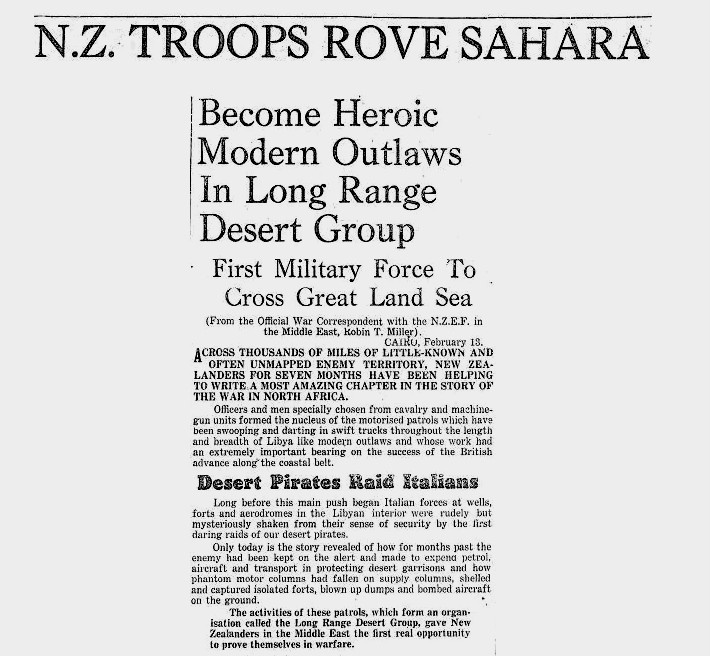
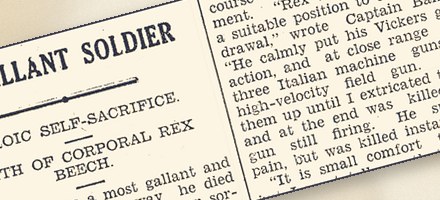
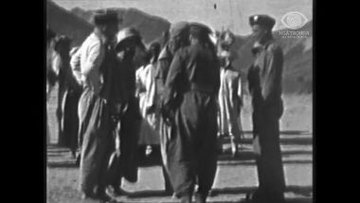
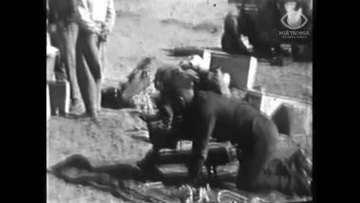
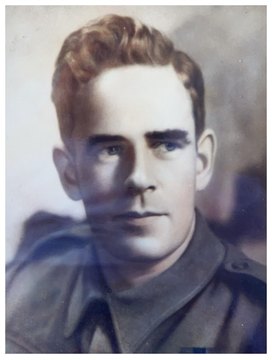
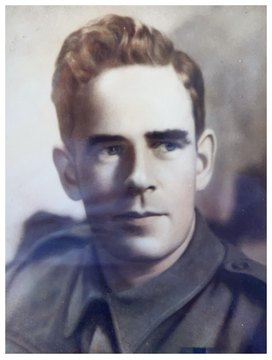
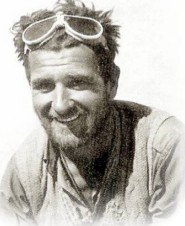
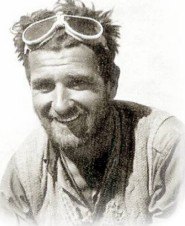
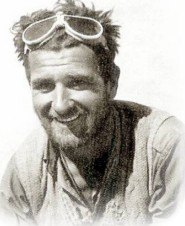
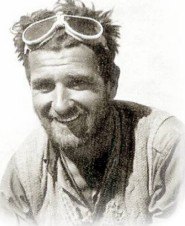
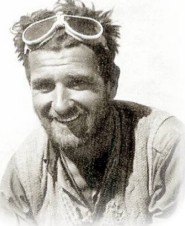
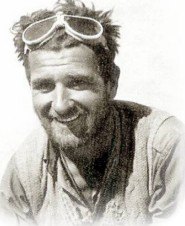
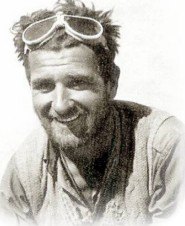
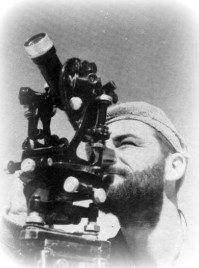
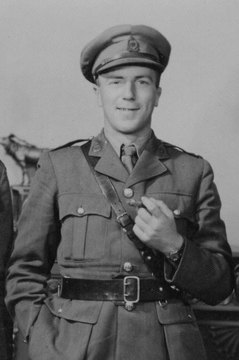
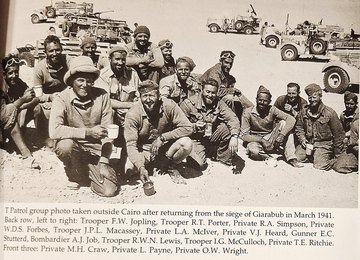
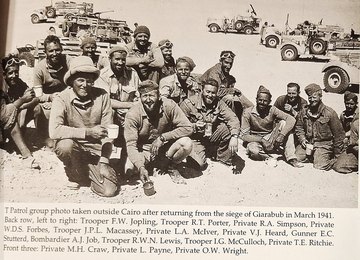
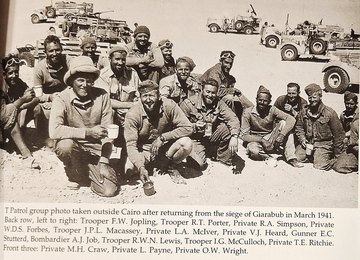
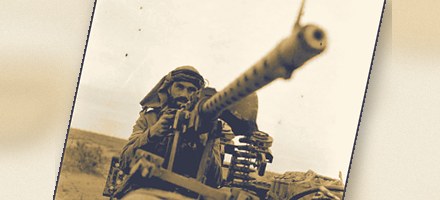
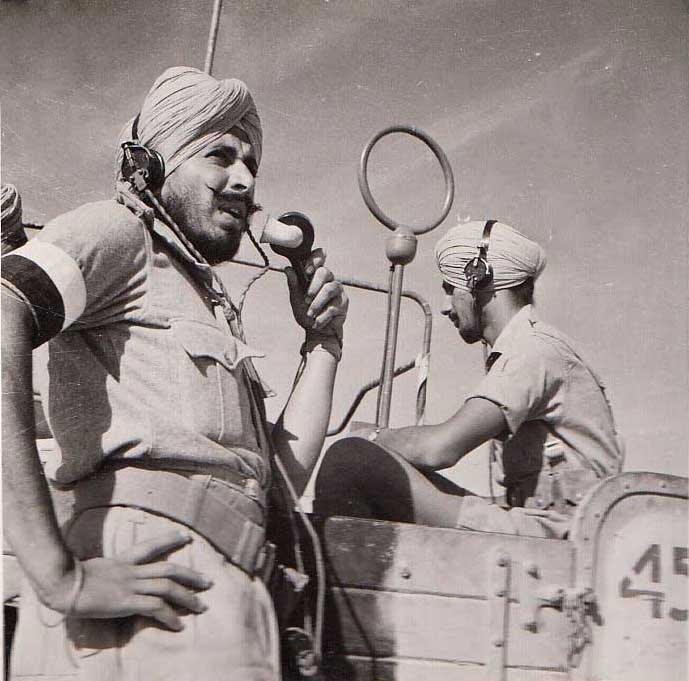
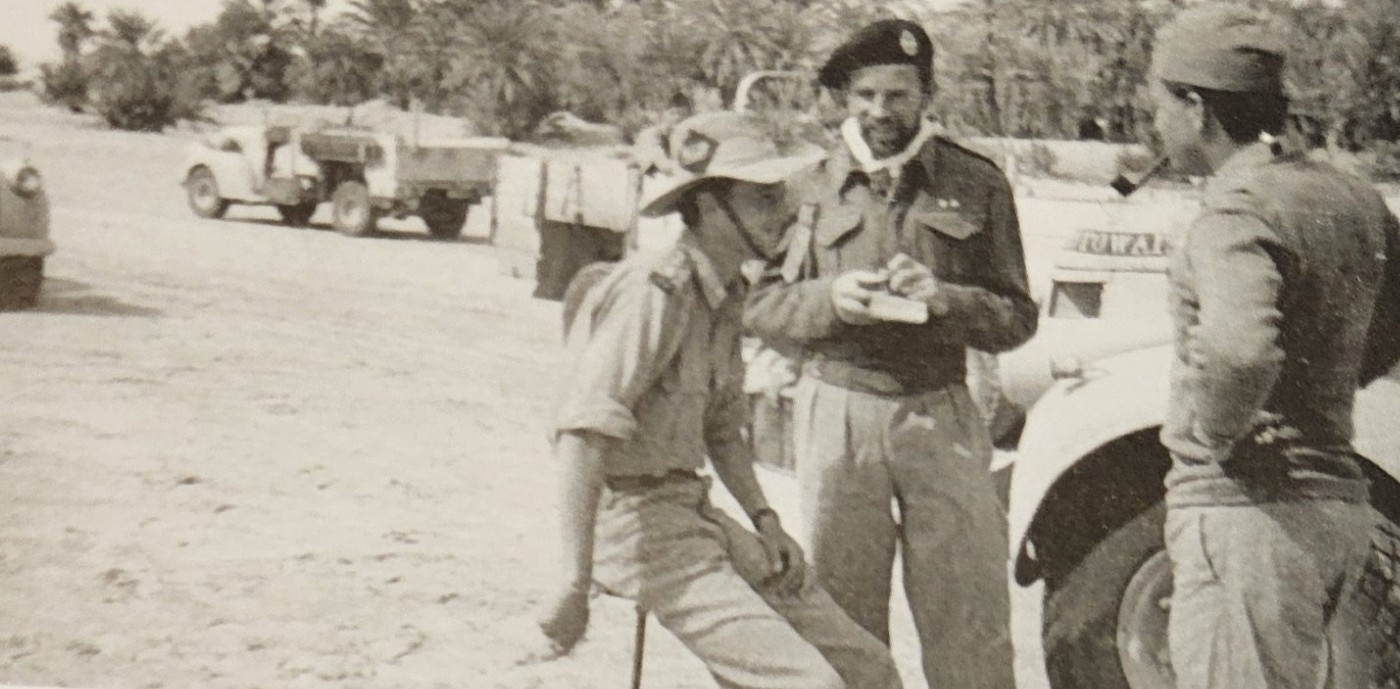
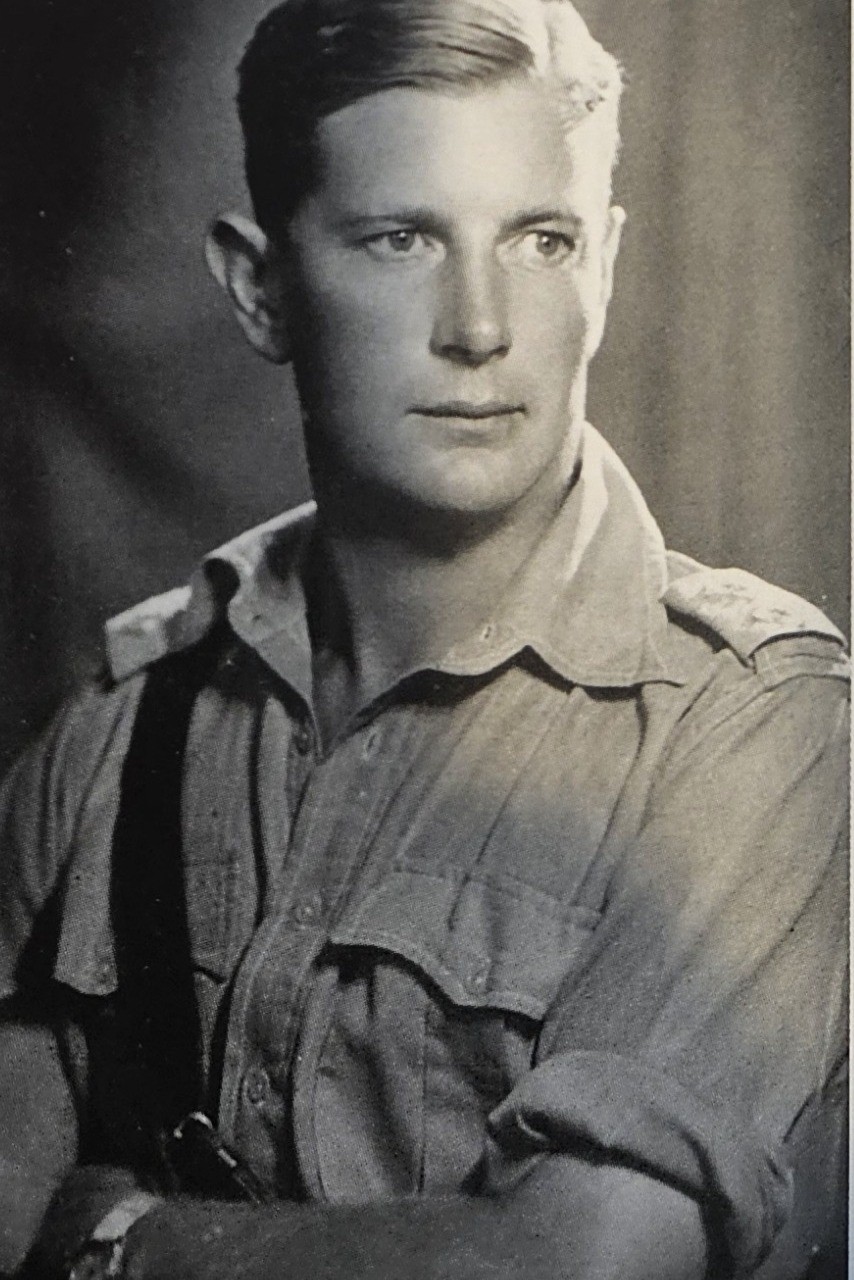
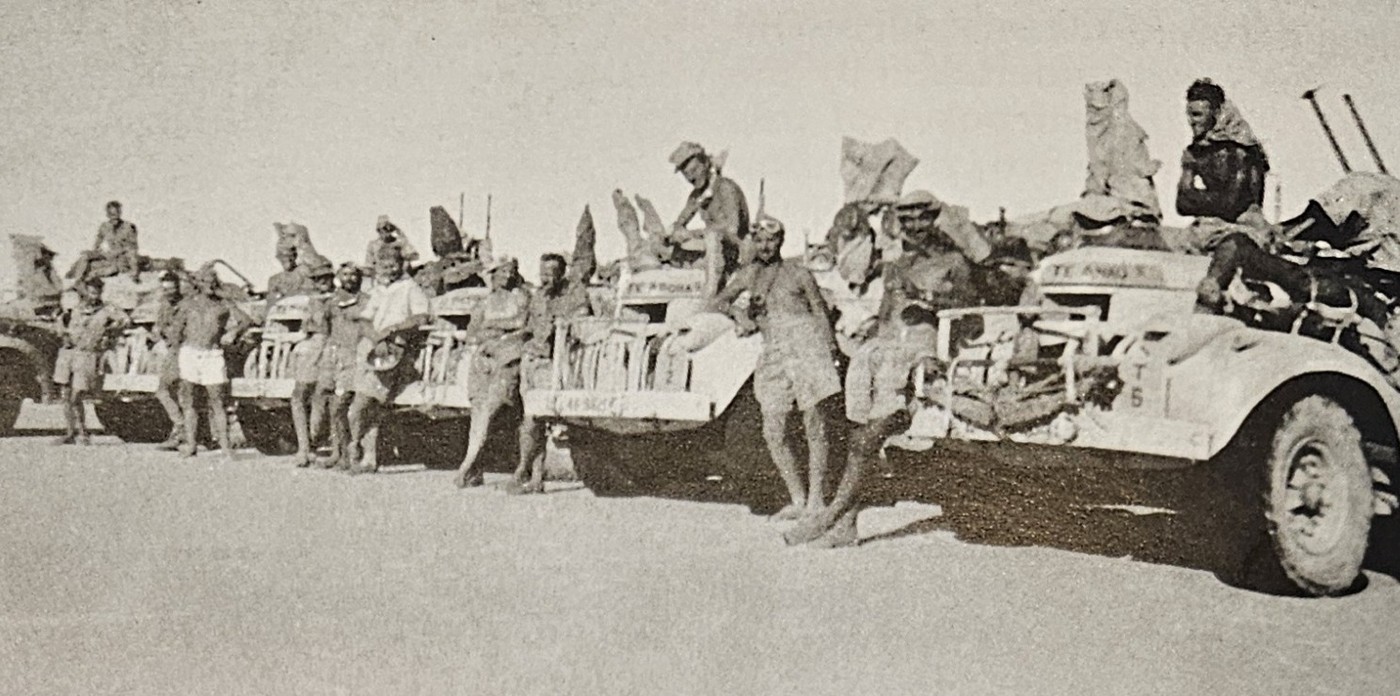
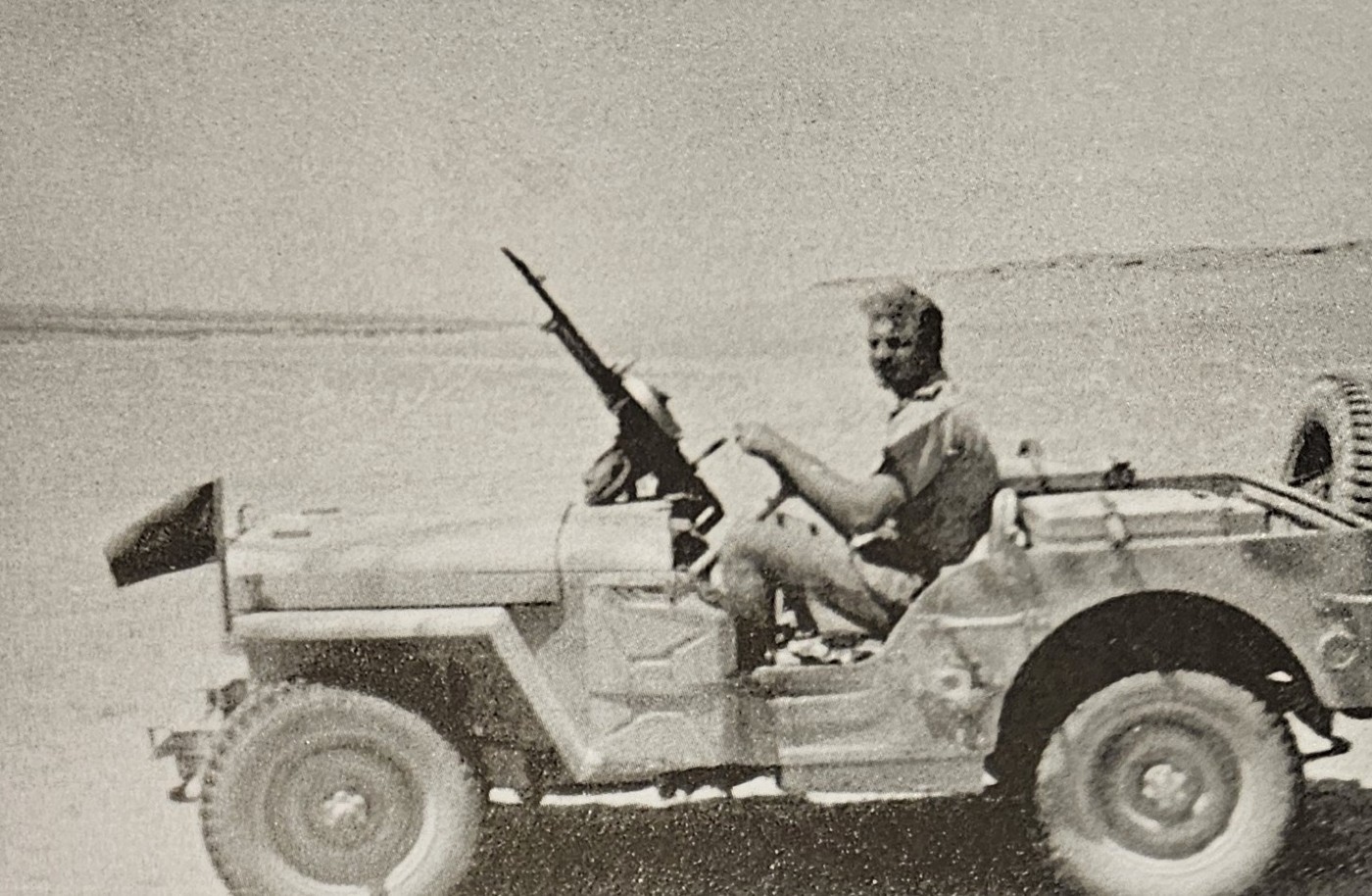
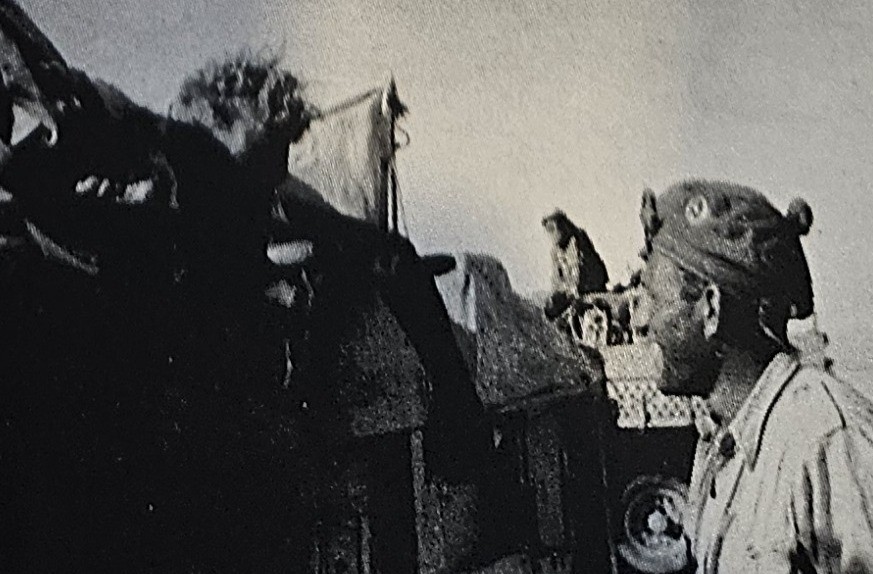
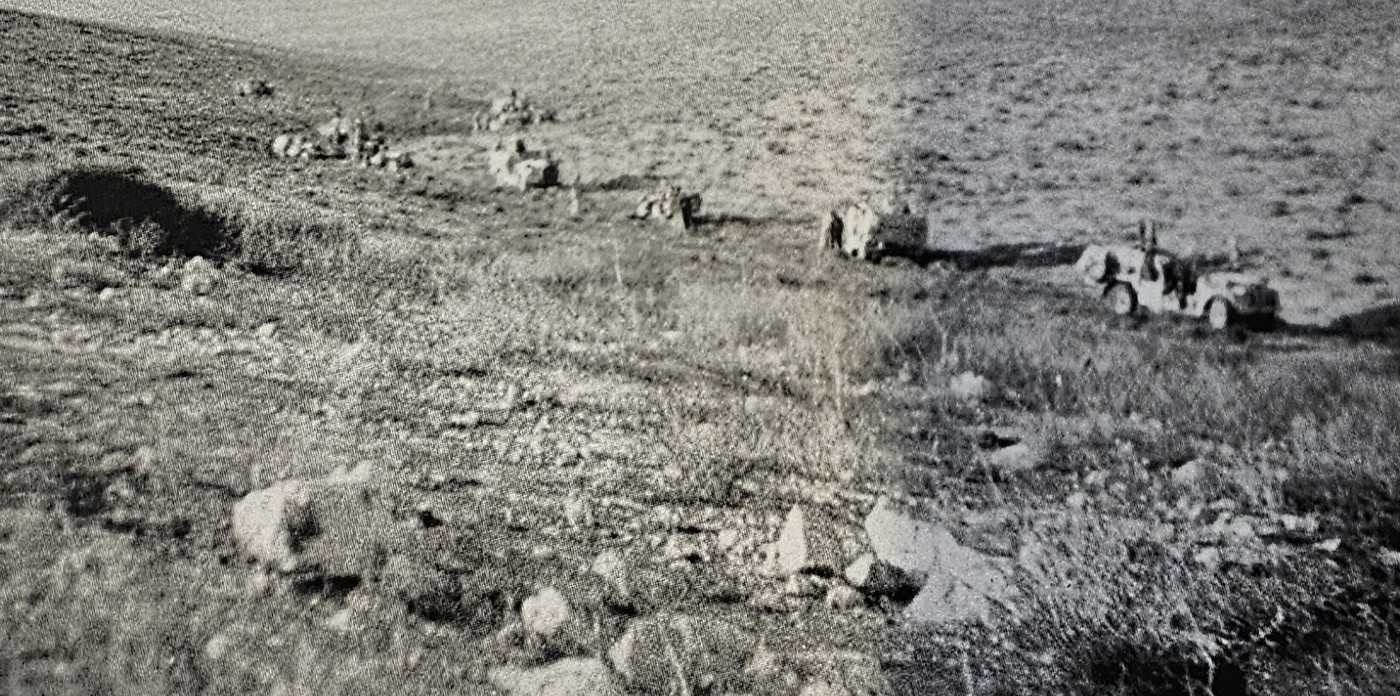
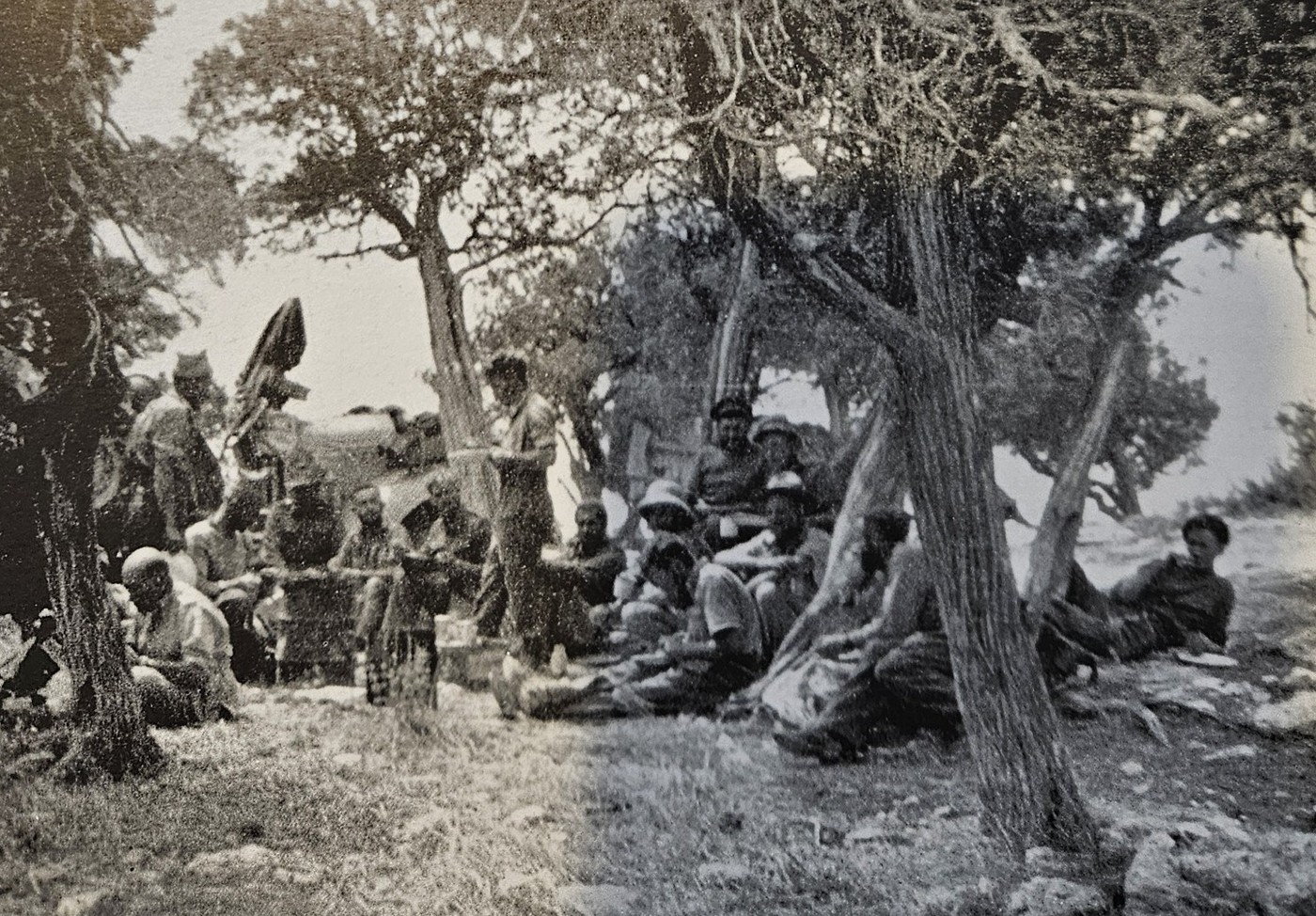
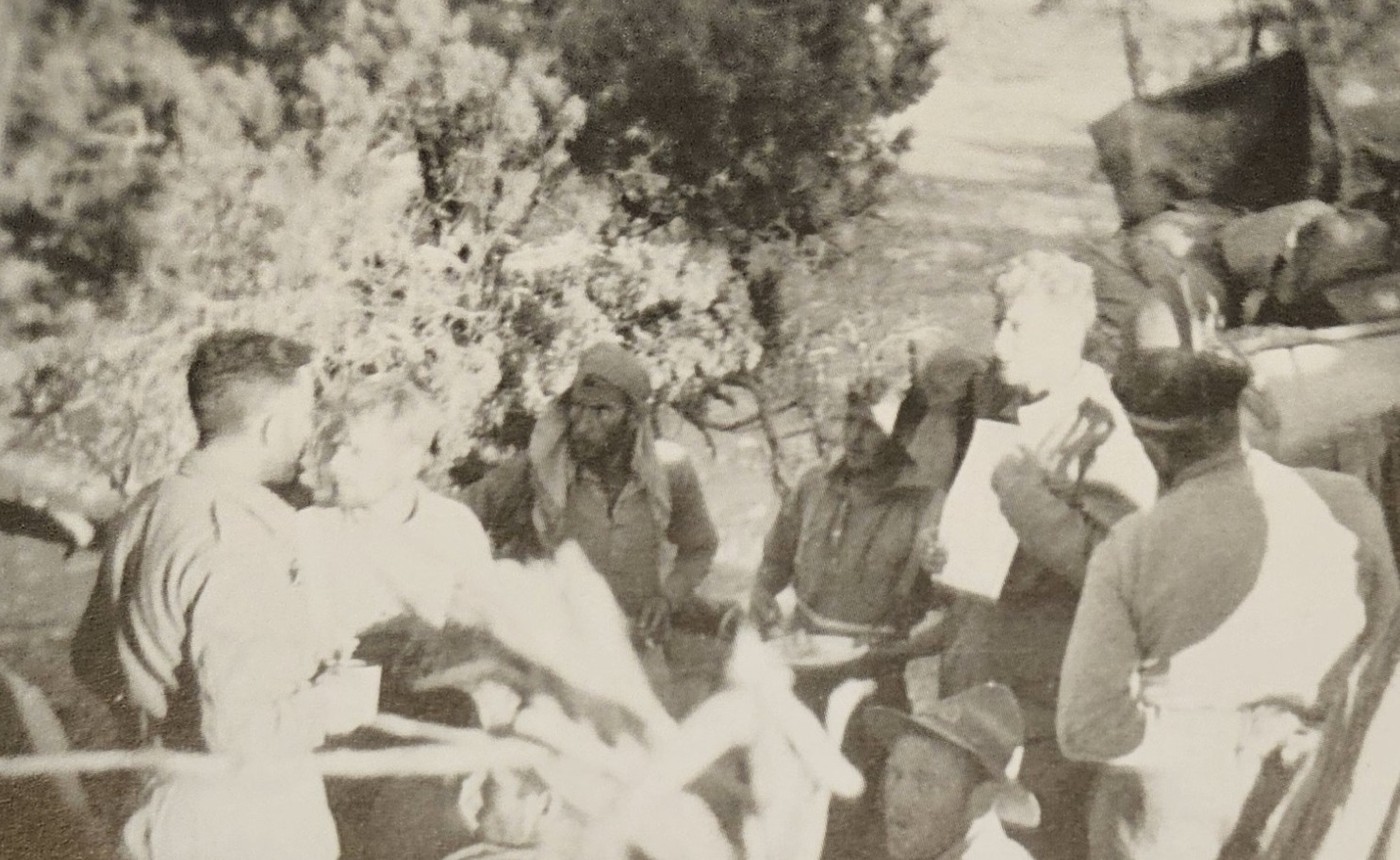
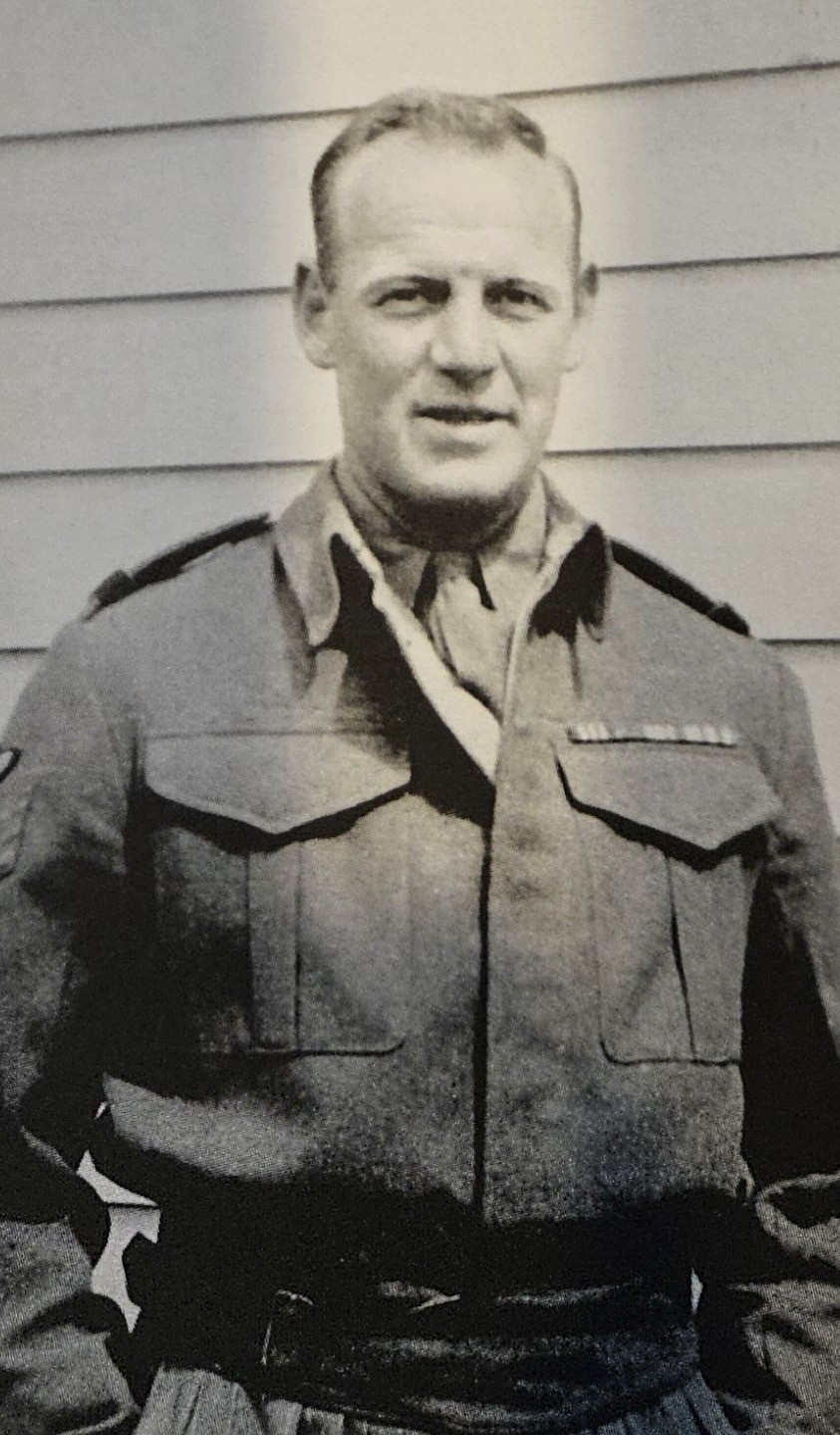
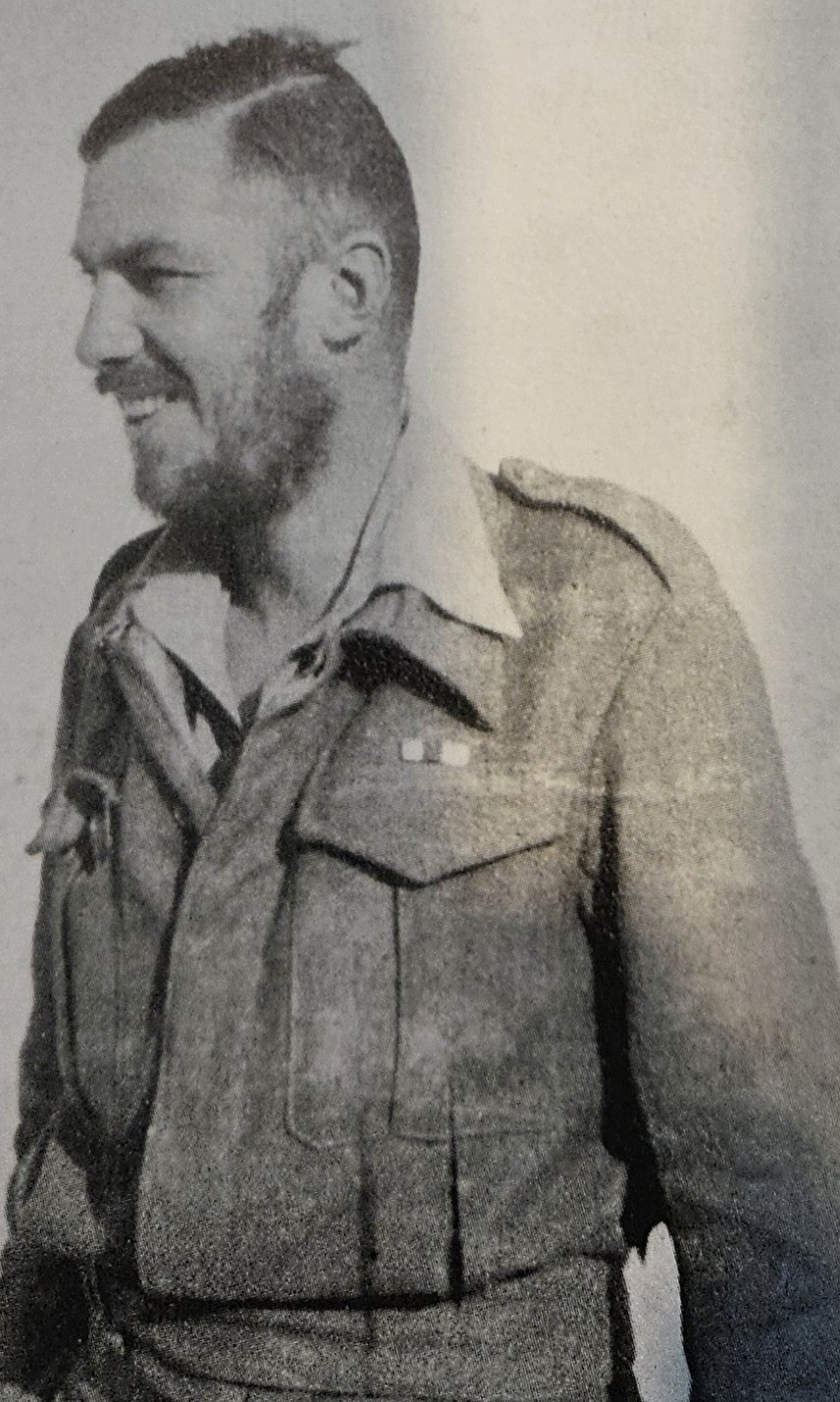
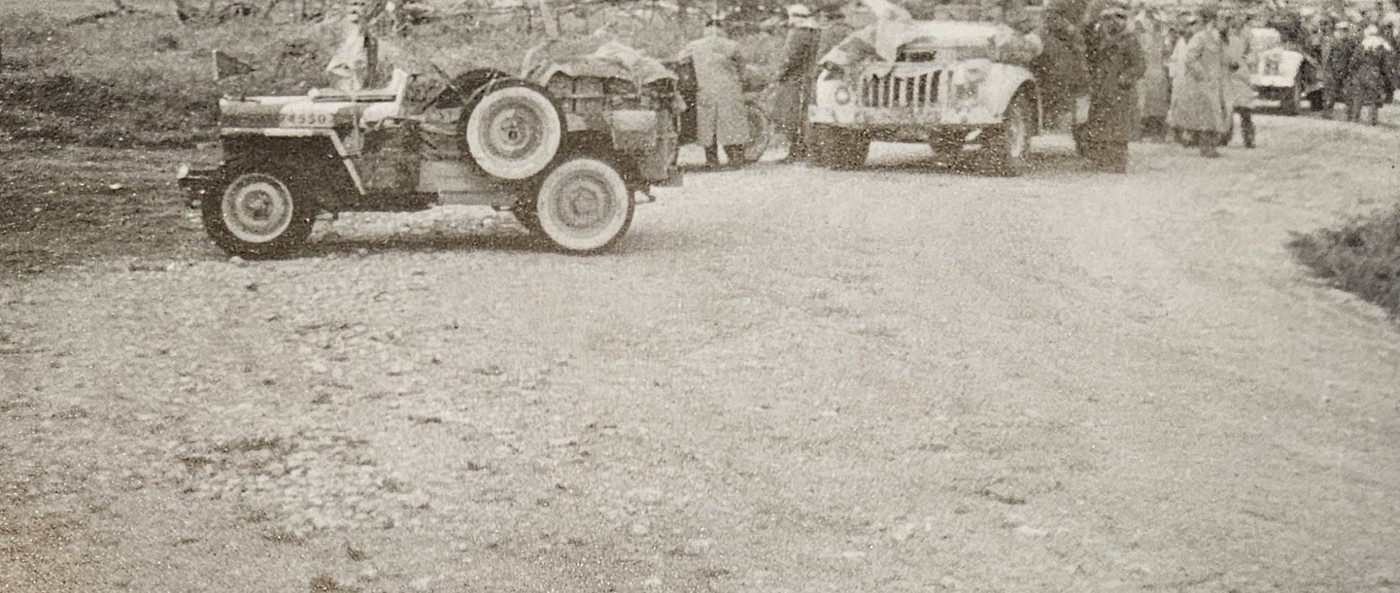
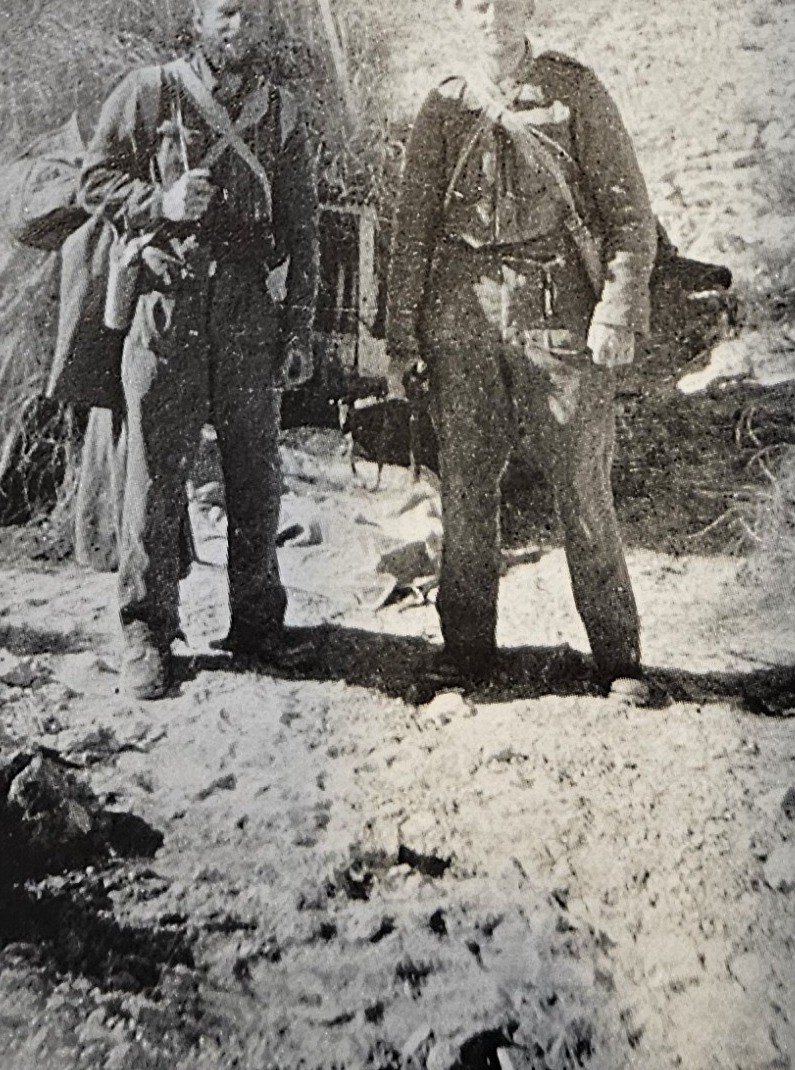
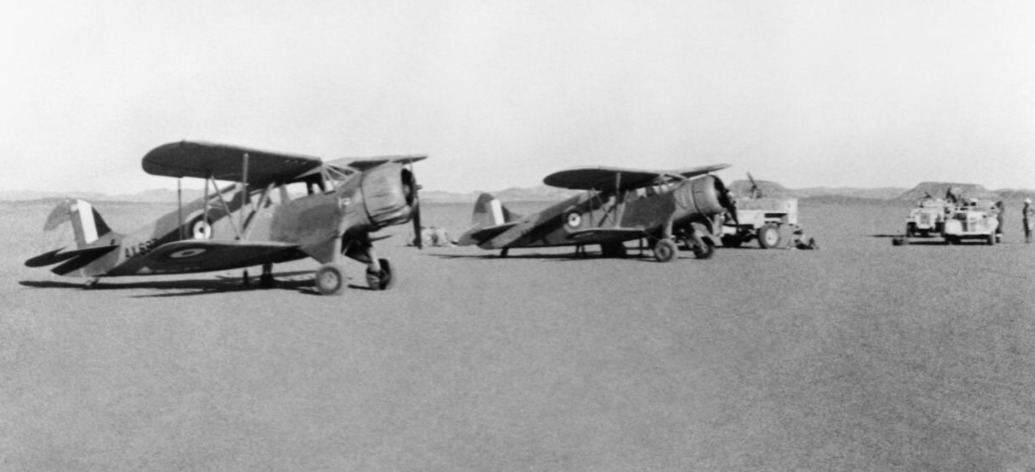
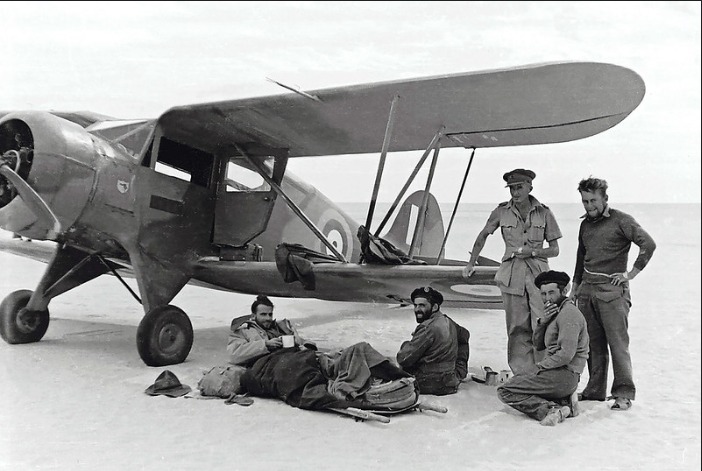
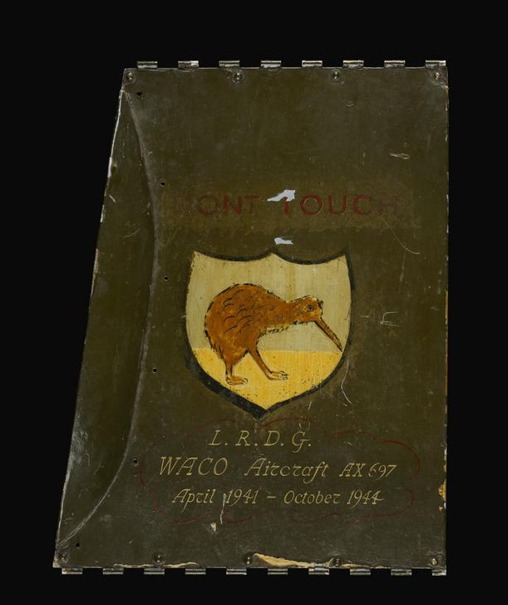
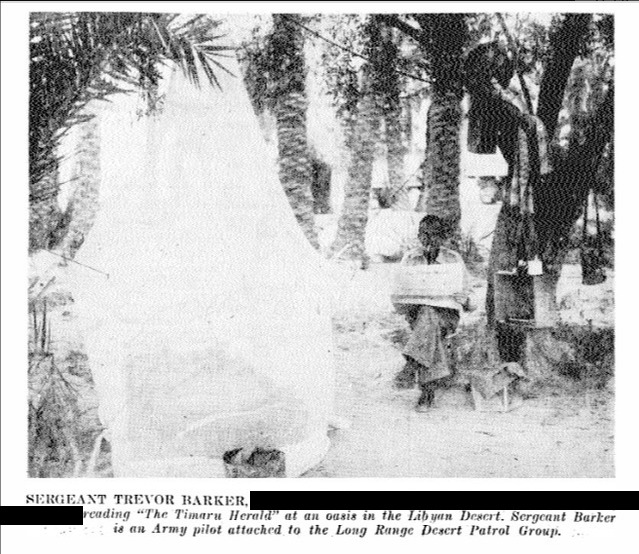
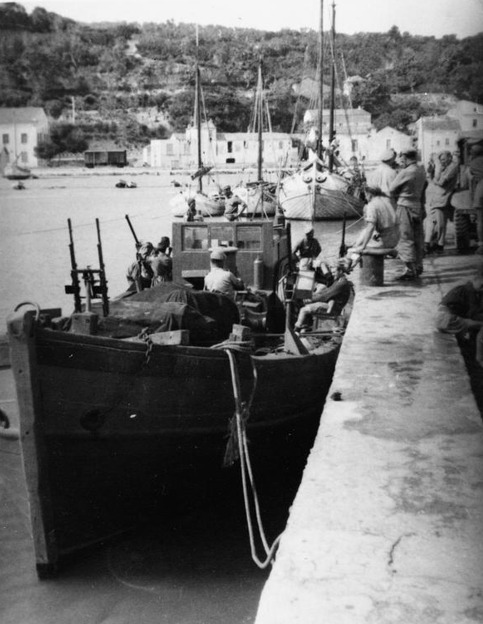
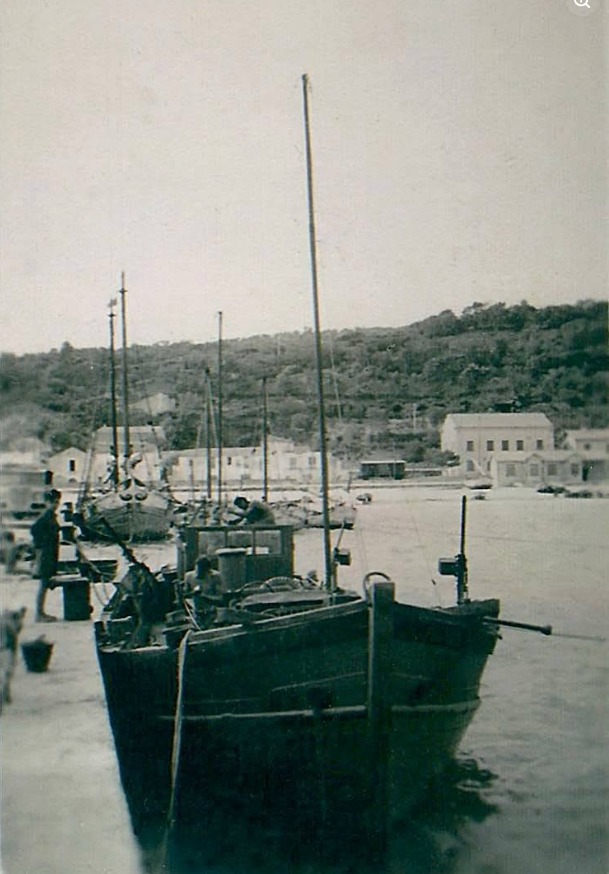
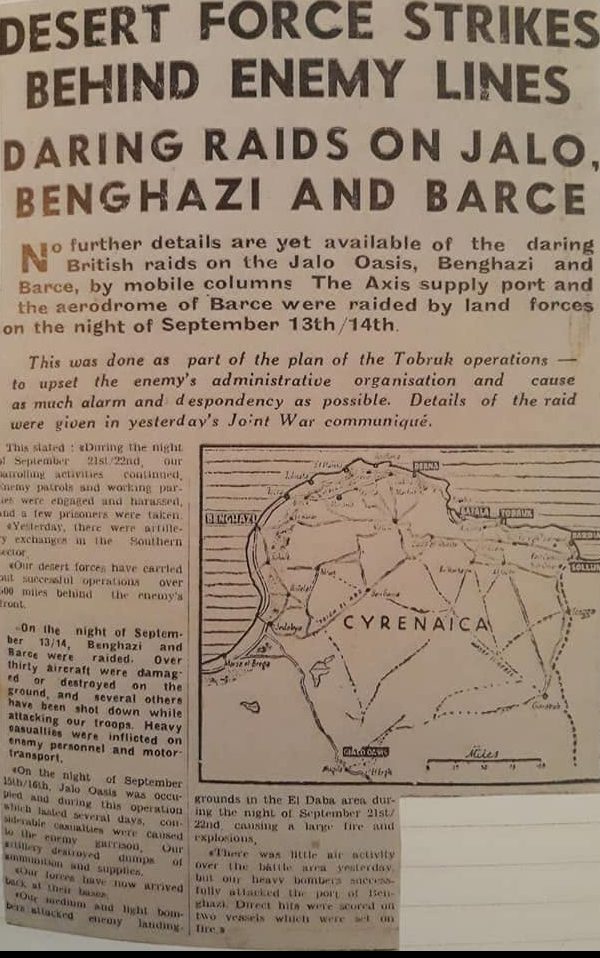
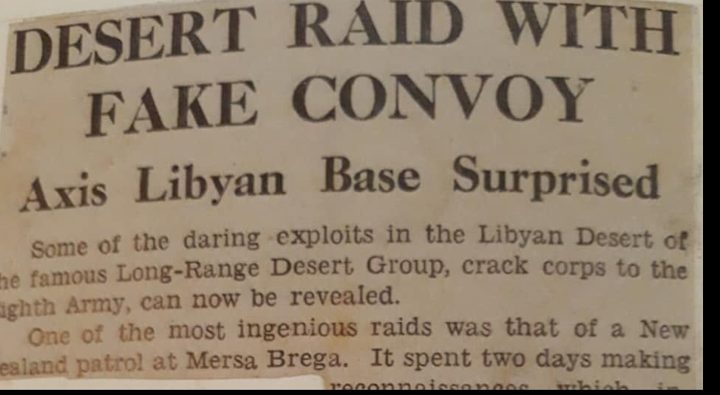
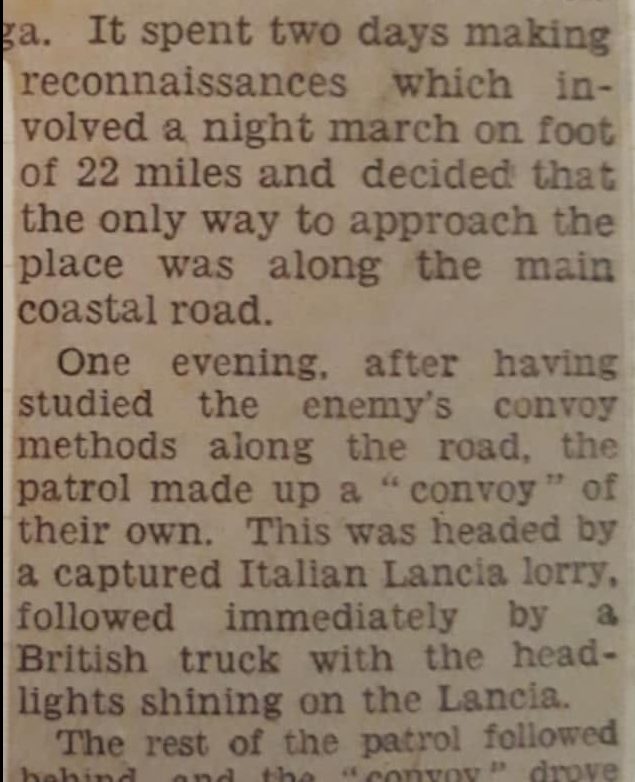
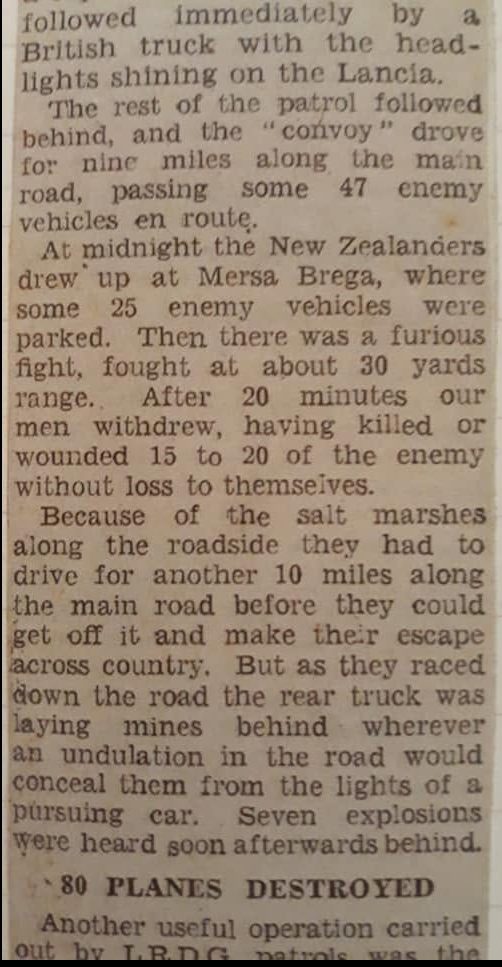
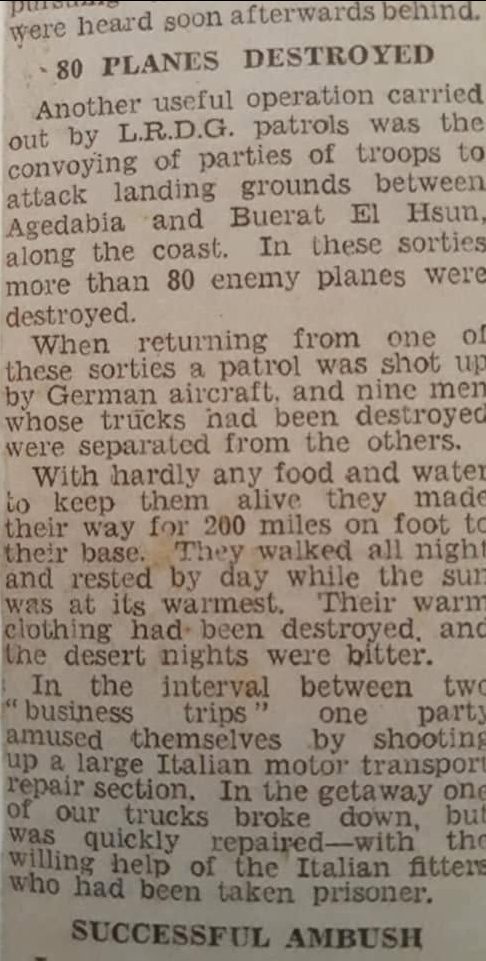
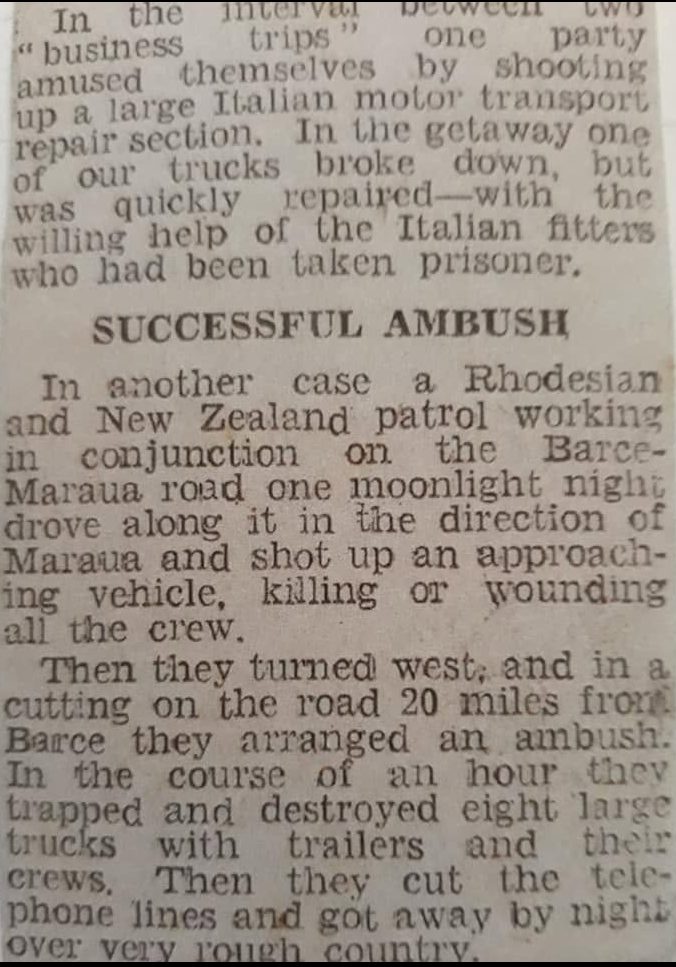
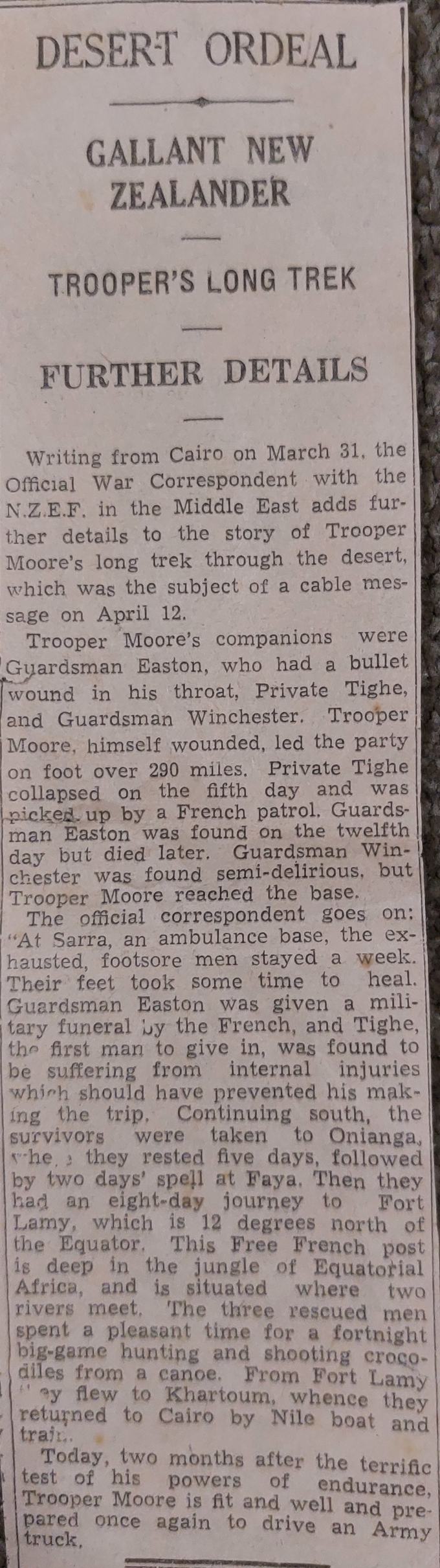
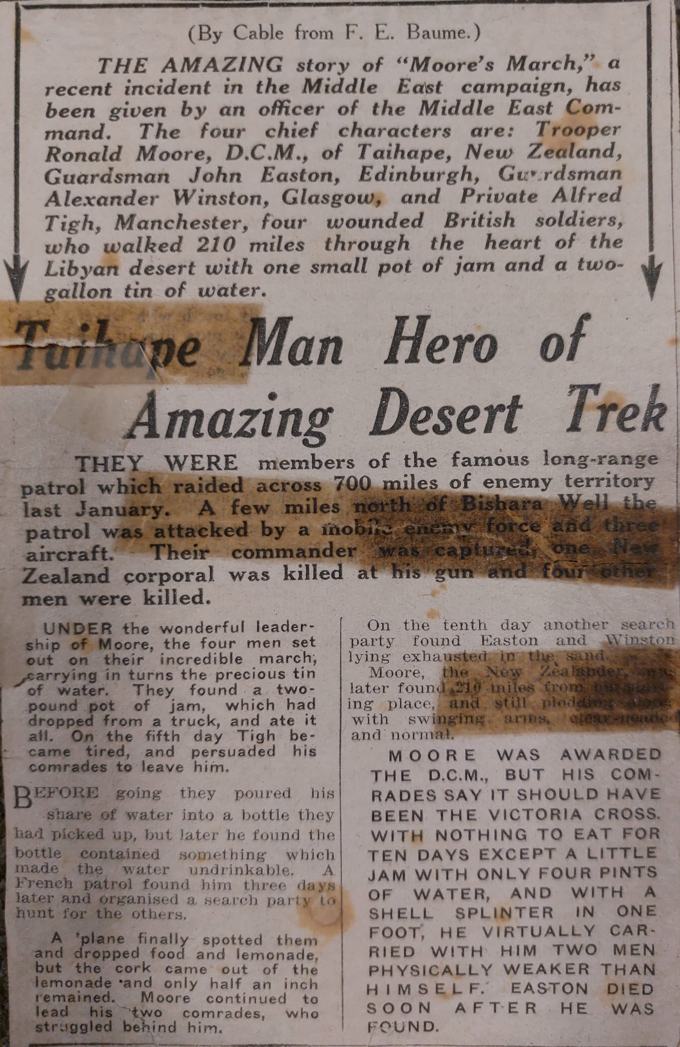
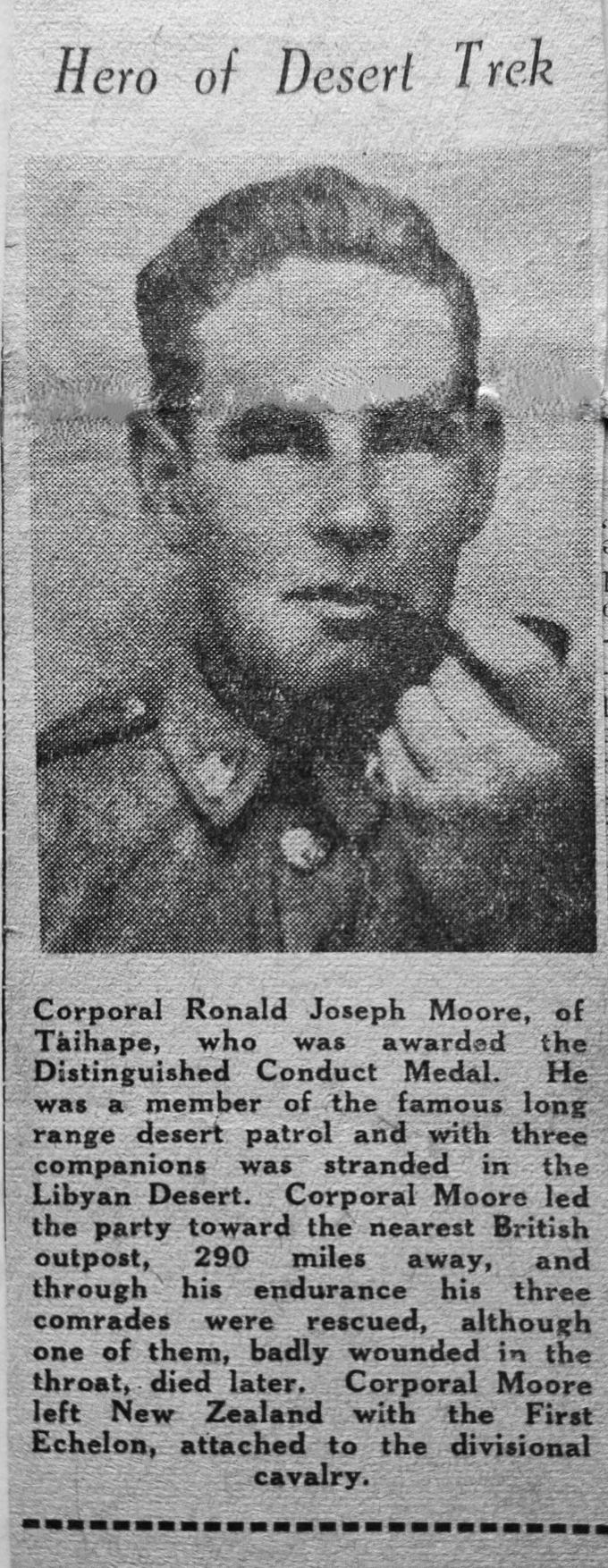
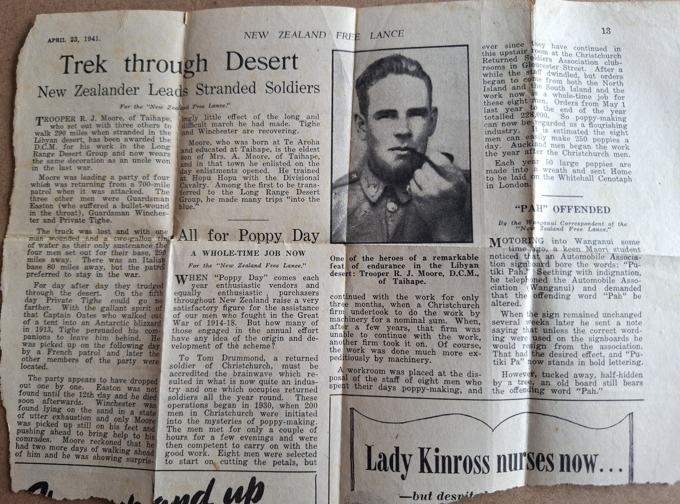
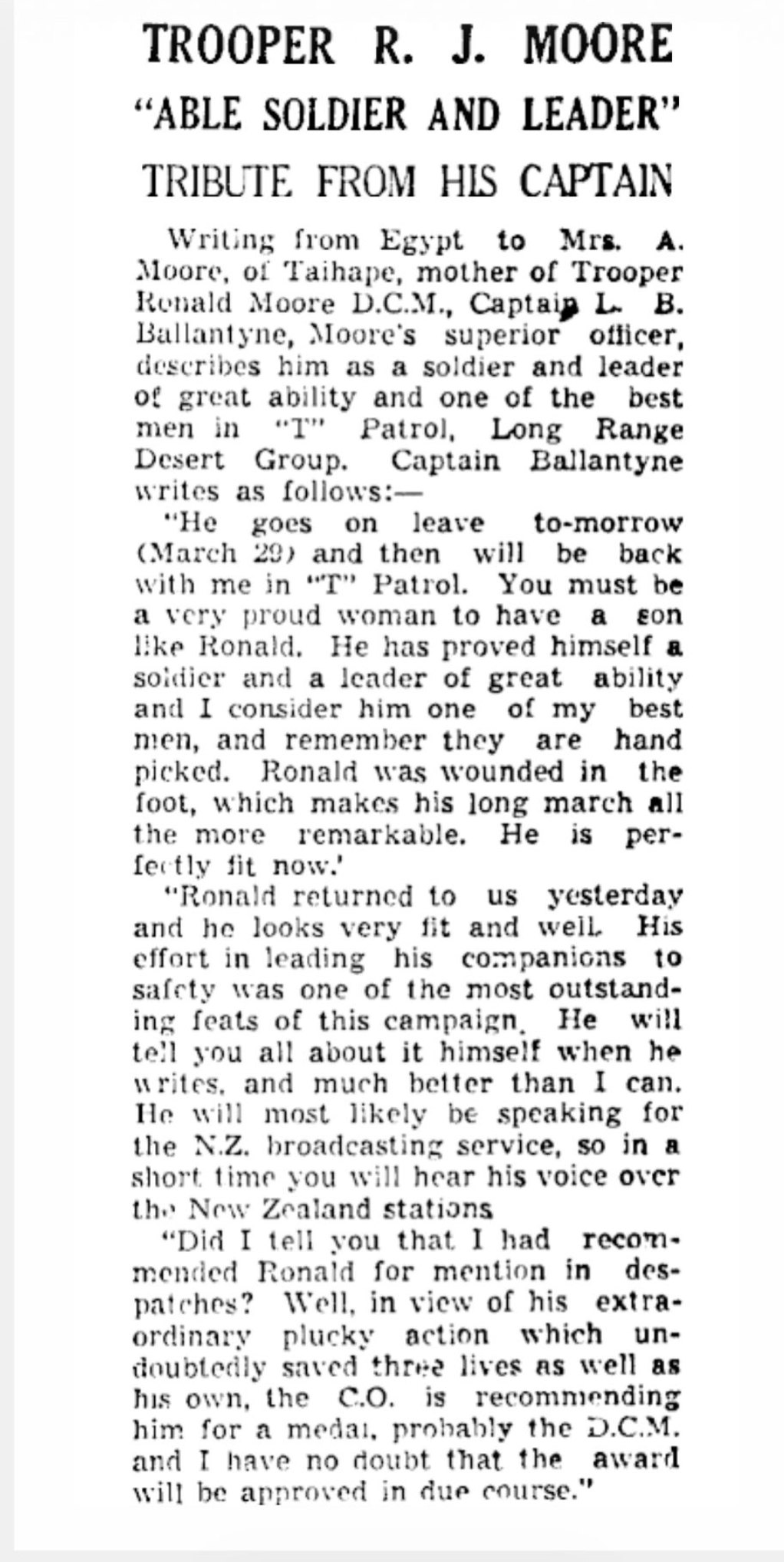
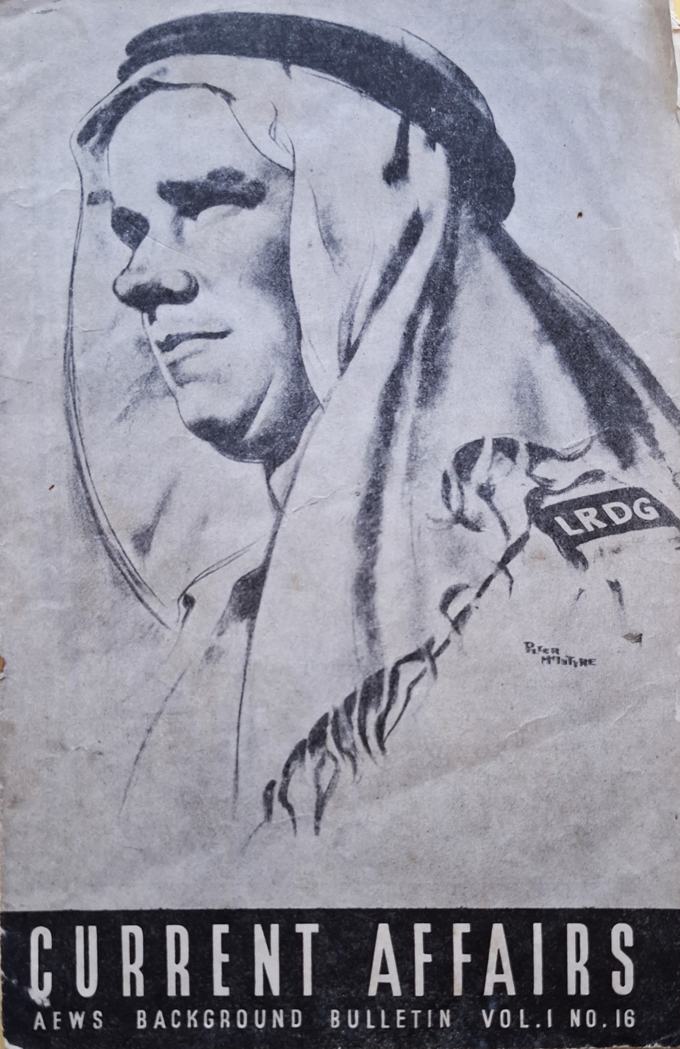
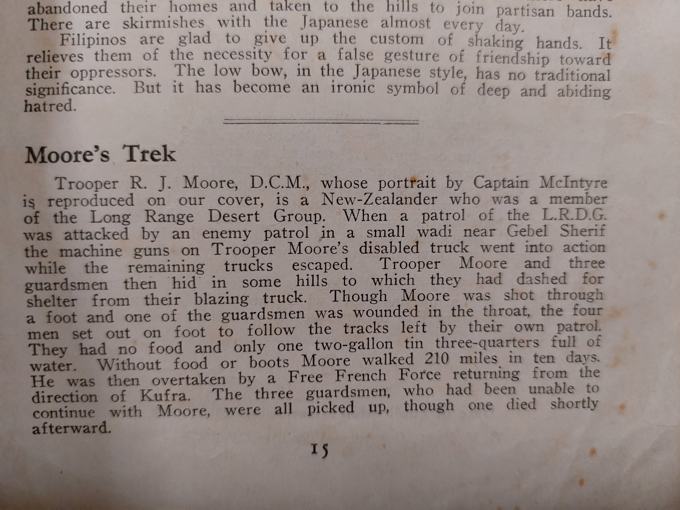
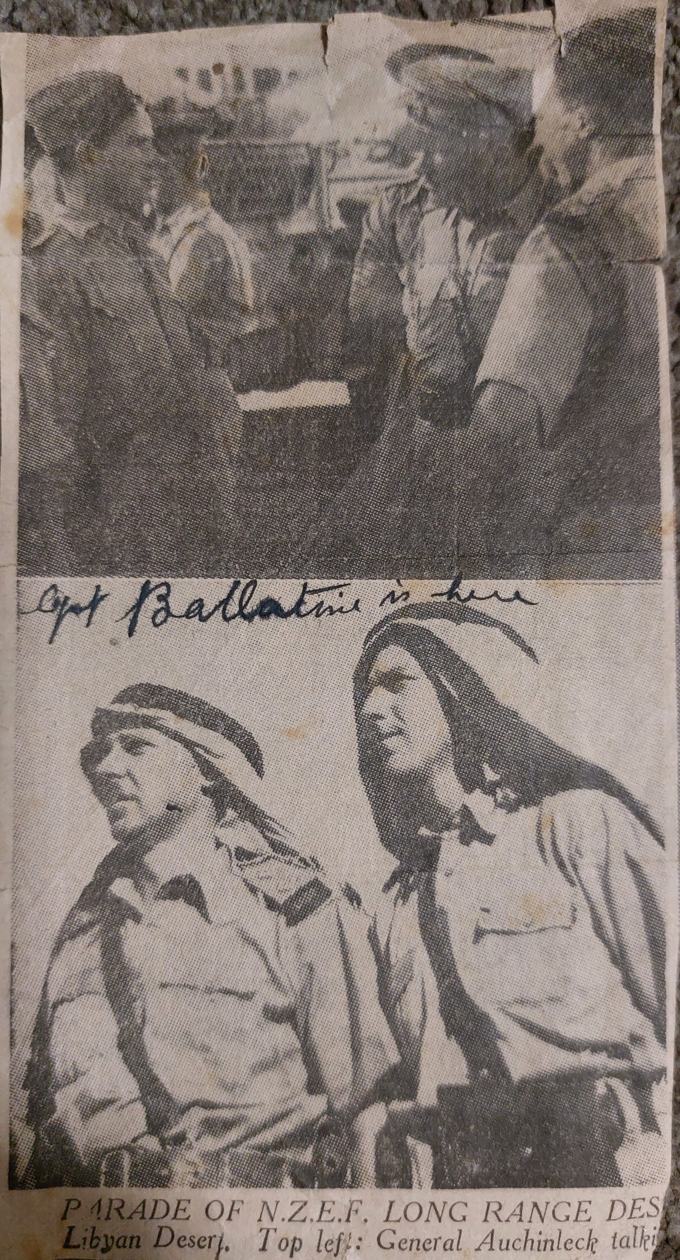
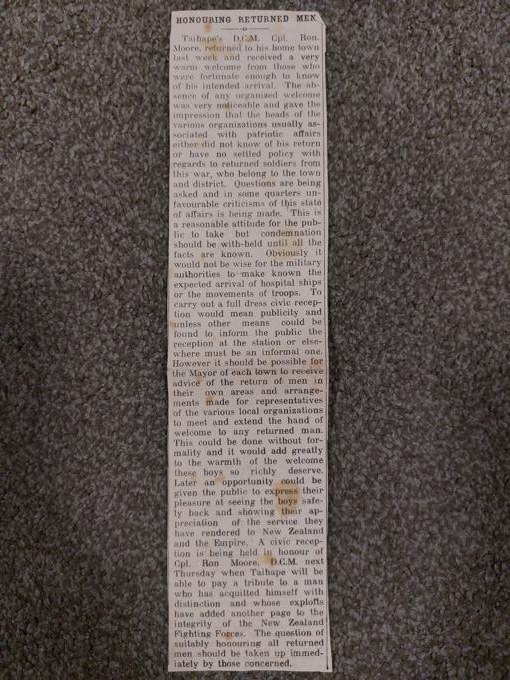
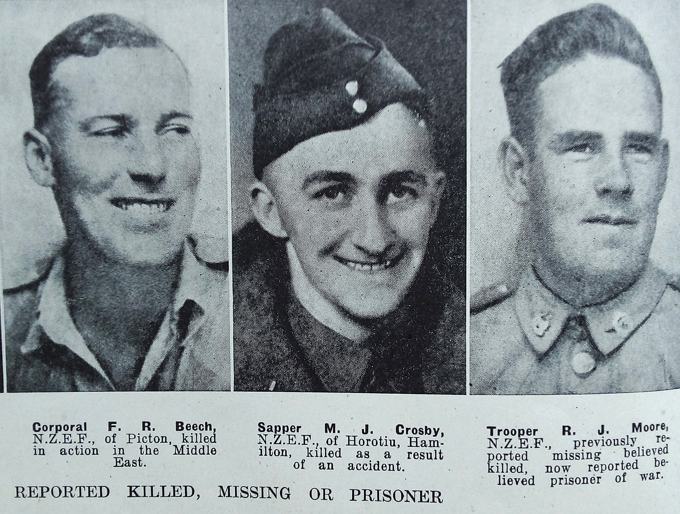
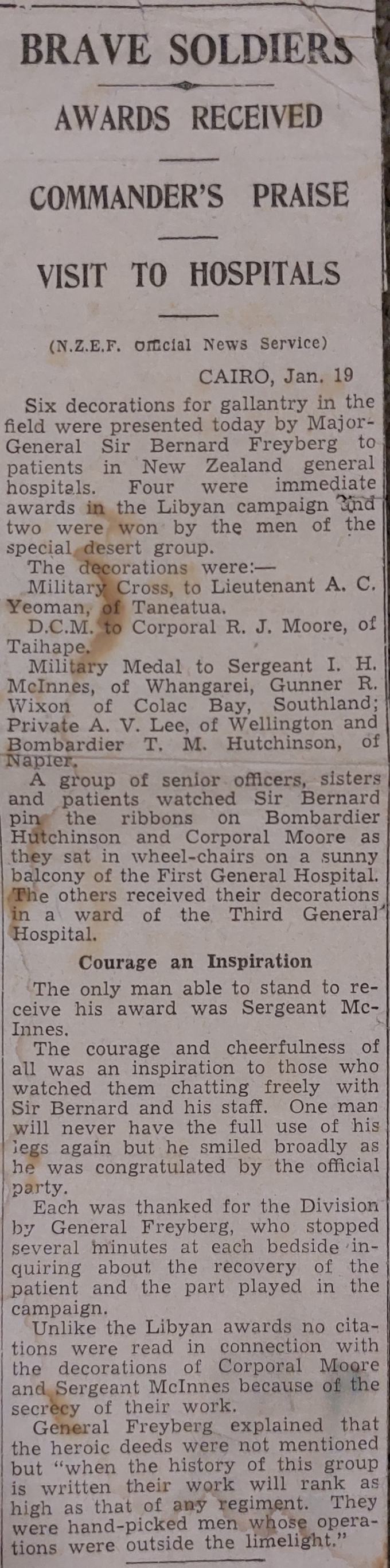
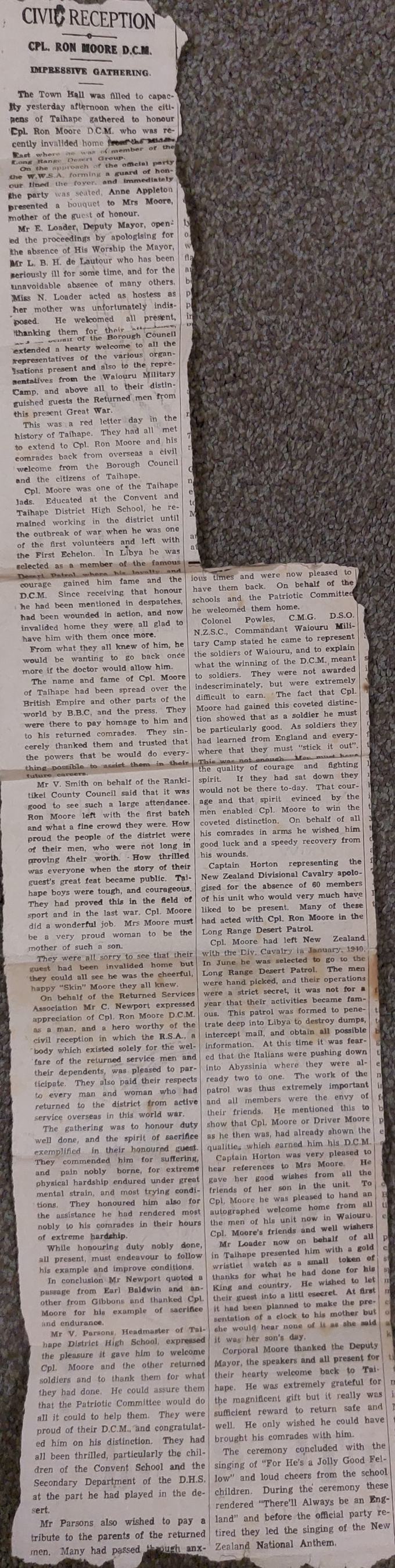
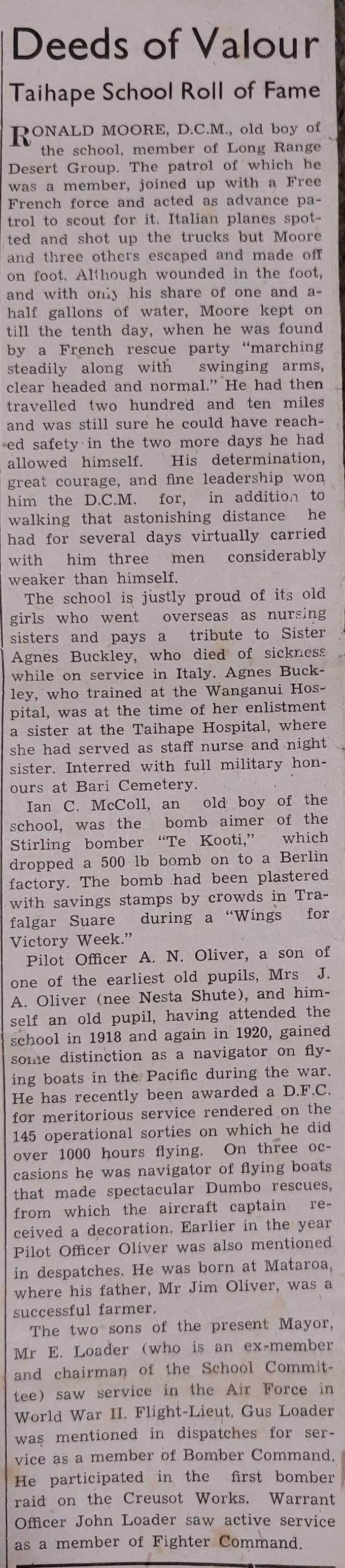
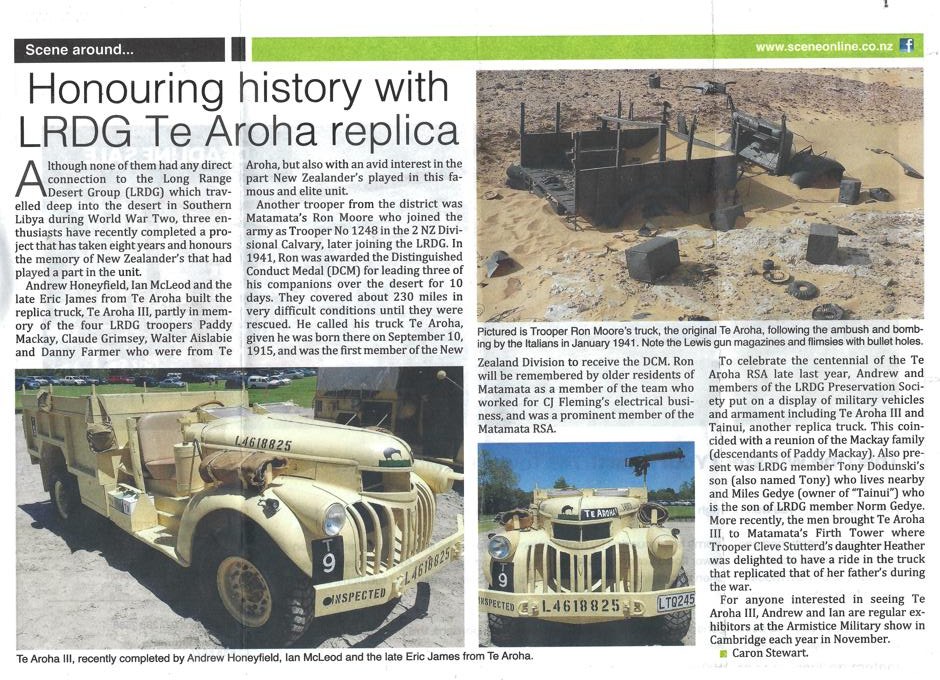
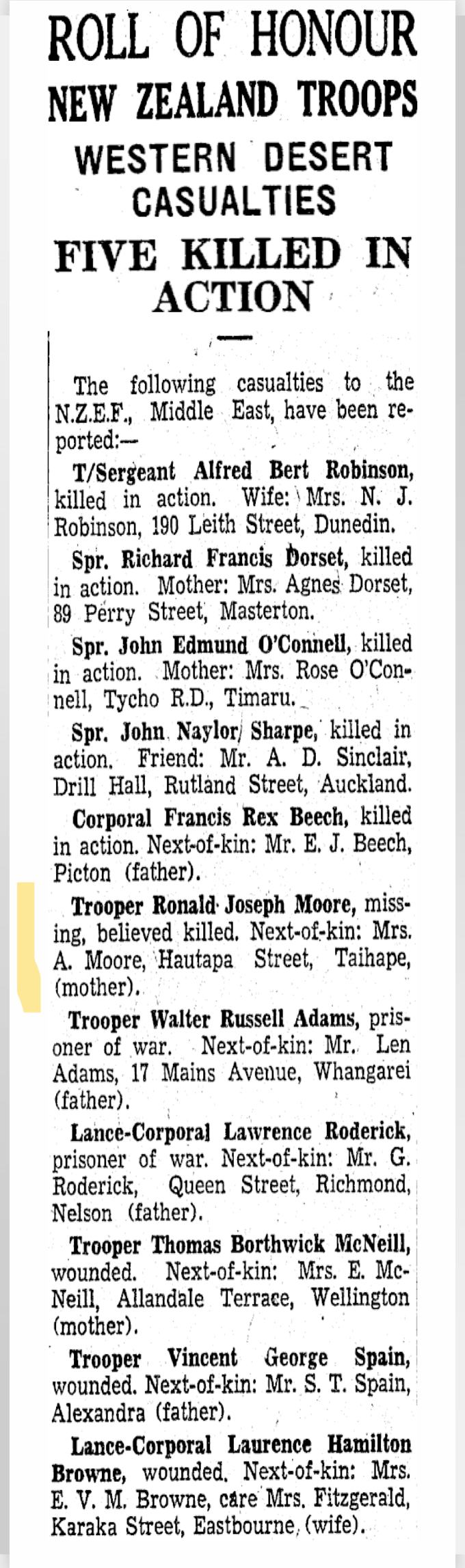
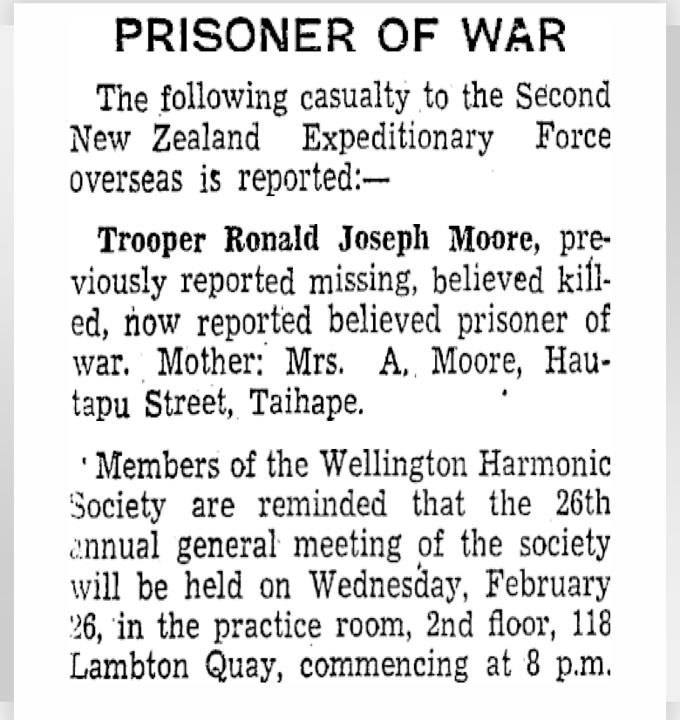
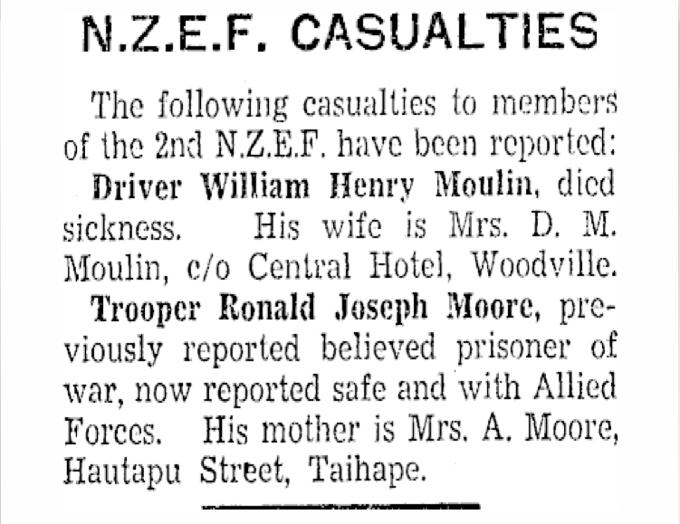
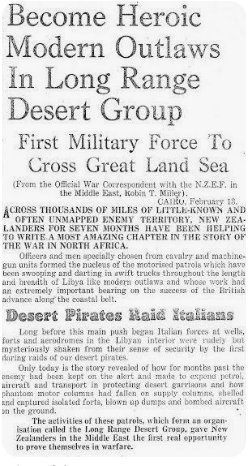
Northern Advocate, 15 February 1941, p.3 (via Papers Past). Click to enlarge.
Formed in the Egyptian desert in 1940 as the Long Range Patrol, the idea of Major
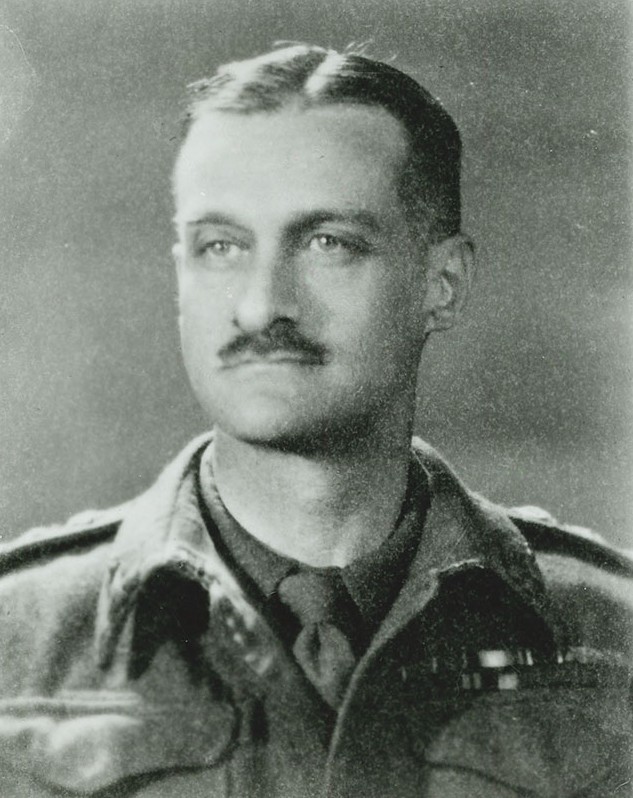
(later Brigadier) Ralph Bagnold, the LRDG were a small reconnaissance and raiding force
that operated deep behind Axis lines across the North African desert. Many of the first
volunteers came from the 2nd New Zealand Expeditionary Force, and New Zealanders remained at
the heart of the unit throughout; later patrols drew in Rhodesians, Guardsmen and Yeomanry.
Travelling by truck and jeep across country most armies thought impassable, they gathered
intelligence, kept the famous “Road Watch”, and guided and carried other special
forces, among them the fledgling SAS and Popski’s Private Army, to their
targets and home again. Their badge was a scorpion within a wheel, and their motto,
“Not by Strength but by Guile”, said everything about how they fought. The Group
was disbanded in 1945.
This website is merely a new generation of the original LRDG Preservation Society’s (L.R.D.G. P.S.) website and an ancillary knowledge base to their popular Facebook page. It definitely does not intend to replace all the hard work the L.R.D.G. P.S. has done over many years. What this site does endeavour to do is provide a searchable database of the men, vehicles and reference material of the LRDG. I encourage new material so this site continues to grow and become more complete and accurate, and I also encourage users to let me know of any inaccuracies. I have taken a great deal of time to double-check information wherever possible — but sometimes double-checking raises more questions than it answers, because of discrepancies between seemingly valid sources.
This site is an ongoing effort to record every man who served with the Long Range Desert
Group — drawn together from unit nominal rolls, the Auckland War Memorial Museum Online
Cenotaph, the Commonwealth War Graves Commission, the research of fellow historians, and the
published work of Brendan O’Carroll and others. Each entry gathers a man’s rank,
service number, patrol, honours and campaign medals, and links to his archival record where one exists.
My personal motivation for creating this site is that my father, Ronald Moore, was one of the
original members of the LRDG (LRP). Since I retired I have had the time to research and build out the
database that forms the backbone of this site. It is very comprehensive, but there is still a
great deal of information missing. So, I rely on visitors to provide as much information as they
can about the men and their roles in the LRDG, to the L.R.D.G. Preservation Society so we can make
this an even more valuable resource for families and researchers of the L.R.D.G.
Should anyone use any of the information from this site, credit should be given to all original sources, authors and rightsholders.
The Long Range Desert Group Preservation Society
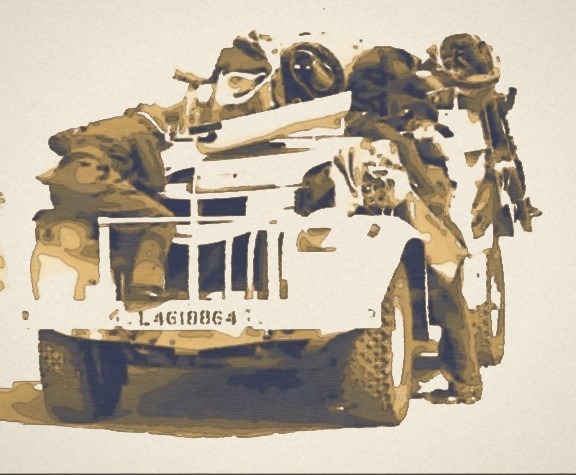
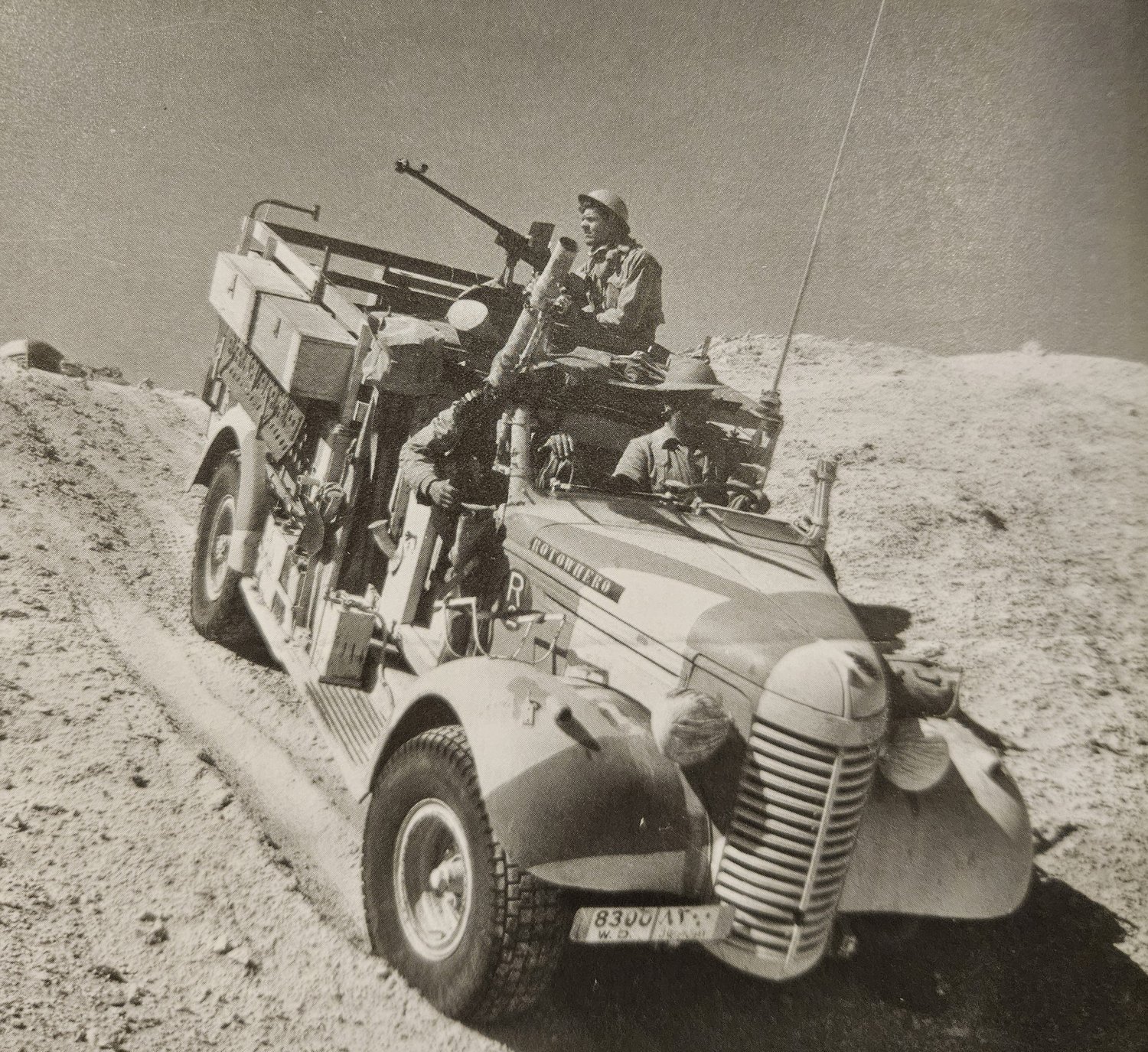
The L.R.D.G. P.S. was founded in 1992 by Jack Valenti. He wanted to fulfil a lifelong dream to build a replica of the famous 1942 Canadian Chevrolet, India-pattern LRDG truck. Jack had always been interested in this particular part of history.
Jack recruited the help of his lifelong friend Rick Butler, who also had a deep interest in the same subject. It took several years to get the truck finished.
As Jack and Rick took the truck to various military vehicle shows and parades, many people showed great interest in what they were trying to accomplish, and so the Long Range Desert Group Preservation Society was born.
The group was established to learn as much as possible about the unit, the men in it, and the equipment and tactics they used, then to share that information with all who wish to learn. To that end Jack and Rick started to outfit the truck and themselves with historically correct “military equipment,” gear, provisions and uniforms.
We also publish a magazine, ‘Tracks’ currently every year, full of a diverse range of information by the leading researchers/writers/authorities of the LRDG.
In 1997 the original L.R.D.G. P.S. website was created. Today the L.R.D.G. P.S. has members all over the world, including countries such as England, Canada, New Zealand, Australia, Portugal, South Africa and more. Over the years it has grown to become a recognised historical society, funded through the support of its many members and friends. We are extremely lucky to have every significant LRDG author as members.
We are very active and successful with our research, and this is down to the overwhelming level of courtesy and respect shown by this group to each other, and their willingness to share their knowledge, information and opinions.
A special thanks to
Jack Valenti — the great man who created the original LRDG Preservation Society website and Facebook group, and without whom none of this would be possible. I had the pleasure of meeting Jack at his home in Pebble Beach, California, many years ago. A cherished memory.
Brendan O’Carroll — preeminent LRDG historian and author, has given me an enormous amount of help. By sharing his vast knowledge of the LRDG and opening his extensive library to me, he has been both an invaluable source of information and a generous supporter of what I am trying to achieve with this site. It simply would not have been possible without his time and effort. For 26 years his books have kept the names of these men, and the story of the LRDG, alive. A complete list of his works can be found in the books section of this site.
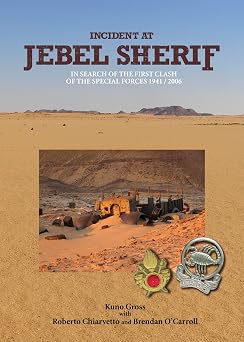
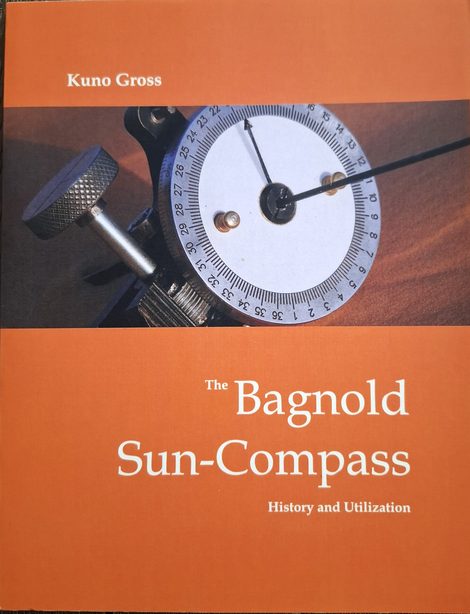
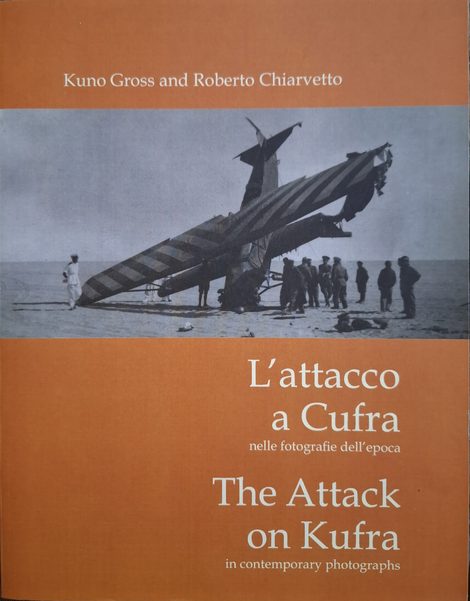
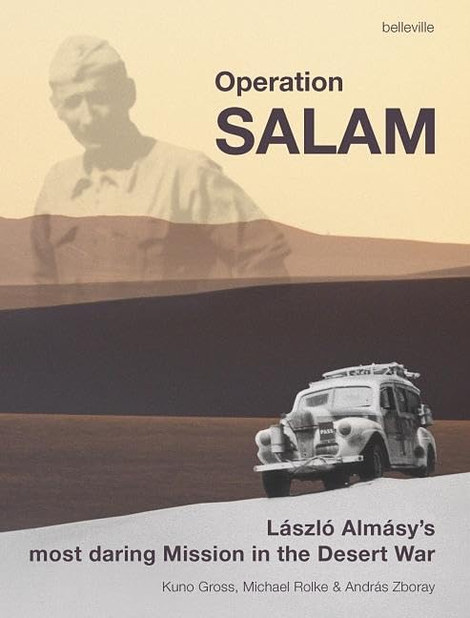
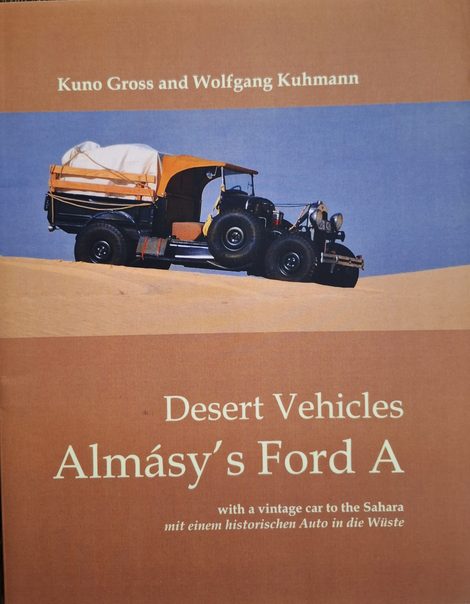
Kuno Gross — author and researcher of the desert war, a number of his books and the Tracks magazine can be found in the Media section of this site. He worked for eleven years in industrial plant construction in Libya and travelled the desert whenever he could, and since returning to Europe in 2010 he has gone back to North Africa as often as the chance allows. In 2021 he revived Tracks, the Group’s own magazine, and it now appears annually.
Charlie Down — another key L.R.D.G. P.S. contributor and administrator. Charlie has worked tirelessly to keep the LRDG name alive and has a great knowledge of the technical aspects of LRDG vehicles, weapons, equipment etc. Lives in the UK.
Bob Amos-Jones — a noted LRDG historian, who studies and spends much time researching the subject in the British military archives and many other places. Also an administrator and key contributor on the L.R.D.G. P.S. Facebook page. Lives in the UK.
Maurizio Piglia — another L.R.D.G. P.S. historian, with a deep knowledge of military history including the LRDG. Also the longest serving administrator and a key contributor on the L.R.D.G. P.S. Facebook page. Lives in New Zealand and Italy.
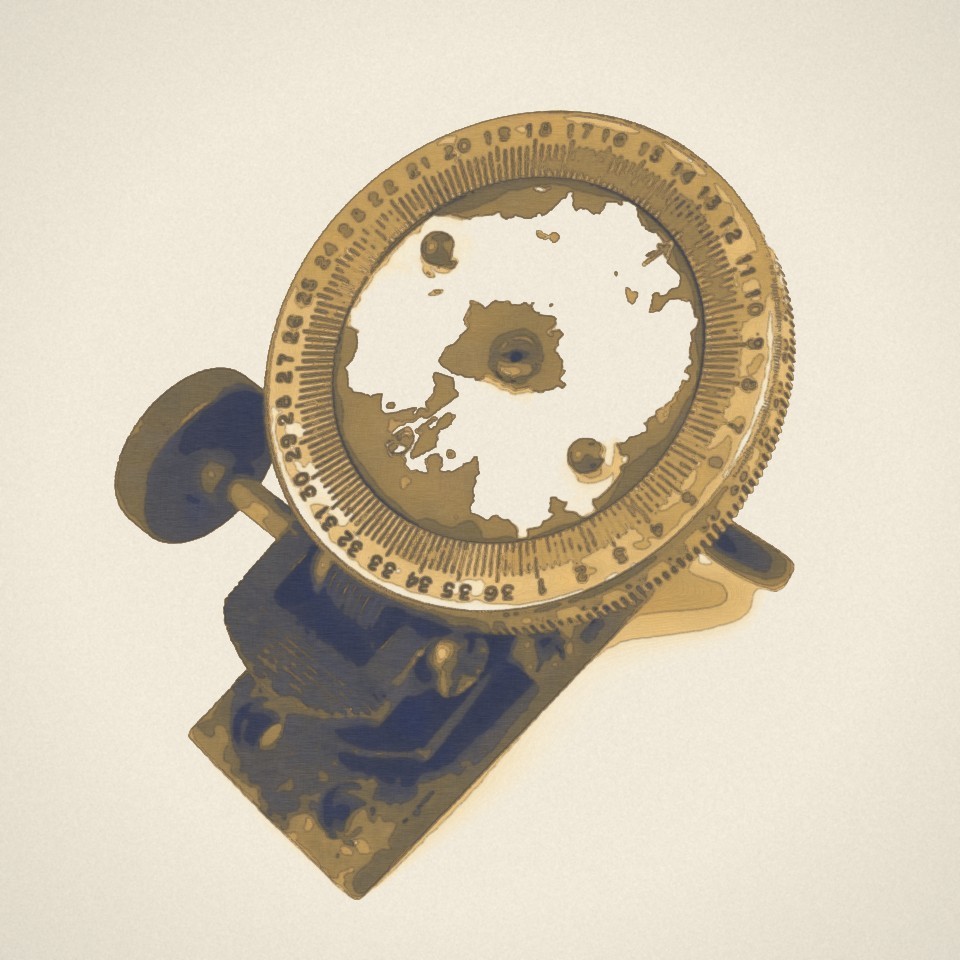
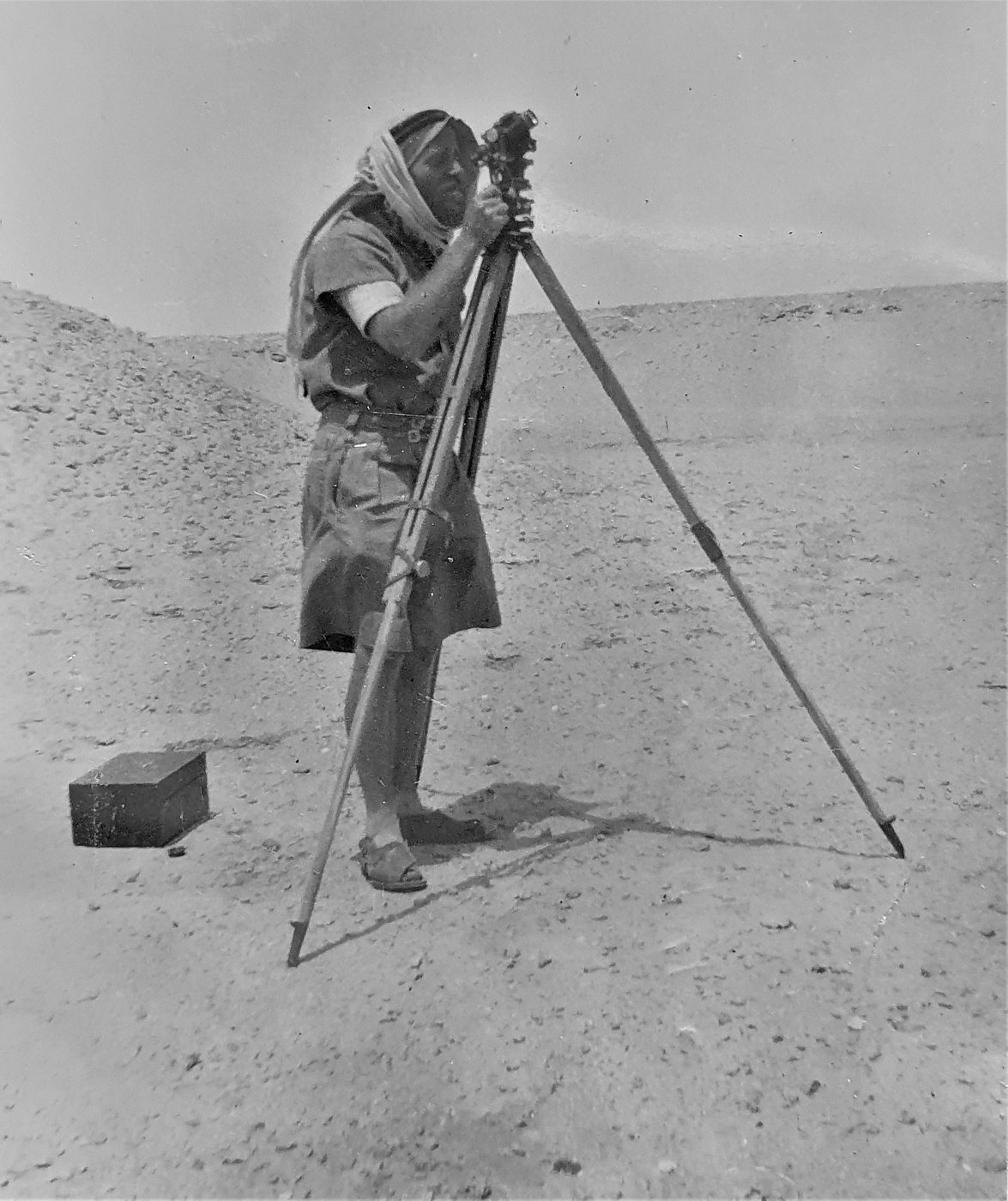
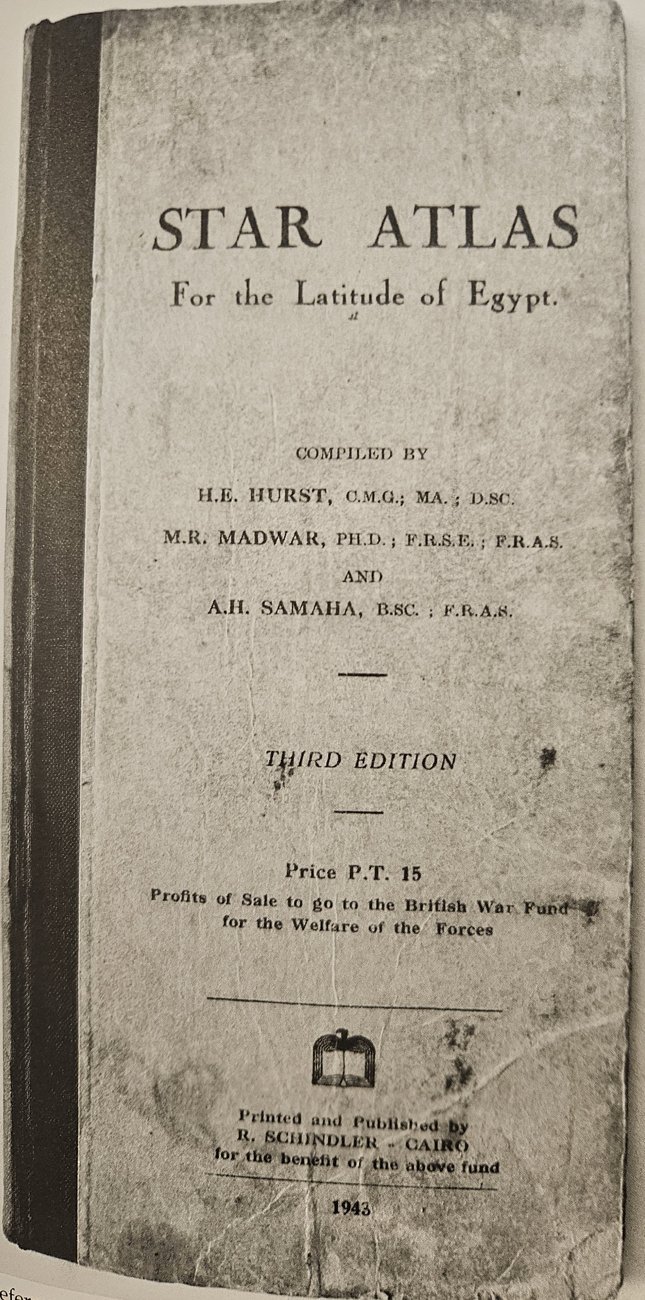
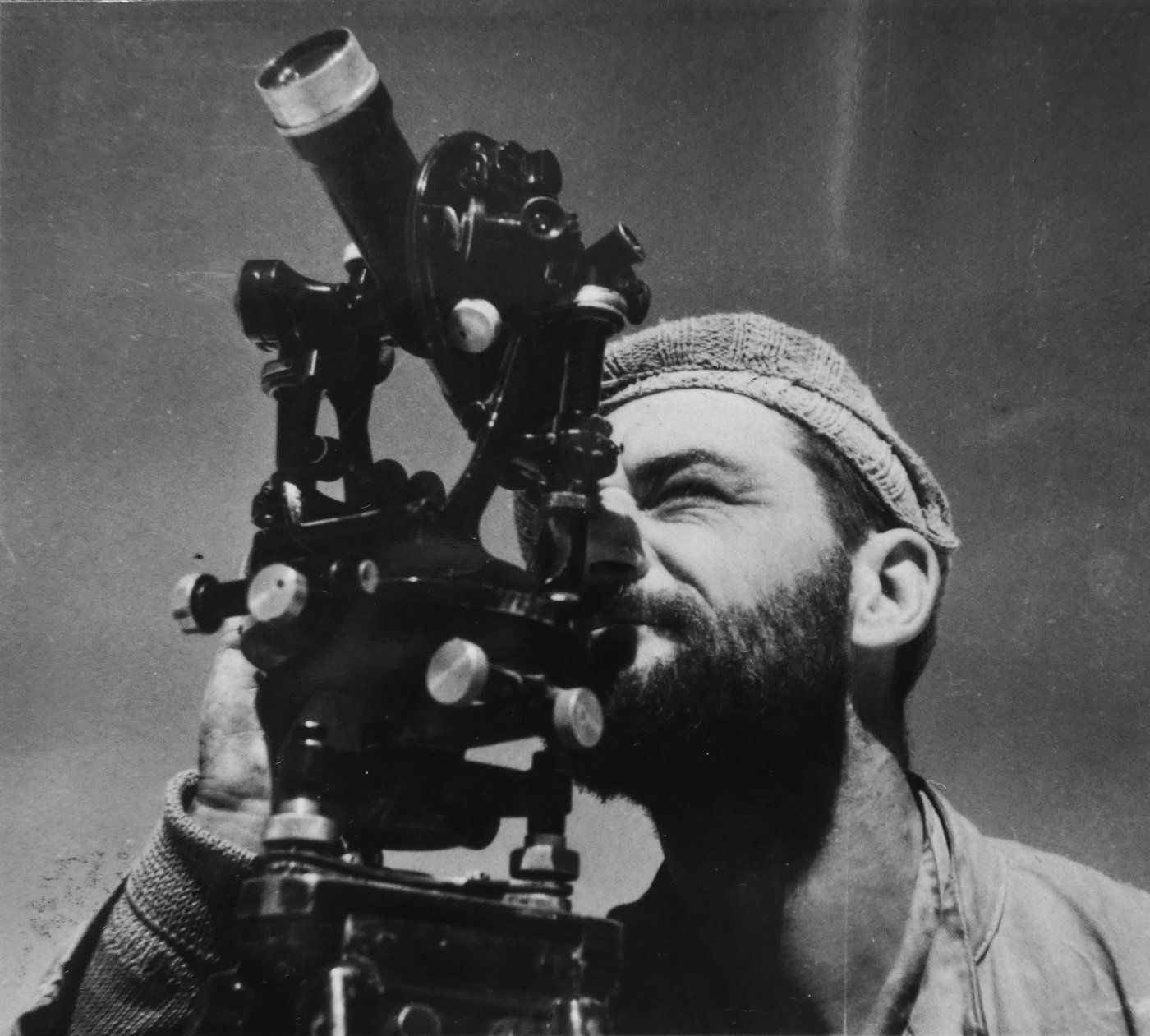
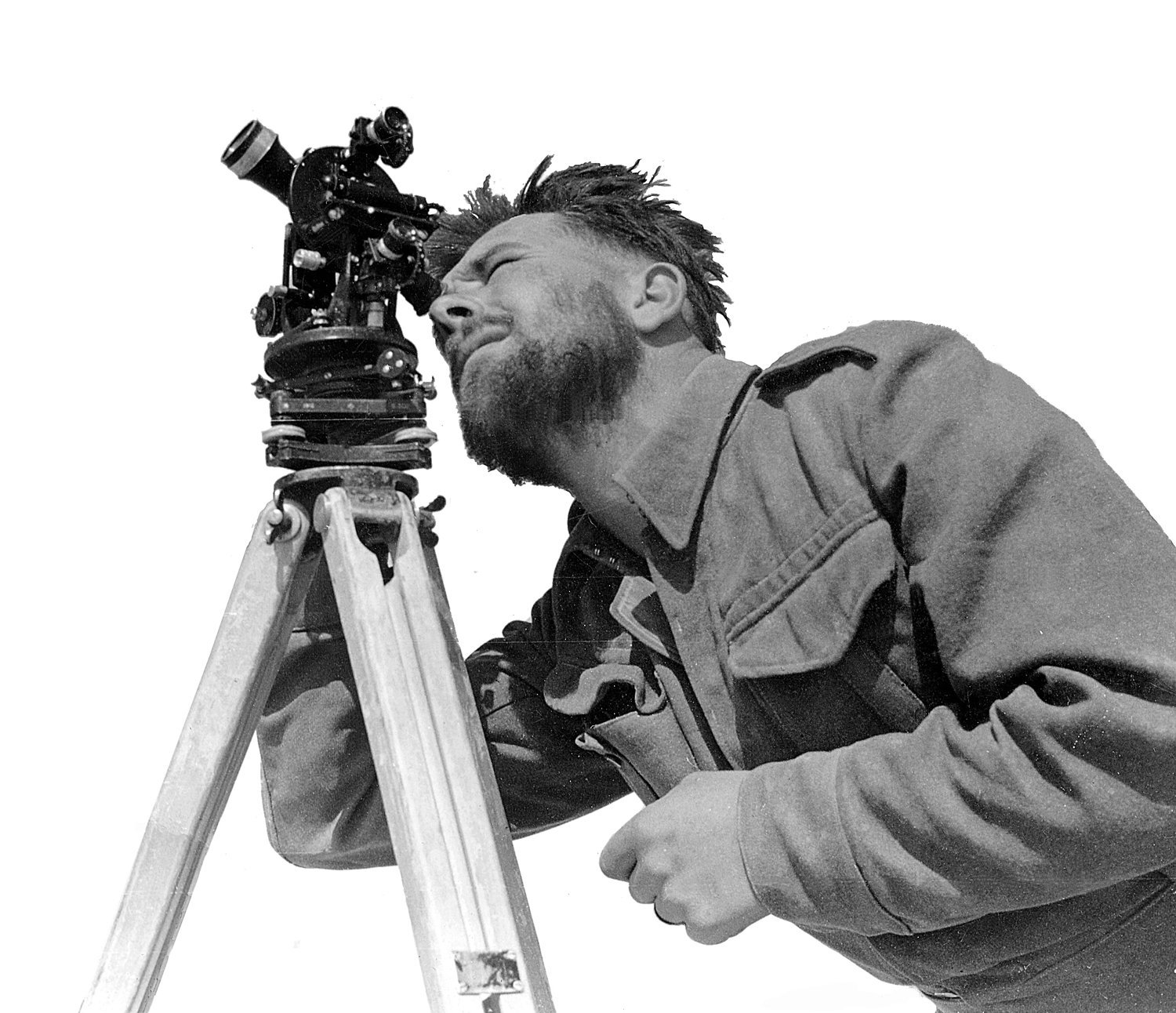
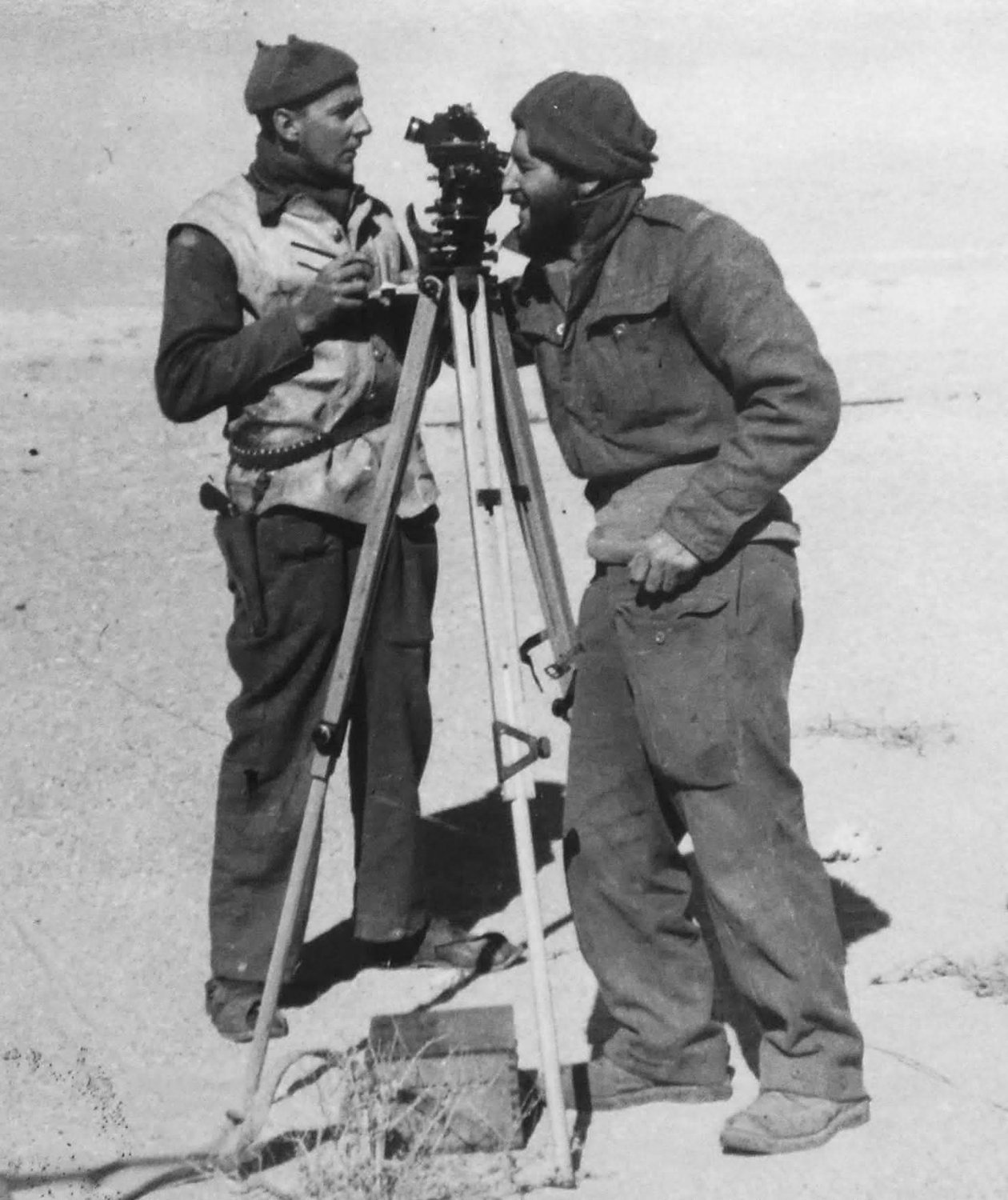
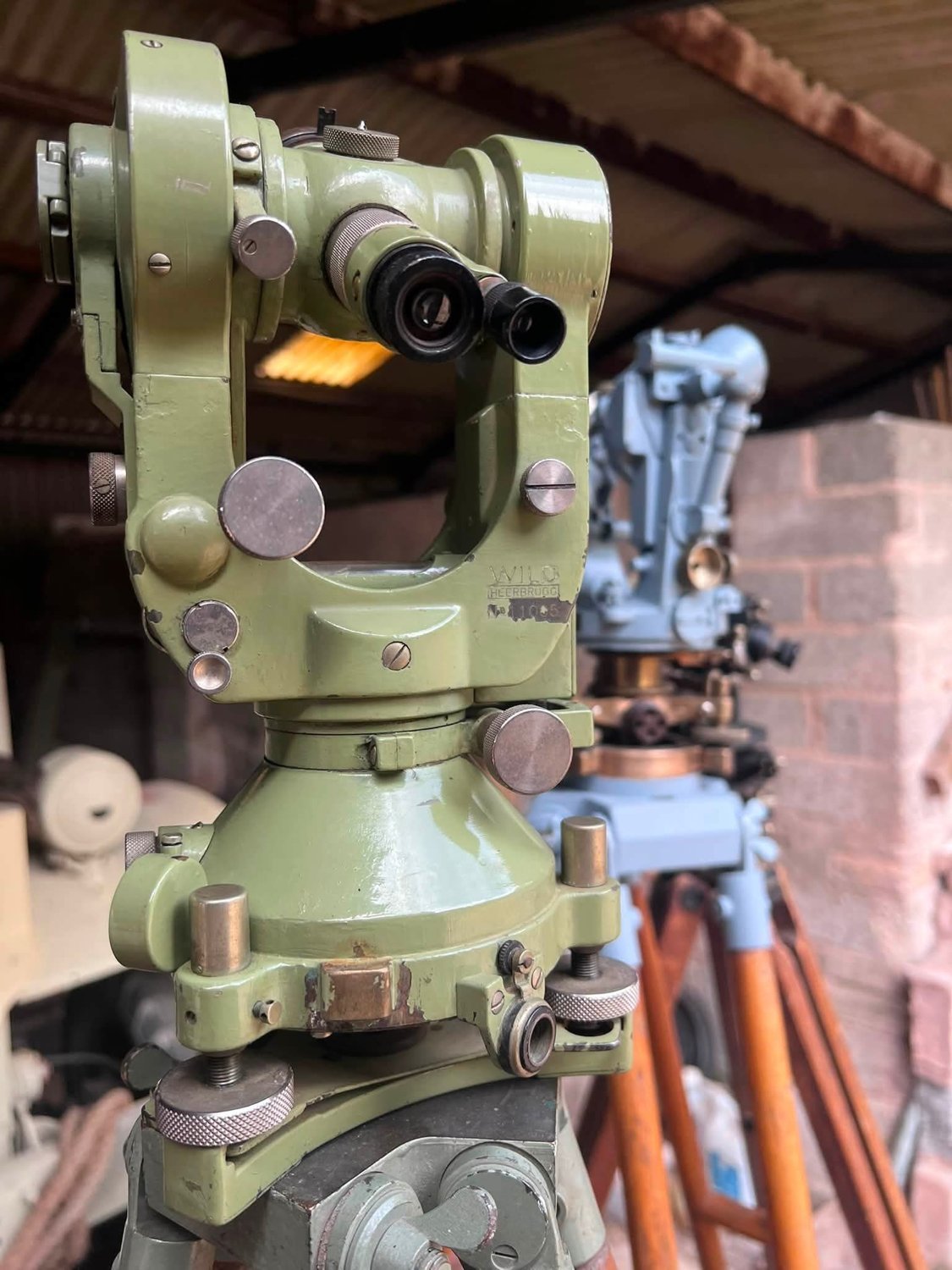
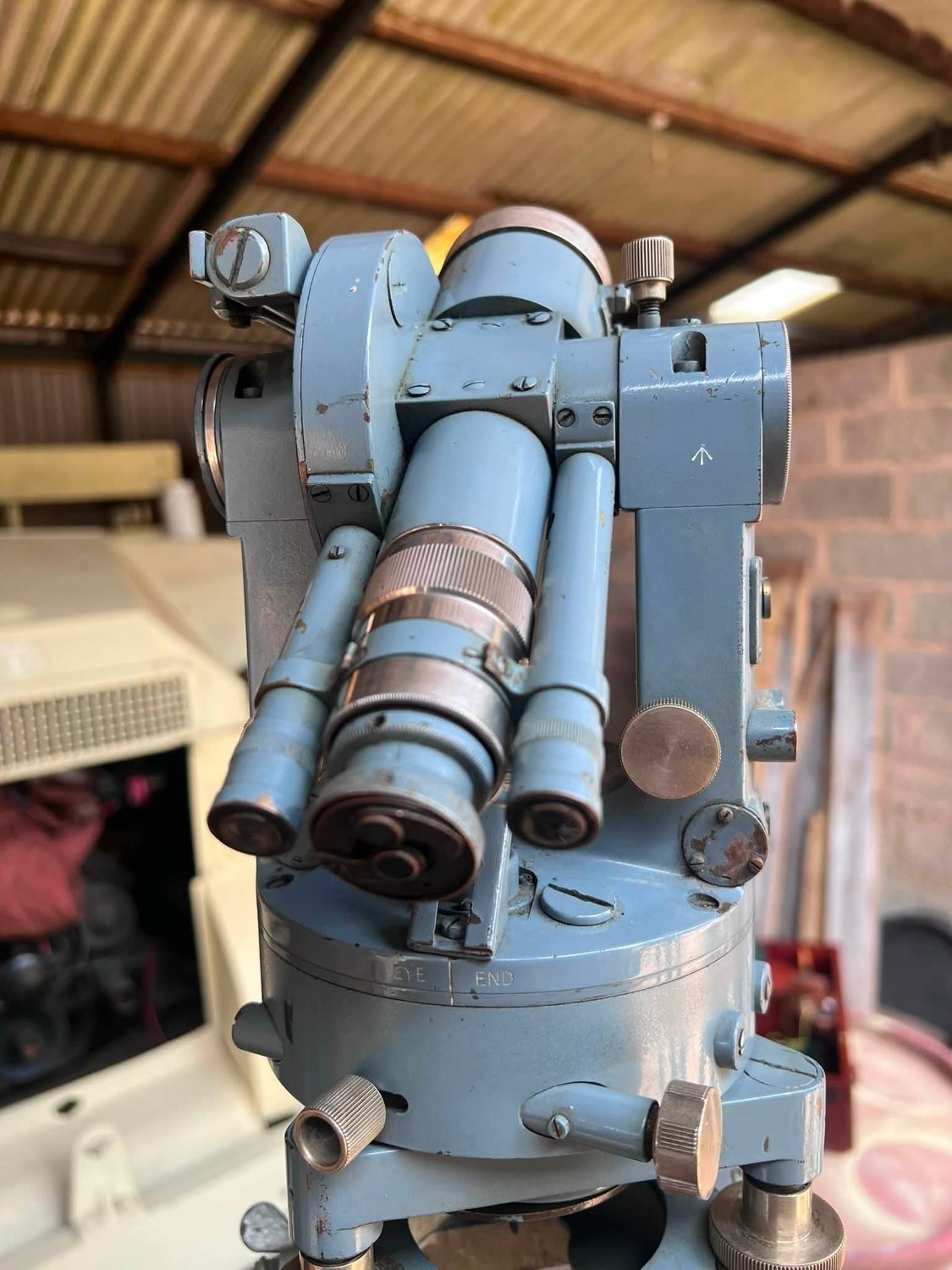
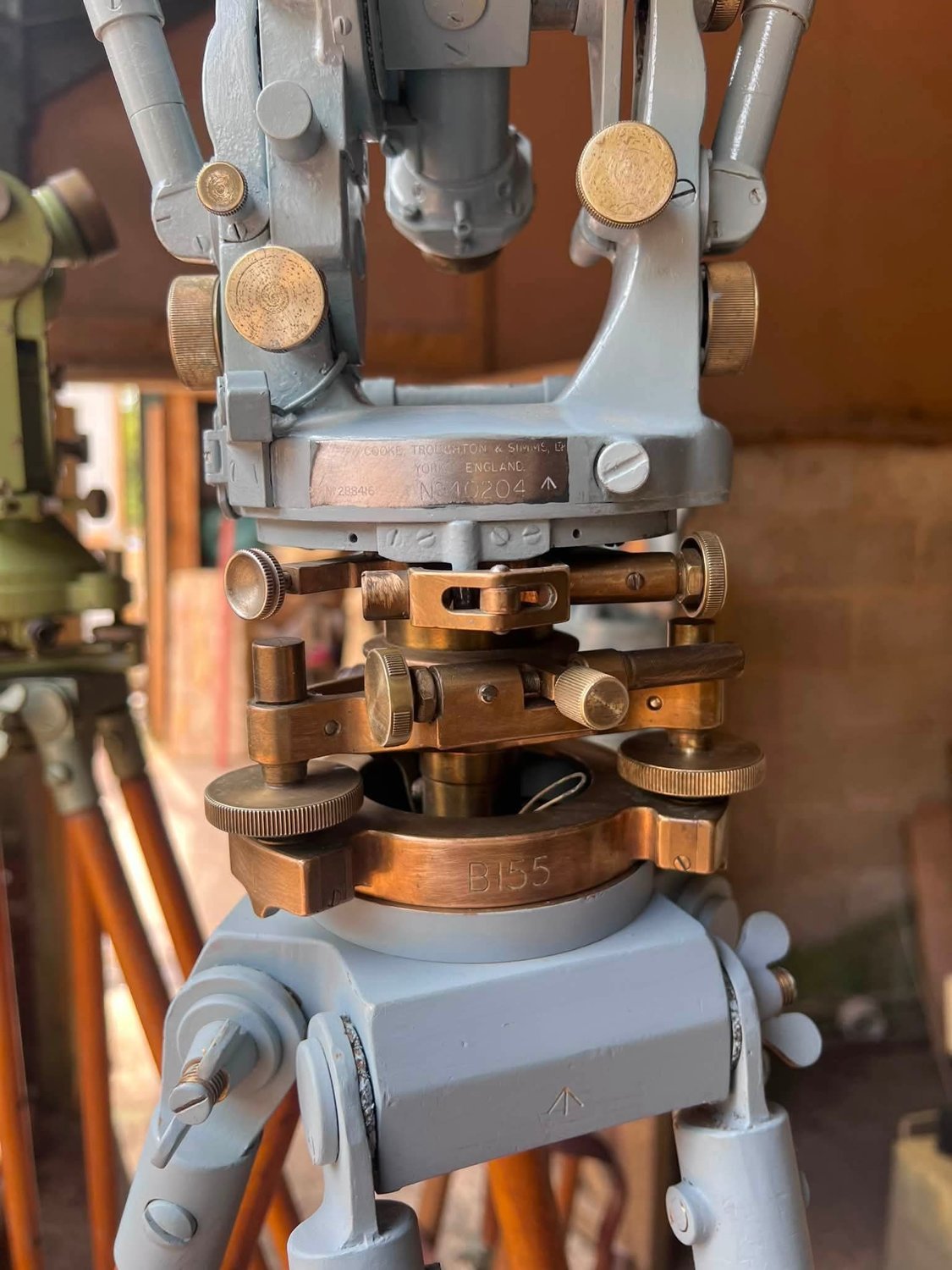
David Harrison — an administrator and contributor of the L.R.D.G. P.S. Facebook page, with a large collection of LRDG theodolites and considered an expert on the subject of navigation. His contributions to the Theodolite section of this site were very helpful. Lives in the UK.
Ian Chard — son of Harry Chard, who served with Y Patrol in the desert, and the unofficial Y Patrol historian. Lives in the UK. A key L.R.D.G. P.S. contributor who has done a great deal of work documenting the men of the LRDG.
The roll is never finished. If you can add information, or have a correction or question about a man, a photograph, or a
family memory, please post in the
LRDG Preservation Society’s Facebook Group. Every detail helps keep
their service record updated.
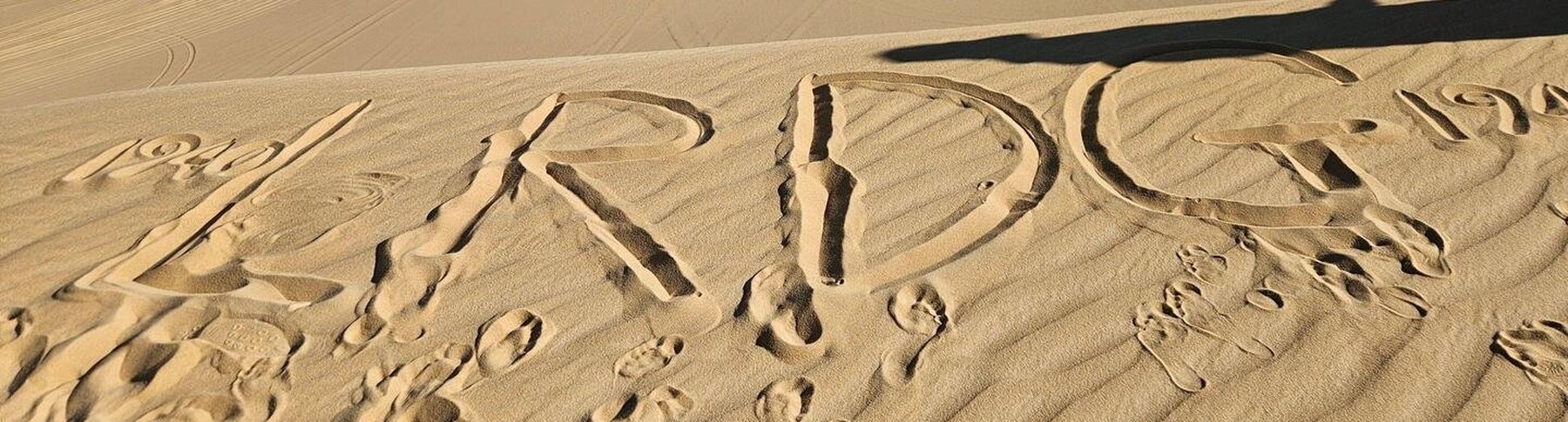
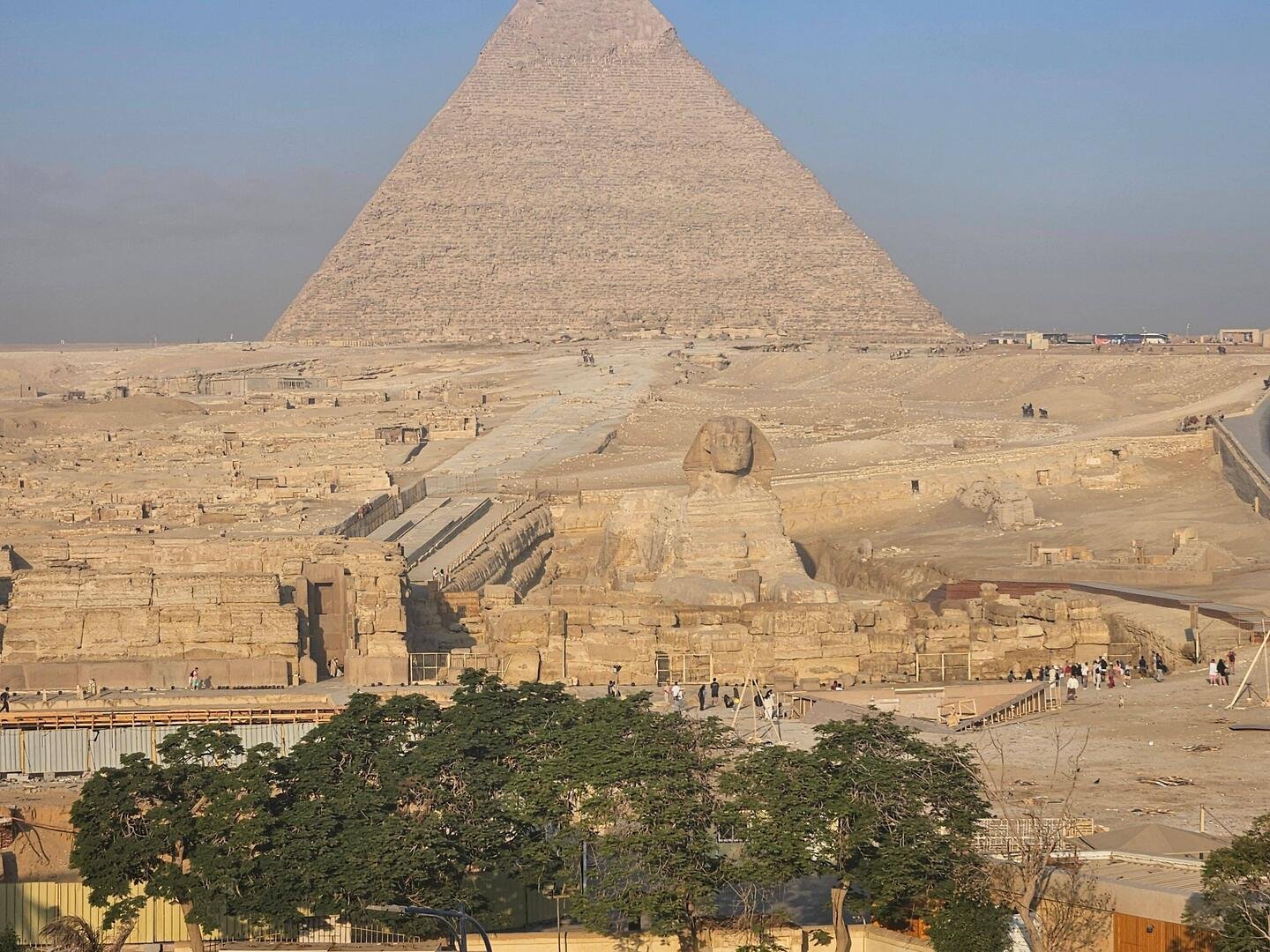
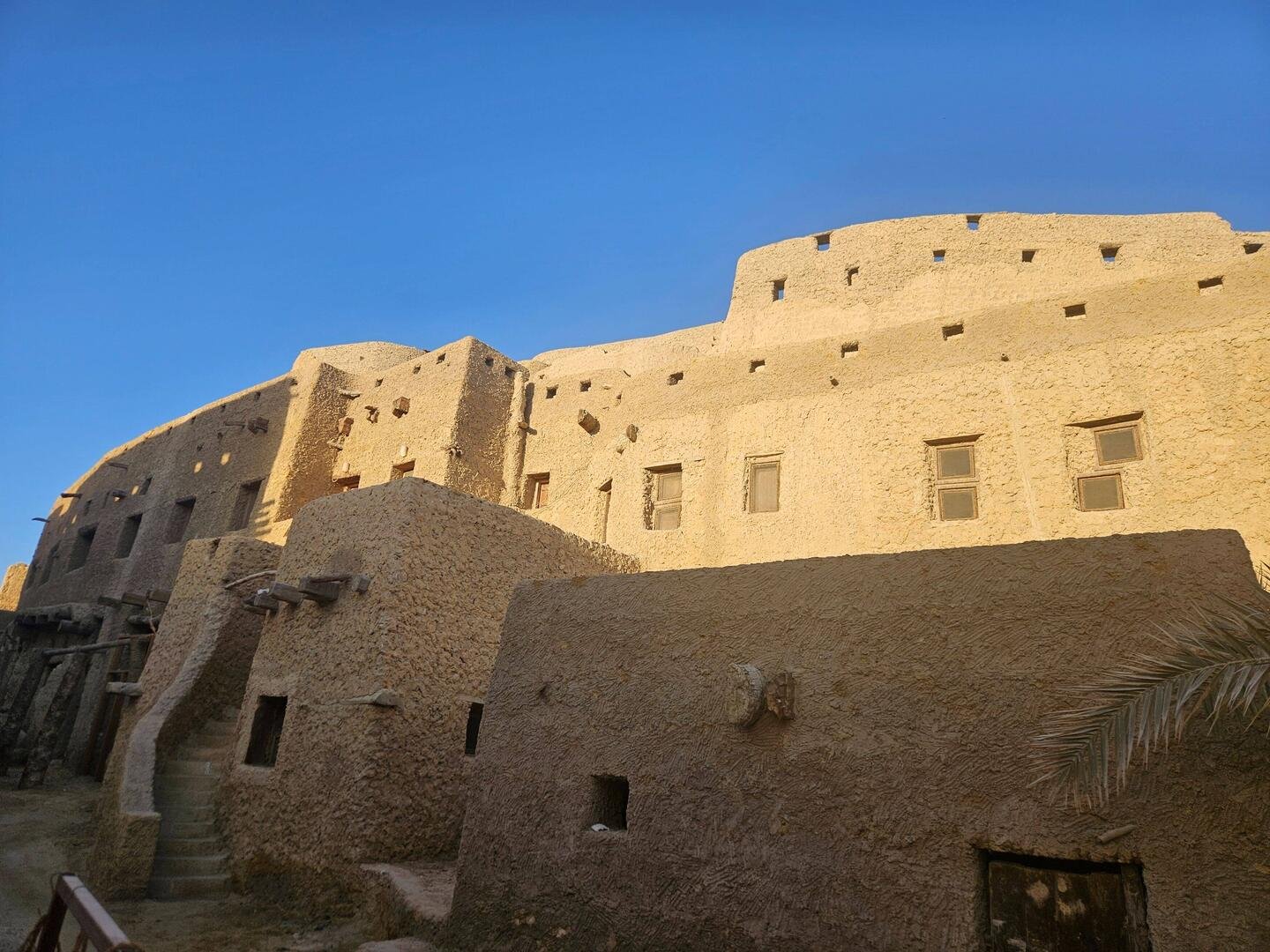
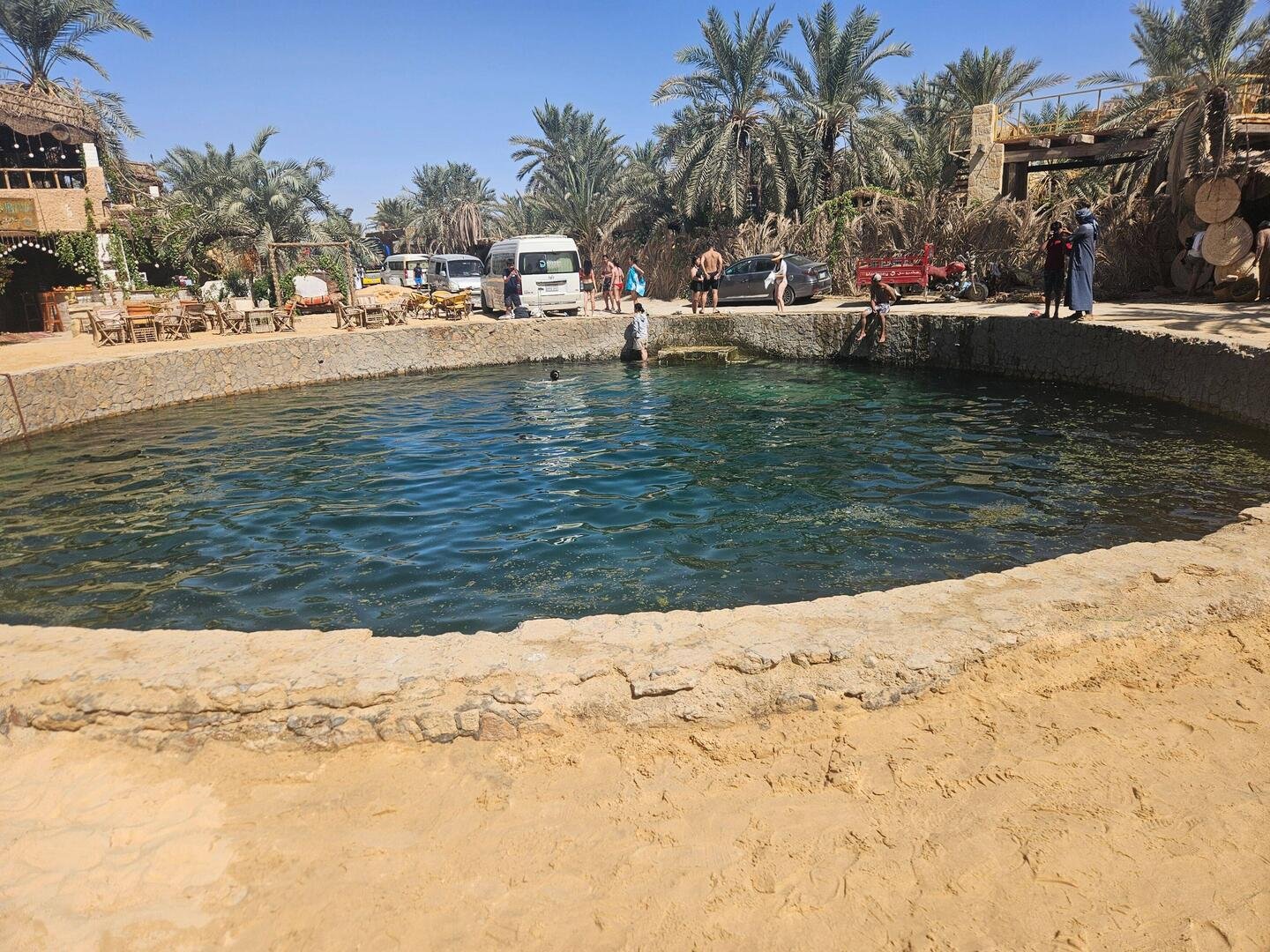
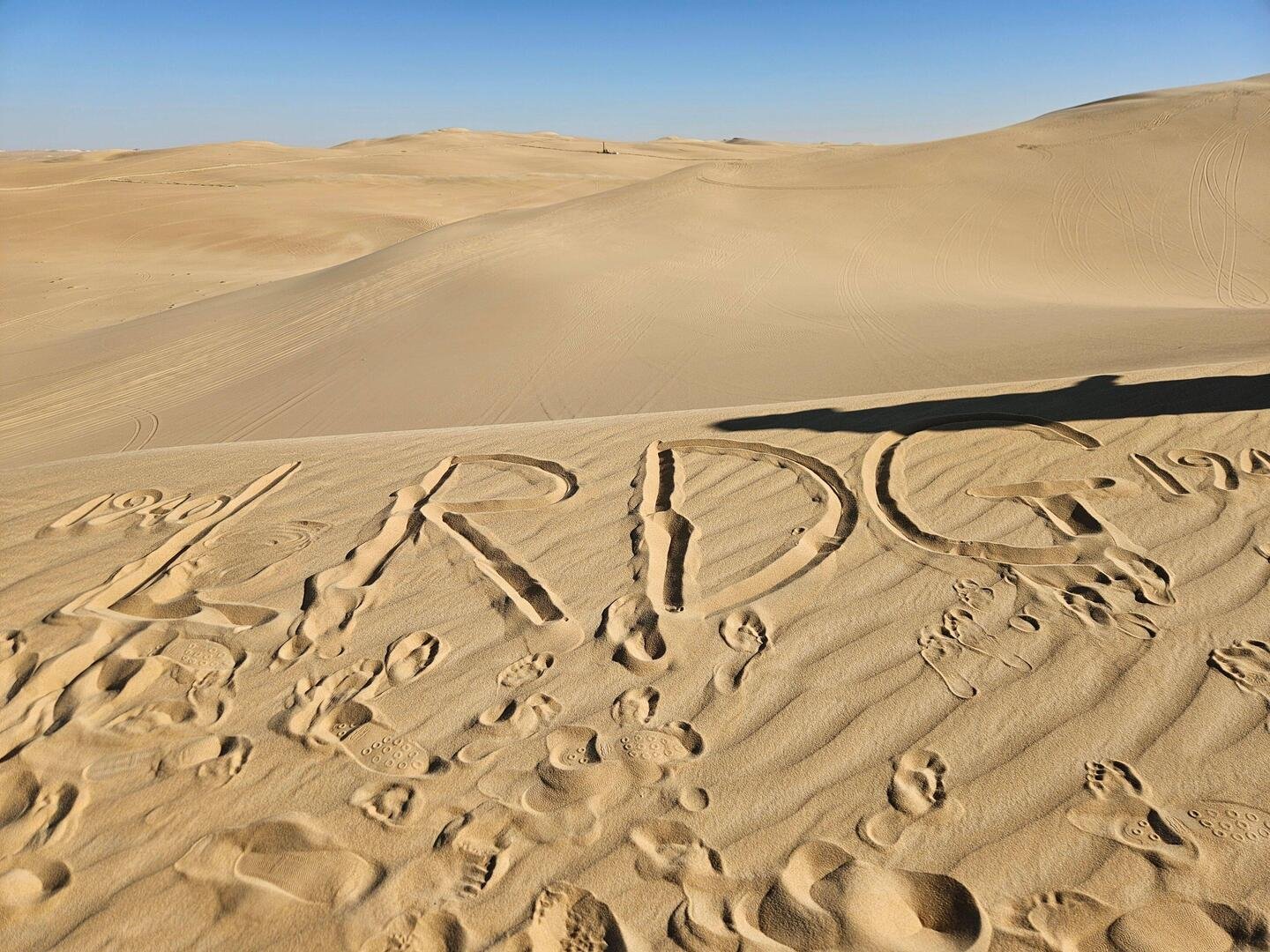
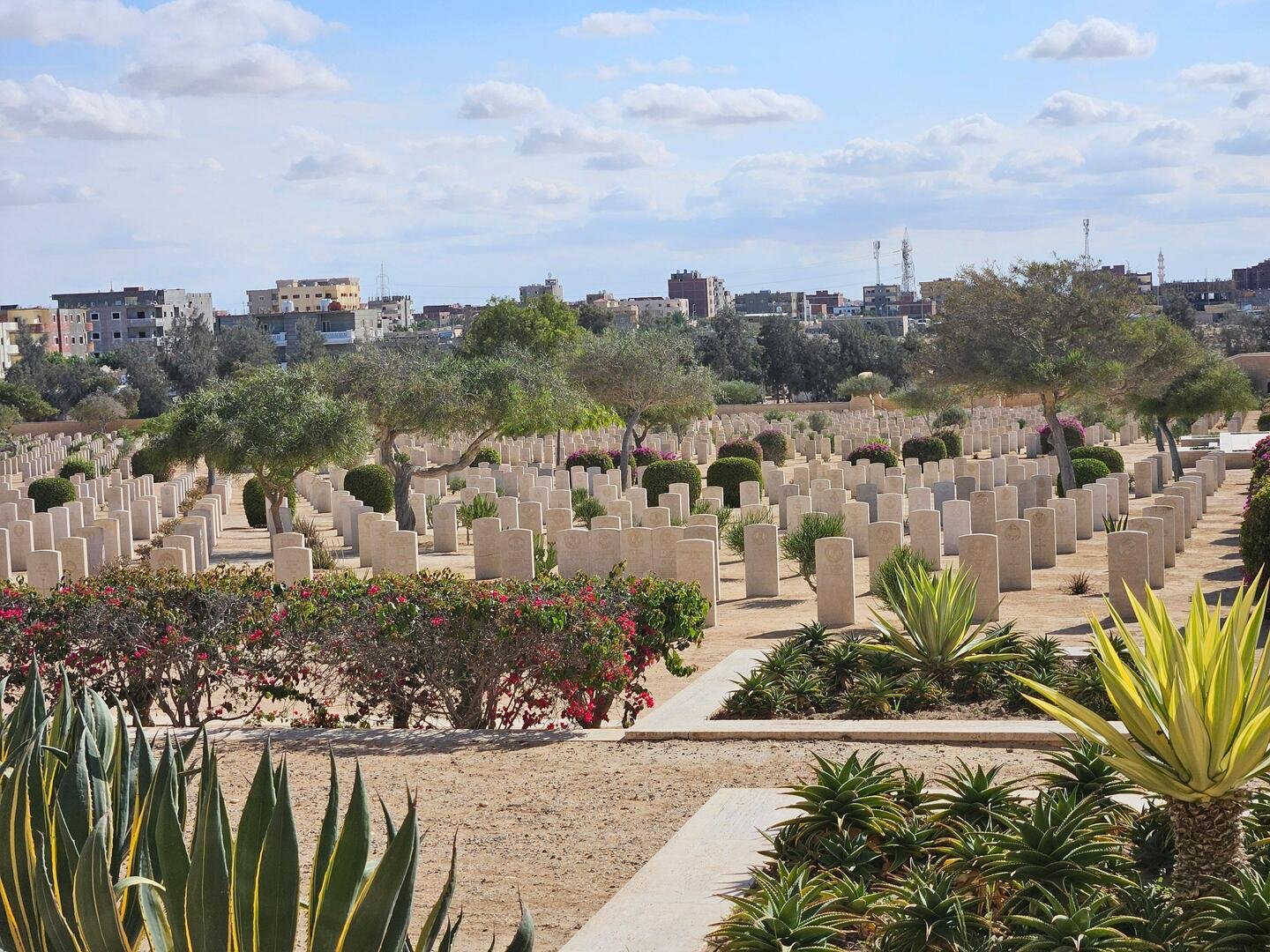
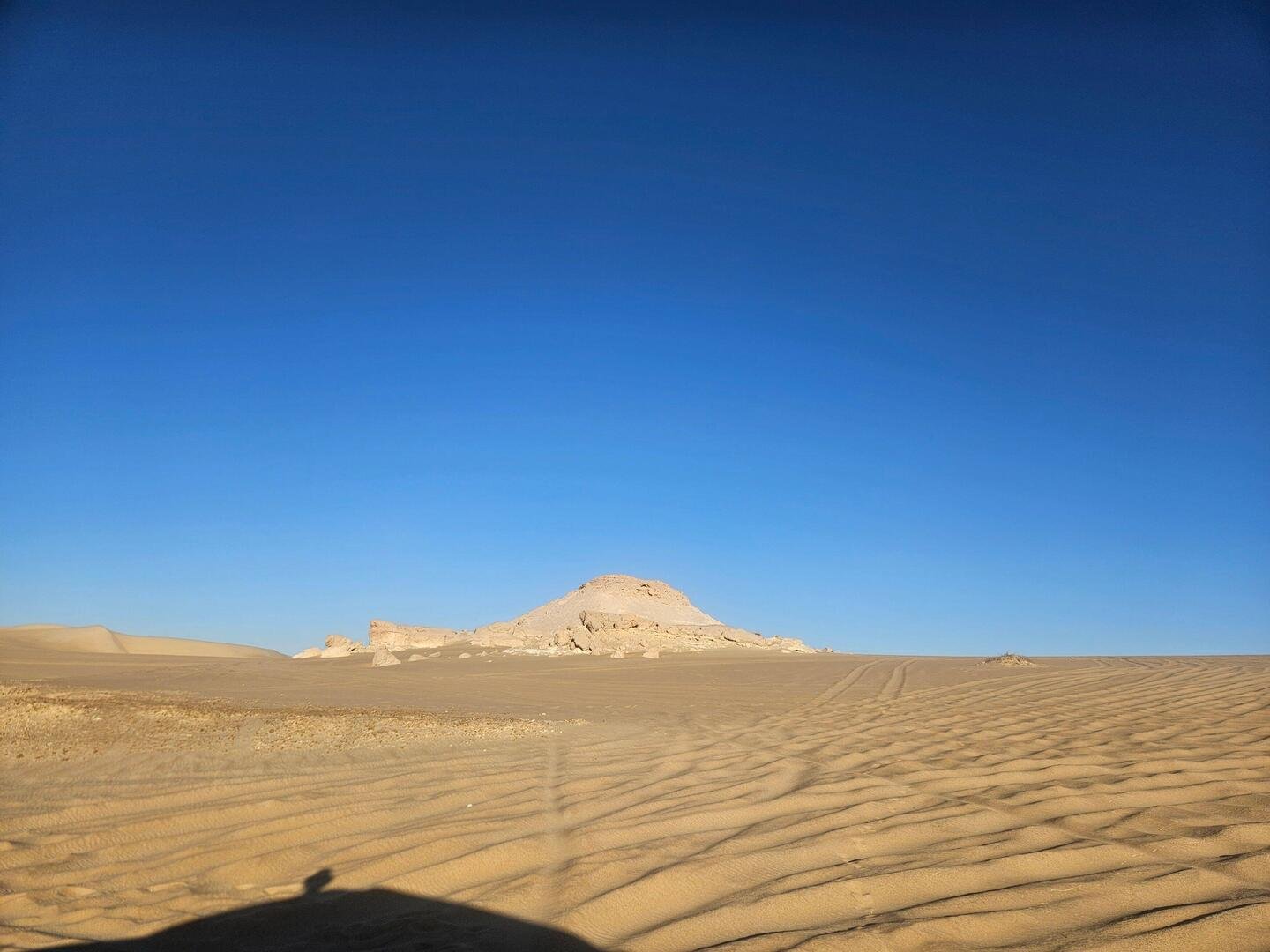
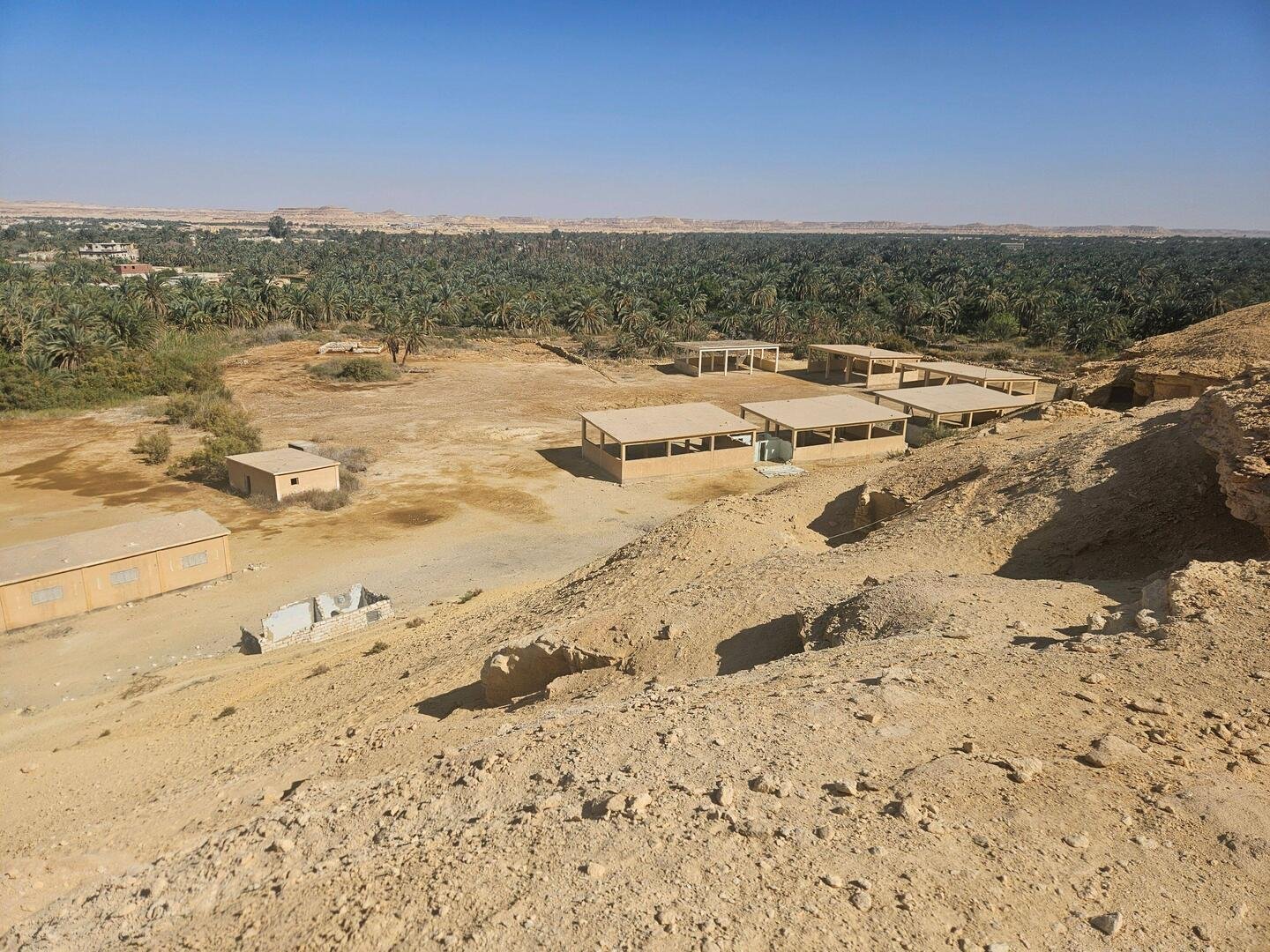
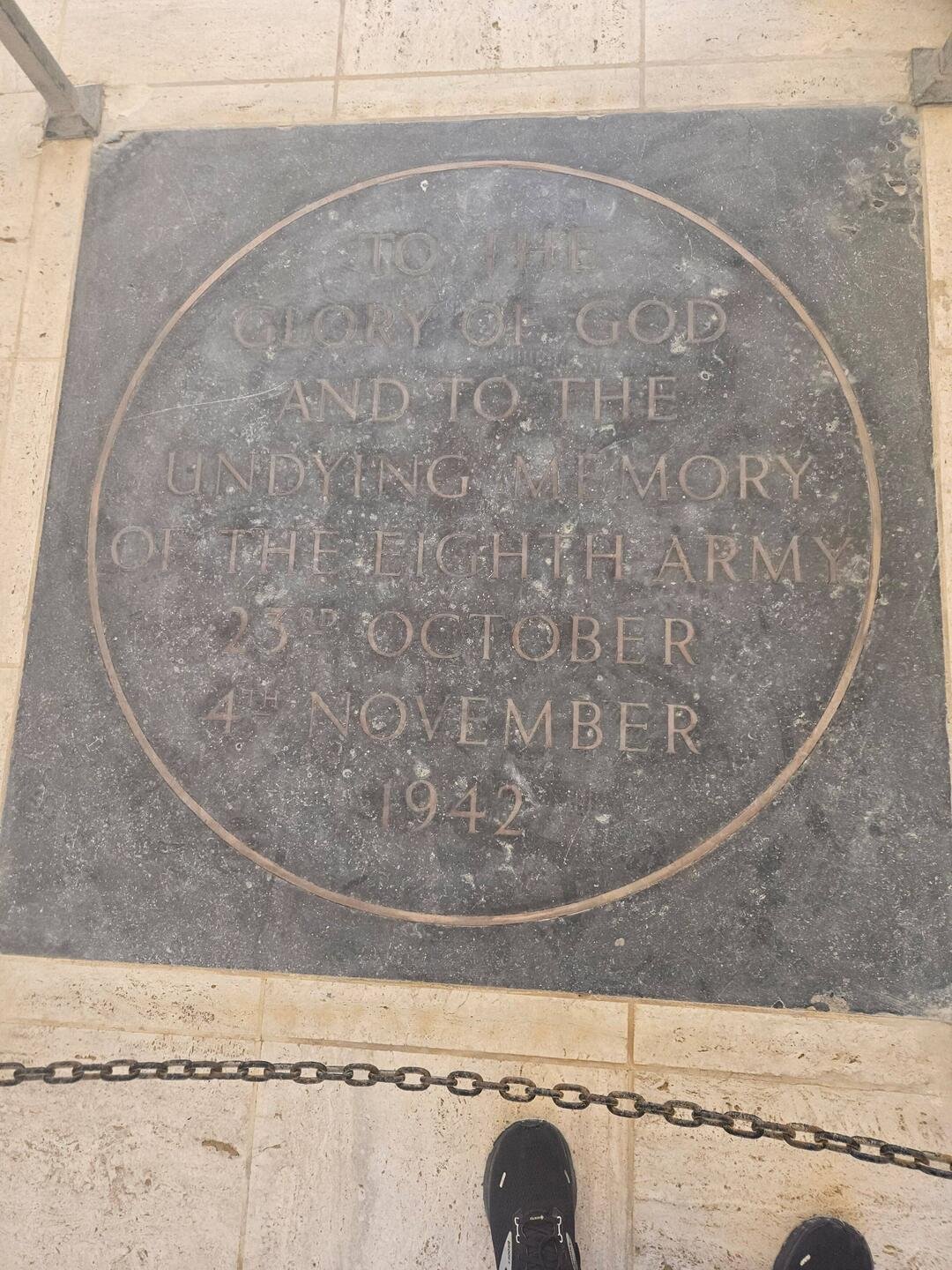
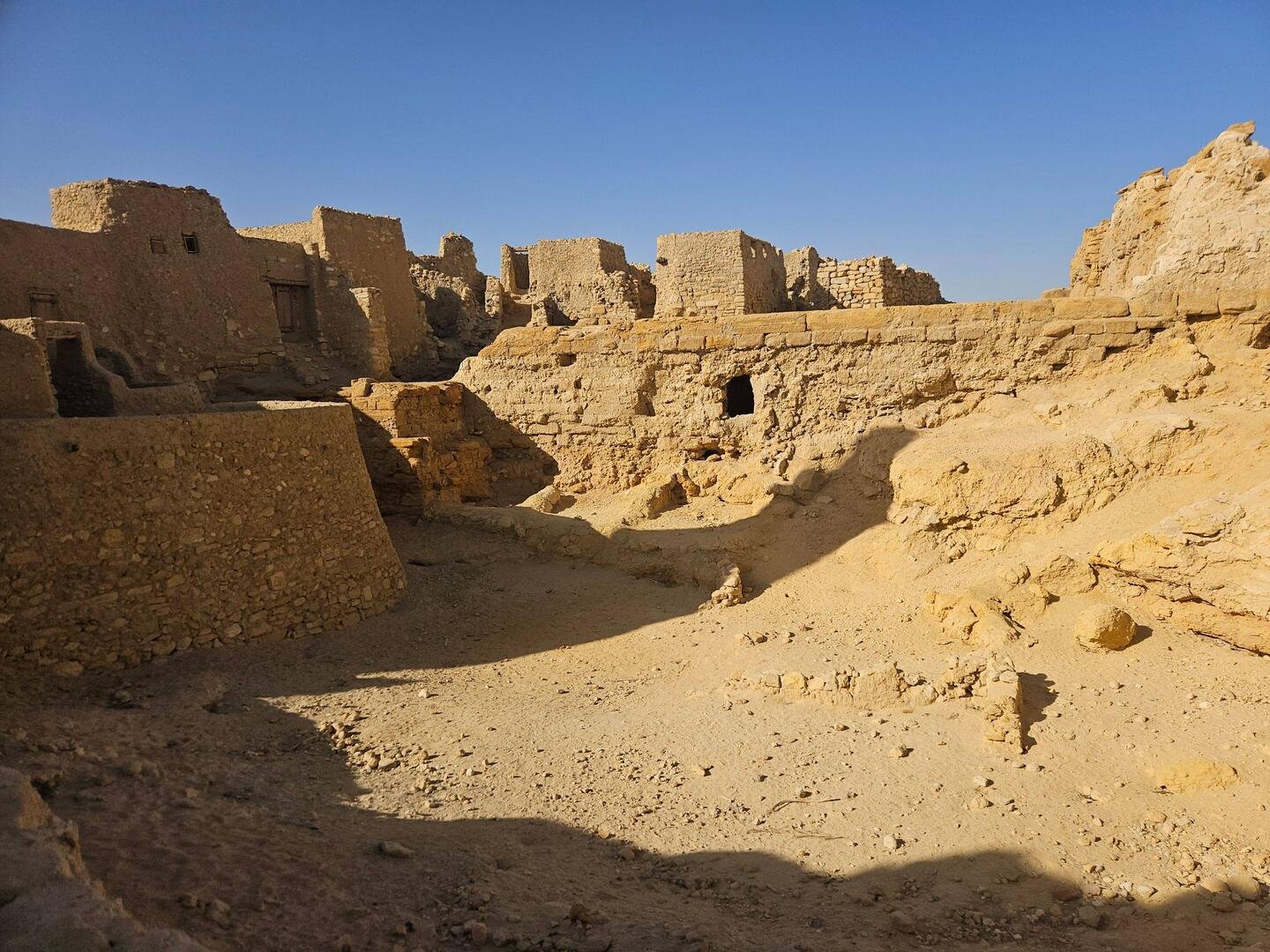
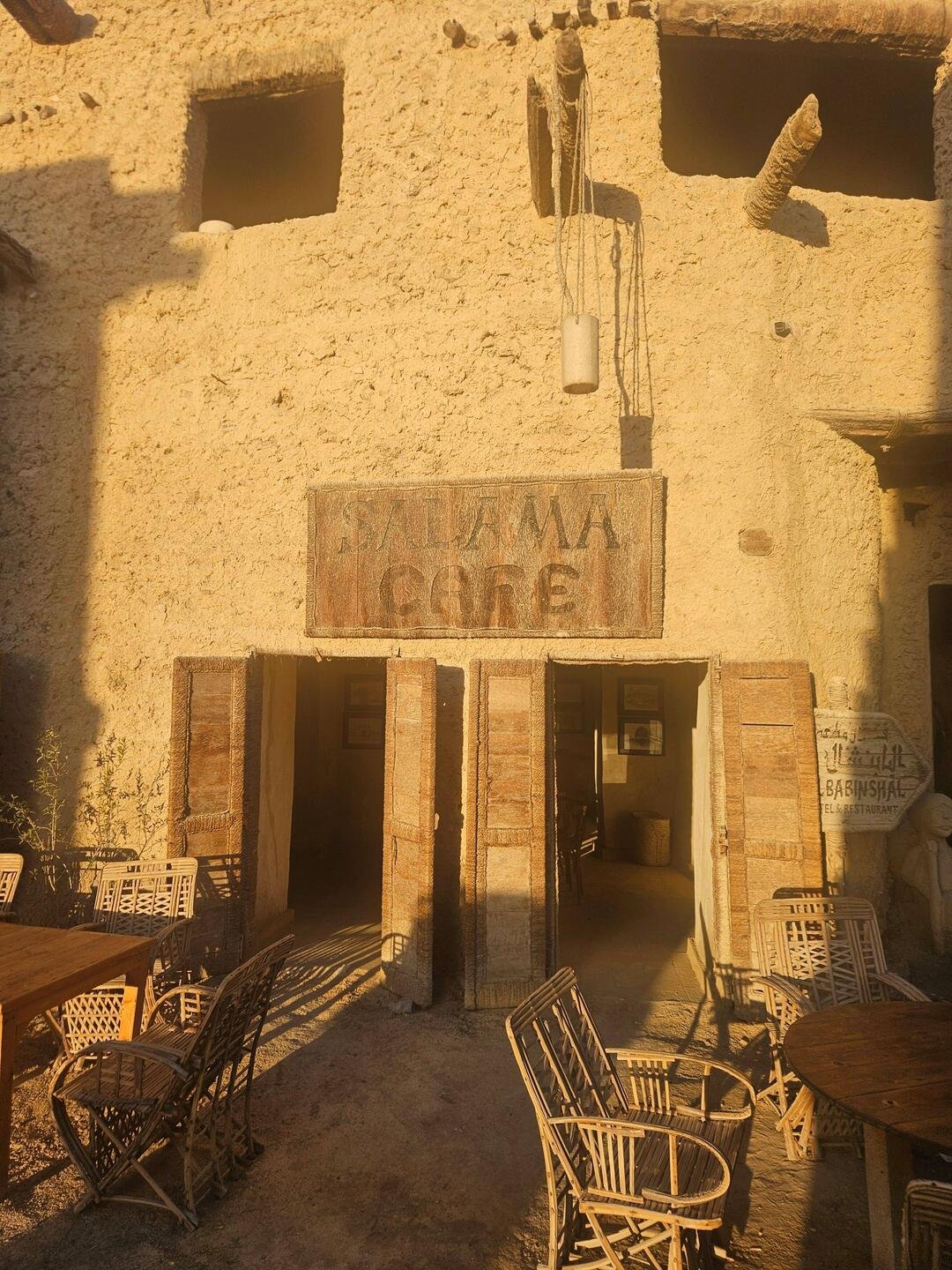
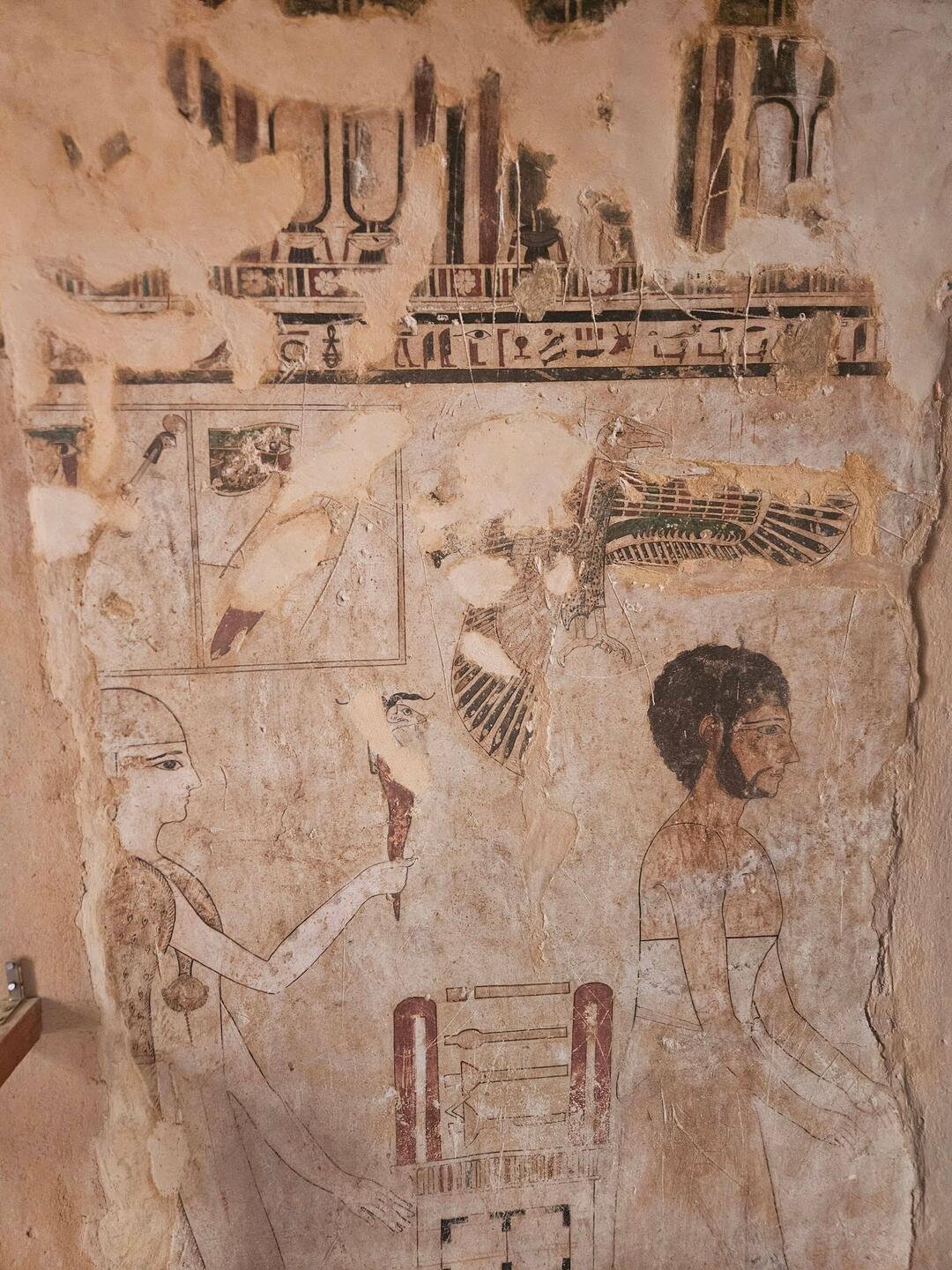
The pictures on each page were taken by me in October 2025. The trip included Cairo, Maadi, El Alamein, Alexandria, Mersa Matruh, Siwa and other historical WWII and LRDG sites.
Lest we forget. Roll compiled by Tony Moore.
Nominal Roll
About this roll. This roll records 1,455 known members of the
Long Range Desert Group, 1940–1945. Search by last name or army (service)
number, or select a patrol, to find a member. A member whose card has a
gold top border has a gallantry award or campaign medals recorded —
shown in the “Honours and Medals” section of his card. Where an archival record exists, the
“View archive record” button links to their entry on the Auckland War
Memorial Museum Online Cenotaph or the Commonwealth War Graves Commission. Compiled
from unit rolls and archival research.
Completeness. In August 2026 the Auckland War Memorial
Museum’s Online Cenotaph was searched for every record labelled with the Long Range Desert
Group — 242 in all. Every one of them is a man already on this roll. No New Zealander whom
the Museum records as serving with the Group is missing from it.
Finding a man.Start typing the
first few letters of the man’s last name and the screen will populate all with
those letters. You can also search by Army #, or choose a patrol, rank or honour
from the drop-down lists. The rank list groups the men as Officer, NCO and Other
Rank, so a sergeant or a corporal is found under NCO.
Search the roll
0 of 0 members shown
Search the Roll
Enter a last name or army number, or choose a
patrol, to find members of the Long Range Desert Group.
No members match your search
Try a different spelling, a shorter number, or clear the search.
Not By Strength But By Guile
Media
Books, magazines, newspapers and film about the Long Range Desert Group and the desert war. Choose a subject below.
Books and references for the Long Range Desert Group and related desert
operations. Brendan O’Carroll’s LRDG series is listed first, followed by Kuno Gross;
all other authors follow alphabetically by surname. Where a title is currently sold on Amazon a link is
provided; other titles can be found through eBay, AbeBooks and specialist booksellers.
If you know of a title that should be listed here, please
email the roll keeper. Please note I do not earn money from
Amazon purchases through the links provided on this site.
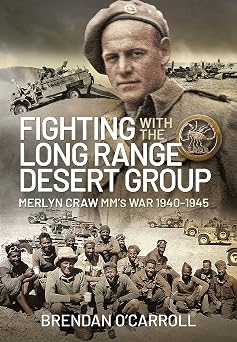
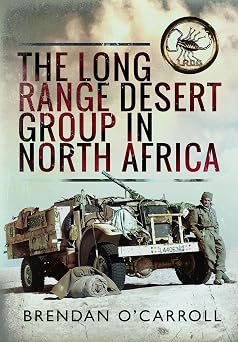
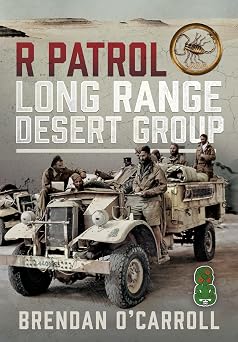
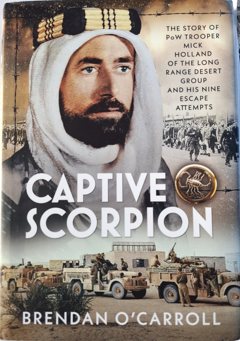
Brendan O’Carroll
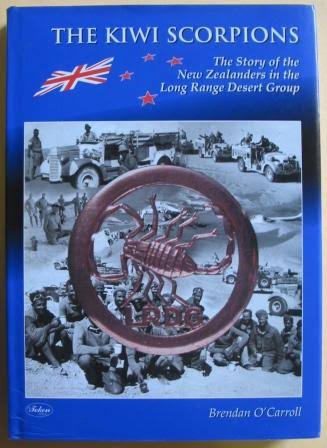
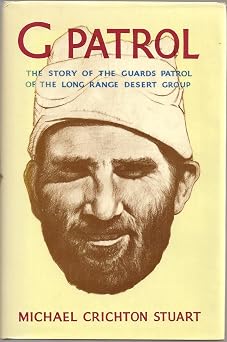
The Kiwi Scorpions: The Story of the New Zealanders in the LRDG
First published in 1958, and with an introduction by Bernard Fergusson DSO, OBE, British Army officer and military historian the author acknowledges that but for Alistair Timpson MC on whose account half the book is based, the book might never have been written. And of the other half, he draws heavily on the accounts of Hon. Bernard Bruce MC (last two chapters), J. Dennis (Barce raid Ch 13.) and Martin Gibbs (2IC G patrol – Ch 5 and 6). This in no way detracts from the content as when it was written only David Lloyd Owen had published his adventures and so this was perhaps the most detailed look at life in an LRDG patrol at that time. Since there have been many more accounts as we know, and Timpson’s meticulous account was published in full by his son after his death in 2000 and will be reviewed later.
The first two chapters quickly takes us first to the cultural eye opener of a Guards officer coming to terms with the already experienced New Zealand LRDG members. But the author was savvy enough to recognise these immense differences in background while understanding their shared aims – and a working relationship that was to be built on trust, not background or privilege. G Patrol had been raised exclusively from the brave but ultra-traditional Guards regiments of the UK as many of the original New Zealanders in the LRDG were called back to their original regiments. There was now a mix of Guards, New Zealanders, Rhodesians and Yeomanry – an unusual cocktail of arms but one that was ultimately to prove formidable. Then as the patrol left on the last day of 1940 with Claytons T Patrol of experienced New Zealanders and the story goes into some detail of the trials and tribulations of desert travel and operations.
In Chapter three they meet the French soldiers of Col d’Ornano before in the second chapter going into detail of their role in the battle of Murzuk and their foray into Vichy territory and the Tibesti Hills. Throughout there is a detailed account of the lands they travelled, the flora and fauna and the trials of operating so far from any base or support. Chapter four focuses on their stay at Kufra and again, there is a great deal of detail which gives a real authenticity and feel for the life of the LRDG. The author relates the lost of Clayton and his need to take command of both T and G patrol, and a 1200 mile epic return to Cairo.
Chapters five to nine will give any LRDG enthusiast plenty to digest as the winter operations of 1941-2 are explained in detail and the reader is introduced to the famous Road Watches that began in the Spring of 1942. There is good details on the challenges of these watches, he first forays with the SAS are of course, mentioned. As with the rest of the story so far, the author has the gift of being able to write in an easy to understand and visualise style of description rather than just a list of things they did and places they went.
Crichton-Stuart leaves G Patrol in the summer of 1942 so his narrative is taken from Timpson, Bruce and Dennis but regardless of this the writing is clear and interesting with much detail. On choice of weapons ‘G patrol …..individualists might nurse the odd Spandau, Bren or Breda’ and on the pink, yellow and green camouflage scheme ‘Patrol Commanders who had prescribed it admitted it was a ‘little flashy’.. while the first driver to take over the new painted truck said he would not dare to be seen in Cairo in such a thing!’. Chapters ten and eleven are again focused on the road watches and the various other tasks and raids, some with the SAS some not and again, there is plenty of detail to delight the reader away from the normal drudgery of names, places, and dates.
Chapter twelve sees the LRDG patrols now being guide escorts and ‘incidental nuisances’ with the SAS and chapter thirteen goes into great detail about the Barce raid. The author references the fact that the very successes of the LRDG and SAS now meant they vied with one another for disruptive suggestions on what they might do next. So two Rhodesian patrols went to Benghazi with Stirling, two patrols went with the Sudan Defence Force to capture Jalo, one went with John Haselden to Tobruk and two went on their own to raid Derna.
Chapter fourteen sees G Patrol back on Road Watch and another long and interesting commentary on these iconic tasks before the final chapter documents the road to Tripoli and a different type of role, terrain and fighting than in the desert. A foretaste of things to come… As the book comes to a close G Patrol are on the border of Libya and Tunisia at Ghadames where at a hotel was ‘a Visitors book, beginning with the signature of the Crown prince of Italy and ending when they left with all the signatures of G Patrol’. Who can imagine what that would that be worth today???
And so having covered 3,500 miles in thirty seven days G patrols last adventure came to a close. As the call for Guardsmen to make up the crippling losses of the Guards battalions after the frontal assault on Romels 90th division came the members of the patrol answered and only a few were left in the ranks of the LRDG. While the Guards were represented in the LRDG in all of its future operations, G Patrol was finally disbanded as a unit after two years and there months service.
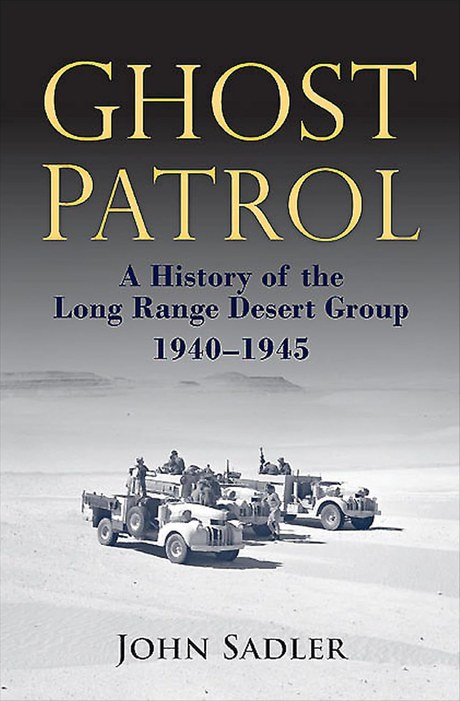
G patrol was the first book since Lloyd Owens Long Range desert Group that detailed the operations of the LRDG. Whereas Lloyd Owen had presented a somewhat broad brush approach, clearly due to the limit of space, the censors pen and his own matter of fact way of writing, this book for the first time brought to life the day to day routine of being in a patrol and the variety of tasks they were asked to undertake. It was perhaps the first of what would become increasingly a more detailed insight into the life of an LRDG soldier.
The fact that much was taken from his brothers in arms no way detracts from the book and certainly brought a perspective that at the time was new and to this day stands up as an excellent account of a patrol in the LRDG. In that year of publication ‘The Phantom Major’ would also be released, further building the reputation of the Group. I forgot what an interesting read it was and what effect it had all those years ago when I first turned the pages and would urge anyone who has not got it in their LRDG collection do so. They will not regret it.
Contributor review by Duncan B., supplied through Tony Moore.
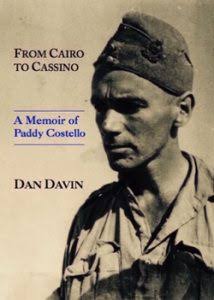
From Cairo to Cassino: A Memoir of Paddy Costello
Davin, Dan Small New Zealand print run — available secondhand / at auction only
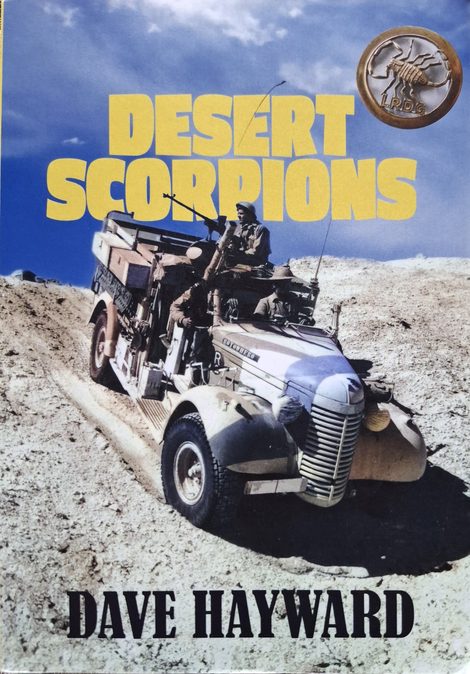
Desert Scorpions (a novel of the Second World War)
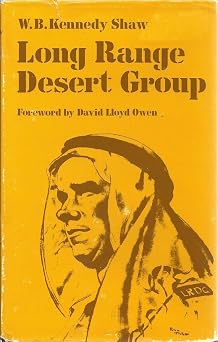
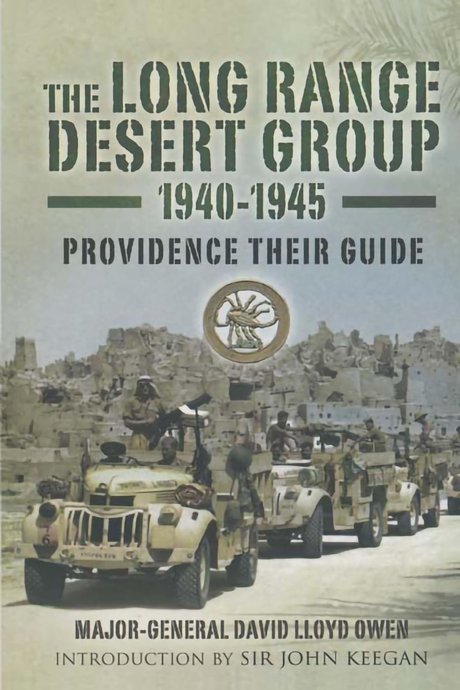
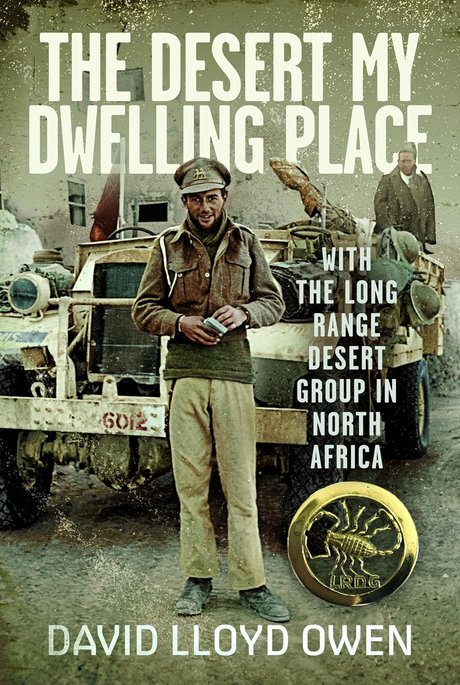
When in 1980 David Lloyd Owen published this book it provided a critical element to the written history of the LRDG as he ultimately became at the age of 26 in 1943 its commander until the units disbandment in 1945. His post war military career saw him reach the lofty heights of Major General and also as chairman of the LRDG Association. And the fact that it was written some 40 years after the events gave Lloyd Owen the luxury of a perspective and detail that was not afforded to Kennedy Shaw in his 1945 book.
While larger maps of the area of operations are limited to inside the front and back covers they are of the Western Desert and the Adriatic, the disastrous Greek Islands campaign map is tucked away on page 132 in the book. There are many excellent photos however interspersed throughout and most now familiar with any enthusiast of the LRDG history. And the dustjacket of the 1980 edition is adorned with a painting by Brigadier George Davy and titled Rhodesians of the Long Range Desert Group on Road Watch, Libya (original in the Imperial War Museum) – a thoroughly apt and evocative cover for the cover.
While considering writing an account of the unit in the mid 1970’s it appears a chance meeting with a seventeen year old medal collector, and subsequently his father, who had also served in the desert during the war and was now in publishing, provided the impetus to press on with what became this book.
The book is split into two parts, the first on the formation and operations in the Western Desert and the second on the Dodecanese, Italian and Balkan theatres. The first chapter, unsurprisingly, set the scene by focusing on Ralph Bagnold and the story of how he Prendergast, Kennedy Shaw, Clayton and Harding-Newman created the concept and ethos of the LRDG and how Bagnold sold the idea to the highest levels of Middle East Command. The following chapter then focused on the patrol structure, as Lloyd Owen felt that without an understanding of how the LRDG organised its men compared to the orthodox military set up, the subsequent narrative would be more difficult to appreciate. This chapter is not only an excellent summary for any reader to understand the workings of the basic unit but also showed that as an officer, Lloyd Owen had an understanding of the men he commanded and their roles, motivations and attributes.
After further chapters on the iconic patrols and actions of 1940/41 he spends some time on the characters of Easonsmith and Prendergast. Without doubt he held them both in high regard and gives the reader an insight into their personalities but also had some interesting observations on the selection process needed to sift the huge amount of volunteers into a few worthy men who could cope with the rigours of long periods of desert life. Then he moves onto the November offensive of 1941, the introduction to and work with the SAS and of course the Road Watch. Each chapter is approached with the same generosity and modesty he displays throughout his writing along with detail enough to delight and satisfy the reader. His matter of fact summary of the Road Watch is a masterclass in humility, ‘Not only was it tedious but it was something we all hated doing…we did, however, understand its importance, which was very considerable’.
And unsurprisingly, the move from Siwa to Kufra, the raids on Beghazi, Barce and Tobruk all follow in his narrative along with mentions of the SAS operations and personalities, Popski and of course liberal doses of the personalities within the LRDG and their astonishing experiences and actions. The first half of the book finishes with the move into Tunisia which heralded the end of the classic desert background the LRDG was destined to become most associated with.
In part two the new charter for the LRDG, operating in small patrols working behind enemy lines, seems at face value to be a continuation of the desert work but now did not involve being a vehicle based unit and while jeeps were available when feasible, the LRDG were to have to learn mountaineering skills and operating on foot carrying heavy loads – something that led to a significant minority leaving the LRDG.
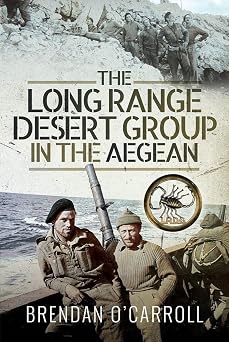
After training in Lebanon and the introduction of Parachute training, as the need to be inserted many miles from the front allowed no other option if seaborne infiltration was not possible, the expected focus on Sicily and Italy disappeared with the Italian Armistice. The rushed push into the Aegean did not bode well and the lack of information was in Lloyd Owen’s words, ‘disgraceful’. Brendan O’Carroll, in his excellent book LRDG in the Aegean, has produced the most comprehensive and detailed account of operations here, but Lloyd Owen conveyed the frustration over being deployed without reconnaissance, intelligence or the numbers that could really have made a difference.
After the disaster at Leros, the LRDG again brushed itself off before being sent to operations in Albania, Yugoslavia and the Dalmatian Islands. Here the patrols again got its ‘wheels’ and operated in Jeeps but again, much of the terrain dictated that long, torturous marches through the mountains was often required. They were again deployed on the Yugoslav coast reporting Axis shipping and air movements. Clearly as the chapters unfold, it was obvious the LRDG patrols contributed significantly to operations in the region, but as commander, his exposure to the bigger picture perhaps increased his frustrations. As he states ‘In the middle of 1944 there were a total of eighteen different parties on various tasks….stretching from the north east corner of Italy through Yugoslavia and Albania to Greece…..nor was it easy to control so many operations in such diverse types of country’.
This section of the book was particularly interesting as the Yugoslav, Albanian and Greek operations are little written about and the chapter on working with the RAF and Navy are particularly illuminating. And through all of the narrative the author displays his trademark humility and acknowledgement that the unit were still in charge of their own selection of men and that those standards ensured a constant flow of the very best soldiers the Commonwealth could provide.
Inevitably in an area of such political turmoil both the LRDG and SBS were to feel the weight of local rivalry when Yugoslavia under Tito realised their desire for power. For many months the brave Yugoslav partisans fought side by side with their counterparts in the LRDG but as communism struck almost overnight everything changed and past alliances meant nothing. The last few weeks of the war were not easy for the unit, but it is clear their spirit never flagged and they took on each new task as though it was their first.
But the inevitable happened as the war came to a close and on 21st June 1945 Lloyd Owen recollected how he assembled the unit and broke the news of their disbandment to them.
This is one of those books that many have read and put away on a shelf as newer and more comprehensive accounts and ones that shine a light on specific events fill collections. However, rereading this book served only to remind me of why I got interested in the unit all those years ago. I had read the Phantom Major, Popski’s Private Army and The Long Range Desert Group in the 1970’s but it was undoubtedly Lloyd Owen’s book that really galvanised my interest in all things desert and beyond. Perhaps it was due to the fact he commanded the unit from 1943 that so much was written by him of the operations after the desert, but that is what his book brings, a complete anthology of operations, all set skilfully against the backdrop of the politics and high-level decisions that pervaded the time. If you were only to be allowed to have one book on the LRDG in your library or to take to a desert island, this would be the one you would need to take.
In this review I shall leave the last words to value of this work to the author himself: ‘Five years and fourteen days after its formation in Cairo, the Long Range Desert Group ended its active career. I believe that its days in the desert have made some mark in military history, but few people realise that our story did not end until over two years after that campaign had been won.’
Contributor review by Duncan B., supplied through Tony Moore.
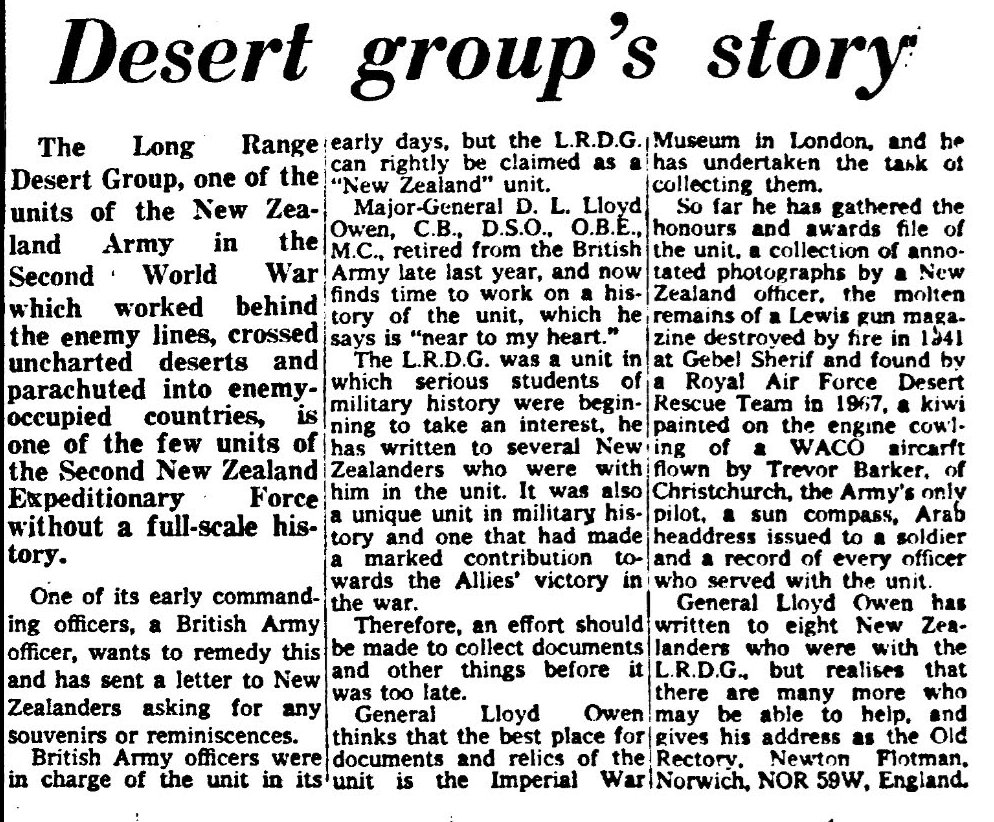
Read the 1981 newspaper reviewNewspaper review, 1981
REVIEWED IN NEW ZEALAND THE MONTH IT CAME OUT. “Desert sands to Balkan mountains” — David Gunby in the Press, 10 October 1981. The review records that Lloyd Owen had commanded the Group since the black days after the Aegean and carried out its disbandment, and that as chairman of the LRDG Association he had by then LOST CONTACT WITH MANY OF THE NEW ZEALANDERS. It also names Jake Easonsmith’s death at Leros. The cutting is on this site’s Newspapers page and on both men’s cards. See the cutting ›
The Desert My Dwelling Place: With the LRDG in North Africa
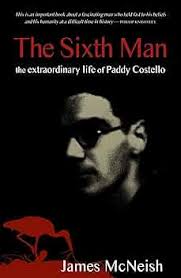
Growing up in primary school and in high school, there was always one thing I hated (make that HATED). It was Book Reports, so here I set; having just finished “The Sixth Man” The extraordinary life of Paddy Costello, by James McNeish.
I bought this book; as it came to my attention after reading the short (94 page) booklet by his friend Dan Davin. My reasoning was, that since he (Paddy) had served with the LRDG, even though it was for a short time, I was curious to see what he did while serving with them. And this 400 page biography would ultimately tell the story.
For some reason I find “biographies” difficult to read, maybe it because there are no periods of suspense; like in a “Jack Reacher” novel. That is not to say that Paddy did not have periods of suspense and excitement in his life. Anyway this starts out with his early life in Auckland, New Zealand where his parents had migrated from Ireland.
At a young age he was an addictive reader and shown an ability for languages. Throughout his life managing to speak and read at least 10 different languages, and Persian being self-taught.
In June (or July) 1935, returning from Greece, to Cambridge and stopping to see a friend in his bookstore, he met Bella Lerner. It was love at first sight and they were married in Sep of 1935.
In mid-1940, he was “sacked” from his college staff position at University College of the South West, Exeter. He was suspected at this time of being a Communist. He at some time had joined the Communist Party. And over his wife’s objection he enlisted, since he was from New Zealand ended up with the Fifth Brigade as a private in Intelligence (signaling). Then in early 1941 sailed to the Middle East arriving in March.
As the Greek tragedy unfolded that April; he found himself with the NZ 21St surrounded by Germans and having to find his own way of escaping. With his ability to speak Greek he found a boat with the help of a smuggler, and managed to get himself and officers which he served under escape to Crete.
Having heard of Castello’s exploits; General Freyberg, sent for him and sent him off to Cairo to be trained for a commission. Now on page 108 we find the Young Paul Freyberg NZ#923 and Costello NZ#943 were in the same OCTU and posted to the LRDG at the same time. Paddy ended up with Malaria, and must have been on at least one patrol, as he shot at a gazelle with a “Tommy gun” and missed. And interrogated German & Italian prisoners, while trying to learn some Arabic. From what I can tell it looks like he served with the LRDG from about Sept 1941 until Feb 1942. So that is all I could gleam from this 400 page biography and his LRDG service.
He was then transferred back to HQ where he served under Gen. Freyberg as an Intelligence Officer. Then, while on leave in London, a telegram (April 27th 1944) arrived from Freyberg, stating the New Zealand Government ask for his release from service, to take up a diplomatic post in the Soviet Union.
This was something new for New Zealand as they had no diplomatic missions anywhere else in the world (at that time). Initially working out of a hotel until a residence could be established. In 1945 he was sent to Poland to assist in the repatriating New Zealand and allied prisoners of war. Which on page 313 is his report on the “German Extermination Camps”. He served in different capacities in Russia and Paris until 1955 when it was deemed his “suspected” communist leanings were a detriment to his position.
So he went looking for a teaching position. Found one in May 1955 at the University of Manchester in charge of the Russian Dept. Where he taught until his death on Feb. 23rd 1964 at the age of 52.
Now there are a few things I have left out, as I just didn’t know where to insert them in the Review. As well as being a talented linguist, he had translated many works (mostly Russian) in to English. The last item is that he and many of his close friends drank a lot. In my opinion they all may have been alcoholics. But who am I to judge, as I have only one language that I can speak and sometimes not well.
Contributor review by Jack Valenti, supplied through Tony Moore.
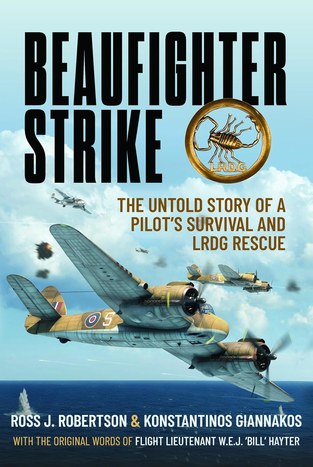
Beaufighter Strike: The Untold Story of a Pilot’s Survival and LRDG Rescue
Robertson, Ross J. & Giannakos, Konstantinos — 2026 Pen and Sword, 18 September 2026 — with the original words of Flight Lieutenant W. E. J. ‘Bill’ Hayter
This an absorbing and remarkable story of two RAF airmen Bill Hayter and Tom Harper. It begins with their initial training progressing to finally flying in the indomitable Bristol Beaufighter, a truly remarkable heavily armed attack aircraft.
The heart of the book is the story told in the words of Hayter as described in a recently found journal. He writes so well, that reader feels they are alongside him and Harper as events unfold, narrated with passion and detail. First of the missions in North Africa and then in the Dodecanese Islands in the Aegean.
Their role was to attack Axis shipping, a high-risk low-level action against intensive flak from which many brave crews did not return. This story describes an attack on the port on the island of Naxos. Again, heavy flak took its toil and Hayter’s Beaufighter S Sugar was hit and crashed into the sea. He describes with intensity of both his and Tom Harper’s lucky escape from the sinking aircraft and landing by dinghy on the rugged coast of Naxos Island.
Both suffered facial wounds and were lucky to be found by patriotic Greeks who risked their lives hiding and caring for the men. This included George Sideris a former Greek Air Force Officer and the local doctor.
By good fortune, the Long Range Desert Group had a watch patrol on the island and enabled the airmen to be rescued by naval launch.
The authors of this work have done a wonderful job in putting this account together. I found it hard to put it down. Anyone interested in RAF Beaufighter operations in the Mediterranean will find these 232 pages both a gripping and at times a tragic read, with an added personal story of determination and bravery by both the British and Greeks involved.
Furthermore, it is very well researched with comprehensive End Notes, Bibliography and Operational Sorties listed in the Appendices.
A highly recommended five star read.
Review by Brendan O’Carroll, LRDG author and historian, supplied through Tony Moore.
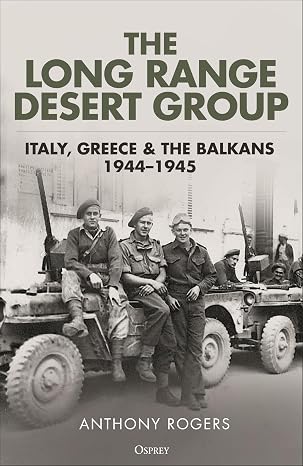
The Long Range Desert Group: Italy, Greece and the Balkans, 1944–1945
Rogers, Anthony — 2027 Osprey — announced for 4 February 2027
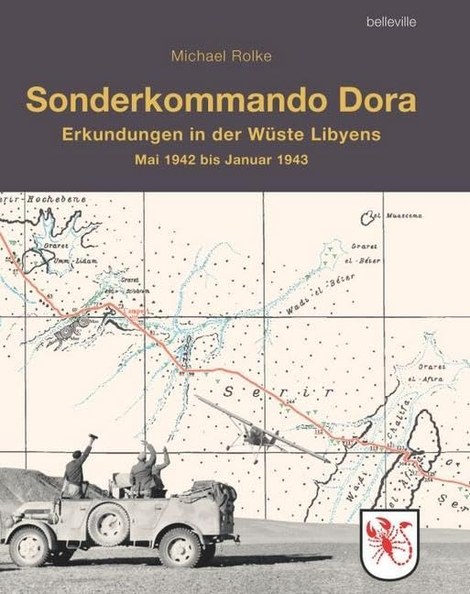
Sonderkommando Dora: Erkundungen in der Wüste Libyens vom Mai 1942 bis Januar 1943
Rolke, Michael — 2021 In German. Included because it is the only book ever written about Sonderkommando Dora, the German desert reconnaissance unit of 1942–43.
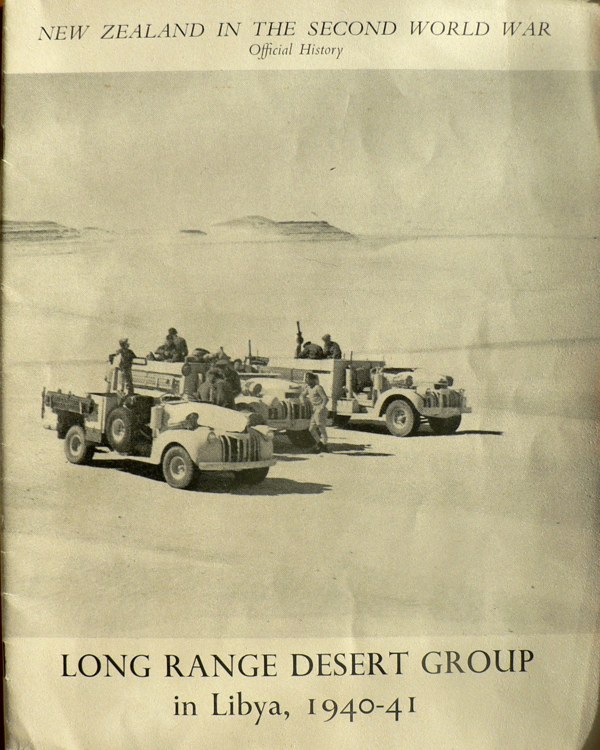
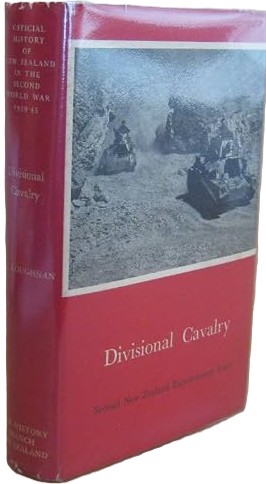
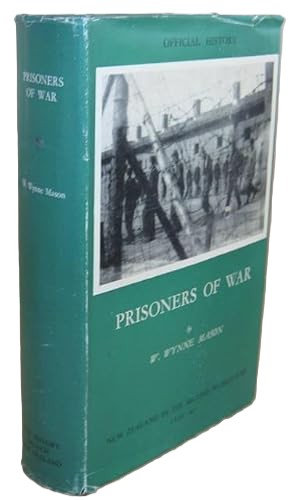
The official histories of New Zealand in the Second World War — core references for this roll. Most are freely readable in full at the New Zealand Electronic Text Collection (NZETC).
Neither of these is a book. They are here because they belong to the same shelf as the histories above and will interest anyone following the Group — but one is a magazine and the other a set of tabletop wargame rules, and NEITHER IS A SOURCE for anything on this roll.
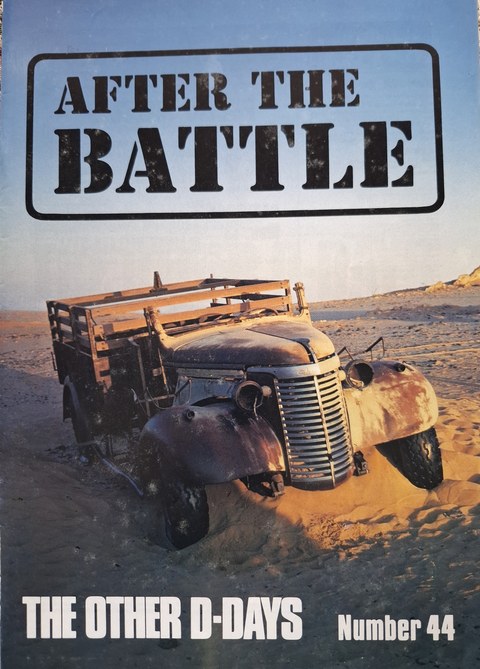
“After the Battle”, No. 44 — The Other D-Days
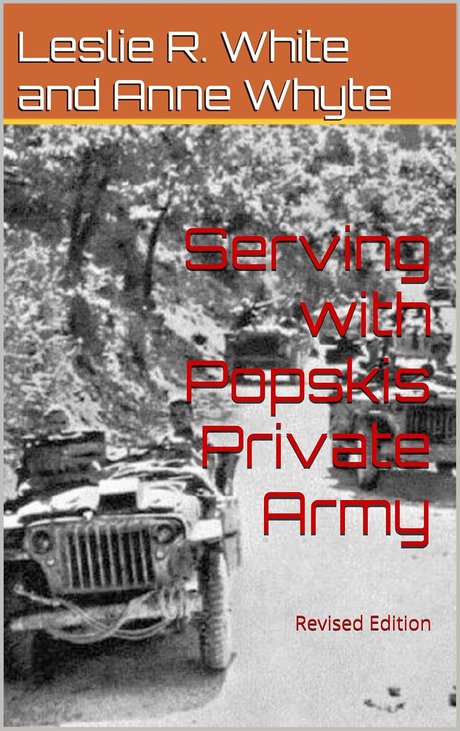
A MAGAZINE, NOT A BOOK “After the Battle” is the British quarterly, founded in 1973, that photographs the sites of the Second World War as they stand today and prints them against the wartime pictures taken from the same spot. This issue takes as its theme the landings other than Normandy. The cover is a wartime Chevrolet lying half-buried in desert sand — the truck is not identified here, and no claim is made about which unit it belonged to. Long out of print; secondhand only.
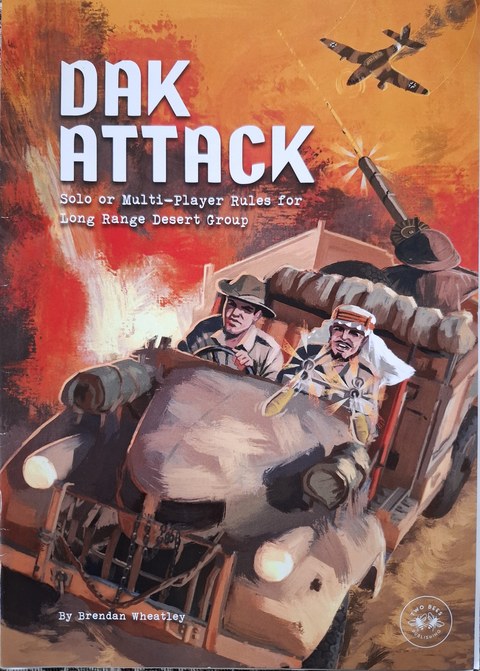
“DAK Attack” — Solo or Multi-Player Rules for Long Range Desert Group
Wheatley, Brendan — Two Bees Publishing A SET OF TABLETOP WARGAME RULES, NOT A BOOK. The player commands a Long Range Desert Group patrol in the North African campaign against the Afrika Korps and the Italian desert forces, alone or against other players, in 28mm. Sold with mission cards and play sheets. It is a game: nothing in it is evidence of anything, and it is listed here because it is about the Group.
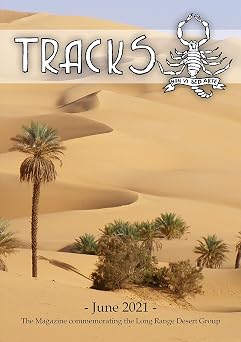
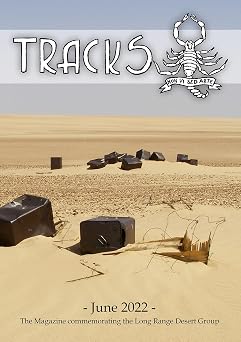
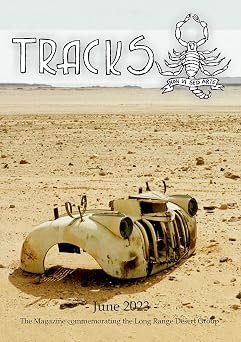
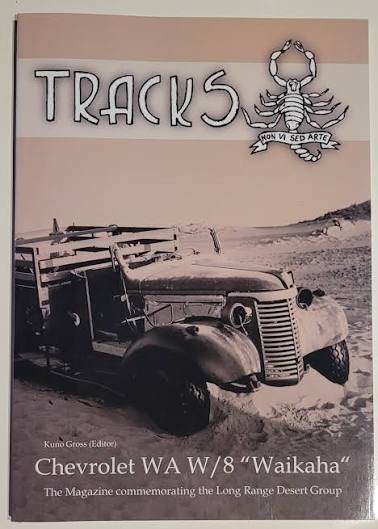
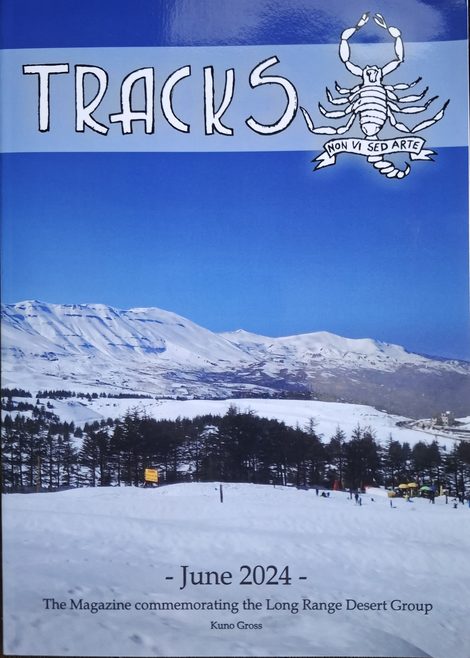
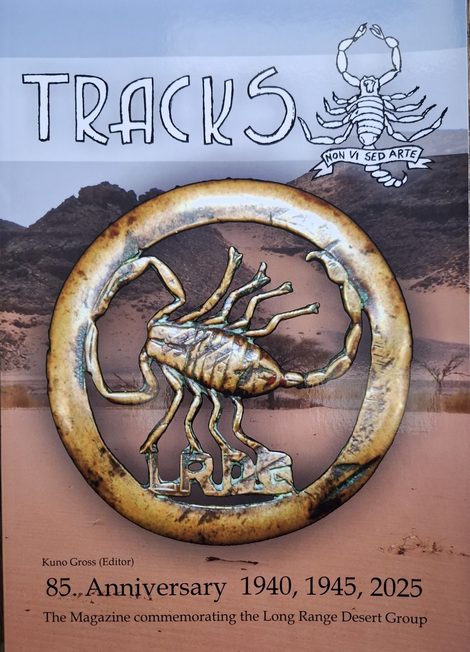
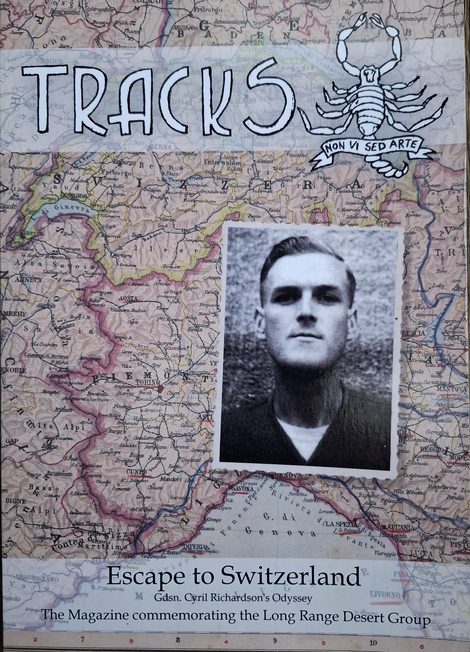
“Tracks” is the magazine commemorating the Long Range Desert Group.
A single issue was produced in the field in 1941; the title was revived in 2021 by Kuno Gross
and now appears annually. If you know of an issue that should be listed here, please
email the roll keeper.
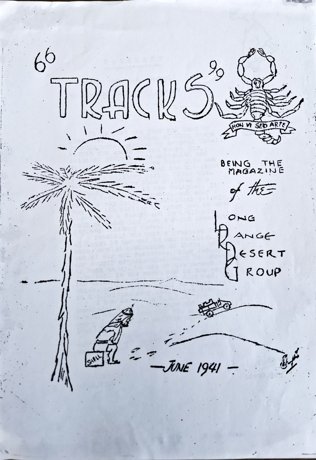
TRACKS — June 1941 (original wartime issue)
Produced in the field at LRDG HQ, Kufra — the sole wartime edition. The cover: a hand-drawn scorpion-and-wheel badge, the motto “Non Vi Sed Arte,” and a desert scene.
Film and podcasts about the Long Range Desert Group. If you know of a documentary, a podcast, an interview or newsreel footage of the Group, please email the roll keeper.
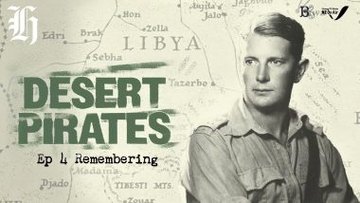
A four-part series on the Long Range Desert Group from the New Zealand Herald, made with the support of NZ On Air and produced by John Daniell and Noelle McCarthy of Bird of Paradise Productions. It draws on rare wartime audio recordings and on film the soldiers shot themselves, and is accompanied by a short film.
“Off the map and behind enemy lines — this is the incredible story of the Long Range Desert Group.” The short film that accompanies the podcast series.
THESE ARE NOT FILMS ABOUT THE GROUP. THEY ARE THE GROUP. Recordings made in the Western Desert in 1940 and 1941 by the NEW ZEALAND MOBILE BROADCASTING UNIT and sent home to be played on the wireless, and three reels of cine film shot by a trooper of T Patrol with his own camera. FIFTEEN MEN ON THIS ROLL ARE NAMED IN THEM and most of them speak. Frank Jopling reading his own diary of the Murzuk raid, “Skin” Moore telling of his 200+ mile walk, and Ralph Bagnold himself, whom wartime censorship would not allow to be named on air. Where a man is on this roll his name is a link to his biography card. THE RECORDINGS ARE NOT COPIED ONTO THIS SITE: they are held by Ngā Taonga Sound & Vision and every title here opens their page for it. Found with the generous help of OSCAR and ABBY at Ngā Taonga, added here by Tony Moore.
Oral history recordings from the Imperial War Museums Sound Archive. The sound files are IWM’s and are served from IWM’s own site — no copy is held on this website — and the copyright in each is IWM’s and is shown on it. IWM permit this use on “information-led, research-oriented websites not behind paywalls”. Every summary of a recording’s contents is IWM’s own catalogue description, quoted. Open a name to listen.
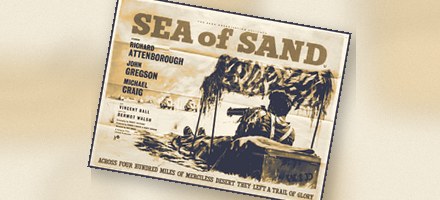
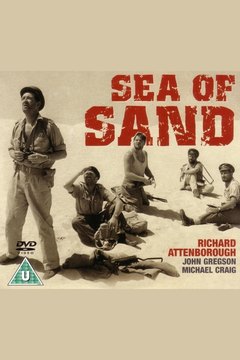
Richard Attenborough, John Gregson, Michael Craig — directed by Guy Green
A classic. Notable for its authenticity, aided by LRDG intelligence officer W. B. Kennedy Shaw. The full film is on YouTube, uploaded by a militaria channel rather than by the rights holder, so it may not stay up.
Imperial War Museums Sound Archive, catalogue 9862 — recorded 15 August 1987, interviewer Conrad Wood. 3 reels here, 59 min 34.
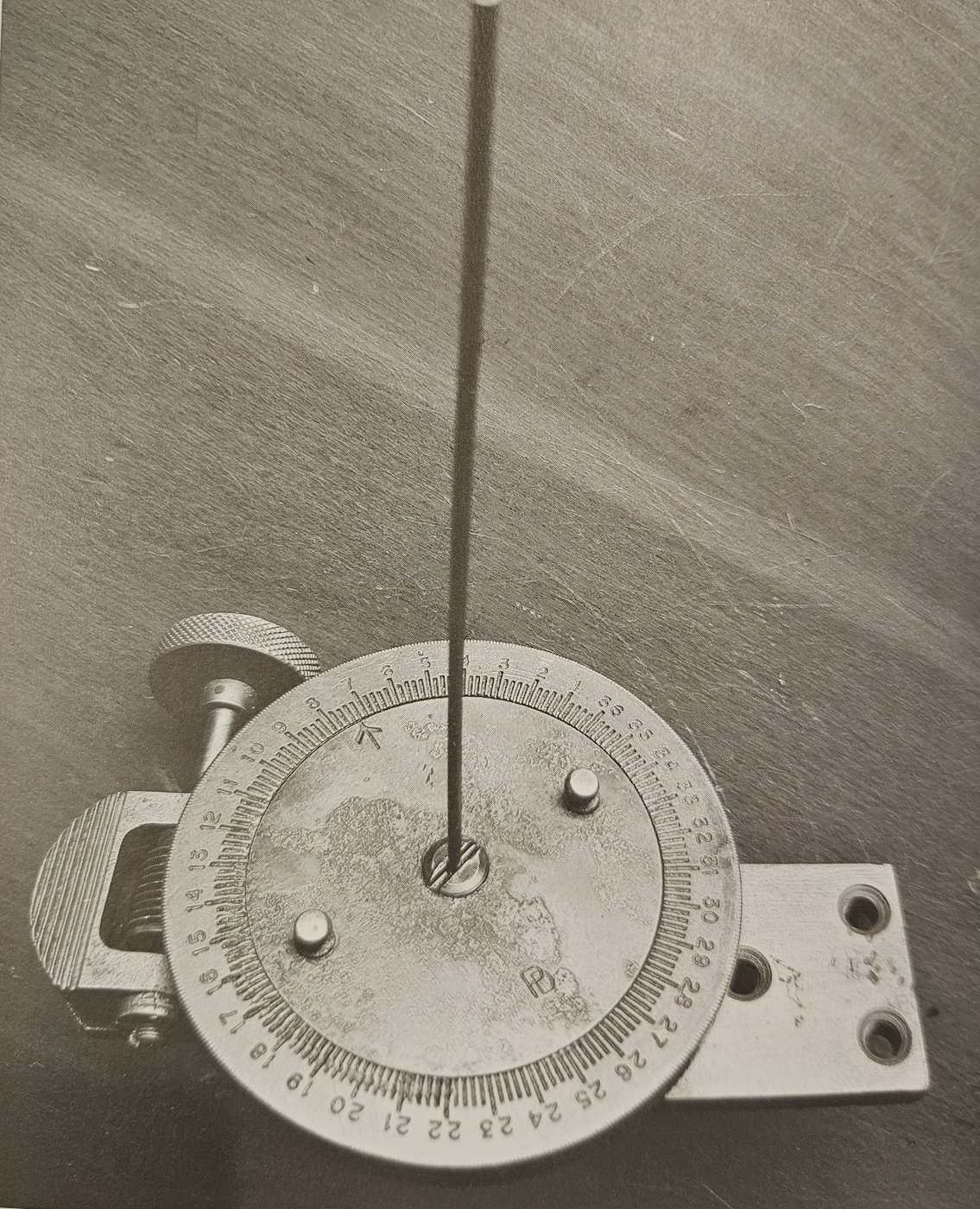
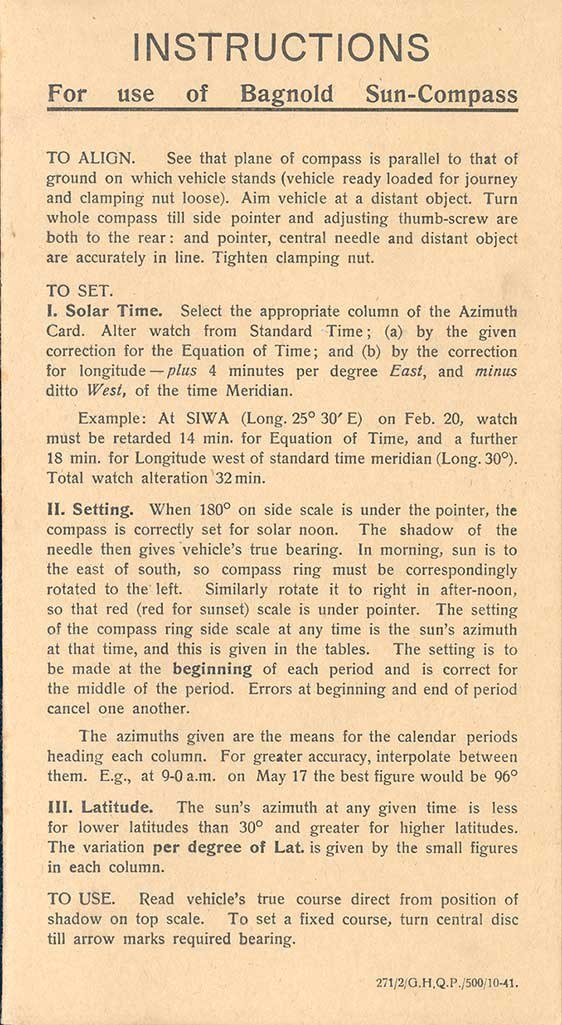
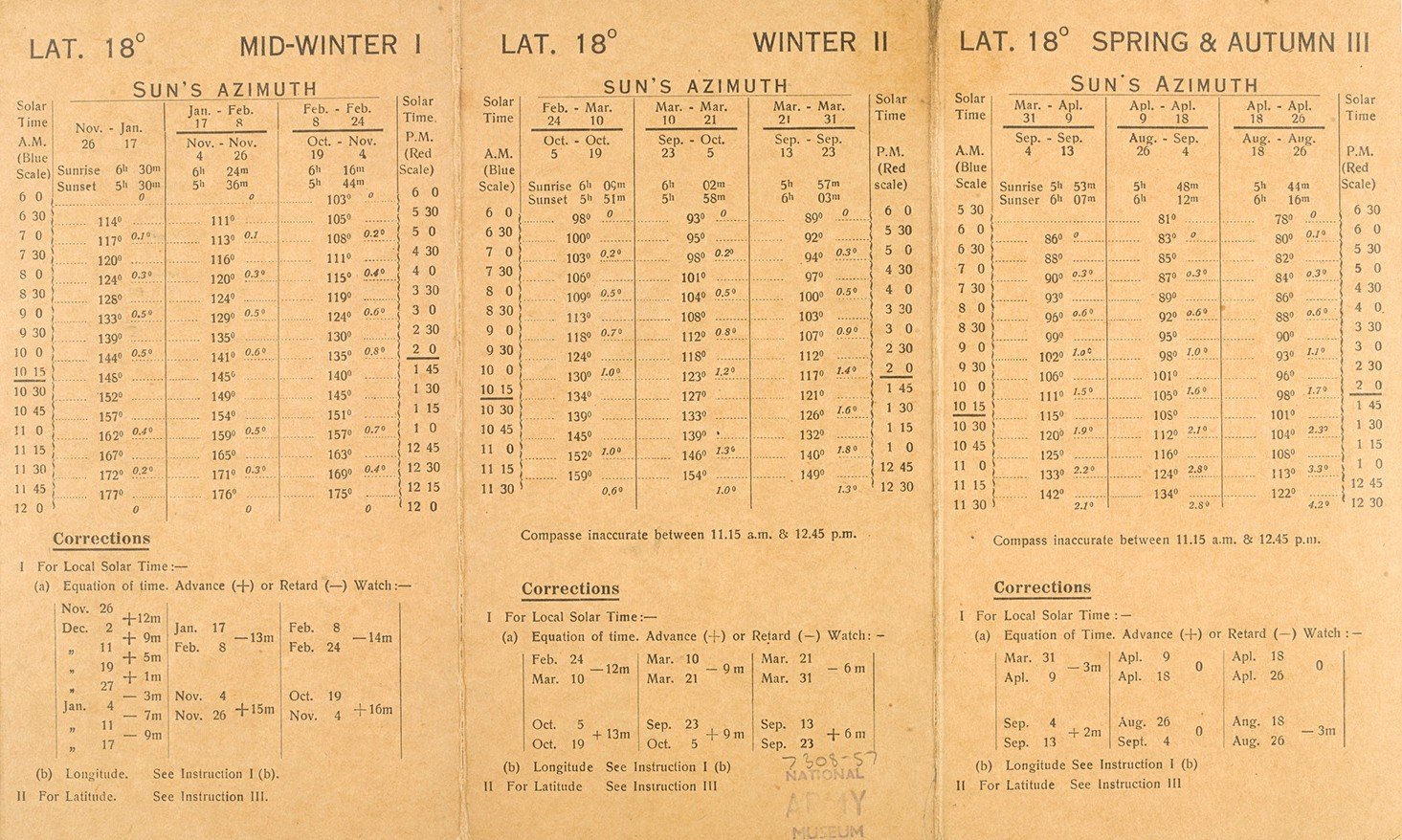
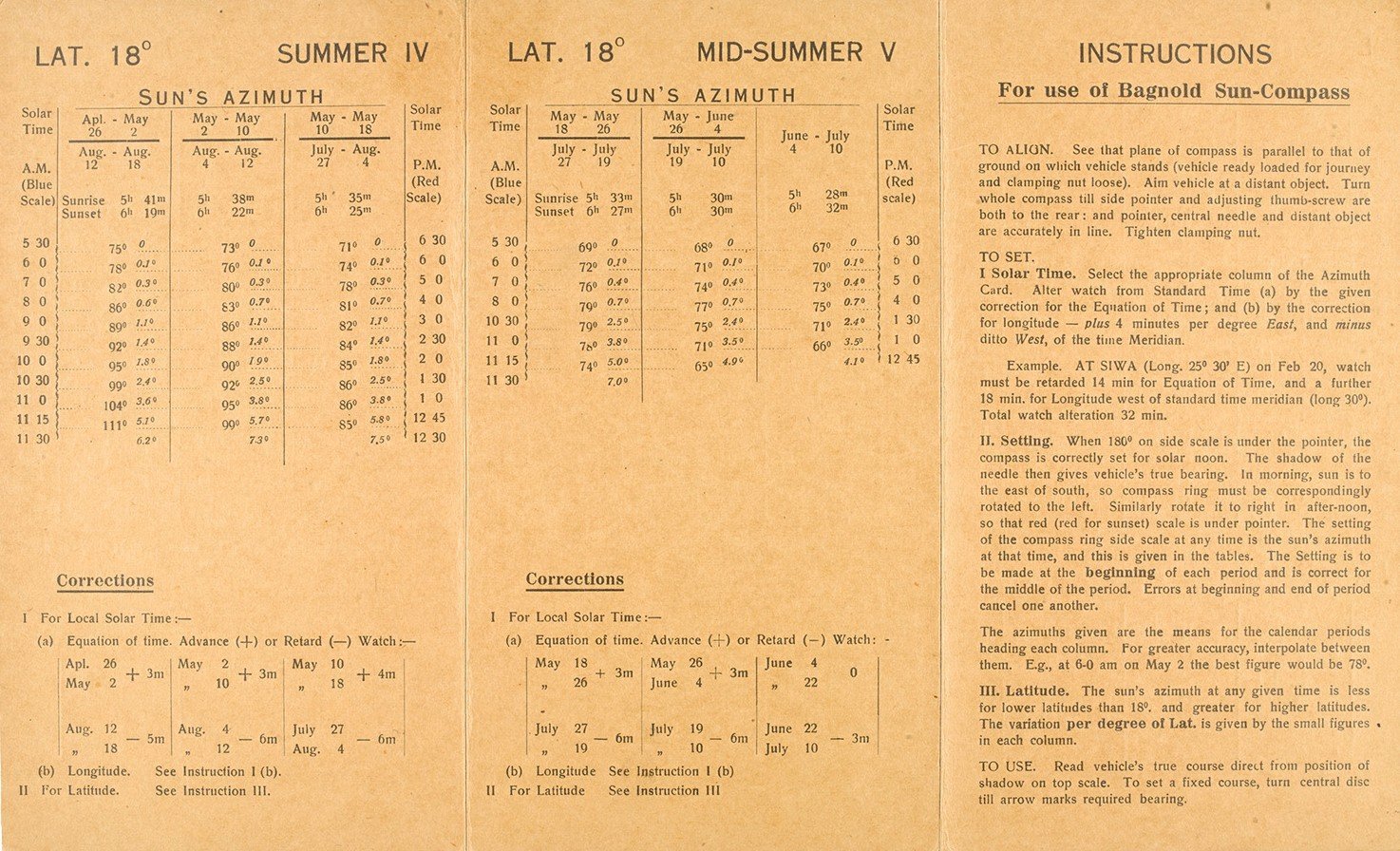
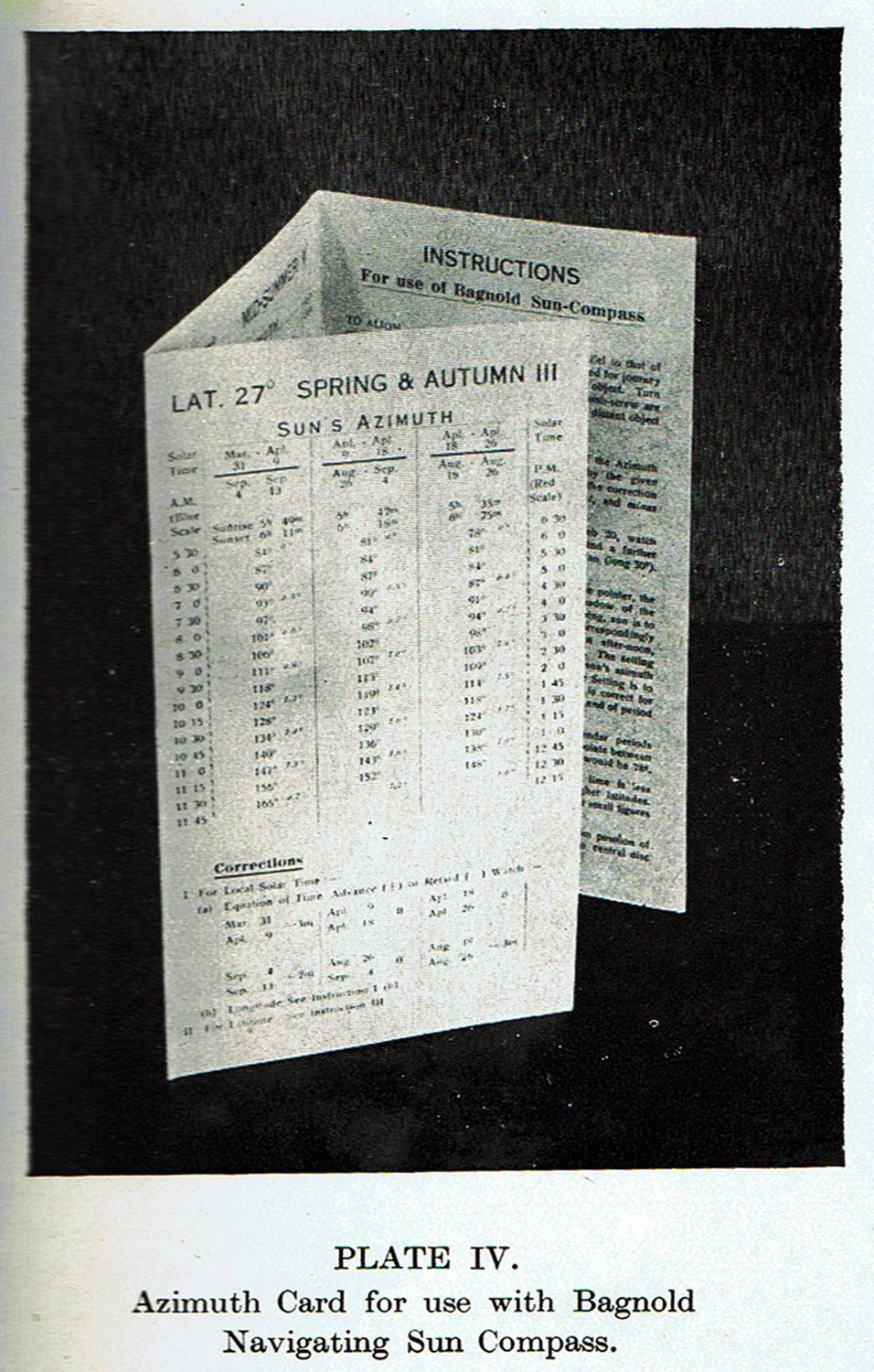
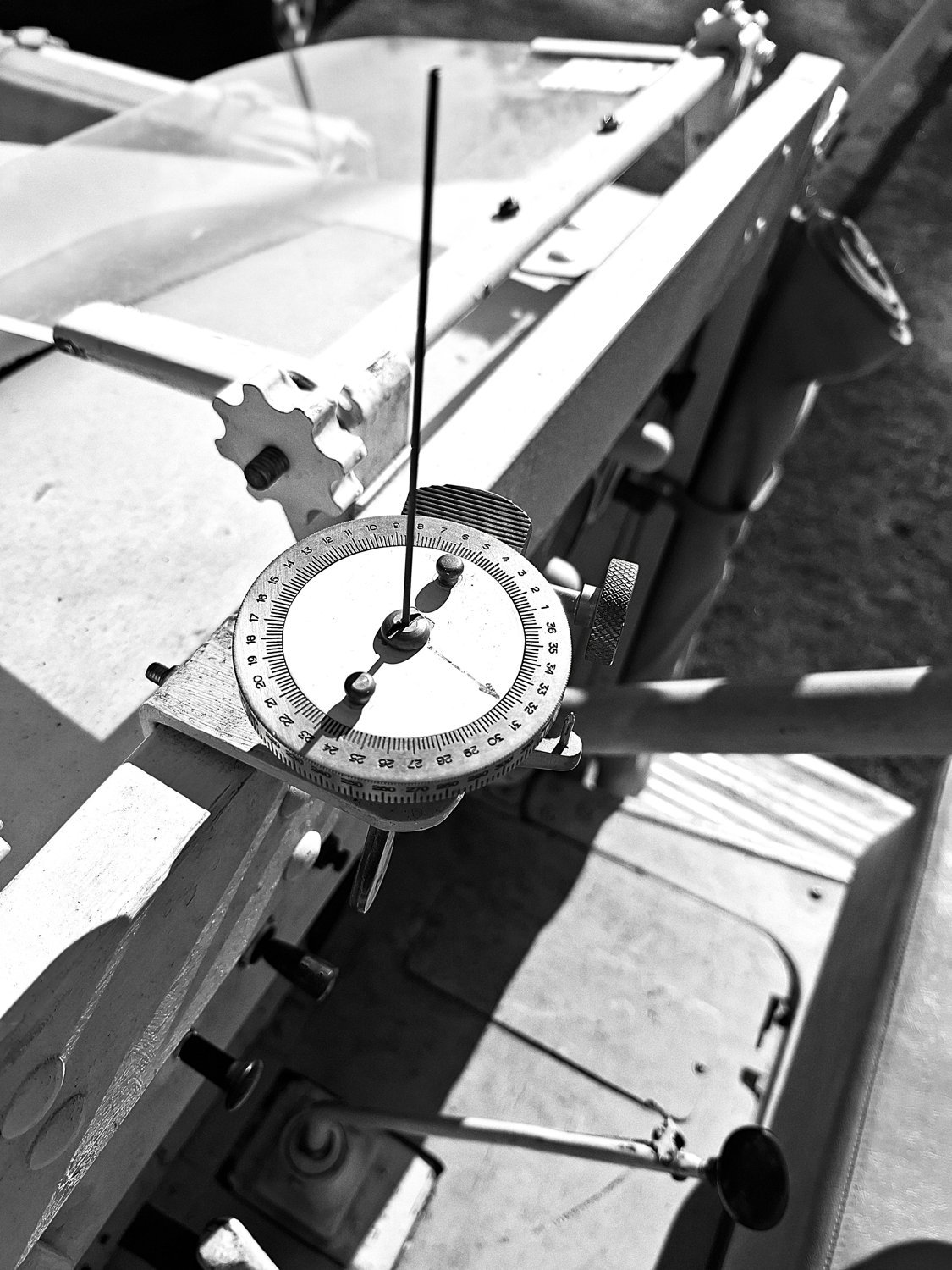
THE FOUNDER OF THE GROUP IN HIS OWN VOICE, recorded forty-seven years after the events, at the age of ninety-one. He talks about the desert before the war, the meeting with Wavell in June 1940 and the proposal that made the unit, the New Zealanders, Kufra and Leclerc, and the invention of the sun compass. IWM’s catalogue gives the whole recording as 75 minutes and the reels they publish come to 59 min 34, so 15 min 26 of it is not among the files they put online; it can be asked for from IWM against the catalogue number.
“Background in GB, 1896-1914: family; education. Aspects of service with Royal Engineers on Western Front, 1915-1918: personal morale; attitude towards Germans. Aspects of period as officer with Royal Engineers in Egypt, 1926-1930: initial interest in desert; appeal of desert; aridity, land formation and archaeology in desert. Recollections of operations commanding Long Range Desert Group in North Africa, 1940-1941: recall from reserve and meeting with General Archibald Wavell, 6/1940; proposal for formation of desert reconnaissance force, 6/1940; method of crossing dunes; New Zealand Army component of force; first mission to investigate Italian activity in southern Egypt, 9/1940.”
“Continues: General Archibald Wavell’s plan to threaten Italians’ unprotected right flank; mission to French Chad to recruit French help; capture of Kufra, Libya by General Phillippe Leclerc’s Free French Forces desert column; problems of organising Arab tribes. Aspects of period as staff officer with General Headquarters, Middle East in Cairo, Egypt, 1941-1944: work at headquarters; memories of Mortimer Wheeler in Cairo; work as Deputy Signal Officer-in-Chief; visit to neutral Turkey; return to GB, 1944. Aspects of operations commanding Long Range Desert Group in North Africa, 1940-1941: invention of sun compass during 1920s; development of water condenser for car radiator; means of extracting vehicles stuck in sand; failure of army to understand Long Range Desert Group; value of General Archibald Wavell’s support; adequacy of water supply; human body’s reaction to desert climate.”
Imperial War Museums Sound Archive, catalogue 9909 — recorded 23 July 1987, interviewer Conrad Wood. 4 reels here, 1 hr 33 min 18.
HE ENDED THE WAR COMMANDING THE GROUP. On this roll as David Lanyon Lloyd Owen, #74596, Y1. He took the Yeomanry Patrol in 1941, commanded B Squadron in the Aegean in 1943, and led the Group in Italy and the Balkans to the end. IWM’s catalogue gives the whole recording as 110 minutes and the reels they publish come to 1 hr 33 min 18, so 16 min 42 of it is not among the files they put online; it can be asked for from IWM against the catalogue number.
“Recollections of operations as officer with Long Range Desert Group in North Africa, Italy and the Balkans, 1941-1945: background to joining Long Range Desert Group; role of Long Range Desert Group; impressions of Ralph Bagnold; taking command of Yeomanry Patrol; characteristics of yeomanry troops; adjusting to desert conditions; patrols equipment; health of troops in desert; role of Long Range Desert Group during Operation Crusader, 11/1941-12/1941; rescue of Special Air Service group.”
“Continues: Major David Stirling’s decision to work with Long Range Desert Group; types of operations undertaken; the road watch; threat from German Air Force; technique for dispersal if attacked by aircraft; attitude of desert Arabs to Long Range Desert Group; pleasures of acting independently and high calibre of personnel; problems of boredom during operations; question of Germans operating in similar role as Long Range Desert Group; role of unit prior to and during Allied offensive, 1942-1943.”
“Continues: wounding at by German Air Force at Kufra, Libya, 9/1942; success of Long Range Desert Group in desert and decision that unit would continue war in Europe. Aspects of operations commanding B Sqdn, Long Range Desert Group in Middle East and Greece, 1943: training in Lebanon, summer 1943; capture of Leros Island, Greece by Germans, late 1943; his escape from Leros by Italian Navy submarine; effect of losses to Long Range Desert Group; reorganisation in French Syria. Aspects of operations commanding Long Range Desert Group in Italy and the Balkans, 1944-1945: adapting to non-desert conditions in Italy; problems of handling local population in Balkans; problem of political divisions; working with Albanian Partisans; character of Albanian Partisans; Allied air support available to partisans.”
“Continues: treatment of Long Range Desert Group by Yugoslavs at end of war; German forces’ attitude towards captured Long Range Desert Group personnel.”
Imperial War Museums Sound Archive, catalogue 16077 — recorded 18 October 1995, interviewer Conrad Wood. 2 reels here, 50 min 31.
A VICTORIA CROSS, AND BAGNOLD’S ADJUTANT. On this roll as Eric Charles Twelves Wilson, Major. He won the Victoria Cross holding Tug Argan Pass in British Somaliland in August 1940 with the Somaliland Camel Corps, was captured, and heard of the award while a prisoner in Eritrea. He came to the Group afterwards, as adjutant to Ralph Bagnold. IWM’s catalogue gives the whole recording as 60 minutes and the reels they publish come to 50 min 31, so 9 min 29 of it is not among the files they put online; it can be asked for from IWM against the catalogue number.
“Background in Sandown, Isle of Wight, GB, 1911-1931: family circumstances; education. Aspects of period as officer cadet at Royal Military College, Sandhurst, 1931-1932 and as officer with East Surrey Regt in GB, 1933. Aspects of period as officer with Somaliland Camel Corps in British Somaliland, 1939-1940: role as commanding officer of Yao Coy; learning local languages; reasons why troop had their wives with them; transfer to Machine Gun Coy, 3/1940. Recollections of operations with Machine Gun Coy, Somaliland Camel Corps at Tug Argan Pass in British Somaliland, 11/8/1940-15/8/1940: Italian knowledge of location of British defensive positions; defence of Tug Argan Pass for which he won Victoria Cross; supporting 1st Bn Northern Rhodesia Regt; capture and reaction to hearing he had been awarded Victoria Cross.”
“Continues: performance of Vickers Machine Gun and Somali troops during battle; opinion of Somalis; performance of Italian troops; circumstances of his capture. Aspects of period as prisoner of war in Eritrea, 1940-1941: length of captivity; tunneling escape attempt; liberation 1941. Aspects of period as officer with Long Range Desert Group in North Africa, 1941-1942: role as adjutant to Ralph Bagnold; duties. Aspects of operations as officer with 11th (Kenya) Bn King’s African Rifles, 25th (East African) Infantry Bde, 11th East African Infantry Div in Burma, 1944-1945: role as second in command in Kabaw Valley; troop’s attitude towards Japanese; surrender of Indian National Army troops.”
Imperial War Museums Sound Archive, catalogue 30098 — recorded 24 July 2007, interviewer Toby Brooks. 10 reels here, 4 hr 33 min 56.
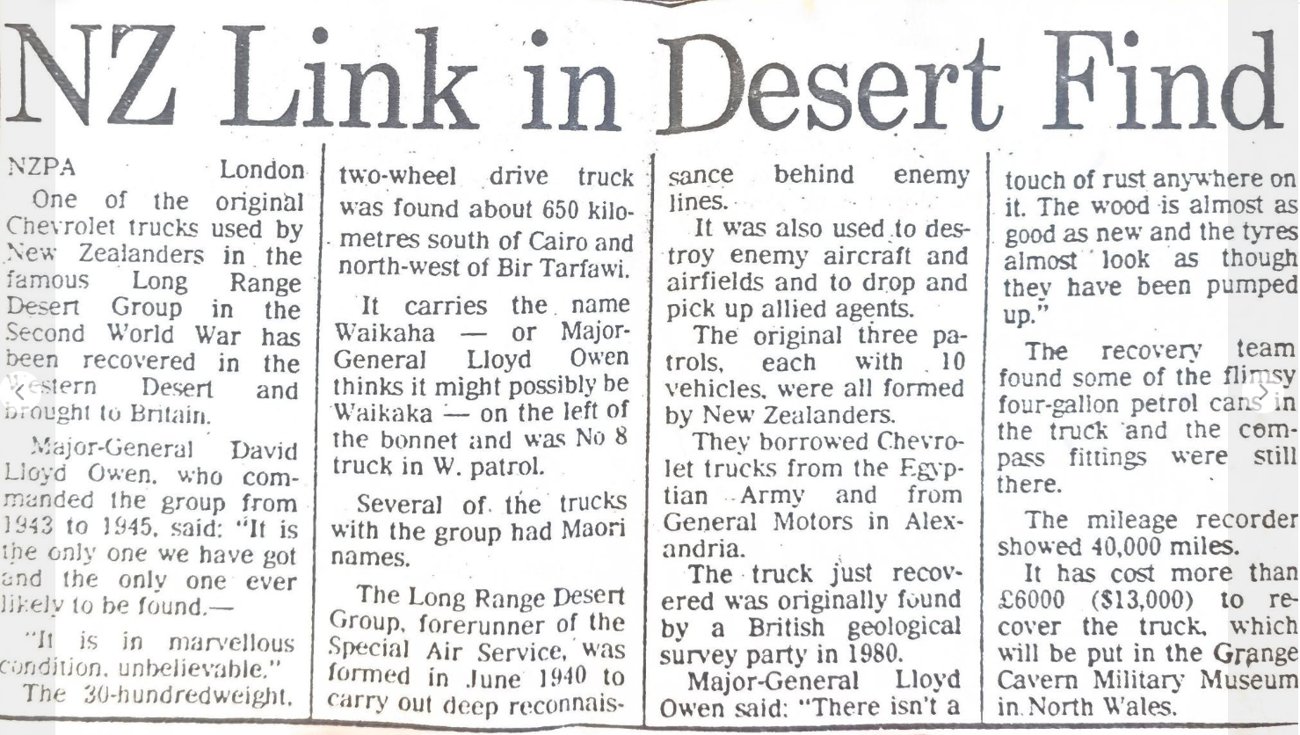
TEN REELS, AND THE ONLY VOICE HERE FROM THE WORKSHOPS. On this roll as Leslie Sullivan, #7612534, Craftsman, Light Repair Section, a R.E.M.E. fitter attached to the Group from November 1941. Plaited string for fan belts, sand tyres, changing a wheel in the open desert, and what the trucks were really like to keep running. HIS REEL 2 TELLS THE STORY OF “MOORE’S MARCH” and reel 3 describes the radiator condenser Bagnold invented. IWM name Ronald Joseph Moore among the people associated with this recording. Reel 2 also has him on the Chevrolet WB 30 cwt truck “Waikaha” in the Imperial War Museum. IWM’s catalogue gives the whole recording as 300 minutes and the reels they publish come to 4 hr 33 min 56, so 26 min 04 of it is not among the files they put online; it can be asked for from IWM against the catalogue number.
“Background in Patricroft, GB, 1919-1939: family; education; civilian work; background to enlistment in British Army, 20/10/1939. Aspects of period as private with Royal Army Ordnance Corps in GB and Egypt, 9/1939-11/1941: processing in Hilsea; hospitalisation for dermatitis; interview with commanding officer on return from hospital; attending course at Isleworth; attachment to 10th Bn Queen’s Own Cameron Highlanders (Lovat’s Scouts); coastal defence duties; story of obtaining truck to travel for lunch; attachment to Officer Cadet Training Unit in Pwllheli; relations with commanding officer; problems fixing a truck’s speed at 30mph; overseas posting to Egypt; marriage; posting in Tel-el-Kebir, Egypt. Recollections of operations as craftsman with Royal Electrical and Mechanical Engineers attached to Long Range Desert Group in North Africa, 11/1941-5/1943: background to joining of unit in Mersa Matruh, Egypt; making and use of petrol bombs including description of roadblocks; signs warning of ambushes; summary of period with Long Range Desert Group.”
“Continues: impressions on joining unit; journey to base and withdrawal; periods at Jalo Oasis, Libya and Siwa Oasis, Egypt; story of dates; journey to Kufra Oasis, Libya; terrain; memories of Major Ralph Bagnold; washing in desert; organisation of unit; setting up of emergency supply dumps; story of ’Moore’s March’; navigation; work of survey section; determination among fitters; story of repairs made to a truck; possibility of being returned to unit; story of soldier dismantled truck; atmosphere in unit; success of repair work; use of plaited string for fan belts; organisation of spares; problems changing a tyre; details of sand tyre; reflections on Chevrolet WB 30 cwt Truck ’Waikaha’ in Imperial War Museum, London.”
“Continues: involvement with re-enactment group; aerial activity; details of sand mats and their use to signal Allied aircraft; receiving fire from Allied aircraft; method of defending against attacks from Axis aircraft; question of use of covers on trucks and wearing of keffiyeh; Deutsches Afrika Korps hospital; vehicles used; leave; journeys through desert; problems with petrol tins; plan for patrol to Tobruk, Libya; nature of terrain covered en route to Tobruk, Libya; story of accident involving vehicle with Guardsmen in; evacuation of injured Guardsman by aircraft and amendments made to plane to make this possible; failure of attack on Tobruk, Libya; medical staff; informality between ranks in Long Range Desert Group; growing of beards; use of water rations; description of condenser in vehicle radiators invented by Major Ralph Bagnold.”
“Continues: evacuation of wounded; number of unit casualties in desert and on Leros Island, Greece; later problems with operation on Leros Island, Dodecanese Islands, Greece, 11/1943; personal morale in desert; nature of desert patrol to oasis, including inspections of opposition vehicles and accident from mine; Light Aid Detachment; attachment to New Zealand Patrol; rations, including rum; story of visit with comrade to 51st (Highland) Infantry Div’s facilities; visit to Alexandria, Egypt; details of water carried in trucks; story of transporting Randolph Churchill; sleeping arrangements and cold at night; clothing worn during day and condition of skin in sun; weapons carried; communications.”
“Continues: navigation training received; contact with civilians; Italian Army’s long range desert work; nature of desert terrain; attitude to serving in desert; sandstorms and wildlife; hospitalisation with malaria; Long Range Desert Groups’s relationship with and role of Special Air Service; rescue of early Special Air Service patrol; later support given to Special Air Service; membership of Special Air Service Regimental Association; discussion of work with Special Air Service; emergency stores remaining in desert; stories of surrounding a mirage in desert and attempt to shoot Planet Venus on Leros Island, Greece; black mark discipline system; prank with weapons.”
“Continues: subsequent interview with commanding officer; reaction to possibility of being Returned to Unit; relations among personnel serving with Long Range Desert Group; organisation of unit and reorganisation following actions on Leros Island, Greece, 11/1943; selection for Long Range Desert Group; details of Kufra Oasis, Libya and Siwa Oasis, Egypt; learning to swim; story of attempt to track down brother.”
“Continues: period in French Syria, 6/1943-9/1943. Recollections of operations as trooper with Long Range Desert Group on Leros Island, Dodecanese Islands, Greece, 9/1943-11/1943: Long Range Desert Group role on Leros Island; naval activity; location on Leros Island; landing of German airborne forces; resistance put up against German forces; rescue attempt by Royal Navy submarines; running out of rations; call from German boat for surrender and troops’ response, 20/11/1943. Aspects of period as prisoner of war in transit from Greece to Germany, 11/1943-1/1944: voyage to Piraeus, Greece; period in captivity in warehouse at Pireaus, Greece, including rations and latrines; train journey northwards to Yugoslavia; hospitalisation with dysentery in Skopje, Yugoslavia; of bartering with fellow prisoner of war on train; story of German patient; Christmas 25/12/1943; rumour of end of Second World War. Aspects of period as prisoner of war in Stalag VII-A, Moosburg and Stalag IV-B, Muhlberg, Germany, 1/1944-4/1945: arrival in Stalag IV-B, Muhlberg, 9/2/1944; bombing of nearby Dresden; clearance of rubble in Dresden; exemption from work; contact with German civilians; conduct of American prisoners of war; American prisoners of war relations with Soviet prisoners of war.”
“Continues: attitude toward Germans; opinion of Italian Army troops; description of camp; radios and news of war; liberation by Soviet Army troops; release of Soviet prisoners of war; Soviet scorched earth policy; shooting of bad German Army guards; opinion of and relationship with German Army guards; exercise in camps; weight and fitness levels on release; rations scavenged from area; closing of camp; news of the disappearance of diplomats. Aspects of journey to United States Army lines and return to GB, 5/1945: escape from camp; walk to Allied lines; first contact with United States Army troops; night spent in farmhouse; crossing of River Elbe; processing in United States Army camp; issue of kit; rations; night spent in camp; flight to GB; interview on arrival and telephone call made to wife. Post-war life and employment: journey to meet wife.”
“Continues: reception on return; scams for gaining ration coupons and tools; civilian employment; mail sent home during war; wife’s knowledge of his capture; role of escapes from camp; buying first home and previous accommodation; help received from British Legion; prior recollection of knowledge of war during period in North Africa; opinion of service with Long Raid Desert Group; reflections on Second World War; prior recollection of civilian employment and life before war.”
Imperial War Museums Sound Archive, catalogue 20495 — recorded 21 August 2000, interviewer Conrad Wood. 4 reels here, 1 hr 49 min 52.
HULL TO THE QATTARA DEPRESSION, AND ON TO LEROS. On this roll as Lawrence Herbert Thompson, #T/157859, Lance Corporal, Heavy Section. He remembers the character of Bagnold and Prendergast, being captured by the Germans at Msus and getting away again, and declining to fire on German parachutists coming down on Leros. IWM’s catalogue gives the whole recording as 115 minutes and the reels they publish come to 1 hr 49 min 52, so 5 min 08 of it is not among the files they put online; it can be asked for from IWM against the catalogue number.
“Background in Kingston upon Hull, GB, 1917-1940: family; education; employment. Aspects of period as driver with No 285 Coy, Royal Army Service Corps in GB, India and Palestine, 1940: character of training at Bulford Camp, 2/1940; driving military vehicles; voyage aboard HMT Queen Mary GB to India, 6/1940; memories of coping with heat and flies; impressions of Bombay, India; reception in Cape Town, South Africa; state of accommodation in Palestine; negotiating Seven Sisters in a lorry. Recollections of operations as driver with Long Range Desert Group in North Africa, 1940-1943: background to volunteering for unit; move to Egypt.”
“Continues: role setting up bases in Western Desert, Egypt; condition of former Italian base at Houn, Libya; state of Giarabub, Libya after Royal Air Force attack; character of Lieutenant-Colonels Ralph Bagnold and Guy Prendergast; job retreiving bodies from minefield; narrow escape from German Air Force attack at Tobruk, Libya; under fire from South African armoured car between Tobruk and Msus, Libya; capture by Germans at Msus, Libya and subsequent escape; reception received on regaining Allied lines; water and beer supply in Western Desert, Egypt.”
“Continues: rations for unit; operating behind Axis lines, 6/1942; crossing Qattara Depression, Egypt; deflation of vehicle tyres for crossing desert and problems of burst tyres; use of recognition flag. Aspects of operations as NCO with Long Range Desert Group on Leros Island, Dodancanese Islands, Greece, 10/1943: training in Middle East prior to move to Leros Island; capture of German airborne forces; foraging for food; German Air Force Ju 87 Stuka dive-bomber attacks; declining to fire on descending German airborne forces; prior recollection of shooting down of German Air Force aircraft at Kufra Oasis, Libya; hiding in undergrowth.”
“Continues: capture by Germans airborne forces. Recollections of period as prisoner of war in Greece and Stalag VII-B, Memmingen, Germany, 10/1943-5/1945: removal to Piraeus, Greece; conditions in captivity in Athens, Greece; move to Stalag VII-B, Memmingen, Germany; removal from camp, 1945; work he did as prisoner of war; sight of concentration camp survivors at Stalag VII-B, Memmingen, Germany; move into Czechoslovakia and liberation by United States Army troops, 5/1945; opinion of treatment received from German captors.”
Imperial War Museums Sound Archive, catalogue 9961 — recorded 10 September 1987, interviewer Conrad Wood. 5 reels here, 2 hr 9 min 38.
CAPTURED ON LEVITHA, THEN EIGHTEEN MONTHS IN THE YUGOSLAV MOUNTAINS. On this roll as James Douglas Patch, #982472 / 482478, Private, Y1. S Patrol at Gtafia, the Tobruk and Barce raids, and Popski; then capture by German mountain troops, an escape from a prisoner train in Yugoslavia, and a year and a half with the Chetniks and the Partisans. IWM’s catalogue gives the whole recording as 150 minutes and the reels they publish come to 2 hr 9 min 38, so 20 min 22 of it is not among the files they put online; it can be asked for from IWM against the catalogue number.
“Recollections of operations as trooper with Long Range Desert Group in North Africa, 1941-1942: recruitment as gunner to unit, 1941; capture of Italian Army fort by S Patrol at Gtafia, Libya, 11/1941; capture of Senussi prisoners of war; weapons used by Artillery Section; unit discipline; character of Rhodesian and New Zealander members in unit; Ralph Bagnold’s recruitment policy; composition of Y Patrol; use of sun compass; plan to take commandos into Tobruk, Libya, 9/1942; problems with communication during Tobruk raid; evacuation of unit wounded by aircraft after raid on Barce, Libya, 9/1942; vehicles shot up during raid on Tobruk, Libya, 9/1942; memories of Vladimir ’Popski’ Peniakoff.”
“Continues: work as navigator; coping with air attacks; raid on Hon, Libya, autumn 1942; character of desert surfaces; problem with flies; use of sand trays; German Air Force attack on Kufra, Libya, 9/1942; rescue of British Indian Army sepoy in desert, 1942; esprit de corps in unit; contact with Arabs in desert. Aspects of operations with Long Range Desert Group in Greece, 9/1943-11/1943: projected role of unit in Greece; training for abortive operation on Rhodes Island; move to Lebanon, 5/1943-9/1945.”
“Continues: landings in Dodecanese Islands, 9/1943; role rescuing members of New Zealand Patrol Group. Aspects of prisoner of war in Greece and Yugoslavia, 11/1943: capture by German Army mountain troops on Levitha Island; transfer to Greek mainland; story of escape with Lance Corporal Ronald Hill from train in Yugoslavia taking prisoners of war to Germany. Recollections of operations with Chetniks in Yugoslavia, 11/1943-3/1945: trek across Yugoslavia through mountains; reaction of villagers to their presence; securing help from Yugoslavian civilians; adoption by Chetnik band, 11/1943.”
“Continues: execution of Chetnik traitor; contact with British Military Mission in Serbia; searches of villages by Bulgarian troops; method of keeping warm in snowy conditions; rations available; attempt to persuade Chetniks to join Yugoslav Partisans; joining of his Chetnik group to Yugoslav Partisans; mutual executions amongst Bulgarian and Chetniks; meeting up with British Mission; German attempt to arrange safe passage for troops through Balkans; Partisan toiletry habits; comparison between Yugoslav Partisans and Chetniks; question of indecisiveness of Yugoslavian guerrillas; visit to partisan hospital; contact with Soviet Army in Skopje; attitude of Yugoslav population to guerrillas; how Josip Tito achieved power.”
“Continues: transfer by air from Skopje to Bari, Italy, 3/1945; return to GB, 3/1945; question of attitude of regular British Army towards Long Range Desert Group.”
Imperial War Museums Sound Archive, catalogue 834 — recorded 18 October 1976, interviewer David George Lance. 8 reels here, 3 hr 47 min 19.
THE OLDEST RECORDING HERE, made in 1976, eleven years before Bagnold’s. On this roll as Rupert Norton Harding-Newman, Lieutenant Colonel. Royal Tank Corps in Egypt through the 1930s: testing wheeled vehicles for desert service, the development of sand tyres, and — in reel 5 — the development of the sun compass. THIS RECORDING BEARS ON A QUESTION THIS ROLL HAD ALREADY ASKED. His card carried two entries until they were merged, on the argument that he was the Royal Tank Corps officer of Bagnold’s pre-war desert parties. IWM’s catalogue says the same from a different direction: reel 6 covers “joining Bagnold Desert Survey Expedition, 1932 and Shaw Expedition, 1935” and “establishment of Long Range Desert Group”. IWM’s catalogue gives the whole recording as 225 minutes and the reels they publish come to 3 hr 47 min 19, so 2 min 19 of it is not among the files they put online; it can be asked for from IWM against the catalogue number.
“Background in Chippenham and Fleet, GB, 1907-1926: family; education. Aspects of enlistment and training with Royal Tank Corps at Royal Tank Corps Depot, Bovington Camp in GB, 1928: interest in Royal Tanks Corps during period at Royal Military College, Sandhurst, 1926- 1927; character of induction training at Royal Tank Corps Regimental Depot, Bovington, 1928; driving and maintenance course; opinion of Vickers Medium Tank; handling Rolls-Royce Armoured Car; character of mechanical training; gunnery training at Gunnery School, Lulworth; methods of firing on move or from stationary positions.”
“Continues: lack of tactical training at Bovington; attitude to joining corps; quality of instructors; opinion of corps officers and reasons for promotion blockage. Recollections of period as officer with 5th Bn Royal Tank Corps in GB, 1928-1930: background to posting to unit at Perham Down Camp; character of section training; predominance of infantry support role; journey with tanks from Perham Down Camp to Taunton area for manoeuvres; character of brigade manoeuvres, 1928; value of large scale training exercises; difficulties of umpiring combined arms exercises, 1929.”
“Continues: comparison in messing facilities of Royal Tank Corps and cavalry; attitude of cavalry and artillery to mechanisation; communications and mobility lessons learnt by large scale exercises; problems with mechanical failures and using Laryngaphones. Recollections of period as officer with 5th Armoured Car Coy, Royal Tank Corps in Egypt, 1930-1932: posting to unit, 1930; role assisting mechanisation of 12th Royal Lancers (Prince of Wales’s); unit training; training armoured car personnel in tank techniques; design and adaptations of Vickers Medium Mk.II Tank to desert conditions; performance of Vickers Medium Mk.II Tank in desert; long range desert exercises; problems of amalgamation of 3rd and 5th Armoured Car Coys, Royal Tank Corps into 6th Bn Royal Tank Corps.”
“Continues: question of unsuitability of commanding officer; assessment of Carden Loyd Carrier for desert service; attitude of 12th Royal Lancers (Prince of Wales’s) to mechanisation; experimental testing of vehicles for desert service; wheeled vehicle testing programme and modifications to improve performance; development of sand tyres; performance of heavy lorries.”
“Continues: descriptions of air filters; navigation and methods and problems; types of compasses used and development of sun compass; close co-operation with Royal Air Force; expedition to demonstrate efficiency of tracked vehicles to Royal Horse Artillery; cavalry’s attitude towards mechanisation. Aspects of period as officer with 6th Bn Royal Tank Regt in Egypt, 1933-1935: attitude of British Army towards Royal Tank Corps; character of annual training programme; restrictions on range of combined arms exercises.”
“Continues: question of army’s failure to appreciate the tank’s potential; joining Bagnold Desert Survey Expedition, 1932 and Shaw Expedition, 1935; value of desert surveying expeditions; establishment of Long Range Desert Group; comparison between home and Egyptian service. Aspect of period with 2nd Bn Royal Tank Regt in GB, 1935: character of tank brigade exercises, 1935.”
“Continues: opinion of Lieutenant-Colonel Percy Hobart’s style of command; value of debriefings; comparison of 1929-1935 exercises. Recollections of period as officer with 1st Light Bn Royal Tank Corps in Egypt, 1936: posting to unit during Abyssinian Crisis; difficulties of desert navigation during battalion exercises; track problems; testing Light Tank Mk.VIB and consequent modifications; deficiencies of complaints procedure; memories of Brigadier John Caunter; facilities at Mersa Matruh.”
“Aspects of period as officer with 6th Bn Royal Tank Regt in Egypt, 1936-1937: practical effects of experience gained from time at Mersa Matruh. Aspects of period as instructor to Egyptian Army in Egypt, 1937-1939: background to attachment; duties mechanising cavalry; opinion of quality of Egyptian troops; lack of administrative support.”
Imperial War Museums Sound Archive, catalogue 10214 — recorded 1 June 1988, interviewer Conrad Wood. 3 reels here, 1 hr 11 min 23.
YEOMANRY PATROL, AND THE ROAD WATCH. On this roll as Roderick Charles Matthews, #318551, Corporal, Y Patrol. He came from the North Somerset Yeomanry in February 1942, and describes the selection, the road watch, his part in the Tobruk raid, and later Greece, Italy and the S.A.S. IWM’s catalogue gives the whole recording as 90 minutes and the reels they publish come to 1 hr 11 min 23, so 18 min 37 of it is not among the files they put online; it can be asked for from IWM against the catalogue number.
“Recollections of operations as trooper with Yeomanry Patrol, Long Range Desert Group in North Africa, 10/1941-5/1943: background to joining Long Range Desert Group from North Somerset Yeomanry, 2/1942; selection procedure; vehicles used by unit; discipline in unit; operating in teams; role of Long Range Desert Group; organisation of road watch; degree of threat from Axis air attack; his role during Operation Agreement, the raid on Tobruk, Libya, 9/1942; transport of agents; rations; terrain; contact with nomadic desert people; animal life in desert; health.”
“Continues: sandstorms; danger of being stranded in desert; navigating in desert. Aspects of operations as NCO with B Sqdn, Long Range Desert Group in Greece, 10/1944-11/1942: shipping watch on Piraeus; relations with Greeks; move to Turkey at end of operation, 25/11/1943; use of caique for shipping watch. Aspects of operations as NCO with B Sqdn, Long Range Desert Group in Italy, 2/1944-12/1944: radio watch mission north of Rome, summer 1944; parachute drop in wrong place; making contact with Italian Partisans; return to Allied lines; his estimate of Italian Partisans; attitude of Italian civilians towards German forces; return to GB, 12/1944. Aspects of period with 1st Special Air Service, Special Air Service Brigade in GB, Germany and Norway, 1/1945-6/1945: joining unit, 1/1945.”
“Continues: comparison between organisation of Long Range Desert Group and Special Air Service; liberation of concentration camps in Germany; duties in Norway, 5/1945-6/1945.”
Imperial War Museums Sound Archive, catalogue 11385 — recorded 9 July 1990, interviewer Conrad Wood. 4 reels here, 1 hr 33 min 33.
SEAFORTH HIGHLANDER, COMMANDO, THEN THE GROUP. On this roll as James Swanson, #2822478, Sergeant. He volunteered from No 11 (Scottish) Commando in September 1941 and remembers being interviewed by David Lloyd Owen; then A and B Squadrons in the desert, G Patrol on Leros, and M2 Patrol in Italy and Greece, where he was wounded in Athens. ONE THING DOES NOT MATCH AND IS LEFT AS IT STANDS. This roll puts him in R Patrol; IWM’s summary has him in A and B Squadrons, then G Patrol and M2 Patrol. Both are recorded rather than one being chosen. IWM’s catalogue gives the whole recording as 120 minutes and the reels they publish come to 1 hr 33 min 33, so 26 min 27 of it is not among the files they put online; it can be asked for from IWM against the catalogue number.
“Aspects of period with 5th Bn Seaforth Highlanders in GB, 1939-1940: joining Territorial Army, 1939; reasons for volunteering for Commandos, 7/1940. Aspects of period as private with No 11 Commando in GB and Middle East, 7/1940-8/1941: joining commando; company organisation of unit; training on Isle of Arran; voyage aboard HMS Glengyle from GB to Egypt via South Africa; reasons for missing only action of No 11 (Scottish) Commando. Recollections of period as trooper with A and B Sqdns, Long Range Desert Group in North Africa, 9/1941-5/1943: volunteering for service, 9/1941; interview with Captain David Lloyd Owen; allocation as driver with A Sqdn; types of vehicles used; establishment of supply dumps; transfer from A to B Sqdn; contrast in New Zealand and British discipline; difference between inter-rank relations in Long Range Desert Group and other army units; types of terrain driven over.”
“Continues: driving techniques in desert; navigation by sun compass; incident of getting lost in desert; danger of Axis air attack in desert; limited contact with nomads; reasons why he found desert to be a healthy place; withdrawal to Palestine, 1943. Aspects of operations as NCO with G Patrol, Long Range Desert Group on Dodecanese Islands, Greece, 9/1943-11/1943: move to Dodecanese Islands; German attack on Leros Island; effect of German Air Force dive bombing on artillery emplacements on Leros Island; firing on German paratroopers landing on Leros Island; treatment of Greek civilians by occupying Italians in Dodecanese; evacuation from Leros Island.”
“Continues: reforming in Palestine. Aspects of operations as NCO with M2 Patrol, Long Range Desert Group in Italy, 1944: promotion to sergeant in M2 Patrol; plans for reconnaissance parachute drop north of Rome, summer 1944; parachute drop; calls by Germans for his group to surrender; walking back to Allied lines; fears that Italian Partisans intended to execute him as a suspected German; crossing Allied lines and first contact with Free French troops; reasons for failure of parachute drop; problems of operating in Italy; reconnaissance patrols by motor boat from Rhondi, Italy towards Yugoslavian coast. Aspects of operations as NCO with M2 Patrol, Long Range Desert Group in Greece, 12/1944: reasons for move to Athens, 12/1944; his wounding by Greek People’s Liberation Army (ELAS) partisans in Athens.”
Imperial War Museums Sound Archive, catalogue 10094 — recorded 8 January 1988, interviewer Conrad Wood. 3 reels here, 1 hr 19 min 37.
THE AEGEAN, ITALY AND YUGOSLAVIA. On this roll as Ashley Martin Greenwood, #248020, Captain. Attached to the New Zealand Squadron in 1943, he was on Leros when the German airborne troops came down, escaped, and went back to organise other escapes; then Italy, a parachute landing on a church roof, and Vis. IWM’s catalogue gives the whole recording as 90 minutes and the reels they publish come to 1 hr 19 min 37, so 10 min 23 of it is not among the files they put online; it can be asked for from IWM against the catalogue number.
“Recollections of operations as officer with Long Range Desert Group in Dodecanese Islands, Greece, 9/1943-11/1943: background to joining Long Range Desert Group, 1943; attachment to New Zealand Sqdn; adjusting to New Zealand methods; role of Long Range Desert Group in Aegean Sea; memories of commanding officer; reception from Greeks on Kalymnos Island; operations in Dodecanese Islands; first encounter with German airborne troops on Leros Island; loss of equipment; equipments; reasons for failure of Dodecanese Campaign; his escape from Dodecanese Islands; return to Leros Island to organise British escapes.”
“Continues: return to Middle East, via Turkey. Recollections of operations as officer with Long Range Desert Group in Italy, 1944: arrival in Italy, 3/1944; type of coastal operations carried out by Long Range Desert Group; failure of airborne operation north of Rome, 6/1944; parachute landing on church roof and evading capture; encounter with Italian Partisans; character of cross-country trek to Allied lines; losses during operation; objective of operation; capture of German Army despatch rider by Italian Partisans; opinion of calibre of Italian Partisans. Recollections of operations as officer with Long Range Desert Group in Yugoslavia, 1944-1945: move to Vis Island, late 1944; role of unit on Vis Island.”
“Continues: reconnaissance operation on German gun battery including use of carrier pigeons; character of operation at Niksic, 12/1944; dinner with Evelyn Waugh; obstructiveness of Yugoslav Partisans; female partisans; incident of Croatian Ustase planting bomb in house; German forces’ retreat from Yugoslavia; leaving Yugoslavia, 1/1945; training in Italy to operate against possible German redoubt in Bavaria, Germany, 1945; plans to use Long Range Desert Group in Far East; David Lloyd Owen’s efforts on his behalf regarding rank and pay.”
Imperial War Museums Sound Archive, catalogue 33667 — recorded 2007. 1 reel here, 31 min 23.
AN R.A.F. PILOT ATTACHED TO THE GROUP IN AUGUST 1940, which is as early as it gets. HE IS NOT ON THIS ROLL: he flew with 216 and 70 Squadrons and was attached rather than posted. In his own words to IWM, “being attached to Maj. Bagnold’s Long Range Desert Group in Libya, 8/1940”, taking part in raiding parties, and navigation by sun compass and theodolite. ONLY REEL 1 IS HERE, AND THAT IS DELIBERATE. His interview runs to TEN reels of an R.A.F. career and the Long Range Desert Group appears in the first of them. The other nine are on IWM’s own page, linked above. IWM’S RECORD GIVES NO INTERVIEWER AND ONLY THE YEAR, so neither is claimed here.
“Aspects of period with RAF in GB, 1937-1938: description of training at RAF Warmwell; story of accidentally firing Lewis gun round thorough tail; number of flying hours; description of voyage aboard HMT Dorsetshire from Southampton to Alexandria, Egypt, 3/1938. Aspects of operations with 216 Sqdn RAF in Egypt, Palestine and North Africa, 1938-1941: posted to RAF Heliopolis, Egypt; description of Vickers Valentia including armaments, communications, speed and reliability; story of flying as second pilot with CO; problem of stomach ailment; recreational and sporting activities in Heliopolis; description of duties flying personnel and stores to other stations; various memories of friends; home leave in GB, 5/1939; posted to RAF Ternhill for conversion course on Bristol Bombay, 10/1939; story of flying Bristol Bombay back to Egypt via France and Malta and problem of engine failure; number of flights and aircraft at RAF Heliopolis; description of Bristol Bombay and potentially fatal design fault with wings; opinion of location of latrine; routes flown; summary of military situation, 1940; description of bombing missions against Italian positions at Sidi Barrani; duties as Acting Assistant Adjutant; story of being attached to Maj. Bagnold’s Long Range Desert Group in Libya, 8/1940; description of taking part in raiding parties; water and fuel supplies; methods of navigation including sun compass; and theodolite”
Imperial War Museums Sound Archive, catalogue 9969 — recorded 17 September 1987, interviewer Conrad Wood. 4 reels here, 1 hr 45 min 18.
THE ROAD WATCH, FROM THE MAN WHO SAT ON IT. On this roll as Frank Gordon Harrison, #323314, Sergeant, Y1. He came from the Yorkshire Hussars, and four reels take in how a road watch was actually kept and signalled to Eighth Army, the Tobruk raid, the Qattara crossing, and capture north of Rome in 1944. IWM’s catalogue gives the whole recording as 120 minutes and the reels they publish come to 1 hr 45 min 18, so 14 min 42 of it is not among the files they put online; it can be asked for from IWM against the catalogue number.
“Recollections of operations as trooper and NCO with Y (Yeomanry) Patrol, Long Range Desert Group in North Africa, 1941-1943: transfer to unit from Yorkshire Hussars Yeomanry (Alexandra, Princess of Wales’s Own); type of man required by Long Range Desert Group; clothing worn; cases of personnel being returned to unit; nature of road watch; operating road watches; signalling intelligence to Eighth Army; detection by Axis forces; use of camouflage; water rationing; flies; desert sores; contracting malaria at Siwa Oasis, Egypt; attacks on road and their effects on Axis troops; his role as driver; impressions of David Lloyd Owen.”
“Continues: duties as driver and characteristics of vehicles; crossing stone belt in desert; driving over sand sea; pleasures of water facilities at Siwa Oasis, Egypt and Kufra Oasis, Libya; reasons for not shaving; nature of bases at Siwa Oasis, Egypt and Kufra Oasis, Libya; accidental shooting up of patrol by South African Air Force fighter aircraft; use of Waco YKC and ZGC-7 aircraft; horse play with Very Light on leave in Cairo, Egypt; disappearance of Italian agent transported to Marada, Libya.”
“Continues: capture of Italian agent and his treatment; navigational system used; rescue of patrol in difficulties, 1942; plan for raid on Tobruk, Libya and its execution, 9/1942; sight of battlefield after tank battle at Sidi Rezegh, Libya; plans to evacuate Long Range Desert Group to Southern Rhodesia during Axis offensive, summer 1942; crossing Qattara Depression; degree of threat from Axis forces; wounding of David Lloyd Owen in German Air Force attack at Kufra Oasis, Libya, 10/1942; David Lloyd Owen’s return to unit.”
“Continues: use of jeeps; capture of Italian horses at Tripoli, Libya, 1943; reorganisation in Lebanon, 1943. Aspects of operations as NCO with N Patrol, Long Range Desert Group in Italy, 1944: bravery of commanding officer; capture by German Army north of Rome; treatment on capture; role of Long Range Desert Group in Italy; preference for service in desert.”
Imperial War Museums Sound Archive, catalogue 16849 — recorded 25 September 1996, interviewer Conrad Wood. 4 reels here, 1 hr 48 min 38.
NAVIGATOR, GUNNER, AND THEN A BOAT. On this roll as Ronald William Cryer, #322694, Trooper, Y1. From the North Somerset Yeomanry in February 1942 to the road watch at Marble Arch, then Leros and an escape to Turkey by motor boat, then Boat Patrol in the Adriatic and finally the S.A.S. under Paddy Mayne. HIS FORENAME IS SPELT TWO WAYS AND THE DIFFERENCE IS NOT HIDDEN. This roll carried him as ROLAND William Cryer; IWM catalogue his interview as RONALD William Cryer. The number, the middle name, the patrol and the dates all agree, so this is one man and one of the two spellings is wrong. See his card. IWM’s catalogue gives the whole recording as 115 minutes and the reels they publish come to 1 hr 48 min 38, so 6 min 22 of it is not among the files they put online; it can be asked for from IWM against the catalogue number.
“Background in Bristol, GB, 1920-1939: family; education; employment; membership of North Somerset Yeomanry with Territorial Army; reaction to declaration of Second World War, 3/9/1939. Aspects of period as trooper and NCO with North Somerset Yeomanry, 4th and 5th Cavalry Bdes, 1st Cavalry Div in GB, Palestine and French Syria, 9/1939-8/1941: postings in GB, 1939-1940; prospects of use of cavalry in Second World War; general duties in Palestine; occasions of being under fire in French Syria, 6/1941-7/1941; becoming small arms specialist after break up of 1st Cavalry Div in Palestine, 8/1941; lack of sense of danger in Palestine. Recollections of operations as NCO with Y1 Patrol, Long Range Desert Group in North Africa, 2/1942-5/1943: reasons for volunteering for Long Range Desert Group, 2/1942; character of Siwa Oasis, Egypt; role as navigator; request to become gunner; pattern of active service in desert, 1942.”
“Continues: how road watch was conducted at Marble Arch, Libya; final road watch on Marble Arch after Battle of El Alamein, 11/1942; wounding of Major David Lloyd-Owen during German Air Force attack on Kufra Oasis, Libya, 10/1942; plan for raid on Tobruk, Libya and proposed role of Y1 Patrol; outcome of raids on Tobruk, Benghazi and Barce, Libya, 9/1942; method of getting vehicle out of soft sand; reaction to lack of success of raids, 9/1942; raid on Italian Air Force at Homs; reasons for attacking Axis airfields; topographical reconnaissance to assist advance of Eighth Army in Libya and Tunisia.”
“Continues: decision to use Long Range Desert Group in new role and retraining in Lebanon. Recollections of operations as trooper with Y Patrol, Long Range Desert Group on Leros Island, Dodecanese Islands, Greece, 9/1943-11/1943: his role during campaign; German Air Force attacks on island, 9/1943; firing on German paratroopers landing on island, 12/11/1943; withdrawal to Partini Bay to contest anticipated German landing; news of Allied surrender and escape from Partini Bay to Turkey in motor boat, 16/11/1943; refusal of Turkish authorities to allow escapers to land at Bodrum, Republic of Turkey; escape in minesweeper to Haifa, Palestine; loss of New Zealand contingent of Long Range Desert Group after campaign. Aspects of period as NCO with Boat Patrol, Long Range Desert Group in Yugoslavia, 8/1944-12/1944: conversion of Y Patrol into Boat Patrol for operations in Yugoslavia from 12/1943; role at forward base on Dugi Otok Island; sinking of boat off Vis Island; length of service and return to GB, 12/1944.”
“Continues: attack on German merchantman off Dalmatian Coast; contact with Yugoslav Partisans. Recollections of operations as trooper with 1st Special Air Service in GB, Germany and Norway, 2/1945-11/1945: background to joining unit; memories of Paddy Mayne, 2/1945; contrast between Long Range Desert Group and Special Air Service; retraining on Browning Automatic; posting to B Sqdn for crossing of River Rhine, Germany, 3/1945; saving German Navy archives from destruction at Kiel, Germany, 5/1945; crossing River Rhine, Germany, 3/1945; German resistance; sight of German jet aircraft and V2 Rockets; participation in liberation of Norway, 5/1945; disbanding of Special Air Service in GB, 11/1945.”
Imperial War Museums Sound Archive, catalogue 13127 — recorded 30 March 1993, interviewer Conrad Wood. 2 reels here, 58 min 31.
A FITTER WITH THE GUARDS PATROL, AND THEN WITH POPSKI. On this roll as Alexander Lumsden Stewart, #7615885, Craftsman, G2. The Great Sand Sea crossing to Siwa in December 1941, being chased by Afrika Korps armoured cars, the march across the desert after the Barce raid, and then B Patrol of Popski’s Private Army in Italy.
“Background in GB, 1919-1939: family; education; employment; volunteering for military service, 12/1939. Recollections of operations as fitter with G (Guards) Patrol, Long Range Desert Group in North Africa, 1941-1943: service with Royal Army Ordnance Corps in GB and Egypt prior to volunteering for Long Range Desert Group, early 1941; attitude to service in desert; first trip to Kufra Oasis, Libya, 1941; crossing Great Sand Sea to Siwa Oasis, Egypt, 12/1941; joining G2 (Guards) Patrol; incident of being chased by Deutsches Afrika Korps armoured cars; road watch duties; reasons for nickname of unit; initial encounter with Vladimir ’Popski’ Peniakoff; reconnaissance work in desert; sand channelling in desert; German strafing of survivors of raid on Barce, Libya, 9/1942; march across desert after raid on Barce, Libya, 9/1942; actions against attacking German Air Force on arrival back at Kufra Oasis, Libya; retreat from Siwa Oasis, Egypt, 6/1942.”
“Continues: arrival of new patrol commander and duties, early 1943; ambush by Moroccan Goumier; contact with American troops in Constantine, French Algeria; hospitality of French Foreign Legion at desert fort. Recollections of operations as fitter with B Patrol, 1st Demolition Sqdn, Popski’s Private Army (PPA) in Italy, 1943-1945: background to joining unit; role of unit in Italy; raid on German headquarters near Foggia; Trooper Dennis ’Danny’ O’Neill’s accident in Willys Jeep; abortive amphibious landing south of Ancona; period of leave in GB, 1945; return to unit and entry into Austria, 5/1945; adaptations of Willys Jeeps; prior recollection of co-operation of Senussi people with Long Range Desert Group in North Africa.”
Imperial War Museums Sound Archive, catalogue 19044 — recorded 2 June 1999, interviewer Conrad Wood. 2 reels here, 54 min 02.
COLDSTREAM GUARDS, AND THEN THE GUARDS PATROL. On this roll as Spencer William Seadon, Guardsman, G2. He joined the Guards from Abbassia Barracks in Cairo, guided his patrol out through a minefield with Afrika Korps armoured cars behind them, worked with the S.A.S., and was talked into the Dodecanese by Paddy Mayne.
“Background in GB, 1916-1937: family; education; reasons for enlistment in Coldstream Guards, 1937. Aspects of period with 3rd Bn Coldstream Guards, 1st Guards Bde in Egypt, 1939-1941: move into Western Desert. Recollections of operations with Guards Patrol, Long Range Desert Group in North Africa, 1941-1943: reasons for joining unit at Abbassia Barracks, Cairo; attack by Italian Air Force aircraft which officer was killed; pursuit by Deutsches Afrika Corps armoured cars and guiding his patrol through minefield; work with Special Air Service; problems crossing desert; ration supply; exchange of Lewis Gun for Bren Gun; amusing mishap with bunch of grapes.”
“Continues: Recollections of operations with Long Range Desert Group in Kalinos Island, Dodecanese Islands, Greece, 1943: Paddy Mayne’s persuading him to go to Dodecanese Islands; escape from Kalinos Island aboard motor torpedo boat; relations with Greeks. Reflections on period as guardsman with Coldstream Guards, 1938-1944: duties as officer’s servant at Guards Training Depot, Pirbright, GB, 1944; service 3rd Bn Coldstream Guards during Arab Revolt in Palestine, 1938-1939 including relations with Jewish settlers at Rehovot; post-war career.”
Imperial War Museums Sound Archive, catalogue 17641 — recorded 23 October 1997, interviewer Conrad Wood. 2 reels here, 46 min 21.
A CAVALRY CHARGE, AND THEN THE DESERT. On this roll as Harry Devonshire, Trooper, Y Patrol. He rode in the Cheshire Yeomanry’s charge against Vichy French Spahi cavalry in Lebanon in June 1941 — one of the last British cavalry charges — volunteered for the Group in Jerusalem, and was wounded in an Afrika Korps ambush late in 1942 and flown out. IWM’s catalogue gives the whole recording as 50 minutes and the reels they publish come to 46 min 21, so 3 min 39 of it is not among the files they put online; it can be asked for from IWM against the catalogue number.
“Background in Wallasey, GB, 1918-1939: family; education; employment; reaction to declaration of Second World War, 3/9/1939; joining Cheshire Yeomanry in Territorial Army. Aspects of operations as trooper with C Sqdn, Cheshire Yeomanry, 6th Cavalry Bde, 1st Cavalry Div in Lebanon and Palestine, 1940-1941: charge against Vichy French Army Spahi cavalry in Lebanon, 6/1941; patrolling in Palestine. Recollections of operations as trooper with Y Patrol, Long Range Desert Group in North Africa, 1941-1942: reasons for volunteering for unit in Jerusalem, Palestine; joining Y Patrol in Cairo, Egypt; uniform and equipment carried; skirmish with German Deutsches Afrika Corps troops on first patrol; food and water supplies taken on patrol; lack of help from Arabs; attack on Axis camp; use of booster gears on vehicles; problems of operating in desert; use of Kufra Oasis, Libya; wounding in Deutsches Afrika Korps ambush, late 1942.”
“Continues: evacuation by aircraft; further details of wounding in German Deutsches Afrika Korps ambush; nature of road watching operations; occasion when identification signal was put out to prevent Royal Air Force attack on patrol; attitude to serving with Long Range Desert Group; use of Arab keffiyeh headdress; attitude to serving in desert; sleeping arrangements.”
Imperial War Museums Sound Archive, catalogue 16977 — recorded 7 November 1996, interviewer Conrad Wood. 2 reels here, 53 min 16.
THE LAST YEAR, IN GREECE. On this roll as James W. G. Heys, #5349547, Light Repair Section. A fitter from the Ordnance Corps who volunteered for parachute training, served on the Gargano Peninsula, and went to Greece with the Rhodesian Patrol in October 1944. He names men who died: Corporal Alfred Tighe on a mine near Corinth, and Corporal J. D. van Rensburg. His reel 2 ends with the disbandment of the unit in Italy on 21 June 1945. IWM’s catalogue gives the whole recording as 60 minutes and the reels they publish come to 53 min 16, so 6 min 44 of it is not among the files they put online; it can be asked for from IWM against the catalogue number.
“Background in Haslingdon, GB, 1921-1939: family; education; reaction to declaration of Second World War, 3/9/1939. Aspects of period as fitter/mechanic with Royal Army Ordnance Corps in GB and Egypt and Sudan, 1940-1943: enlistment in British Army, 9/1940; voyage aboard HMS Dido from GB to Alexandria, Egypt, 4/1941; working on Matilda Mk II Tank in workshops at Tel-el-Kebir, Egypt, 1941-1942; stealing of equipment by Egyptian workforce; posting to Sudan; British Army morale during German advance in Western Desert, 6/1942-7/1942. Recollections of operations as trooper with Long Range Desert Group in Italy and Greece, 1943-1944: posting to Long Range Desert Group; volunteering for parachute training prior to posting to Italy; period on Gargano Peninsula, Italy, 3/1944-10/1944; attachment to Rhodesian Patrol in Greece, 10/1944; unit objective to capture Araxos Airfield, Greece; amalgamation of unit with Special Boat Service; pursuing withdrawing German Army at Patras, Greece; appearance of Greek Partisans, 10/1944.”
“Continues: attitude of Greek civilians towards British and German Army troops; move to Corinth, Greece; death of Corporal Alfred Tighe on mine near Corinth, Greece; move to Athens, Greece, 11/1944; skirmishing with German Army, 11/1944; accidental death of Corporal J D van Rensburg, 2/10/1944; aid from civilian blacksmith to repair broken Willys Jeep, 12/1944; Christmas celebrations, 25/12/1944; abortive exchange of prisoners at Volos, Greece, 1/1945; unit casualties in conflict with Greek People’s Liberation Army (ELAS), 12/1944; attitude of unit towards Greek People’s Liberation Army (ELAS); memories of Captain John Olivi; disbandment of unit in Italy, 21/6/1945.”
Imperial War Museums Sound Archive, catalogue 10383 — recorded 16 September 1988, interviewer Conrad Wood. 2 reels here, 50 min 46.
DROPPED NEAR SIENA, AND TAKEN THE SAME MONTH. On this roll as Frank Lord, Lance Corporal, M1. He joined the Group in Palestine in December 1943, parachuted into the Siena area on 13 June 1944, was captured by German troops and interrogated at Verona, and spent the rest of the war in Dulag Luft and Stalag VIII-B. IWM’s catalogue gives the whole recording as 60 minutes and the reels they publish come to 50 min 46, so 9 min 14 of it is not among the files they put online; it can be asked for from IWM against the catalogue number.
“Aspects of operations as NCO with Long Range Desert Group in Italy, 1943-1945: background to joining unit in Palestine, 12/1943; transfer to Italy, winter 12/1943-6/1944; plans for parachute drop behind Axis lines, 6/1944; nature of parachute drop at Siena area, 13/6/1944. Aspects of period as prisoner of war in Italy and Germany, 6/1944-7/1944: capture by German Army troops; treatment on capture; conditions of imprisonment and interrogation in Verona.”
“Continues: responses to interrogation in Verona; transfer to Frankfurt am Main, Germany. Recollections of period as prisoner of war in Dulag Luft Interrogation Centre, Oberursel and Stalag VIII-B, Lamsdorf, Germany, 7/1944-4/1945: use of secret illicit radio; searches by German authorities; threat of German camp authorities to stop Red Cross parcels; conditions on march westwards from camp, 1945; liberation by United States Army, 1945; processing of prisoners of war in France and return to GB, 1945.”
Newspaper clippings relating to the LRDG. Any clippings related specifically to LRDG members appear on their individual Roll entry as well as here. This page lists cuttings by the date they were printed. The filter box narrows the list by name, paper or headline if you know it. Click on “View clipping” to read any of them and once one is open, the arrow keys move to the next and previous clippings and Escape closes it. If you have a clipping that mentions the Group, please email the roll keeper and include a link.
Please note that I have not used AI to restore any of the images. Therefore some of the clippings, especially those with pictures, are very unclear.
209 clippings
1941
24 January 1941“Expeditionary Force Casualty”The Press — Acting-Lance-Corporal L. H. Browne, NZ #4444. The first time his name reached New Zealand, and it was a casualty: “wounded in action in the Western Desert”. SIXTEEN PAPERS CARRIED THE SAME TELEGRAM THAT DAY. He went on to the D.C.M. and the M.C. Reproduced under CC BY-NC-SA 4.0; Stuff Ltd is the copyright owner. Source: The Press, 24 January 1941, via Papers Past (National Library of New Zealand).
14 February 1941“Who’s News Today”Cincinnati Times-Star — Major R. A. Bagnold, #10231. THE GROUP’S FOUNDER IN AN AMERICAN NEWSPAPER COLUMN, THE DAY BEFORE THE GROUP ITSELF BECAME PUBLIC. Cincinnati Times-Star, 14 February 1941, “WHO’S NEWS TODAY” by Lemuel F. Parton, released by Consolidated News Features, datelined New York, Feb. 14. The Cairo despatch that first told New Zealand what the Long Range Desert Group was appeared on 15 February; this ran the day before it, and it never uses the unit’s name at all. It is about the sand. “Here’s another Cambridge man, Maj. Ralph Alger Bagnold, who lost himself in the desert for many years, studying sand. Nobody knew why, but now we learn through Columbia-visiting Orientalist, Sir George Sansom, that Maj. Bagnold undoubtedly was making possible the success of the British armies in North Africa. Knowing all about sand, from the major’s researches, helped them to ‘move swiftly across great arid spaces and strike hard blows’.” Parton had read him years earlier and been puzzled: “we roamed the arid outskirts of Maj. Bagnold’s book, Physics of Brown Sand and Desert Dunes. We remember thinking he was poaching on the poets, who usually keep track of whither the desert sands blow and when they grow cold, and we wondered why. If I remember correctly, the book was no handy manual for desert tank drivers, but it was only one of many such writings by the major, which no doubt provide a unique study of desert topography, useful in war.” Then the life: Cambridge, the Royal Military Academy at Woolwich, the Royal Engineers, the north-west frontier of India, “and was lured to the Libyan Desert, not by interest in sand, but by reading Herodotus, who described seven oases in the desert hinterland of Cyrene… Only six were known in 1929. Maj. Bagnold determined to find the seventh.” On the second expedition, in 1930, he found the high plateau of Jebel Uweinat after covering 3,100 miles of desert. “He is still only 44, with plenty more deserts to conquer. Sir George says he will get some of the credit for the winning of Libya.” THE SECOND ITEM IN THE COLUMN, A PARAGRAPH ON AN AMERICAN LAWYER WITH NOTHING TO DO WITH THIS ROLL, HAS BEEN PAINTED OUT rather than cropped away, so that the column keeps the shape it had on the page. THE ROLL SPELLS THE OASIS UWEINAT AND THE PAPER SPELLS IT “Jubel Uwenat”; the paper’s spelling is left as printed. Source: Cincinnati Times-Star, 14 February 1941, page 6, via NewspaperArchive.com.
15 February 1941“N.Z. Troops Rove Sahara — Become Heroic Modern Outlaws In Long Range Desert Group”Northern Advocate — the Group. THE DESPATCH THAT FIRST TOLD NEW ZEALAND WHAT THE GROUP WAS, from the official war correspondent in Cairo, carried by at least seven papers on one day. It describes the Murzuk raid — the Christmas Eve departure, the rendezvous with French troops in the Tibesti foothills, the fort set ablaze, and Traghen marching out to surrender with drums beating and banners flying. Sergeant C. D. Hewson of this roll was killed on that operation. IT ALSO NAMES THE CORRESPONDENT, which few settings of this despatch do: under the headline, “(From the Official War Correspondent with the N.Z.E.F. in the Middle East, Robin T. Miller).” He wrote the account of the Group that the whole country read in February and March 1941; of the settings on this site only this one and the Auckland Star of 7 March 1941 give his name. THIS IS THE CLIPPING REPRODUCED ON THE HOME PAGE of this site. Reproduced under CC BY-NC-SA 4.0; NZME is the copyright owner. Source: Northern Advocate, 15 February 1941, via Papers Past (National Library of New Zealand).
15 February 1941“Northlanders In Action With Long Range Desert Group”Northern Advocate — Trooper W. R. Adams, NZ #1074. HIS HOME PAPER GOING STRAIGHT TO THE LOCAL ANGLE on the day the Cairo despatch first told New Zealand what the Group was. It names Adams as a prisoner and says he was on “the first expedition led into the desert by an officer named Clayton” — Major P. A. Clayton, also on this roll and captured in the same action — and that his association with the unit began in August 1940, at the very beginning. IT ALSO CARRIES A CLAIM THAT DOES NOT HOLD UP: that Sergeant Ben Robinson of Parua Bay, an Antarctic veteran of the Byrd and Ellsworth expeditions, killed that week, “was also a member of the Long Range Desert Group”. He was real, and so was the Antarctic service, but the same paper reported in May that he was a master mariner killed by a mine off Sollum while bringing water barges to the desert army — nothing to do with the patrols. The guess is recorded on Adams’s card so nobody has to check it twice. Reproduced under CC BY-NC-SA 4.0; NZME is the copyright owner. Source: Northern Advocate, 15 February 1941, via Papers Past (National Library of New Zealand).
15 February 1941“An Epic Of The Desert”Northern Advocate — the Group. THE LEADING ARTICLE, WRITTEN THE DAY THE NEWS BROKE. Not a report of the Group but a newspaper’s reaction to it, printed beside the despatch itself: “One of the strangest yet most inspiring stories told of the war is contained in our cable news today… the experiences and achievements of long-range desert patrols consisting of a considerable proportion of New Zealanders, whose exploits read like the imaginings of a genius in the realm of fiction. Indeed, no novelist has pictured more exciting or successful adventures.” It answers a jibe that had evidently been felt at home — that New Zealand troops had been “merely marking time while their comrades from the other side of the Tasman have been making history” — and allows that many had “to remain on leash… but they have the satisfaction of knowing that ‘they also serve who only stand and wait.’” It ends: “The story of the Long Range Desert Group indeed proves that truth is stranger than fiction.” Reproduced under CC BY-NC-SA 4.0; NZME is the copyright owner. Source: Northern Advocate, 15 February 1941, via Papers Past (National Library of New Zealand).
15 February 1941“Daring Raids On Italians — New Zealanders In Patrols”Southland Times — Lieutenant J. H. Sutherland, NZ #1013, and Trooper L. A. Willcox, NZ #1290. THE DAY THE GROUP BECAME PUBLIC IN NEW ZEALAND. Cairo, 13 February 1941, printed here on 15 February — the first full account New Zealand readers were given, and the one that put the phrase into the papers: “Only to-day is the story revealed.” “Across thousands of miles of little known and often unmapped enemy territory, New Zealanders for seven months have been helping to write the most amazing chapter of the story of the war in North Africa. Officers and men specially chosen from cavalry and machine-gun units formed the nucleus of the motorized patrols which have been swooping and darting in swift trucks throughout the length and breadth of Libya like modern outlaws.” They are called “our desert pirates” in the next paragraph. WHAT THE GROUP GAVE THE NEW ZEALANDERS. “The activity of these patrols, which form an organization called the Long Range Desert Group, gave the New Zealanders in the Middle East their first real opportunity to prove themselves in warfare. While fellow members of the Expeditionary Force vainly awaited a taste of battle, the New Zealand officers and men in this Long-Range Desert Group were meeting action aplenty.” Half a million truck miles “in pioneering a new form of military operation”. THE SAND SEA, AND THE TRUCKS THAT FELL OFF THE DUNES. Three columns crawled through 200 miles of towering dunes in September “as the first military force ever to cross the ‘great sand sea’”; on the first day trucks floundered axle-deep, and one or two, the drivers “confused by the blinding yellow glare, fell over the brink of a huge dune, rolling over and over for 100 feet, but they were unharmed”. Then three days of heat in which “more than one man became delirious and the ground was strewn with dead and dying birds”, and the patrols “given up as lost” on a garbled wireless message until, after a month, “three bands of bearded, unwashed but exultant young soldiers reached Cairo with a batch of Italian prisoners and several bags of documents”. AUGILA, UWEINAT, MURZUK AND TRAGHEN, all in one column: the sentry seized “before he had completed the fascist salute”; three point-blank shells and a garrison out the back door; 600 miles south, another patrol driving the Uweinat garrison up a mountainside; the Christmas Eve start on “one of the strangest war-time journeys ever undertaken”, the rendezvous with a dozen French troops in the Tibesti foothills, Murzuk taken completely by surprise, and Traghen, whose inhabitants “marched out in a body to surrender with drums beating and banners flying”. AND THE TWO DECORATIONS, WHICH IS WHY THIS IS ON TWO MEN’S CARDS. “Every man chosen for the Long-Range Desert Group is jealous of the privilege and would not change places ‘with any man in any army’. Many have distinguished themselves by their courage and initiative and so far two cavalry men, Lieutenant Sutherland and Trooper Willcox, as recently announced, have won military decorations which were the first awarded to the New Zealand Expeditionary Force.” That is Lieutenant James Henderson Sutherland, NZ #1013 and Trooper Leslie Athol Willcox, NZ #1290. HEADED “DARING RAIDS ON ITALIANS — NEW ZEALANDERS IN PATROLS — MOBILE WARFARE IN LIBYAN DESERT”, with the sub-headings “New Form Of Operation”, “Blanket Of Blinding Sand”, “Crossing Of Libya”, “Courage And Initiative” and “Armies In Miniature”. THE SAME DESPATCH RAN THE SAME MORNING IN THE WANGANUI CHRONICLE under a different headline, and that setting — which adds Willcox’s home district — is also on this site. Reproduced under CC BY-NC-SA 4.0; Stuff Ltd is the copyright owner. Source: Southland Times, Issue 24361, 15 February 1941, page 6, via Papers Past (National Library of New Zealand).
15 February 1941“New Zealand Patrols Sweep Libya From End To End”Wanganui Chronicle — Lieutenant J. H. Sutherland, NZ #1013, and Trooper L. A. Willcox, NZ #1290. THE DAY THE GROUP BECAME PUBLIC IN NEW ZEALAND. Cairo, 13 February 1941, printed here on 15 February — the first full account New Zealand readers were given, and the one that put the phrase into the papers: “Only to-day is the story revealed.” “Across thousands of miles of little known and often unmapped enemy territory, New Zealanders for seven months have been helping to write the most amazing chapter of the story of the war in North Africa. Officers and men specially chosen from cavalry and machine-gun units formed the nucleus of the motorized patrols which have been swooping and darting in swift trucks throughout the length and breadth of Libya like modern outlaws.” They are called “our desert pirates” in the next paragraph. WHAT THE GROUP GAVE THE NEW ZEALANDERS. “The activity of these patrols, which form an organization called the Long Range Desert Group, gave the New Zealanders in the Middle East their first real opportunity to prove themselves in warfare. While fellow members of the Expeditionary Force vainly awaited a taste of battle, the New Zealand officers and men in this Long-Range Desert Group were meeting action aplenty.” Half a million truck miles “in pioneering a new form of military operation”. THE SAND SEA, AND THE TRUCKS THAT FELL OFF THE DUNES. Three columns crawled through 200 miles of towering dunes in September “as the first military force ever to cross the ‘great sand sea’”; on the first day trucks floundered axle-deep, and one or two, the drivers “confused by the blinding yellow glare, fell over the brink of a huge dune, rolling over and over for 100 feet, but they were unharmed”. Then three days of heat in which “more than one man became delirious and the ground was strewn with dead and dying birds”, and the patrols “given up as lost” on a garbled wireless message until, after a month, “three bands of bearded, unwashed but exultant young soldiers reached Cairo with a batch of Italian prisoners and several bags of documents”. AUGILA, UWEINAT, MURZUK AND TRAGHEN, all in one column: the sentry seized “before he had completed the fascist salute”; three point-blank shells and a garrison out the back door; 600 miles south, another patrol driving the Uweinat garrison up a mountainside; the Christmas Eve start on “one of the strangest war-time journeys ever undertaken”, the rendezvous with a dozen French troops in the Tibesti foothills, Murzuk taken completely by surprise, and Traghen, whose inhabitants “marched out in a body to surrender with drums beating and banners flying”. AND THE TWO DECORATIONS, WHICH IS WHY THIS IS ON TWO MEN’S CARDS. “Every man chosen for the Long-Range Desert Group is jealous of the privilege and would not change places ‘with any man in any army’. Many have distinguished themselves by their courage and initiative and so far two cavalry men, Lieutenant Sutherland and Trooper Willcox, as recently announced, have won military decorations which were the first awarded to the New Zealand Expeditionary Force.” That is Lieutenant James Henderson Sutherland, NZ #1013 and Trooper Leslie Athol Willcox, NZ #1290. HEADED “NEW ZEALAND PATROLS SWEEP LIBYA FROM END TO END — ATTACKS ON ENEMY OUTPOSTS — UNMAPPED COUNTRY THOUSANDS OF MILES WIDE”, received 14 February at 9.55 p.m. THIS SETTING GIVES WILLCOX HIS HOME DISTRICT, and no other paper on this site does: “two cavalrymen, Lieutenant Sutherland and Trooper Willcox (Kai Iwi, Wanganui)”. It is his own district’s paper, which is why it knew. IT ALSO RUNS ON PAST THE OTHERS with a second cable, “Received Feb. 14, 11.20 p.m., LONDON, Feb. 13”: “The Long-Range Desert Group is commanded by a lieutenant-colonel famed as an explorer in the Libyan Desert, who was formerly a British official of the Egyptian Survey Department and a member of the Palestine Department of Antiquities.” London has compressed three men into one — Bagnold the explorer, Clayton of the Egyptian Survey and Kennedy Shaw of the Palestine Department of Antiquities, all three on this roll. The error is left as printed and recorded here. THE SAME DESPATCH RAN THE SAME MORNING IN THE SOUTHLAND TIMES as “Daring Raids On Italians”; that setting is also on this site. Reproduced under CC BY-NC-SA 4.0; NZME is the copyright owner. Source: Wanganui Chronicle, Volume 85, Issue 39, 15 February 1941, page 6, via Papers Past (National Library of New Zealand).
15 February 1941“Enemy Outposts Demoralised — Highwaymen Tactics In Libya”Hawke’s Bay Herald-Tribune — Lieutenant J. H. Sutherland, NZ #1013, and Trooper L. A. Willcox, NZ #1290. THE SAME DAY, IN HAWKE’S BAY, AT 1,412 WORDS. “Enemy Outposts Demoralised — Highwaymen Tactics in Libya”, Hawke’s Bay Herald-Tribune, 15 February 1941 — the day the story broke in New Zealand, and one of the two fullest settings on this site. THE OPENING, WHICH IS THE ONE NEW ZEALAND READ FIRST: “Across thousands of miles of little-known and often unmapped enemy territory, New Zealanders have for seven months been helping to write a most amazing chapter of the story of the war in North Africa.” The men were specially chosen from cavalry and machine-gun units and formed the nucleus of patrols “swooping and darting in swift trucks throughout the length and breadth of Libya like modern outlaws”. “Only to-day is the story revealed.” THE HEADLINE’S OWN IMAGE IS IN THE TEXT: a patrol “careered down one thoroughfare in broad daylight and held up a column of lorries in the style of highwaymen. The haul included official mail, giving all the enemy dispositions in the inner desert area.” AUGILA, UWEINAT, MURZUK AND TRAGHEN are all here, and so are the two decorations: “two cavalrymen, Sutherland and Willcox, as recently announced, have won military decorations, which were the first awarded to the N.Z.E.F.” — Lieutenant J. H. Sutherland, MC, NZ #1013 and Trooper L. A. Willcox, MM, NZ #1290. A NOTE ON THE CONDITION OF THIS ONE. About two-thirds of the way down, one band of about four lines is badly damaged in the original scan — the paragraph beginning “maintaining secrecy by avoiding all wells…” is largely illegible. That damage is in the Papers Past image itself, not in this reproduction, and nothing has been done to disguise it. The Nelson Evening Mail setting on this site carries the same passage clean. WHY THIS SETTING AND NOT ANOTHER. The Cairo despatch of 13 February 1941 ran in at least thirteen New Zealand papers. This site does not reproduce them all — eight near-identical reprints were deliberately left out. The settings kept here are the ones that carry something the others do not: the Nelson Evening Mail (1,628 words, the longest, and the only one with the two-car reconnaissance paragraph), the Hawke’s Bay Herald-Tribune (1,412 words), and the Auckland Star, one of only two settings here that name the war correspondent. Reproduced under CC BY-NC-SA 4.0; NZME is the copyright owner. Source: Hawke’s Bay Herald-Tribune, Volume 84, Issue 122, 15 February 1941, page 9, via Papers Past (National Library of New Zealand).
15 February 1941“Amazing Exploits — Men From N.Z.E.F. — Desert Pirates”Nelson Evening Mail — Lieutenant J. H. Sutherland, NZ #1013, and Trooper L. A. Willcox, NZ #1290. THE LONGEST SETTING OF THE FEBRUARY 1941 DESPATCH, AND THE ONLY ONE WITH THE FIRST RECONNAISSANCE IN IT. “AMAZING EXPLOITS — MEN FROM N.Z.E.F. — GUERRILLA WARFARE WAGED — DESERT PIRATES”, Nelson Evening Mail, 15 February 1941. At 1,628 words it is the fullest printing of this despatch on the site. THE PARAGRAPH NO OTHER SETTING HERE CARRIES, and it is a specific, checkable fact about the very beginning: “Prior to the first main expedition in September the vanguard of the British force, comprising one British and five New Zealand officers with two light cars, crossed the sandy waste and travelled 200 miles west to Kufra and then to the Benghazi area, returning after days in the desert studying wheelmarks and extracting a wealth of information by other means.” Five New Zealand officers, two cars, before any of the rest of it. IT ALSO KEEPS THE PHRASES THE SHORTER SETTINGS CUT: the patrols “swooping and darting in swift trucks throughout the length and breadth of Libya like modern outlaws”; “our desert pirates”; “three bands of bearded and unwashed but exultant young ruffians” reaching Cairo with Italian prisoners and bags of documents; the trucks that rolled 100 feet down a dune “without harm being done”; and the country itself — “as lifeless as the moon”, dunes 400 feet high running from horizon to horizon. THE TWO DECORATIONS ARE HERE TOO: “two cavalrymen, Sutherland and Willcox, as recently announced, have won military decorations which were the first awarded in the N.Z.E.F.” That is Lieutenant James Henderson Sutherland, MC, NZ #1013 and Trooper Leslie Athol Willcox, MM, NZ #1290. AND THE SAME LONDON ERROR AS THE WANGANUI CHRONICLE: the closing paragraph makes Bagnold, Clayton and Kennedy Shaw into one man — “a lieutenant-colonel famed as an explorer of the Libyan desert who was formerly a British official in the Egyptian Survey Department and a member of the Palestine Department of Antiquities”. Left as printed and recorded here. WHY THIS SETTING AND NOT ANOTHER. The Cairo despatch of 13 February 1941 ran in at least thirteen New Zealand papers. This site does not reproduce them all — eight near-identical reprints were deliberately left out. The settings kept here are the ones that carry something the others do not: the Nelson Evening Mail (1,628 words, the longest, and the only one with the two-car reconnaissance paragraph), the Hawke’s Bay Herald-Tribune (1,412 words), and the Auckland Star, one of only two settings here that name the war correspondent. Reproduced under CC BY-NC-SA 4.0; Stuff Ltd is the copyright owner. Source: Nelson Evening Mail, Volume LXXIII, 15 February 1941, page 2, via Papers Past (National Library of New Zealand).
15 February 1941“Desert Pirates — N.Z. Forces In Egypt — Remarkable Exploits”Grey River Argus — the Group. THE BEST HEADLINE OF THE SEVEN THAT RAN THE SAME DESPATCH ON ONE DAY, and the fullest telling. Motorised patrols “swooping and darting in swift trucks throughout the length and breadth of Libya like modern outlaws”; the sentry at Augila seized before he could finish his Fascist salute; the crossing of the Great Sand Sea; three days so hot that men became delirious and the ground was strewn with dead and dying birds; and the Murzuk raid, on which Sergeant C. D. Hewson of this roll was killed. Papers Past records the copyright in this newspaper as undetermined, with an untraced rights owner, so no licence is claimed here and none is implied. Source: Grey River Argus, 15 February 1941, via Papers Past (National Library of New Zealand).
15 February 1941“Noted Desert Explorer As Commander”Levin Daily Chronicle — Lieut.-Col. R. A. Bagnold #10231, Major P. A. Clayton #147264 and Captain W. B. Kennedy-Shaw #146099. THREE MEN ROLLED INTO ONE, ON THE DAY THE GROUP BECAME PUBLIC. “NOTED DESERT EXPLORER AS COMMANDER”, Levin Daily Chronicle, 15 February 1941, page 5, a short cable marked “Received Friday, 11 p.m.” and datelined London, 13 February. It is here in full: “The long-range desert group was commanded by a lieutenant-colonel famed as an explorer in the Libyan Desert, who was formerly a British official in the Egyptian Survey Department and a member of the Palestine Department of Antiquities. Prior to the first main expedition in September, the vanguard of the British force, comprising one British and five New Zealand officers and two light cars, crossed the sandy waste and travelled 200 miles westward to Kufra and Benghazi and returned after days in the desert studying wheelmarks and extracting a wealth of information.” THAT FIRST SENTENCE DESCRIBES THREE DIFFERENT MEN AS THOUGH THEY WERE ONE. The lieutenant-colonel famed as an explorer is R. A. Bagnold. The British official of the Egyptian Survey Department is P. A. Clayton. The member of the Palestine Department of Antiquities is W. B. Kennedy-Shaw. All three are on this roll, and the Amarillo Daily News of 22 July 1941, also on this site, sets them out correctly and separately — Bagnold the only regular soldier of the three. The error is left as the paper printed it, because it is the sort of thing that gets copied forward, and because it shows how little London had to work with on the second day. A NOTE ON THE FIGURES TOO: the roll’s own accounts of the first patrols do not describe a 200-mile run to Kufra and Benghazi by six officers in two cars, and Kufra and Benghazi are some 400 miles apart; the cable is recorded as it stands rather than reconciled. Reproduced under CC BY-NC-SA 4.0; NZME is the copyright owner. Source: Levin Daily Chronicle, 15 February 1941, via Papers Past (National Library of New Zealand).NoteWHAT THE CABLE DESCRIBES IS THE AUGUST 1940 RECONNAISSANCE, AND IT HAS THE PARTY WRONG. It was not one British and five New Zealand officers. It was Captain Pat Clayton with six New Zealanders — Lance Corporals William Hamilton and Dick Croucher, and Troopers Ron Tinker, Ron Spotswood, Jack Emslie and Merv Curtis — together with Ali Said Fudail, a companion of Clayton’s in the Egyptian Desert Survey, who is not on this roll. They left Cairo on 7 August 1940 in two 15cwt Chevrolets and were back thirteen days later. The ranks are those the men held that month; their cards carry the rank each finished with. Courtesy of Bob Amos-Jones.
15 February 1941“The Patrol’s Lament”Auckland Star — an unnamed New Zealander of the Group. A POEM WRITTEN INSIDE THE GROUP, IN ITS FIRST WINTER, AND PRINTED WITHOUT A NAME. The paper says only that “the following lines were written by a member of the Long Range Desert Group Patrol, comprised of New Zealanders, and reflects a certain amount of dissatisfaction that the troops have not been in the forefront of the recent offensive operations.” It is comic and aggrieved by turns: G.H.Q. wondering where to find men who could go short of food and drink and be left unshaven and unwashed, until “Major Ragnoldt” — Ralph Bagnold, the Group’s founder, his name misset — came along and stole away their thunder; Freyberg asking why ruddy Tommies should send his men into the void; and the closing line, “New Zealanders have blazed the trail, we’ve carried out an order.” WHO WROTE IT IS NOT KNOWN. The keeper of this roll believes it may be Gunner Claude Grimsey, NZ #551, who was writing home to New Zealand papers in this same period and whose Cairo letter is also on this site — but THE PAPER DOES NOT SAY SO, and no name is put to it here. Reproduced under CC BY-NC-SA 4.0; Stuff Ltd is the copyright owner. Source: Auckland Star, Volume LXXII, Issue 38, 15 February 1941, page 6 (Supplement), via Papers Past (National Library of New Zealand).
15 February 1941“Amazing Desert Saga — Daring Patrols In Libya — Taieri Man’s Decoration”Evening Star — Lieutenant James Henderson Sutherland, MC, NZ #1013 and Trooper Leslie Athol Willcox, MM, NZ #1290. THE ONLY PRINTING THAT SAYS WHERE SUTHERLAND CAME FROM. Under the sub-head “TAIERI MAN’S DECORATION”: “Every man chosen for the Long Range Desert Group is jealous of the privilege, and would not change places ‘with any man in the Army.’ Many have distinguished themselves by their courage and initiative, and so far two cavalrymen, Sutherland (of Taieri) and Willcox, as recently announced, have won military decorations, which were the first awarded in the N.Z.E.F.” Dunedin’s paper put an Otago man in the headline; no other printing of this despatch names his district. AND A DESCRIPTION OF THE GROUP’S COMMANDER, unnamed by the censor: “commanded by a lieutenant-colonel who was formerly a British official of the Egyptian Survey Department and a member of the Palestine Department of Antiquities.” THIS SITE DOES NOT PUT A NAME TO HIM. The description fits a surveyor, and the Group’s commander in February 1941 was Ralph Bagnold; the Egyptian Desert Survey man of the Group was Patrick Clayton, who had been captured a fortnight earlier. The wire may have conflated them. IT IS RECORDED AS PRINTED AND NOT RESOLVED. It adds the September 1940 pioneer trip: “one British and five New Zealand officers, and two light cars crossed the sandy waste and travelled 200 miles westward of Kufra and Benghazi.” THE PLATE IS CUT to the headline and those two sections, WITH DASHED RULES MARKING WHAT WAS TAKEN OUT — the body of the despatch is already on this site nine times over. Reproduced under CC BY-NC-SA 4.0; Allied Press Ltd is the copyright owner. Source: Evening Star, Issue 23811, 15 February 1941, page 6, via Papers Past (National Library of New Zealand).
15 February 1941“Desert Raids — Daring Patrols — Explorer In Command”Waikato Times — Lieutenant James Henderson Sutherland, MC, NZ #1013 and Trooper Leslie Athol Willcox, MM, NZ #1290. THE PRINTING THAT NAMES THEM PROPERLY. Every other paper that carried this despatch gave the two decorated men as bare surnames. The Waikato Times gives them in full: “So far two cavalrymen, Lieutenant J. H. Sutherland, and Trooper L. A. Willcox, as recently announced, have won decorations—the M.C. and M.M. respectively—which were the first awarded to the New Zealand Expeditionary Force.” RANKS, INITIALS AND THE ACTUAL DECORATIONS, and every one of them agrees with this roll. IT ALSO SAYS MORE ABOUT THE COMMANDER than any other printing: “a lieutenant-colonel who is famed as an explorer of the Libyan Desert, and who was formerly a British official in the Egyptian Survey Department and a member of the Palestine Department of Antiquities”. He is still not named, and this site does not name him — see the Evening Star of the same day for why the description is not straightforward. THE PLATE IS CUT to the headline and those two passages, WITH DASHED RULES MARKING THE CUTS. THE PRINTINGS OF THIS DESPATCH NOW KNOWN TO THIS SITE, in one place: Northern Advocate, Grey River Argus, Levin Daily Chronicle, Southland Times, Wanganui Chronicle, Hawke’s Bay Herald-Tribune, Nelson Evening Mail, Evening Star and Waikato Times (all 15 February 1941) — and three more checked and NOT reproduced here because they add nothing the site does not already hold: MARLBOROUGH EXPRESS, 15 February 1941, page 5 (1,496 words); ROTORUA MORNING POST, 15 February 1941, page 5 (603 words); and WAIRARAPA TIMES-AGE, 15 February 1941, page 9 (1,002 words), which names Sutherland and Willcox but without their ranks, initials or decorations. Recorded so the same ground is not walked twice. Reproduced under CC BY-NC-SA 4.0; Stuff Ltd is the copyright owner. Source: Waikato Times, Volume 128, Issue 21347, 15 February 1941, page 10, via Papers Past (National Library of New Zealand).
17 February 1941“Desert Hazards — Exploits Of Patrols — Explorer’s Narrative”New Zealand Herald — the Group — and an unnamed New Zealander of 1923. NOT A DESPATCH BUT AN EXPLANATION, AND IT REACHES BACK EIGHTEEN YEARS. Two days after the story broke, the Herald set out to tell its readers what the country the patrols crossed was actually like, by going to Major C. S. Jarvis, former Governor of Sinai, and his book “Three Deserts” (1936), which records an expedition he joined in 1923 to find a route from the Dakhla Oasis to Kufra. AND THIS SENTENCE, WHICH IS WHY THE CUTTING IS HERE: “It is interesting to note that a New Zealander was a member of this expedition and earned the commendation of Major Jarvis.” A NEW ZEALANDER IN THE LIBYAN DESERT IN 1923, SEVENTEEN YEARS BEFORE THE GROUP EXISTED — AND THE PAPER DOES NOT NAME HIM. This roll cannot either. It is recorded as an open question in case anyone can close it. JARVIS ON THE SAND SEA, quoted at length: nine motor-cars, six miles an hour, broken back axles, cars circling “like vultures over a carcase” until they found firm ground; and from the top of a dune “a truly awe-inspiring waste of billowed sand… the Bay of Biscay in a gale of wind… suddenly immobilised and turned a pale putty-coloured yellow… grandly beautiful, but also extremely forbidding.” He warns that landmarks are useless there, because the same flat-topped hill with a notch in one side repeats itself half a dozen times in a day. THE POINT THE HERALD DRAWS: Jarvis’s expedition failed to reach Kufra. “The fact that this expedition failed in its objective to find a way to Kufra serves to emphasise the achievements of the 1940 patrols which not only conquered the hazards of this illimitable desert but attacked and discomfited an enemy secure in well-established forts and stations.” Reproduced under CC BY-NC-SA 4.0; NZME is the copyright owner. Source: New Zealand Herald, Volume LXXVIII, Issue 23892, 17 February 1941, page 9, via Papers Past (National Library of New Zealand).
18 February 1941“Believed Prisoner of War”Levin Daily Chronicle — Trooper Ronald Moore, NZ #1248. A Press Association telegram of 17 February reporting him missing and now believed a prisoner. He was neither — he was walking out of the Sahara on foot.
18 February 1941“Trooper Captured — Earlier Thought Dead”Taranaki Daily News — Trooper Ronald Moore, NZ #1248. The same telegram under a blunter headline, recording that he had first been reported killed.
18 February 1941“N.Z.E.F. Casualty”Southland Times — Trooper Ronald Moore, NZ #1248. The United Press Association version of the same telegram: “previously reported missing believed killed, now reported believed prisoner of war.”
18 February 1941“Earlier Thought Dead — Trooper Prisoner of War”Hawera Star — Trooper Ronald Moore, NZ #1248. The fourth paper to carry it on the same day. FOUR PAPERS, ONE WIRE REPORT, ALL OF IT WRONG — kept together here because that is how the news of one trooper travelled the country.
18 February 1941“Famous Patrol — Long Range Group — Missing Trooper A Member — Now Reported Prisoner”Waikato Times — Trooper Ronald Moore, NZ #1248. THE FIFTH PAPER OF 18 FEBRUARY 1941 — AND THE ONLY ONE THAT IS NOT THE WIRE. “FAMOUS PATROL — Long Range Group — Missing Trooper A Member — Now Reported Prisoner”, Waikato Times, 18 February 1941. Four papers that morning carried the same short Press Association telegram about Trooper Moore, and all four are already on this site. This is the fifth, and it is a different thing altogether: Hamilton was his boyhood town, so its paper went to the family and then wrote at length about what the Group had been doing. THE FAMILY’S SIDE OF IT: “Mrs A. Moore, widow of the late Mr E. J. Moore, of Taihape and formerly of Hamilton, has received more reassuring news regarding her only son, Trooper Ronald Joseph Moore, who on February 8 was officially reported missing, believed killed. An official message yesterday was a cablegram from the War Office advising that Trooper Moore was missing and believed to be a prisoner of war.” THE MAN BEFORE THE WAR: “Trooper Moore lived in his boyhood with his parents in Hamilton. Later he attended the Convent and district high school at Taihape, and then engaged in farming in that district. He joined up in the first few days of the war with the Divisional Cavalry. Later he was one of the small group selected for special service and known as the Long Range Desert Group.” AND THEN THE PART NO WIRE REPORT CARRIED — a plain description of the Group’s first seven months, printed while it was still barely a name: “Leaving the environs of Cairo seven months ago, the patrol covered the vast desert country to the south and west, even across the border of Egypt into Libya and French Equatorial Africa, where the small motorised parties captured prisoners and ammunition and gained much valuable information. The special force was under the leadership of a noted explorer, who had an intimate knowledge of the country traversed. At one stage Trooper Moore and four others were 19 days without reaching a waterhole or seeing green grass. The sun was intensely hot, and conditions far from pleasant. The patrol carried on for weeks and months, ranging from the desert metropolis of Kufra to all points of the compass, right down to Lake Chad, to the west across the borders of Libya, and northward to within measurable distance of the settled country along the Mediterranean shores.” BOTH REPORTS WERE WRONG, AND HIS CARD SAYS SO. He was not killed and he was not a prisoner. His truck had been disabled at Gebel Sherif on 31 January; shot through the foot, he led three wounded Guardsmen 210 miles on foot in ten days before a Free French column returning from Kufra found them. He was awarded the D.C.M. and the recommendation itself is on this card. On the day this went to press he had been out of the desert about a week and nobody in New Zealand knew it. THE PAPER’S LAST FIGURE IS NOT KEPT AS FACT: it says the distance covered “ran into hundreds of thousands of miles”, which cannot be right for seven months of patrolling; it is recorded as printed rather than quietly corrected. Reproduced under CC BY-NC-SA 4.0; Stuff Ltd is the copyright owner. Source: Waikato Times, 18 February 1941, via Papers Past (National Library of New Zealand).
20 February 1941“Desert Patrol — “Show Quite A Picnic” — Aucklander’s Reactions”New Zealand Herald — an unnamed New Zealand bombardier of the Group. A MAN OF THE GROUP WRITING HOME ABOUT HIS FIRST ACTION, IN HIS OWN WORDS, AND THE PAPER DOES NOT NAME HIM. “Well, I am back again from the desert and ready to go out again shortly… The last trip was quite eventful. We were bombed again by three Italian aeroplanes, which failed to score a single hit, and we engaged an enemy outpost, causing several casualties without harm to ourselves. I have at last had an opportunity of trying out my gun, pumping close on 40 rounds into the enemy fortifications.” AND THEN THE PART THAT IS HARD TO READ WITHOUT WINCING: “Twenty of these rounds I fired at a range of 400 yards, knocking out two machine-gun nests and at least one man. I was a bit scared before going into action, but once I got going I quite enjoyed it. In fact, in spite of bullets kicking up the dust all round my truck, both my gunner and I thought the show quite a picnic.” He describes the method plainly: “We would pick out a target, fire, then pick up the glasses and look for another target.” HE CLOSES WITH TWO CLAIMS WORTH DATING: “So far our patrols have been lucky, as we have not had a single man killed or wounded. We are, I think, the only New Zealand troops who have been in contact with the enemy.” He was writing before Gebel Sherif on 31 January 1941 was known at home; Corporal Francis Rex Beech, NZ #1093 had already been killed there. WHO HE WAS IS NOT ESTABLISHED. The paper gives only that he was a NEW ZEALAND BOMBARDIER and an AUCKLANDER. A bombardier is an artilleryman, which narrows it; this roll does not guess further. Reproduced under CC BY-NC-SA 4.0; NZME is the copyright owner. Source: New Zealand Herald, Volume LXXVIII, Issue 23895, 20 February 1941, page 8, via Papers Past (National Library of New Zealand).
25 February 1941“Desert Patrol — North Africa Exploits — “Show Quite A Picnic””Gisborne Herald — a New Zealand bombardier of the Group. A LETTER HOME FROM A NEW ZEALAND BOMBARDIER, ten days after the Group first reached the New Zealand papers, and the earliest first-hand account of a patrol in action this site holds. “Well, I am back again from the desert and ready to go out again shortly… The last trip was quite eventful. We were bombed again by three Italian aeroplanes, which failed to score a single hit, and we engaged an enemy outpost, causing several casualties without harm to ourselves. I have at last had an opportunity of trying out my gun, pumping close on 40 rounds into the enemy fortifications. Twenty of these rounds I fired at a range of 400 yards, knocking out two machine-gun nests and at least one man. I was a bit scared before going into action, but once I got going I quite enjoyed it. In fact, in spite of bullets kicking up the dust all round my truck, both my gunner and I thought the show quite a picnic.” On method: “We would pick out a target, fire, then pick up the glasses and look for another target.” And a claim that dates it precisely: “So far our patrols have been lucky, as we have not had a single man killed or wounded. We are, I think, the only New Zealand troops who have been in contact with the enemy.” The writer is not named. Reproduced under CC BY-NC-SA 4.0; the Gisborne Herald Company is the copyright owner. Source: Gisborne Herald, 25 February 1941, via Papers Past (National Library of New Zealand).
5 March 1941“Taihape Soldier Under Fire — Truck Hit by Shell”Wanganui Chronicle — Trooper Ronald Moore and Captain L. B. Ballantyne. Prints a letter written from Egypt on 12 February by Moore’s patrol officer, describing the fight at Gebel Sherif on 31 January. It opens “This is a sad letter to have to write”. IT WAS WRITTEN WHILE MOORE WAS STILL WALKING.
7 March 1941“A Gallant Soldier — Heroic Self-Sacrifice, Death of Corporal Rex Beech”Marlborough Express — Corporal F. R. Beech, NZ #1093. Captain L. B. Ballantyne’s letter to his father at Kenepuru Head, printed in full: the Vickers gun put into action at close range against three machine guns and a field gun, held until the patrol was clear, “and at the end was killed with his gun still firing”. Reproduced under CC BY-NC-SA 4.0; Stuff Ltd is the copyright owner. Source: Marlborough Express, 7 March 1941, via Papers Past (National Library of New Zealand).
7 March 1941“Lightning Raids — Desert Patrols — Astounding Success”Auckland Star — Bagnold, Clayton, Kennedy Shaw, Sutherland #1013 and Willcox #1290. ONE OF ONLY TWO SETTINGS ON THIS SITE THAT NAME THE MAN WHO WROTE IT. “LIGHTNING RAIDS — DESERT PATROLS — ASTOUNDING SUCCESS — NEW ZEALANDERS’ PART”, Auckland Star, 7 March 1941, and under the headline: “(From the Official War Correspondent with the N.Z.E.F. in the Middle East, MR ROBIN T. MILLER.)” MOST PRINTINGS OF THIS DESPATCH GIVE ONLY “the Official War Correspondent”. Two on this site name him: this one, and the Northern Advocate of 15 February 1941 — “N.Z. Troops Rove Sahara”, the clipping reproduced on this site’s home page, which has carried his name in its dateline all along. A CORRECTION, RECORDED RATHER THAN QUIETLY MENDED: this caption first said the Auckland Star was the only setting to name him. It is not. The error was caught on 31 August 2026 by reading the home page’s own clipping at full size, and it is left on the record here because a roll that asks other people’s sources to be checked should show its own being corrected. THE POINT STANDS EITHER WAY. The whole February 1941 account of the Group that New Zealand read, in paper after paper, is one man’s copy, and these two settings are where that man is named. THE TEXT IS THE FULL DESPATCH: Bagnold, Clayton and Kennedy Shaw named as the three Englishmen Wavell called in; the selection made “chiefly from the Divisional Cavalry”; the first “bag” and the cheery wave answered by a burst of machine-gun fire; Augila and Uweinat; and the two decorations — “the two cavalrymen, Lieutenant J. H. Sutherland, M.C., and Trooper L. A. Willcox, M.M.” — which were the first awarded to members of the N.Z.E.F. Both men are on this roll. WHY THIS SETTING AND NOT ANOTHER. The Cairo despatch of 13 February 1941 ran in at least thirteen New Zealand papers. This site does not reproduce them all — eight near-identical reprints were deliberately left out. The settings kept here are the ones that carry something the others do not: the Nelson Evening Mail (1,628 words, the longest, and the only one with the two-car reconnaissance paragraph), the Hawke’s Bay Herald-Tribune (1,412 words), and the Auckland Star, one of only two settings here that name the war correspondent. Reproduced under CC BY-NC-SA 4.0; Stuff Ltd is the copyright owner. Source: Auckland Star, Volume LXXII, Issue 55, 7 March 1941, page 6, via Papers Past (National Library of New Zealand).
8 March 1941“First Decoration — New Plymouth Soldier — Desert Patrol Group”Taranaki Daily News — Tpr L. A. Willcox and Lt J. H. Sutherland. THE FIRST TWO MEMBERS OF THE 2ND N.Z.E.F. TO EARN DECORATIONS, AND BOTH OF THIS GROUP — at Uweinat, where their patrol drove an Italian garrison up a mountainside. Corroborated three weeks later, from inside the patrol, by Sergeant Spotswood’s letter home. Reproduced under CC BY-NC-SA 4.0; Stuff Ltd is the copyright owner. Source: Taranaki Daily News, 8 March 1941, via Papers Past (National Library of New Zealand).
10 March 1941“Desert Warfare — Achievement Of The Impossible”Bay of Plenty Beacon — Bagnold, Clayton, Kennedy Shaw, Sutherland #1013 and Willcox #1290. THE FULL FEBRUARY 1941 DESPATCH, WITH FIVE MEN OF THIS ROLL NAMED IN IT. Cairo, 13 February 1941, from the Official War Correspondent with the N.Z.E.F. in the Middle East. “No better example of ‘achievement of the impossible’ has emerged from the war in North Africa than that provided by the adventures of the Long Range Desert Group. The patrols forming the group, which consists largely of picked New Zealanders, have attained a measure of success astounding to friend and foe alike.” THE THREE ENGLISHMEN, NAMED. Wavell called them in to find out and if necessary disrupt whatever was happening “in the depths of central and southern Libya”; in peacetime they had roamed the desert “apparently more ‘for the fun of it’ than for any other reason”. They are Major (now Lieutenant-Colonel) R. A. Bagnold, Mr (now Major) P. A. Clayton, late of the Egyptian Survey Department, sent for by air from Tanganyika, and Mr (now Captain) Kennedy Shaw, borrowed from the Palestine Department of Antiquities. All three are on this roll. WHY NEW ZEALANDERS. “It was no small tribute to the Dominion’s military reputation when they turned to the N.Z.E.F. for the bulk of the officers, drivers, gunners and fitters needed to form the patrols… whole regiments would probably step forward, and so a selection was made, chiefly from the Divisional Cavalry.” THE FIRST TRIP OUT, IN THE MEN’S OWN WORDS: not so much eagerness to strike a blow “as of the prospect of adventuring into territory over which no vehicle had ever passed before”; then 50 miles an hour over the dunes, long hours crawling “through soft, almost liquid, sand”, a sandstorm and a heat wave of about 130 degrees in the shade. THE FIRST “BAG”, WHICH IS THE BEST PARAGRAPH IN THE DESPATCH. An Italian column “trundling serenely down a desert highway, laden with supplies and official mail. The Italian drivers were probably not greatly surprised to see another group of dusty trucks fall in abreast of them, and in fact one of them gave a cheery wave of his hand. The answer was a burst of machine-gun fire across his bows. The Italian lorries, the supplies, the mail — and the raiders, too — disappeared as if into thin air.” THE FIRST TWO DECORATIONS IN THE WHOLE OF THE 2NZEF, AND BOTH MEN ARE ON THIS ROLL. At Uweinat the patrol attacked a garrison living among huge boulders at the foot of a mountain, “and the two cavalrymen, Lieutenant J. H. Sutherland, M.C., and Trooper Willcox, M.M., displayed exceptional initiative and courage in the operation which drove the enemy force up the hillside”. That is Lieutenant James Henderson Sutherland, NZ #1013 and Trooper Leslie Athol Willcox, NZ #1290. AND THE FEZZAN TREK: the assaults on “Murzuk, Traghen and two other oases — points 1,200 miles from their base in a direct line”, with the wounded man carried 700 miles by truck and flown 3,000 more, and the damaged truck towed over 1,000 miles — a tow so unusual only because of the driving and maintenance standard of the patrols. HEADED “DESERT WARFARE — ACHIEVEMENT OF THE IMPOSSIBLE”, and the earliest of the three settings. It prints Willcox correctly as L. A. Willcox. THE SAME DESPATCH RAN IN AT LEAST THREE PAPERS IN NINE DAYS, and all three settings are on this site: the Bay of Plenty Beacon of 10 March as “Desert Warfare”, the Ellesmere Guardian of 11 March as “Adventure In Desert”, and the Te Puke Times of 18 March as “Long Range Desert Group”. They are kept separately because each is a different paper’s setting, with its own headline, its own compositor’s errors and its own reach; together they show how far this account of the Group travelled through provincial New Zealand in a fortnight. Reproduced under CC BY-NC-SA 4.0; Beacon Printing and Publishing Company is the copyright owner. Source: Bay of Plenty Beacon, Volume 3, Issue 281, 10 March 1941, page 8, via Papers Past (National Library of New Zealand).
11 March 1941“Adventure In Desert — Exploits Of New Zealanders On Patrol”Ellesmere Guardian — Bagnold, Clayton, Kennedy Shaw, Sutherland #1013 and Willcox #1290. THE FULL FEBRUARY 1941 DESPATCH, WITH FIVE MEN OF THIS ROLL NAMED IN IT. Cairo, 13 February 1941, from the Official War Correspondent with the N.Z.E.F. in the Middle East. “No better example of ‘achievement of the impossible’ has emerged from the war in North Africa than that provided by the adventures of the Long Range Desert Group. The patrols forming the group, which consists largely of picked New Zealanders, have attained a measure of success astounding to friend and foe alike.” THE THREE ENGLISHMEN, NAMED. Wavell called them in to find out and if necessary disrupt whatever was happening “in the depths of central and southern Libya”; in peacetime they had roamed the desert “apparently more ‘for the fun of it’ than for any other reason”. They are Major (now Lieutenant-Colonel) R. A. Bagnold, Mr (now Major) P. A. Clayton, late of the Egyptian Survey Department, sent for by air from Tanganyika, and Mr (now Captain) Kennedy Shaw, borrowed from the Palestine Department of Antiquities. All three are on this roll. WHY NEW ZEALANDERS. “It was no small tribute to the Dominion’s military reputation when they turned to the N.Z.E.F. for the bulk of the officers, drivers, gunners and fitters needed to form the patrols… whole regiments would probably step forward, and so a selection was made, chiefly from the Divisional Cavalry.” THE FIRST TRIP OUT, IN THE MEN’S OWN WORDS: not so much eagerness to strike a blow “as of the prospect of adventuring into territory over which no vehicle had ever passed before”; then 50 miles an hour over the dunes, long hours crawling “through soft, almost liquid, sand”, a sandstorm and a heat wave of about 130 degrees in the shade. THE FIRST “BAG”, WHICH IS THE BEST PARAGRAPH IN THE DESPATCH. An Italian column “trundling serenely down a desert highway, laden with supplies and official mail. The Italian drivers were probably not greatly surprised to see another group of dusty trucks fall in abreast of them, and in fact one of them gave a cheery wave of his hand. The answer was a burst of machine-gun fire across his bows. The Italian lorries, the supplies, the mail — and the raiders, too — disappeared as if into thin air.” THE FIRST TWO DECORATIONS IN THE WHOLE OF THE 2NZEF, AND BOTH MEN ARE ON THIS ROLL. At Uweinat the patrol attacked a garrison living among huge boulders at the foot of a mountain, “and the two cavalrymen, Lieutenant J. H. Sutherland, M.C., and Trooper Willcox, M.M., displayed exceptional initiative and courage in the operation which drove the enemy force up the hillside”. That is Lieutenant James Henderson Sutherland, NZ #1013 and Trooper Leslie Athol Willcox, NZ #1290. AND THE FEZZAN TREK: the assaults on “Murzuk, Traghen and two other oases — points 1,200 miles from their base in a direct line”, with the wounded man carried 700 miles by truck and flown 3,000 more, and the damaged truck towed over 1,000 miles — a tow so unusual only because of the driving and maintenance standard of the patrols. HEADED “ADVENTURE IN DESERT — ‘ACHIEVING THE IMPOSSIBLE’ — EXPLOITS OF NEW ZEALANDERS ON PATROL”, the fullest headline of the three. It prints Willcox correctly as L. A. Willcox. THE SAME DESPATCH RAN IN AT LEAST THREE PAPERS IN NINE DAYS, and all three settings are on this site: the Bay of Plenty Beacon of 10 March as “Desert Warfare”, the Ellesmere Guardian of 11 March as “Adventure In Desert”, and the Te Puke Times of 18 March as “Long Range Desert Group”. They are kept separately because each is a different paper’s setting, with its own headline, its own compositor’s errors and its own reach; together they show how far this account of the Group travelled through provincial New Zealand in a fortnight. Reproduced under CC BY-NC-SA 4.0; Stuff Ltd is the copyright owner. Source: Ellesmere Guardian, Volume LXII, Issue 19, 11 March 1941, page 2, via Papers Past (National Library of New Zealand).
12 March 1941“Tough Life — Desert Patrols — Biting Winds To Heat”Gisborne Herald — The Group. THE DESPATCH THAT DESCRIBES THE MEN RATHER THAN THE RAIDS. Cairo, 13 February 1941, from the Official War Correspondent with the N.Z.E.F. It opens on the thing a Gisborne or Timaru reader could picture: “The unobtrusive arrival in Cairo from time to time in the past half-year of dusty trucks bearing Maori names and carrying crews of bearded, grimy men has marked the return of patrols of the Long Range Desert Group from eventful expeditions into Italian Libya.” THE TRUCKS WITH MAORI NAMES ARE THE GROUP’S OWN. Every New Zealand patrol truck carried one, painted on the bonnet, and this is the wartime press noticing it. WHAT THE MEN SAID. “The life is tough, but it’s the life for me,” a cavalryman declared. They vanished “into the blue” for three to seven weeks at a stretch, counted a thorough wash a rarity and a shave a luxury, began a week in jerseys, greatcoats and sheepskins against “raw, biting winds” and ended it “bared to the waist under a blanket of stifling heat”. And they learned why the Arabs wear the long flowing head-dress — the headdress seen on so many of the photographs on this site — because “whistling cross winds flinging a hail of sand into their faces taught them that”. NEW YEAR IN THE GREAT SAND SEA. They saw 1941 in early, round a camp fire, “the first time anyone has spent New Year’s Eve there,” said one, “and the first time I haven’t seen the new year in since I was about seven” — and dined next day on rissoles, fruit salad, iced Christmas cake and mandarines. AND THE WELCOME IN CHAD, across the southern Libyan border: a guard of honour, dinner, dancers, and the bath a trooper would not forget — “at a well in the middle of a beautiful vegetable garden… after changing it three times we began to look our normal selves again.” HEADED “TOUGH LIFE — DESERT PATROLS — BITING WINDS TO HEAT”. THE SAME DESPATCH RAN IN THE TIMARU HERALD the next day as “Italian Libya”, and that printing is also on this site; the Timaru setting runs on past this one, with the goats, the French rations and the gazelle stew. Reproduced under CC BY-NC-SA 4.0; the Gisborne Herald Company is the copyright owner. Source: Gisborne Herald, Volume LXVIII, Issue 20502, 12 March 1941, page 4, via Papers Past (National Library of New Zealand).
12 March 1941“Tell-Tale Tracks — Wheel Marks In Desert — Wealth Of Information”Gisborne Herald — Major Patrick Andrew Clayton, #147264. THE CUTTING THAT NAMES HIM WHEN THE OTHERS WOULD NOT. Most of the February despatches describe an unnamed officer-explorer; this one prints “Major P. A. Clayton, one of the three Englishmen directing the patrol operations”, and puts him on the September 1940 pioneer trip: “Five New Zealanders had their first instruction in the reading of tracks when they accompanied Major P. A. Clayton… across the Great Sand Sea in two light cars before the raids proper were begun. Two hundred miles beyond the frontier, they spent four days on the main enemy route from Benghasi to Kufra. Major Clayton quietly studied the wheel marks of all the traffic that had passed, while enemy aircraft, intent on other things, flew unsuspectingly overhead.” THAT IS THE SAME PARTY the 15 February despatch described as “one British and five New Zealand officers, and two light cars… 200 miles westward of Kufra and Benghazi”, and IT SETTLES WHO THE BRITISH OFFICER WAS. It does not settle the other question those printings raise: the Evening Star and Waikato Times of 15 February attach the Egyptian Survey Department background to the Group’s LIEUTENANT-COLONEL, and Clayton was a MAJOR. The wire seems to have run two men together. Both readings are on this site and neither is resolved. AND THE CRAFT ITSELF, WHICH IS WHY THE PIECE EXISTS: “In the same way that the Bedouin can tell from footmarks the age, breed and condition of every camel in a caravan, a European with years of experience is able to extract a wealth of information from the marks of motor traffic. Except over moving dunes, car tracks persist for many years. In parts of the Egyptian desert the old tracks of 1916 patrols can be plainly seen still.” That persistence cut both ways: “Once they are spotted from the air, the tracks of a motor column can be followed up until the column itself is found and bombed.” Reproduced under CC BY-NC-SA 4.0; the Gisborne Herald Company is the copyright owner. Source: Gisborne Herald, Volume LXVIII, Issue 20502, 12 March 1941, page 4, via Papers Past (National Library of New Zealand).
13 March 1941“Italian Libya — Eventful Expeditions”Timaru Herald — The Group. THE DESPATCH THAT DESCRIBES THE MEN RATHER THAN THE RAIDS. Cairo, 13 February 1941, from the Official War Correspondent with the N.Z.E.F. It opens on the thing a Gisborne or Timaru reader could picture: “The unobtrusive arrival in Cairo from time to time in the past half-year of dusty trucks bearing Maori names and carrying crews of bearded, grimy men has marked the return of patrols of the Long Range Desert Group from eventful expeditions into Italian Libya.” THE TRUCKS WITH MAORI NAMES ARE THE GROUP’S OWN. Every New Zealand patrol truck carried one, painted on the bonnet, and this is the wartime press noticing it. WHAT THE MEN SAID. “The life is tough, but it’s the life for me,” a cavalryman declared. They vanished “into the blue” for three to seven weeks at a stretch, counted a thorough wash a rarity and a shave a luxury, began a week in jerseys, greatcoats and sheepskins against “raw, biting winds” and ended it “bared to the waist under a blanket of stifling heat”. And they learned why the Arabs wear the long flowing head-dress — the headdress seen on so many of the photographs on this site — because “whistling cross winds flinging a hail of sand into their faces taught them that”. NEW YEAR IN THE GREAT SAND SEA. They saw 1941 in early, round a camp fire, “the first time anyone has spent New Year’s Eve there,” said one, “and the first time I haven’t seen the new year in since I was about seven” — and dined next day on rissoles, fruit salad, iced Christmas cake and mandarines. AND THE WELCOME IN CHAD, across the southern Libyan border: a guard of honour, dinner, dancers, and the bath a trooper would not forget — “at a well in the middle of a beautiful vegetable garden… after changing it three times we began to look our normal selves again.” HEADED “ITALIAN LIBYA — Eventful Expeditions — LONG RANGE DESERT PATROL”. THIS SETTING RUNS LONGER THAN THE GISBORNE ONE and is the fuller of the two. Under “Reception at Chad” it keeps what the other cut: the hosts “killed a bullock for us and brought along what they had said would be mutton. It turned out to be a flock of goats. They killed 14 before we could stop them.” The French rations were “olive oil, vinegar, rum, red wine, dried bananas, untoasted coffee beans, sugar, pressed meat, flour and rice”, and “after making the mistake of trying to brew coffee from green beans and to fry dough in olive oil we got along all right”. There was gazelle stew, the gazelles run down by truck; the news from Daventry each evening even on the Libyan frontier; and mail flown out to them more than once by the aircraft that sometimes worked with the patrols. THE GISBORNE HERALD OF THE PREVIOUS DAY carried the shorter setting of the same despatch, headed “Tough Life”; it is also on this site. Reproduced under CC BY-NC-SA 4.0; Stuff Ltd is the copyright owner. Source: Timaru Herald, Volume CXLIX, Issue 21911, 13 March 1941, page 8, via Papers Past (National Library of New Zealand).
13 March 1941“Thorough Wash A Rarity — New Zealand Desert Patrols — Warm Welcome To Chad”The Press — the New Zealanders of the Group. HOW THEY ACTUALLY LIVED, AND IT OPENS WITH THE TRUCKS. “The unobtrusive arrival in Cairo from time to time in the last half-year of dusty trucks bearing Maori names and carrying crews of bearded, grimy men has marked the return of patrols of the Long Range Desert Group from eventful expeditions into Italian Libya.” The truck names are on this site’s own Trucks page; here they are in a newspaper in March 1941. THE CONDITIONS: vanishing “into the blue” for three to seven weeks, “looking upon a thorough wash as a rarity and a shave as a luxury”; beginning a week trying to keep out raw biting winds with jerseys, greatcoats and sheepskins and ending it “bared to the waist under a blanket of stifling heat”. “The life is tough, but it’s the life for me,” a cavalryman told the correspondent. NEW YEAR IN THE GREAT SAND SEA: they saw it in early, “with a sing-song round a camp fire somewhere in the wilderness of the Great Sand Sea”, and dined the next day on rissoles, fruit salad, iced Christmas cake and mandarines. AND CHAD, WHICH THEY NEVER FORGOT: a guard of honour, wine, “an excellent dinner” and dancers. “But I’ll never forget the bath we had at a well in the middle of a beautiful vegetable garden,” said a trooper. “Natives drew the water for us, and after changing it three times we began to look our normal selves again. Then they gave us a shower with a watering can, and insisted on washing our clothes.” THE FRENCH RATIONS DEFEATED THEM MORE THAN THE ITALIANS DID. Told they would be given mutton, they got a flock of goats — “They killed 14 before we could stop them. We actually made a goat stew—but don’t ask me how it tasted.” The rest was olive oil, vinegar, rum, red wine, dried bananas, untoasted coffee beans, sugar, pressed meat, flour and rice: “After making the mistake of trying to brew coffee from green beans and to fry dough in olive oil we got along all right, however.” They chased gazelle in the trucks for fresh meat, listened to the news from Daventry each evening even in the Libyan interior, and more than once had their mail flown out to them. Reproduced under CC BY-NC-SA 4.0; Stuff Ltd is the copyright owner. Source: Press, Volume LXXVII, Issue 23277, 13 March 1941, page 8, via Papers Past (National Library of New Zealand).
14 March 1941“Long Range Desert Group — New Zealanders In Libya — Adventurous Life Of Patrols”Dominion — the Group. WHAT THE PATROLS WERE LIKE TO LIVE IN, datelined Cairo, 13 February 1941. It opens on a detail nothing else on this site records: “The unobtrusive arrival in Cairo from time to time in the past half-year of dusty trucks bearing Maori names and carrying crews of bearded, grimy men, has marked the return of patrols of the Long Range Desert Group from eventful expeditions into Italian Libya.” Men vanished “into the blue” for three to seven weeks, “looking upon a thorough wash as a rarity and a shave as a luxury”, beginning a week trying to shut out “raw, biting winds… with jerseys, greatcoats, and sheepskins, and ending it bared to the waist under a blanket of stifling heat”. “They know now why the Arabs wear long, flowing head-dress.” New Year’s Eve was sung round a camp fire in the Great Sand Sea — “the first time anyone has spent New Year’s Eve there” — and next day they dined on rissoles, fruit salad, iced Christmas cake and mandarines. In Chad the Free French met them with a guard of honour and native women dancers; at a well in a vegetable garden the local people drew and changed their bath water three times, showered them with a watering can, insisted on washing their clothes, and killed 14 goats before the patrol could stop them. French rations brought olive oil, vinegar, rum, red wine, dried bananas and green coffee beans. They ate gazelle, run down by truck; they listened to the news from Daventry each evening in the Libyan interior; and their mail was more than once flown out to them. Reproduced under CC BY-NC-SA 4.0; Stuff Ltd is the copyright owner. Source: Dominion, 14 March 1941, via Papers Past (National Library of New Zealand).
14 March 1941“Murzuk Fort On Fire”Southland Times — Sergeant Cyril Hewson, NZ #1030, killed there; Sergeant Edgar Sanders, NZ #598, and the Group. MURZUK FORT BURNING — A PHOTOGRAPH OF THE ACTION IN WHICH A MAN OF THIS ROLL WAS KILLED. Southland Times, 14 March 1941, page 5. The printed caption is the whole of what the paper said, and it is reproduced with the picture: “MURZUK FORT ON FIRE — A historic moment in the amazing career of the Long Range Desert Group, largely comprising picked New Zealand officers and men.” WHAT YOU ARE LOOKING AT: date palms at the edge of the Murzuk oasis, sand and wheel tracks in the foreground, and on the left horizon the smoke of the burning fort. THE ACTION IS THE MURZUK RAID OF 11 JANUARY 1941 — the Group with de Gaullist forces from Chad, 1300 miles from Cairo, on the far side of Libya. Sergeant Cyril Desmond Hewson, NZ #1030, was killed there that day, and his card records it. Sergeant Edgar Sanders, NZ #598, is on the Murzuk raid roll held here, and the four photographs he sent home to his mother — printed in the same paper eight days later — are also on this site. THE PAPER DOES NOT SAY WHO TOOK IT, and this site cannot. It is reproduced as printed. Reproduced under CC BY-NC-SA 4.0; Stuff Ltd is the copyright owner. Source: Southland Times, Issue 24384, 14 March 1941, page 5, via Papers Past (National Library of New Zealand).
14 March 1941“The Extent Of The Operations — a map of Libya”Southland Times — The Group. THE GROUP’S OWN COUNTRY, DRAWN FOR NEW ZEALAND READERS EIGHT WEEKS AFTER THE GROUP BECAME PUBLIC. Southland Times, 14 March 1941, page 5, on the same page as the photograph of Murzuk fort burning. The map runs from Tunis and Tripoli east to Alexandria and Port Said, and south to Chad and the Sudan, with the Great Sand Sea shaded along the Egypto-Libyan border and Kufra, Murzuk, Tejerri, Uweinat, Tibesti and Faya all marked. THE PRINTED CAPTION, COMPLETE: “THE EXTENT OF THE OPERATIONS of the Long Range Desert Group, in which officers and men of the N.Z.E.F. played a prominent part, may be judged from this map of Libya. The shaded area lying along the Egypto-Libyan border is the ‘Great Sand Sea,’ and the patrols were the first military force ever to cross it. Uweinat, on the border, Aujila, in the north, Kufra, in the south, and Murzuk and Traghen, in the south-west, are landmarks in the epic journeys of the New Zealand and British ‘desert raiders.’ Their voyages took them also to the Free French province of Chad, south of Libya, and to the Sudan.” IT IS WORTH PUTTING BESIDE THE FIRST-HAND ACCOUNTS ON THIS SITE. Lieutenant J. H. Sutherland told Masterton Rotary the Sand Sea was “103 miles across and 400 miles long”; this is that crossing seen from above, with the ground either side of it named. Reproduced under CC BY-NC-SA 4.0; Stuff Ltd is the copyright owner. Source: Southland Times, Issue 24384, 14 March 1941, page 5, via Papers Past (National Library of New Zealand).
15 March 1941“New Zealand Unit’s Badge”Hawke’s Bay Herald-Tribune — the Group. THE BADGE, DESCRIBED THE MONTH AFTER THE GROUP BECAME PUBLIC. Hawke’s Bay Herald-Tribune, 15 March 1941, page 8, complete in 96 words: “A distinctive badge has been issued to members of the Long Range Desert Group, composed chiefly of picked New Zealanders, in Libya. One of the badges has been sent by a member of one of the patrols to his mother in Auckland. The badges are made of silverplated metal with a scorpion in gold, and bear the letters ‘L.R.P.’ for Long Range Patrol, and ‘L.R.D.G.’ for Long Range Desert Group, while on the outer edges of the scroll at the foot of the badge are the letters ‘N.Z.’” BOTH NAMES ON ONE BADGE, four and a half years before the Evening Post’s naturalist wrote about the scorpion — the two cuttings are the earliest and the latest word on it here. Reproduced under CC BY-NC-SA 4.0; NZME is the copyright owner. Source: Hawke’s Bay Herald-Tribune, 15 March 1941, page 8, via Papers Past (National Library of New Zealand).
17 March 1941“Two Whangarei Boys Fight With Long Range Desert Group”Northern Advocate — L/Cpl D. J. Adams and Pte K. Campbell. Two men of the roll named together, with Campbell’s own account of the sandstorms: “the whole desert seems to move… visibility is sometimes only up to fifty yards”. Reproduced under CC BY-NC-SA 4.0; NZME is the copyright owner. Source: Northern Advocate, 17 March 1941, via Papers Past (National Library of New Zealand).
17 March 1941“Bomb Dodging — Long Range Desert Patrol”Bay of Plenty Beacon — the Group. A WHOLE ARTICLE ON HOW THE PATROLS BEAT AIRCRAFT, from the Official War Correspondent with the N.Z.E.F., Cairo, 13 February 1941 — and it is told as a technique, step by step, by the men who used it. Spotted in central Libya by an aeroplane that circled and swerved away, they were hunted a few hours later by armoured vehicles and shook them off “in a brisk running fight through a desert valley”, then had to elude three bombers. An Okoroire trooper explains the method: “When the first plane came over us from the right we watched for the glint of the bombs in the sun as they began their fall. Then, by judging our speed and that of the plane, I reckoned that the bombs would fall behind us, and so I gave ‘Tirau’ — that’s my truck — all she had, and she went like a champion. Sure enough, we heard the ‘Boom! Boom! Boom!’ of the bombs landing a chain behind us… We dodged them like this for about half an hour.” THAT IS THE ONLY PLACE ON THIS SITE WHERE A MAN NAMES HIS OWN TRUCK, and it confirms the Maori naming the Dominion noticed three days earlier. The piece also has Murzuk — the fort guard springing to attention “as if about to form a guard of honour” before “we drove straight down the road and let them have it” — a truck reversing out of machine-gun fire at a hangar corner, and a long passage on reading tracks: as a Bedouin “can tell from footmarks the age, breed and condition of every camel in a caravan”, so wheel marks tell on you, and “in parts of the Egyptian desert the old tracks of 1916 patrols can still be plainly seen”. Five New Zealanders learned it from Major P. A. Clayton, “one of the three Englishmen directing the patrol operations”, who spent four days on the Benghazi–Kufra route quietly studying wheel marks while enemy aircraft flew overhead. Reproduced under CC BY-NC-SA 4.0; Beacon Printing and Publishing Company is the copyright owner. Source: Bay of Plenty Beacon, 17 March 1941, via Papers Past (National Library of New Zealand).
17 March 1941“News Of The Day — Long Range Desert Group Badge”Taranaki Daily News — the Group — its badge, described the year it was issued. THE BADGE, DESCRIBED IN PRINT IN THE YEAR IT WAS ISSUED. Four lines in a country paper’s news column, and they are the earliest description of the badge this site holds: “The Long Range Desert Group, made up mostly of New Zealanders, which distinguished itself in the Libyan campaign, has been issued with a special badge. The badge is in the form of a scroll, with a circle containing a scorpion, and is silver plated. The letters N and Z occupy each end of the scroll, which also bears L.R.D.G. (Long Range Desert Group), surmounted by L.R.P. (Long Range Patrol).” READ IT AGAINST THE BADGES ON THIS SITE. The scorpion in its circle, the scroll, the N and the Z at the ends, and L.R.P. above L.R.D.G. — the older name still standing over the newer one, in March 1941, because the Long Range Patrol had only become the Long Range Desert Group the previous November. THE PLATE IS CUT to the column heading and this paragraph, WITH DASHED RULES MARKING WHAT WAS TAKEN OUT: the rest of “News of the Day” is savings accounts, a centennial grant and a joke about an eye specialist. SIX MORE PRINTINGS OF THE 13 FEBRUARY DESPATCH WERE CHECKED AND NOT REPRODUCED, because each is the same wire and adds nothing this site does not already hold: CENTRAL HAWKE’S BAY PRESS, 7 March 1941, page 6 (971 words); BAY OF PLENTY TIMES, 7 March, page 5 (858); FRANKLIN TIMES, 7 March, page 3 (934); HAWKE’S BAY HERALD-TRIBUNE, 8 March, page 9 (508); PATEA MAIL, 10 March, page 4 (944); and WANGANUI CHRONICLE, 12 March, page 10 (955). Recorded so the same ground is not walked twice. A NOTE ON THE PATEA MAIL: alone among the papers on this site its copyright is licensed to the National Library by Jim Clarkson, and it may be copied and reproduced for ANY purpose — not under the Creative Commons non-commercial licence that governs the rest. Reproduced under CC BY-NC-SA 4.0; Stuff Ltd is the copyright owner. Source: Taranaki Daily News, 17 March 1941, page 6, via Papers Past (National Library of New Zealand).
17 March 1941“Fighting Genius — Campaign In Libya — Senior Officer’s Views”New Zealand Herald — the Group, from the man who commanded the regiment most of its New Zealanders came from. THE DIVISIONAL CAVALRY’S OWN COMMANDING OFFICER ON WHAT HIS MEN DID IN THE GROUP. Lieutenant-Colonel C. J. Pierce, Officer Commanding the New Zealand Divisional Mechanised Cavalry, home on sick leave by the Aotearoa and bound for Auckland Hospital, talked to the Herald. HE IS NOT ON THIS ROLL — he was Div Cav, not LRDG — but the MAJORITY OF THE NEW ZEALANDERS IN THE GROUP CAME OUT OF HIS REGIMENT, and this is him speaking about them. WHAT HE SAID THE GROUP WAS WORTH: the New Zealanders “were very disappointed that they had not yet been used as a body, although certain units had been used in key positions, notably the Divisional Signallers, the Reserve Motor Transport Company and the Long Range Desert Patrol Group. These units had been indispensable to the conduct of the campaign.” AND THEN AN OPERATION, DESCRIBED BY THE MAN WHOSE MEN CARRIED IT OUT: “Before actual hostilities were launched against the Italians, a unit of mine outflanked the entire enemy army on a patrol… Those men moved in a deep circle and cut through to the coast within nine miles of Benghazi when the Italian front line was at Sidi Barrani. Working by night they mined a section of the main road. Later we learned that a mine explosion wrought havoc among lorries of an Italian supply column.” THE REST OF THE INTERVIEW IS THE CAMPAIGN AS A SENIOR OFFICER SAW IT: never more than 20,000 Allied troops used against the Italian army; Wavell “a veritable wizard of military strategy”; the British “I” tanks the Italians did not know existed and could not touch with field artillery; and trenches “flooded with water one night from a rain storm and then the next day to be the centre of a swirling dust storm — overcoming the natural difficulties was far harder than overcoming the military obstacles.” HIS VIEW OF THE ENEMY IS BLUNT and is reproduced as printed, not softened: the Italian soldiers were “for the great part, a scruffy lot who simply did not have the necessary courage… well equipped and possessed numerical superiority in tanks” but “not trained for first-class warfare”. AND ONE LAST THING WORTH KEEPING: at Tobruk his New Zealanders drove the Australians up to the breastworks, and when the Australians piled out and charged, “the New Zealanders grabbed rifles, deserted their lorries, and went with them. They were determined not to be left out of it altogether.” Reproduced under CC BY-NC-SA 4.0; NZME is the copyright owner. Source: New Zealand Herald, Volume LXXVIII, Issue 23916, 17 March 1941, page 9, via Papers Past (National Library of New Zealand).
18 March 1941“Casualty List — In Expeditionary Force”Ashburton Guardian — Trooper Ronald Moore, NZ #1248. The correction, a month on: “previously reported believed prisoner of war, now reported safe with Allied forces.”
18 March 1941“Long Range Desert Group — Picked New Zealanders”Te Puke Times — Bagnold, Clayton, Kennedy Shaw, Sutherland #1013 and Willcox #1290. THE FULL FEBRUARY 1941 DESPATCH, WITH FIVE MEN OF THIS ROLL NAMED IN IT. Cairo, 13 February 1941, from the Official War Correspondent with the N.Z.E.F. in the Middle East. “No better example of ‘achievement of the impossible’ has emerged from the war in North Africa than that provided by the adventures of the Long Range Desert Group. The patrols forming the group, which consists largely of picked New Zealanders, have attained a measure of success astounding to friend and foe alike.” THE THREE ENGLISHMEN, NAMED. Wavell called them in to find out and if necessary disrupt whatever was happening “in the depths of central and southern Libya”; in peacetime they had roamed the desert “apparently more ‘for the fun of it’ than for any other reason”. They are Major (now Lieutenant-Colonel) R. A. Bagnold, Mr (now Major) P. A. Clayton, late of the Egyptian Survey Department, sent for by air from Tanganyika, and Mr (now Captain) Kennedy Shaw, borrowed from the Palestine Department of Antiquities. All three are on this roll. WHY NEW ZEALANDERS. “It was no small tribute to the Dominion’s military reputation when they turned to the N.Z.E.F. for the bulk of the officers, drivers, gunners and fitters needed to form the patrols… whole regiments would probably step forward, and so a selection was made, chiefly from the Divisional Cavalry.” THE FIRST TRIP OUT, IN THE MEN’S OWN WORDS: not so much eagerness to strike a blow “as of the prospect of adventuring into territory over which no vehicle had ever passed before”; then 50 miles an hour over the dunes, long hours crawling “through soft, almost liquid, sand”, a sandstorm and a heat wave of about 130 degrees in the shade. THE FIRST “BAG”, WHICH IS THE BEST PARAGRAPH IN THE DESPATCH. An Italian column “trundling serenely down a desert highway, laden with supplies and official mail. The Italian drivers were probably not greatly surprised to see another group of dusty trucks fall in abreast of them, and in fact one of them gave a cheery wave of his hand. The answer was a burst of machine-gun fire across his bows. The Italian lorries, the supplies, the mail — and the raiders, too — disappeared as if into thin air.” THE FIRST TWO DECORATIONS IN THE WHOLE OF THE 2NZEF, AND BOTH MEN ARE ON THIS ROLL. At Uweinat the patrol attacked a garrison living among huge boulders at the foot of a mountain, “and the two cavalrymen, Lieutenant J. H. Sutherland, M.C., and Trooper Willcox, M.M., displayed exceptional initiative and courage in the operation which drove the enemy force up the hillside”. That is Lieutenant James Henderson Sutherland, NZ #1013 and Trooper Leslie Athol Willcox, NZ #1290. AND THE FEZZAN TREK: the assaults on “Murzuk, Traghen and two other oases — points 1,200 miles from their base in a direct line”, with the wounded man carried 700 miles by truck and flown 3,000 more, and the damaged truck towed over 1,000 miles — a tow so unusual only because of the driving and maintenance standard of the patrols. HEADED “Long Range Desert Group — PICKED NEW ZEALANDERS”. This setting prints Willcox as “Trooper A. L. Willcox”; the Beacon and the Ellesmere Guardian both have L. A., which is right for Leslie Athol. The transposition is left as set. THE SAME DESPATCH RAN IN AT LEAST THREE PAPERS IN NINE DAYS, and all three settings are on this site: the Bay of Plenty Beacon of 10 March as “Desert Warfare”, the Ellesmere Guardian of 11 March as “Adventure In Desert”, and the Te Puke Times of 18 March as “Long Range Desert Group”. They are kept separately because each is a different paper’s setting, with its own headline, its own compositor’s errors and its own reach; together they show how far this account of the Group travelled through provincial New Zealand in a fortnight. Reproduced under CC BY-NC-SA 4.0; NZME is the copyright owner. Source: Te Puke Times, Volume XXX, Issue 21, 18 March 1941, page 6, via Papers Past (National Library of New Zealand).
19 March 1941“Expeditionary Force Casualties”The Press, Christchurch — Trooper Ronald Moore, NZ #1248. The Press Association telegram of 18 March carrying the same correction.
19 March 1941““Veritable Wizard Of Military Strategy” — N.Z. Officer’s Tribute To General Wavell”Central Hawke’s Bay Press — the Group. THE DIVISIONAL CAVALRY’S OWN COMMANDING OFFICER ON WHERE HIS MEN HAD GONE. Lieutenant-Colonel C. J. Pierce, O.C. the New Zealand Divisional Mechanised Cavalry, home on sick leave, interviewed in Auckland. He calls Wavell “a veritable wizard of military strategy” and notes that at no time were more than 20,000 Allied troops used against the Italian army. THE PASSAGE THAT MATTERS HERE: the New Zealanders were “very disappointed that they had not yet been used as a body, although certain units had been used in key positions, notably the Divisional Signallers, the Reserve Motor Transport Company and the Long Range Desert Patrol Group. These units had been indispensable to the conduct of the campaign.” And then, from the man they came from: “a number of his men had been with the Long Range Desert Patrol. Before actual hostilities were launched against the Italians, a unit of mine outflanked the entire enemy army on a patrol… Those men moved in a deep circle and cut through to the coast within nine miles of Benghazi when the Italian front line was at Sidi Barrani. Working by night they mined a section of the main road. Later we learned that a mine explosion wrought havoc among lorries of an Italian supply column.” On the desert itself: trenches dug against bombing “flooded with water one night from a rain storm and then the next day to be the centre of a swirling dust storm… Overcoming the natural difficulties was far harder than overcoming the military obstacles.” Reproduced under CC BY-NC-SA 4.0; NZME is the copyright owner. Source: Central Hawke’s Bay Press, 19 March 1941, via Papers Past (National Library of New Zealand).
19 March 1941““Veritable Wizard Of Military Strategy” — N.Z. Officer’s Tribute To General Wavell”Central Hawke’s Bay Press — Lieutenant-Colonel J. T. Pierce, commanding the NZ Divisional Cavalry. THE COMMANDING OFFICER OF THE UNIT THAT SUPPLIED THE GROUP, ON WHAT IT WAS WORTH. “‘VERITABLE WIZARD OF MILITARY STRATEGY’ — N.Z. Officer’s Tribute To General Wavell”, Auckland, printed 19 March 1941. Lieutenant-Colonel J. T. Pierce, Officer Commanding the New Zealand Divisional Mechanised Cavalry in the Middle East, home on sick leave, talking to the press. WHY THIS BELONGS HERE: the Divisional Cavalry is where most of the New Zealanders of this roll came from. When the despatches say the selection was made “chiefly from the Divisional Cavalry”, this is the officer they were taken from — and here he is, in March 1941, saying what he thought of it. ON THE DISAPPOINTMENT OF THE REST: the New Zealanders “were very disappointed that they had not yet been used as a body, although certain units had been used in key positions, notably the Divisional Signallers, the Reserve Motor Transport Company and the Long Range Desert Patrol Group. These units had been indispensable to the conduct of the campaign.” And then, plainly: “Lieutenant-Colonel Pierce said that a number of his men had been with the Long Range Desert Patrol…” ON THE DESERT ITSELF: “Conditions in the desert have to be seen to be believed. For example, when we were dug in in trenches against bombing attacks I have known them to be flooded with water one night from a rain storm and then the next day to be the centre of a swirling dust storm… Overcoming the natural difficulties was far harder than overcoming the military obstacles.” LIEUTENANT-COLONEL PIERCE IS NOT ON THIS ROLL — he commanded the parent regiment, not the Group. He is here because of what he says about it. Reproduced under CC BY-NC-SA 4.0; NZME is the copyright owner. Source: Central Hawke’s Bay Press, Volume XXXVII, Issue 66, 19 March 1941, page 7, via Papers Past (National Library of New Zealand).
19 March 1941“War Casualties”The Dominion, Wellington — Trooper Ronald Moore, NZ #1248. The correction a third time, in the capital’s morning paper.
20 March 1941“Heroic Action — Corporal Beech’s Death”Manawatu Standard — Corporal F. R. Beech, NZ #1093. The same letter, 300 miles away, for readers who knew his parents. IT ADDS WHAT THE MARLBOROUGH ACCOUNT DID NOT: that he was buried with full military honours by the Italians, his grave at Gebel Shereff. Reproduced under CC BY-NC-SA 4.0; Stuff Ltd is the copyright owner. Source: Manawatu Standard, 20 March 1941, via Papers Past (National Library of New Zealand).
20 March 1941“District Personals — Trooper R. J. Moore Rejoins The Allied Forces”Wanganui Chronicle — Trooper R. J. Moore, D.C.M., NZ #1248. THE FIRST NEWS HIS MOTHER HAD THAT HE WAS ALIVE. A single paragraph in the “District Personals” column of the Wanganui Chronicle, 20 March 1941, under TAIHAPE: “Mrs A. Moore, of Taihape, has received advice that her son, Trooper R. J. Moore, who was recently reported to be a patient at a Free French military hospital in Faya (Chad territory), has now rejoined the Allied Forces. Trooper Moore was found in the desert suffering from exposure following a battle between the long range desert group patrol, of which he was a member, and a much stronger Italian force. The truck that he was driving was hit by a shell…” THIS IS GEBEL SHERIF, 31 JANUARY 1941, and the walk that followed it — the one this card records as the ten-day trek. What the cutting adds is the ordinary end of it: a mother in Taihape reading, seven weeks later, that her son had been picked up alive. THE PAPER SETS THE PLACE AS “Fayal”; it is Faya (Faya-Largeau), in northern Chad. Left as printed. THE PLATE IS CROPPED to the headline and his own paragraph. The rest of the column is other people’s news — visitors, a mayor’s trip north — and is not reproduced. Reproduced under CC BY-NC-SA 4.0; NZME is the copyright owner. Source: Wanganui Chronicle, Volume 85, Issue 67, 20 March 1941, page 3, via Papers Past (National Library of New Zealand).
22 March 1941“The Exploits Of The Long Range Desert Group — four photographs”Southland Times — Sergeant Edgar Sanders, MM, NZ #598, and the Group. FOUR PHOTOGRAPHS TAKEN BY A MAN OF THIS ROLL AND SENT HOME TO HIS MOTHER. Southland Times, 22 March 1941, page 7. The printed caption names him: “These photographs were sent by Private E. Sanders, a member of the group, to his mother, Mrs Sanders, of Christchurch.” That is Sergeant Edgar Sanders, NZ #598, M.M., of this roll. THE CAPTION IN FULL: “THE EXPLOITS OF THE LONG RANGE DESERT GROUP in Central and Southern Libya, has aroused considerable interest throughout the world. The group, which consisted largely of picked New Zealanders, was faced with the problem of discovering, and if necessary disrupting, whatever enemy activity was going on in the barren wastes of Central and Southern Libya. They adventured into territory over which no vehicle had ever passed before. These photographs were sent by Private E. Sanders, a member of the group, to his mother, Mrs Sanders, of Christchurch. On the left one of the lorries is shown traversing a sand dune. An old mud fort in Libya is shown next, while a truck hard and fast in the desert sands is second from the right. On the right a vehicle is shown coming off a sand dune on to rough country.” THESE ARE NOT AGENCY PICTURES. They are a soldier’s own snapshots, posted from the desert to Christchurch and passed to the paper — which is why the truck bogged to its axles and the men standing beside it look like what they are rather than like a photograph taken to be published. THE PAPER CALLS HIM PRIVATE; this roll holds him as Sergeant, and as a gunner on the original Long Range Patrol roll of 5 December 1940. Promotion after this photograph was printed accounts for it, and the roll’s rank stands. HE WAS AT MURZUK TOO — his card carries the Murzuk raid roll, and the photograph of Murzuk fort burning, printed in this same paper eight days earlier, is also on this site. Reproduced under CC BY-NC-SA 4.0; Stuff Ltd is the copyright owner. Source: Southland Times, Issue 24391, 22 March 1941, page 7, via Papers Past (National Library of New Zealand).
24 March 1941“Members of the Long Range Desert Group”Southland Times — Pte E. Sanders and Pte L. Hawkins. A photograph of five bearded patrolmen, two of them named — Sanders of Christchurch and Hawkins of New Brighton, both of this roll. Reproduced under CC BY-NC-SA 4.0; Stuff Ltd is the copyright owner. Source: Southland Times, 24 March 1941, via Papers Past (National Library of New Zealand).
27 March 1941“Waipukurau Soldier In Long Range Desert Group”Central Hawke’s Bay Press — Sergeant R. O. Spotswood, NZ #7748. His own letter home, and A WITNESS FROM INSIDE THE PATROL to the first two decorations: “one of our officers received the M.C. and one of the chaps the M.M. I believe they are about the first two New Zealanders to be decorated in the field this war.” Reproduced under CC BY-NC-SA 4.0; NZME is the copyright owner. Source: Central Hawke’s Bay Press, 27 March 1941, via Papers Past (National Library of New Zealand).
28 March 1941“The Long-Range Desert Group — the surrender of Traghen”Southland Times — The Group. THE SURRENDER OF AN OASIS TOWN, PHOTOGRAPHED. Southland Times, 28 March 1941, page 6, two pictures under one caption: “THE LONG-RANGE DESERT GROUP. — Members of the Long-Range Desert Group conversing with inhabitants of the Libyan oasis township of Traghen. The inhabitants surrendered to the British patrol. Below: A New Zealand column near Traghen in south-western Libya.” WHAT IS IN THE UPPER PICTURE: men in steel helmets and shorts standing among robed townspeople under a row of standards — the moment of the surrender itself. The lower one is a line of the Group’s trucks under the date palms. TRAGHEN IS ALREADY ON THIS ROLL. It is one of the Fezzan places named in the Group’s own account of January 1941 — the raiding that followed Murzuk, listed on this site in the Wairarapa Times-Age review of Prelude to Battle as “Murzuk, Umm el Araneb, Gatrun, Bishara, Kufra” and in the Southland Times map of 14 March 1941 as one of the “landmarks in the epic journeys of the New Zealand and British ‘desert raiders’”. This is what that looked like. NO MAN IS NAMED in the caption and this site does not guess at any. Reproduced under CC BY-NC-SA 4.0; Stuff Ltd is the copyright owner. Source: Southland Times, Issue 24396, 28 March 1941, page 6, via Papers Past (National Library of New Zealand).
16 April 1941“Hero of Desert Trek”Auckland Star — Corporal Ronald Moore, D.C.M., NZ #1248. The award announced. The paper gives the march as 290 miles — the ground walked, against the 210 of the straight line — and records that one of the three men he brought out died later of a throat wound.
16 April 1941“Leader Of Moore’s Trek Taihape Boy”Northern Advocate — Corporal R. J. Moore, D.C.M., NZ #1248. The D.C.M. reported from his own town. It gives a count no other cutting does: he had been in action against the enemy four times, and the long trek followed the fourth. Reproduced under CC BY-NC-SA 4.0; NZME is the copyright owner. Source: Northern Advocate, 16 April 1941, via Papers Past (National Library of New Zealand).
17 April 1941“Taihape Trooper’s Feat — Tribute From His Captain”Hawera Star — Corporal Ronald Moore and Captain L. R. Ballantyne. Ballantyne writes again, and this time: “Ronald returned to us yesterday and he looks very fit and well.” He had recommended a Mention in Despatches and changed it, expecting the D.C.M. to be approved. It was.
17 April 1941“Trooper R. J. Moore — “Able Soldier And Leader” — Tribute From His Captain”Wanganui Chronicle — Trooper R. J. Moore, NZ #1248, and Captain L. B. Ballantyne, NZ #1398. HIS OWN PATROL COMMANDER, WRITING TO HIS MOTHER. “TROOPER R. J. MOORE — ‘ABLE SOLDIER AND LEADER’ — TRIBUTE FROM HIS CAPTAIN”, Wanganui Chronicle, 17 April 1941. Captain L. B. Ballantyne, NZ #1398 — T Patrol’s commander, and on this roll — wrote from Egypt to Mrs A. Moore of Taihape about her son, Trooper Ronald Moore, D.C.M., NZ #1248. WHAT HE SAID, IN HIS OWN WORDS: “You must be a very proud woman to have a son like Ronald. He has proved himself a soldier and a leader of great ability and I consider him one of my best men, and remember they are hand picked.” “Ronald returned to us yesterday and he looks very fit and well. His effort in leading his companions to safety was one of the most outstanding feats of this campaign.” AND ONE FACT THAT CHANGES HOW THE WALK READS: “Ronald was wounded in the foot, which makes his long march all the more remarkable. He is perfectly fit now.” He went on leave on 29 March and then returned to T Patrol. TWO OFFICERS RECOMMENDED HIM. Ballantyne put him forward for a mention in despatches and the commanding officer for the D.C.M., for “his extraordinary plucky action which undoubtedly saved three lives as well as his own”. BOTH MEN ARE ON THIS ROLL, and this is the only item on this site in which one of them writes about the other. Reproduced under CC BY-NC-SA 4.0; NZME is the copyright owner. Source: Wanganui Chronicle, Volume 85, Issue 89, 17 April 1941, page 4, via Papers Past (National Library of New Zealand).
2 May 1941“Truck Repairs In Western Desert — Hero of 10-day Trek”Northern Advocate — Trooper Ronald Moore, DCM, NZ #1248, and the Group. A REPORTER WALKED INTO THE GROUP’S WORKSHOP YARD AND NOBODY LOOKED UP. “Truck Repairs In Western Desert”, Northern Advocate, 2 May 1941, page 6, New Zealand Official News Service, datelined Cairo, 4 April, complete. It is the only piece on this site that describes the Group doing the unglamorous half of the work. IT OPENS WITH A CRASH: “Exceeding 50 miles an hour across a stretch of desert, a British army truck struck an unsuspected sand ripple and rocketed into the air, crashed 54 feet away and spread-eagled its four wheels so that the front and rear axles rested on the ground. As a result, the New Zealand driver, short, powerfully-built, ginger-haired and freckled, appeared later with plaster on the side of his head. Bruised, and with skin removed from various limbs, he was more concerned with the loss of the truck than the damage to himself.” AND THEN THE THING THE PIECE IS REALLY ABOUT: “He and his companions, members of the Long Range Desert Group, were seen next day intently occupied with their trucks, tinkering here and there with a spanner, paying particular attention to the most trivial of adjustments. It was not easy for a visitor to attract their attention… in fact, it was not unlike the activity one expected to find at an aerodrome.” HALF A DOZEN ENGLISH SOLDIERS unloading a ten-ton truck with a winch “seemed quite an interesting operation, but earned no further attention from the busy members of the patrol beyond one terse comment: ‘We will be able to get some of our own back with that.’” HOW THEY LOOKED: “Unlike the fresh ruddy-cheeked Tommies one sees in Egypt, these New Zealanders gave the appearance of having a tough hide evenly-tanned, the result of long months in the deserts of north-east Africa.” THE MAN UNDER THE CROSSHEAD “HERO OF 10-DAY TREK”: “There was a group including a patrol navigator and Trooper D. Moore, hero of the ten-day trek from Bishara, looking at photographs taken at the wadi where one of their patrols had been ambushed.” That is Trooper Ronald Joseph Moore, D.C.M., NZ #1248, of this roll. THE INITIAL IS WRONG IN THE PAPER — it prints D. Moore for R. J. Moore — and it is left as set and recorded here rather than corrected away. IT ENDS ON SOMETHING THE OTHER CUTTINGS LEAVE OUT: “On the sand near a burnt-out British motor vehicle lay an Italian taken prisoner in an earlier engagement by the patrol, shot down by the machine-guns of his own army and left where he had fallen.” Reproduced under CC BY-NC-SA 4.0; NZME is the copyright owner. Source: Northern Advocate, 2 May 1941, page 6, via Papers Past (National Library of New Zealand).
3 May 1941“Whangarei Boy With Desert Patrol”Northern Advocate — Corporal C. G. Ball, NZ #7423. His letter home, and THE MOMENT THE UNIT COULD BE NAMED IN PUBLIC: “When the Desert Group was first formed last July, we were a secret patrol and were not allowed to mention the matter but now we are allowed to speak of the Group.” One gallon of water a man a day, cooking and radiators included; no bath and two washes in 67 days. Reproduced under CC BY-NC-SA 4.0; NZME is the copyright owner. Source: Northern Advocate, 3 May 1941, via Papers Past (National Library of New Zealand).
3 May 1941“Hardened To Desert Life — Members Of New Zealand Patrol”Dominion — Trooper Ronald Moore, NZ #1248. A CORRESPONDENT AMONG THEM, THREE MONTHS AFTER GEBEL SHERIF. A New Zealand Official News Service piece datelined Cairo, 4 April: a truck at over fifty miles an hour striking an unsuspected sand ripple and spread-eagling its axles; the ginger-haired New Zealand driver appearing next day with plaster on his head, more concerned about the truck than himself; the men tinkering with spanners and ignoring a field gun being unloaded beside them, beyond one comment — “We will be able to get some of our own back with that.” AND THEN THE PART THAT MATTERS TO THIS ROLL: “There was a group including a patrol navigator and Trooper D. Moore, hero of the 10-day trek from Bishara, looking at photographs taken at the wadi where one of their patrols had been ambushed.” THE INITIAL IS WRONG AND IS RECORDED AS PRINTED. There is no D. Moore of the walk; it is RONALD JOSEPH MOORE, NZ #1248, and the Auckland Star made the same kind of slip on 6 December 1941 when it printed him as “Corporal P. Moore”. The wadi is GEBEL SHERIF, where T Patrol was ambushed on 31 January 1941. Reproduced under CC BY-NC-SA 4.0; Stuff Ltd is the copyright owner. Source: Dominion, Volume 34, Issue 185, 3 May 1941, page 8, via Papers Past (National Library of New Zealand).
5 May 1941“Long Range Desert Group Returns From Operations”Taranaki Daily News — the Group. THE GROUP SEEN AT REST, BY A VISITOR WHO COULD NOT GET THEIR ATTENTION. N.Z. Official News Service, Cairo, 4 April 1941. It opens with a truck that hit “an unsuspected sand ripple” above 50 miles an hour, “rocketed into the air, crashed 54 feet away and spread-eagled its four wheels”; the New Zealand driver, “short, powerfully-built, ginger-haired and freckled”, turned up with plaster on his head “more concerned with the loss of the truck than the damage to himself”. Next day the men were “intently occupied with their trucks, tinkering here and there with a spanner, paying particular attention to the most trivial of adjustments… not unlike the activity one expected to find at an aerodrome”, and a visitor could scarcely get a word out of them — English soldiers unloading a field gun beside them earned only “We will be able to get some of our own back with that.” And the look of them: “Unlike the fresh, ruddy-cheeked Tommies one sees in Egypt, these New Zealanders gave the appearance of having a tough hide evenly tanned, the result of long months in the deserts of north-east Africa.” A group including a patrol navigator was looking at photographs of the wadi where a patrol had been ambushed, where an Italian taken prisoner in an earlier engagement lay “shot down by the machine-guns of his own army and left where he had fallen”. THE PAPER CALLS HIM “Trooper D. Moore, hero of the ten-day trek from Bishara”: that is R. J. Moore, and Sarra, the initial and the place both wrong — a second press garbling of his name to set beside the “Corporal P. Moore” of December 1941 already recorded on his card. Reproduced under CC BY-NC-SA 4.0; Stuff Ltd is the copyright owner. Source: Taranaki Daily News, 5 May 1941, via Papers Past (National Library of New Zealand).
21 May 1941“Desert Warfare — The Long Range Group — Graphic Account Of Work”Te Awamutu Courier — the Group. AN OFFICER’S LETTER HOME, AND THE BEST SHORT DESCRIPTION OF THE GROUP’S METHOD IN ANY OF THESE CUTTINGS. Written by an officer with the N.Z.E.F. in Egypt to Te Awamutu, “to which several Te Awamutu boys are attached”. He sets the scale first: while people at home read of Sidi Barrani, Bardia, Sollum, Tobruk, Derna and Benghazi, “for months before that, in the really dark days when the fate of the African campaign was tottering”, this handful of men was already out. “This desert patrol, a handful of men and a few trucks, Englishmen, New Zealanders, and Frenchmen, left Cairo and struck out into the desert. They severed all communication with the world, carrying their food, clothing, water, medicine, petrol and everything necessary to keep themselves alive and to fight and move in a country where maps are blank sheets of paper, and the slightest mistake means certain death. They vanished for months at a time, straight into the heart of the Sahara, and into and across the dreaded sand sea where the trucks sank to the bodies but were always dug out and moved forward again right to the farthest bounds of Libya.” Coming home they crossed desert “where the only visible signs of previous travellers were the tracks of armoured cars of the last war, and the later caterpillar marks of an Italian exploration expedition of 10 or 15 years ago, which were still identifiable”. And the method in one sentence: “They would arrive outside a garrison, 800 miles ahead of where the Italian expected to see a British soldier, would drive to within 150 yards of the garrison gates while the guard turned out to welcome them, and then open fire and clean the place out. Within 24 hours they would have struck again, 500 miles away. It is a wonderful story, and will thrill the world when told in full.” Reproduced under CC BY-NC-SA 4.0; NZME is the copyright owner. Source: Te Awamutu Courier, 21 May 1941, via Papers Past (National Library of New Zealand).
29 May 1941“New Zealanders And The Long Range Desert Patrol”Northern Advocate — the Group. THE LONGEST AND BEST-WRITTEN ACCOUNT OF THE GROUP IN THE WARTIME NEW ZEALAND PRESS — eighteen columns of it — and it reached Whangarei by an unlikely route: the paper reprints an extract from the Egyptian Mail that a Whangarei man in one of the patrols had posted home to his parents. THE COUNTRY FIRST: 700 miles south of Siwa, Jarabub, Jalo and Marada “the whole character of the desert changes… No rain falls for decades together, and the intervening country is as lifeless as the moon. Tilted plateaus, bordered by abrupt cliff-lines a thousand feet in height, alternate with limitless plains of bare geology… Rows of sand peaks one to four thousand feet high run straight like giant serrated swords from horizon to horizon, impassable for a score of miles on end to all wheeled vehicles.” The dune ranges “collect to form huge and almost impenetrable seas of yellow breakers”; the biggest continuous dunefield in the world runs 800 miles down the western frontier of Egypt with an average width of 150 miles, and with 200 miles of Italian barbed wire “the interior of Libya was cut off from Egypt by a continuous barrier”. THEN THE UNIT: “Within six weeks the peculiar organisation of the Long Range Desert Group was in being, and patrols composed of picked officers and men from the New Zealand Forces and from the Royal Armoured Corps were equipped and trained. These patrols had to be completely self-contained for prolonged independent action out of reach of any possibility of help. Each needed to be an army in miniature, to make its own maps and do its own navigation, to do all its own repairs, to make its own medical arrangements, and to provide its own supplies.” In August an Englishman with five New Zealanders in two light cars reached the Italian “shore” of the Great Sand Sea by a route known only to himself; shortly afterwards the “impassable” barrier was crossed for the first time by a military force. “The New Zealanders, none of whom had any previous experience of the desert, rapidly adapted themselves to the weird and indescribable country of the dunes” — on the first day the trucks floundered axle-deep in almost liquid sand and one or two “fell over the brink of a mighty dune and rolled over and over for a hundred feet, but without coming to any harm”; the next day they ran a hundred miles with hardly a mishap. A three-day hot wind left men delirious and “the ground strewn with little dead and dying birds”. Patrols then separated on 1000-mile reconnaissances, were given up as lost after a garbled wireless message, and after a month “there appeared in Cairo three bands of bearded, unwashed, but exultant young ‘ruffians’ with a batch of Italian prisoners and several bags of captured documents”. One patrol held up a lorry column in broad daylight “in the style of highwaymen of old” and took the official mail for Kufra, “which was found to contain enough information to give us all the enemy dispositions in the inner desert area”. AND THE MURZUK RAID, told at length: the Christmas Eve start on “one of the strangest journeys ever undertaken in war”, 1200 miles from base, avoiding all wells so no word could leak; the rendezvous in the Tibesti foothills where “within an hour of the appointed time, there emerged from the mysterious background of ten-thousand foot volcanic peaks the stately figure of Colonel d’Ornano, the French commander, mounted upon a camel and clad in the customary flowing robes” — he is on this roll, and he was killed at the landing ground that day, “rifle in hand, in an attempt to silence a machine gun at 20 yards’ range”. Of the 30 prisoners taken, one fell off the back of a truck at the moment of departure “and dutifully started running after it to avoid being left behind”. Then Traghen, “whose inhabitants marched out en masse to surrender, with drums beating and banners flying”. Reproduced under CC BY-NC-SA 4.0; NZME is the copyright owner. Source: Northern Advocate, 29 May 1941, via Papers Past (National Library of New Zealand).
11 June 1941“Tpr. W. R. Adams Is In Salmona, Italy”Northern Advocate — Corporal W. R. Adams, NZ #1074. The first word that he was alive, four months after Gebel Sherif. Reproduced under CC BY-NC-SA 4.0; NZME is the copyright owner. Source: Northern Advocate, 11 June 1941, via Papers Past (National Library of New Zealand).
26 June 1941“Letters From War Prisoner Took 4½ Months To Arrive”Northern Advocate — Corporal W. R. Adams, NZ #1074. His own hand at last: two letters of 11 and 17 February, showing he had been moved from Libya to the Italian mainland within a fortnight of capture. Reproduced under CC BY-NC-SA 4.0; NZME is the copyright owner. Source: Northern Advocate, 26 June 1941, via Papers Past (National Library of New Zealand).
9 July 1941“Honours and Awards — Western Desert Operations”Evening Post — Corporal L. H. Browne, NZ #4444. THE OFFICIAL LIST THAT DATES TWO MEN OF THIS ROLL: the Distinguished Conduct Medal to Corporal Lawrence Hamilton Browne, and the Military Medal to Trooper Ian Hamilton McInnes. Reproduced under CC BY-NC-SA 4.0; Stuff Ltd is the copyright owner. Source: Evening Post, 9 July 1941, via Papers Past (National Library of New Zealand).
10 July 1941“Saved Many Lives — Corporal Beech’s Heroic Death”Marlborough Express — Corporal F. R. Beech, NZ #1093. The recommendation came through: mentioned in despatches. The paper reprints Ballantyne’s letter in support and confirms the grave at Gebel Shereef. Reproduced under CC BY-NC-SA 4.0; Stuff Ltd is the copyright owner. Source: Marlborough Express, 10 July 1941, via Papers Past (National Library of New Zealand).
10 July 1941“Prisoner In Italy — Blenheim Man’s Experience”Marlborough Express — L/Cpl L. D. Roderick, NZ #1113. His own letter from Sulmona, and one of the fullest first-hand accounts of an L.R.D.G. man’s capture anywhere on this site — down to what he was wearing: “an old pair of trousers, with the seat torn out of them, a shirt, rather tattered and torn, a pair of old sand shoes and my great coat.” Reproduced under CC BY-NC-SA 4.0; Stuff Ltd is the copyright owner. Source: Marlborough Express, 10 July 1941, via Papers Past (National Library of New Zealand).
11 July 1941“Honour For Soldier — Work On Desert Patrols”Waikato Times — Sergeant J. R. Shepherd, NZ #1328, and Corporal B. F. Shepherd, NZ #5365. THE CUTTING THAT SHOWED THIS ROLL HAS A SECOND PAIR OF BROTHERS, after the McLeods. J. R. Shepherd mentioned in despatches for his work as the wireless operator on a seven-week patrol that crossed French Equatorial Africa to contact the Free French in Chad — over 6000 miles, “traversing for most of the time completely unexplored country”. He left as a private in the Divisional Cavalry and had been at the Ruakura Animal Research Station. The last sentence names his “younger brother, Corporal B. F. Shepherd, who is also on desert patrol work”, formerly of the Waikato Regiment. Both men were already on this roll; nothing said they were brothers. Reproduced under CC BY-NC-SA 4.0; Stuff Ltd is the copyright owner. Source: Waikato Times, 11 July 1941, via Papers Past (National Library of New Zealand).
22 July 1941“Color In Desert Warfare — Lightning Swoops Keep Enemy Guessing”Amarillo Daily News — Lieut.-Col. R. A. Bagnold #10231, Major P. A. Clayton #147264 and Captain W. B. Kennedy-Shaw #146099. THE THREE MEN WHO STARTED IT, NAMED TOGETHER, WITH WHAT EACH OF THEM DID BEFORE THE WAR. “COLOR IN DESERT WARFARE — Lightning Swoops Keep Enemy Guessing”, by S. Burton Heath, Amarillo Daily News, 22 July 1941, datelined New York, July 21. “In a war so highly mechanized that individuals sometimes seem to be something less than identifiable parts of a machine, New Zealanders operating in North Africa are providing a spot of color worth recording. These are the patrols of the Long Range Desert Group, which have been dashing about deep in enemy country since last September, contributing largely to such success as the British have enjoyed south of the Mediterranean.” Then the sentence this cutting is here for: “The patrols are headed by three men who, before the war, used to roam the parched wastes along and beyond the Egyptian frontier for the sheer fun of experience. They are Lieut.-Col. R. A. Bagnold, Maj. P. A. Clayton and Capt. Kennedy Shaw. Only Bagnold had a pre-war military commission, as major. Clayton was connected with the Egyptian Survey Department and Shaw with the Palestine Department of Antiquities.” ALL THREE ARE ON THIS ROLL. The object of the organization, Heath writes, “is to confuse, mystify, terrify and generally hamstring all African enemies of Great Britain, preventing them from settling down in comfort for more than a moment at any time” — drawing Italian men and material away from the north, “which was exactly what Gen. Sir Archibald Wavell had hoped would happen.” The first patrol met a sandstorm and a 130-degree heat wave and found the wells deserted; another, reconnoitring roads near Kufra, “pulled quietly alongside a Fascist motor column that was serenely trundling supplies and official mail down a desert highway. The Blackshirts were not surprised. They waved cheerily at what they supposed to be their fellows. The answer was a burst of machine gun fire.” It closes on Murzuk and on distance: 1,200 miles from base by direct line and much farther by the route actually taken, “and the distances involved are suggested by the case of a soldier badly wounded at Murzuk, who was motored 700 miles across country before he reached a plane which took him 3,000 miles to Cairo. A disabled truck had to be towed 1000 miles to the nearest repair shop.” The wounded man is not named. Murzuk is where Sergeant C. D. Hewson of this roll was killed on 11 January 1941. FOUR PRINTINGS OF THIS COLUMN ARE NOW KNOWN, AND BETWEEN THEM THEY SETTLE ITS DATE. Heath wrote it for the syndicated column News Behind The News, and it ran in different papers under whatever headline each chose: the Beckley Post-Herald of 18 July 1941 under the running head “NEW YORK” with the sub-heads SWOOPS and TREKS; the Oakland Tribune of 20 July under the best headline of the four, “New Zealand Desert Patrols in North Africa Confuse And Terrify Foe By Mystery Forays”; the Modesto Bee and News-Herald of 21 July, inside the full News Behind The News page between items from Washington; and this one. THE OAKLAND PRINTING CARRIES THE DATELINE “NEW YORK, July 18”, WHICH AGREES WITH THE BECKLEY PRINTING OF THAT DAY; the “July 21” on this Amarillo setting is the odd one out, and is that paper’s own re-dating of copy it ran four days late. The wording is the same in all four. Source: Amarillo Daily News, 22 July 1941, page 8, via NewspaperArchive.com; the other three printings from the same archive.
26 July 1941“Desert Conditions Met By N.Z. Patrols”Northern Advocate — Private K. Campbell, NZ #7881. A LETTER WRITTEN IN THE MIDDLE OF A SANDSTORM “which necessitated frequent cleansing of his pen”, by a driver with the Group who had been driving cream lorries for the Whangarei Dairy Company a year before. 125 degrees in the shade. “The hot winds, like a furnace blast, sweep across the plains… whipping up the sand, which strikes like red-hot splinters on the naked skin.” The sand sea “resembled a rolling ocean whose waters had turned to sand”, dunes 20 to 200 feet high, and at 45 miles an hour “one seemed suddenly to be hurtling through space although actually only going down a steep dune”. Reproduced under CC BY-NC-SA 4.0; NZME is the copyright owner. Source: Northern Advocate, 26 July 1941, via Papers Past (National Library of New Zealand).
4 August 1941“Daring Desert Patrols — Italian Garrisons Surprised”Southland Times — The Group. THE STORY AS LONDON TOLD IT, SIX MONTHS ON. Not a Cairo despatch but a Rugby (London) wireless bulletin of 2 August 1941, headed “DARING DESERT PATROLS — ITALIAN GARRISONS SURPRISED”, calling the Group “one of the most romantic fighting units of the Imperial Forces”. THE OFFICER-EXPLORER IS BAGNOLD, unnamed here for security: the first pioneer trip was made by a patrol in two light cars “led by an officer-explorer, who probably knows more about the uncharted desert than any other man alive”, after which “the great sand sea was crossed for the first time in history by military forces” — three columns of laden trucks, hundreds of miles of ridges, sinking ankle deep. AUGILA, TOLD AS A STORY. A party coming back from mine-laying “appeared suddenly before the gate of Fort Agela. A sleepy sentry assumed they were Italian cars. He was silenced before he learned better”; three shells into the mud walls sent the garrison “hotfoot out by the back door”, the patrol stripped the fort of its armament and “disappeared into the desert”. AND MURZUK, WITH THE NEW ZEALANDERS NAMED AS SUCH: “a selected patrol of New Zealanders and officers and men from the Brigade of Guards” who raided “Mazook, 1200 miles from Cairo”, met a Free French detachment that had come by camel, and found the Italians “taken completely by surprise” — sentries again raising their hands in the Fascist salute. “In a few minutes the fort was blazing fiercely.” The next post “marched out en masse to surrender with drums beating and banners flying” — which is Traghen, and the photograph of that surrender, printed in this same paper on 28 March 1941, is on this site. THE SPELLINGS ARE THE PAPER’S: Fort Agela for Augila, Mazook for Murzuk. Left as set. Reproduced under CC BY-NC-SA 4.0; Stuff Ltd is the copyright owner. Source: Southland Times, Issue 24504, 4 August 1941, page 6, via Papers Past (National Library of New Zealand).
4 August 1941“Long-Range Desert Group Spread Confusion, Terror”Northern Advocate — the Group — no man named. THE MURZUK RAID, TOLD TO THE WORLD SEVEN MONTHS AFTER IT HAPPENED, AND STILL NAMING NOBODY. A British Official Wireless Message from London, 3 August 1941, on “one of the most romantic fighting units of the Imperial Forces”. It describes the FIRST CROSSING OF THE GREAT SAND SEA BY MILITARY FORCES — three columns of fully-laden trucks crawling hundreds of miles over the ridges, “often sinking axle-deep in sand” — after a pioneer trip by two light cars “led by an officer-explorer who probably knows more about the unchartered desert than any other man alive.” THAT IS RALPH BAGNOLD, AND THE CENSOR WOULD NOT LET THE PAPER SAY SO. FORT AGELA: a patrol coming back from mine-laying appeared at the gate, “the sleepy sentry assumed that they were Italians and he was silenced before he learned better”; three shells into the mud walls sent the garrison out of the back door, and the patrol went in, stripped the fort of its armament and vanished. AND THEN MURZUK, WHICH IS WHY THIS CUTTING MATTERS TO THIS ROLL: “a selected patrol of New Zealanders and officers and men from the Brigade of Guards—set out from Cairo to raid Mazook, 1200 miles away”, meeting a Free French detachment that came by camel from another direction. The fort was left blazing, aircraft and stores destroyed, prisoners taken; the next day the garrison of the next post “marched out en masse to surrender with drums beating and banners flying.” THE RAID WAS 11 JANUARY 1941 and it cost this roll Sergeant Cyril Desmond Hewson, NZ #1030, killed at Murzuk. The despatch names not one of the men who did it. Reproduced under CC BY-NC-SA 4.0; NZME is the copyright owner. Source: Northern Advocate, 4 August 1941, page 3, via Papers Past (National Library of New Zealand).
21 November 1941“Social And Personal”Te Awamutu Courier — Cyril Walter Eyre, NZ #1305. TEN MONTHS IN THE GROUP, GREECE AND CRETE, AND THEN A TANK INSTRUCTOR AT WAIOURU — ALL IN FOUR LINES OF A COUNTRY PAPER’S GOSSIP COLUMN. “Sergeant Cyril Eyre, son of Mr and Mrs Lewis Eyre, Kihikihi, who has for the past two months been attached to the Waiouru military camp as a tank instructor, is at present in the Wanganui Hospital suffering from an attack of mumps. It will be remembered that Sergeant Eyre, after serving for ten months in the Long Range Desert Patrol, and passing through Greece and Crete, returned to New Zealand to take up his present position.” THIS IS THE SECOND PAPER TO CALL HIM A SERGEANT. The Te Awamutu Courier of 12 December 1941, also on this site, does the same; THIS ROLL HAS HIM AS A TROOPER. Two independent printings three weeks apart do not settle it, but they are recorded. THE PLATE IS CUT AND SHOWS IT. “Social and Personal” is a column of private notices about townspeople who have nothing to do with the Group; shown here are the column heading and the paragraph about Eyre, WITH DASHED RULES MARKING WHAT HAS BEEN TAKEN OUT. Nothing inside the pieces shown has been altered. Reproduced under CC BY-NC-SA 4.0; NZME is the copyright owner. Source: Te Awamutu Courier, Volume 63, Issue 4505, 21 November 1941, page 4, via Papers Past (National Library of New Zealand).
24 November 1941“Sand And Dust Hamper Armies — Fighting Complicated By Mechanized Phase”Dubuque Telegraph-Herald — the Group, and Lieut.-Col. R. A. Bagnold, #10231. THE DESERT ITSELF AS THE THIRD ARMY, AND BAGNOLD AS THE MAN WHO UNDERSTOOD IT. “SAND AND DUST HAMPER ARMIES — Fighting Complicated by Mechanized Phase”, Dubuque Telegraph-Herald, 24 November 1941, from London by the Special News Service. Most of it is an unnamed “eminent scientist now in military service” describing a sandstorm from the inside, and the description is the best on this site. Visibility “may be reduced to three or four yards — that is, if one wears sand-glasses. Without the glasses, one can see nothing at all, looking in the direction of the wind, because you simply cannot open your eyes.” The sharp particles “are blown with such violence that they will almost flay the face and hands; they will scour off the paint and burnish the metal of the number plates of a car… The sand permeates everything. It chokes mouth and nostrils; it is matted in your hair; it is in everything you eat and drink; it clogs any machine.” And then the sentence that explains why the patrols could be stopped by weather: “A blinding pea-soup fog is bad enough, but a pea-soup fog which also buffets you with a force against which it is difficult to stand and scarifies you with a thousand-thonged lash reduces you to complete impotence.” When the wind drops the sand settles but the dust hangs for two days, and “when you read that military operations were held up by violent sandstorms, don’t think that the troops are taking it easy.” THE PASSAGE FOR THIS ROLL COMES AT THE FOOT: “One of the foremost contributors to British science of desert warfare is Lieut. Colonel Ralph Alger Bagnold, a man in his middle forties who was retired from the army because of ill health. He organized and led numerous desert motor expeditions and explorations in Egypt, Sudan and Libya… Living alone for months in the desert, Bagnold learned that currents ran through the sand dunes much as they do in the oceans. He wrote a treatise on the physics of blown sand and desert dunes.” It gives the meeting that made the Group possible: “When the war broke out, Bagnold was still exploring. A ship collision, later entailing a stop at Suez, brought him into touch with General Wavell. The British commander found out that Bagnold knew the Libyan terrain — that he knew when, where and how best to travel across the vast wastelands.” TWO NOTES ON THE SCAN. The cutting is one very long single column and is laid out here in two, the way a page would set it, so that it can be read on screen; nothing has been moved except from the foot of the first half to the head of the second. And it stops in mid-sentence — “British motorized units were fitted with some of his devices designed” — because the column ends there on the page. THE SENTENCE IS CLOSED BY ANOTHER PAPER OF THE SAME DAY: the Pottstown Mercury of 24 November 1941 carried a shorter setting of the same syndicated piece, headed “SAND AND DUST HINDER ARMIES IN NORTH AFRICA”, and it finishes the sentence — “fitted with some of his devices designed to keep engines clear of sand, R.A.F. pilots profited by his advice.” Source: Dubuque Telegraph-Herald, 24 November 1941, page 14, via NewspaperArchive.com; the closing sentence from the Pottstown Mercury of the same date, page 4, from the same archive.
29 November 1941“Desert Magic”Waterbury Democrat — Lieut.-Col. R. A. Bagnold, #10231. THE SHORTEST THING ON THIS SITE ABOUT BAGNOLD, AND THE ONE THAT SAYS MOST ABOUT HIS STANDING. Waterbury Democrat, 29 November 1941, page 8, a single filler paragraph headed only “Desert magic…”. “The desert nomads of Egypt and Libya speak in awed tones of ‘Bagnold.’ It’s a magic name in the world where shifting sands make traveling dangerous save for those who know these wastes and who can follow them from oasis to oasis. Such a hardy voyager proved to be Ralph Bagnold, whose daring, whose resourcefulness, and whose skill are now proving of such tremendous value to the British troops in North Africa.” The life in four lines: commissioned in the Royal Engineers in the first war, service “then as well as sporadically thereafter in various parts of the British Empire”, and then Cairo, where “he conceived the idea of exploring the desert via automobile. It became a fetish with him and soon inaccessible regions — places heard of in native tales, but never visited by white men — were being traced along crude maps that Bagnold and his friends made.” It ends: “No one knows the Libyan deserts any better than Bagnold; no one can navigate them as easily and successfully as he and his aides do in their specially-designed motor cars. If the British are ridding northern Africa of their foes, give a lot of credit to Ralph Bagnold, the Englishman who reduced desert travel to every-day routine.” TWO THINGS THE PAPER GOT WRONG, LEFT AS PRINTED. It calls the route he found the “Kurfa-Farafra camel route”: that is Kufra, the oasis this roll knows from the patrols. And the setting is careless even by 1941 standards — “prved” for proved, “Bagnld” for Bagnold, “While statione dat Cairo” for “While stationed at Cairo”. The quotations above are given as the paper set them apart from those obvious slips, which are closed silently. The scan supplied is 597 pixels across and is shown here at twice that so the type can be read on screen. Source: Waterbury Democrat, 29 November 1941, page 8, via NewspaperArchive.com.
5 December 1941“Desert Service — New Zealand Patrol — Praised By General Auchinlech”Marlborough Express — Trooper R. J. Moore, DCM, NZ #1248, and the Group. THE COMMANDER-IN-CHIEF, MIDDLE EAST, INSPECTING A NEW ZEALAND PATROL — AND STOPPING TO QUESTION TROOPER MOORE. “DESERT SERVICE — New Zealand Patrol — Praised By General Auchinlech”, Marlborough Express, 5 December 1941, N.Z.E.F. Official News Service, datelined Cairo, 5 November. “‘I want to say, between ourselves, that what you do and have been doing is recognised,’ said General Sir Claude Auchinlech, Commander-in-Chief, Middle East, addressing a New Zealand patrol of the Long Range Desert Group after having personally inspected both them and their equipment at their base headquarters. It was early on an autumn morning and the long row of stockily built trucks with the men standing smartly at post made an impressive sight.” THE WHOLE OF WHAT HE SAID: “I have heard a lot about you, and I am sure that I shall hear a lot more. I know the value of the work you are doing. In fact, we could not get on without you. I know that your work has been lonely and dangerous. At the same time, it is on the whole a man’s job. There will be plenty more of it ahead. I am sure that we can rely on you to bring back the kind of news that we want, as you have done in the past. This winter the people that are behind now will be able to get on a bit, too; and as they move you will be going on ahead of them. I want to thank you for what you have done, and I know that you will do just as well in the future.” AND THEN THE MOMENT THIS CUTTING IS HERE FOR: “Included among them was Tpr. R. J. Moore, who by a heroic tramp over 210 miles of desert had saved the lives of his companions as well as his own and had as a result won the Distinguished Conduct Medal. Stopping and speaking to every man in turn, the General made personal inquiries as to their length of service with the patrol and how they were liking the work. He was particularly interested in Tpr. Moore’s exploit and asked him several questions concerning it.” HOW THEY LOOKED, UNDER “BRONZED AND FIT”: “Some of them were wearing their desert headgear and sandals, which gave them a wild, Arab appearance redolent of wandering tribesmen. Their trucks, too, were ready for the desert road at a moment’s notice… Veteran vehicles of rolling wastelands, they had proved their suitability, as had those who rode in them, for the tough job they had to do.” THE SAME DESPATCH RAN IN AT LEAST THREE OTHER PAPERS in the following week — the Waikato Times of 5 December as “Long Range Patrol”, the New Zealand Herald of the 6th as “Desert Patrols”, and the Nelson Evening Mail of the 13th as “Lonely And Dangerous”. This printing is used because it carries the fullest text and the cleanest impression. NOTE THE SPELLING: the paper prints Auchinlech for Auchinleck, as several did that week; it is left as set. Reproduced under CC BY-NC-SA 4.0; Stuff Ltd is the copyright owner. Source: Marlborough Express, 5 December 1941, via Papers Past (National Library of New Zealand).
6 December 1941“Parade of N.Z.E.F. Long Range Desert Group”Auckland Star — Cpl R. J. Moore, Lt S. W. Ellingham and Capt L. B. Ballantyne. A FOUR-PICTURE PAGE WHOSE PRINTED CAPTION NAMES THREE MEN OF THE ROLL: “Top left: General Auchinleck talking to Corporal P. Moore, D.C.M., of Taihape. Below: Lieutenant S. W. Ellingham and Captain L. B. Ballantyne.” The initial is printed as “P.”; no P. Moore of Taihape held the D.C.M., so it is a slip in the paper or the scan, and is left as printed. Reproduced under CC BY-NC-SA 4.0; Stuff Ltd is the copyright owner. Source: Auckland Star, 6 December 1941, via Papers Past (National Library of New Zealand).
6 December 1941“Desert Patrols — General’s Inspection — Praise For Trooper Moore”New Zealand Herald — General Sir Claude Auchinleck and Trooper R. J. Moore, D.C.M., NZ #1248. THE COMMANDER-IN-CHIEF INSPECTS A NEW ZEALAND PATROL, AND STOPS TO QUESTION ONE MAN. “DESERT PATROLS — GENERAL’S INSPECTION — VALUABLE WORK DONE — BRINGING BACK NEWS”, N.Z.E.F. Official News Service, Cairo, 5 November 1941. “I want to say, between ourselves, that what you do and have been doing is recognised,” said General Sir Claude Auchinleck, Commander-in-Chief, Middle East, addressing a New Zealand patrol of the Long Range Desert Group after inspecting them and their equipment at their base headquarters — early on an autumn morning, “the long row of stockily-built trucks with the men standing smartly at post”. WHAT HE TOLD THEM: “I have heard a lot about you, and I am sure that I shall hear a lot more. I know the value of the work you are doing. In fact, we could not get on without you. I know that your work has been lonely and dangerous. At the same time, it is on the whole a man’s job… I want to thank you for what you have done, and I know that you will do just as well in the future.” AND HE ASKED FOR ONE MAN BY NAME. Among the patrol was “Trooper R. J. Moore, who by a heroic tramp over 210 miles of desert had saved the lives of his companions as well as his own and had as a result won the Distinguished Conduct Medal”. Under the sub-heading “Praise for Trooper Moore”: the General stopped and spoke to every man in turn, asking their length of service and how they liked the work, and “was particularly interested in Trooper Moore’s exploit and asked him several questions concerning it”. That is Trooper Ronald James Moore, D.C.M., NZ #1248, of this roll. AND THE DESCRIPTION THE DESPATCHES KEEP RETURNING TO: “Ready for instant action, the men looked bronzed and fit. Some of them were wearing their desert headgear and sandals, which gave them a wild, Arab appearance… Veteran vehicles of rolling wastelands, they had proved their suitability, as had those who rode in them, for the tough job they had to do.” THE PLATE STOPS THERE, where the article does; what follows in the same column is an unrelated report about railway construction and is not reproduced. Reproduced under CC BY-NC-SA 4.0; NZME is the copyright owner. Source: New Zealand Herald, Volume 78, Issue 24141, 6 December 1941, page 10, via Papers Past (National Library of New Zealand).
not before December 1941“Parade of N.Z.E.F. Long Range Desert”newspaper not identified — Capt L. B. Ballantyne and Cpl R. J. Moore, NZ #1248. THE CUTTING THAT STARTED THIS. A wartime cutting from the keeper of this roll, showing the same Auchinleck inspection as the Auckland Star page above; a hand has written “Cpt Ballantine is here” in ink across it, and Moore is in the upper photograph. WHY IT SITS HERE: the paper and date are still not established, but the Auckland Star ran this set of official photographs on 6 December 1941 and its caption names the same men, so the cutting cannot be earlier. It is placed at that date on that reasoning and nothing more. If you can name the paper, please use the box at the foot of the Media page. Source: original cutting held by the keeper of this roll; dated by comparison with the Auckland Star of 6 December 1941, via Papers Past.
12 December 1941“Inspection Of Long-Range Desert Group”Southland Times — Lieutenant S. W. Ellingham, NZ #30972, and Major L. B. Ballantyne, NZ #1398. TWO OFFICERS OF THIS ROLL, NAMED, IN THE HEADDRESS THEY ACTUALLY WORE. Southland Times, 12 December 1941, page 5. Two pictures under one caption, reproduced with it: “INSPECTION OF LONG-RANGE DESERT GROUP. — LEFT: The Commander-in-Chief of the Middle East Forces, General Sir Claude Auchinleck, photographed during a visit of inspection to a New Zealand patrol in the Long Range Desert Group. RIGHT: Two of the New Zealand officers serving with the group, Lieutenant S. W. Effingham (left), and Captain L. B. Ballantyne.” THE PAPER MISREADS ONE OF THE NAMES. There is no Effingham on this roll; there is Lieutenant Samuel Walter Ellingham, NZ #30972, of T Patrol, whose card already records him as “Lieut. S. W. Ellingham” on the patrol’s own list. The double l has been set as ff. The misprint is left as printed and recorded here. THE OTHER MAN IS Major Leonard Bruce Ballantyne, NZ #1398, shown at his 1941 rank of Captain — the commander of T Patrol, which is the patrol Ellingham served in, so the two are photographed together as they served. WHY IT IS WORTH HAVING. Most of the wartime press on this site is words; this is two of the roll’s own officers, bearded, in the Arab headdress the despatches kept describing — the “wild, Arab appearance redolent of wandering tribesmen” of the Auchinleck despatch printed in the same weeks and also on this site. The left-hand picture is that same inspection. THIS SITE CANNOT SAY WHICH MAN IS WHICH beyond the caption’s own “(left)”, and the photographer is not named. Reproduced under CC BY-NC-SA 4.0; Stuff Ltd is the copyright owner. Source: Southland Times, Issue 24616, 12 December 1941, page 5, via Papers Past (National Library of New Zealand).
12 December 1941“Soldiers’ Relatives — Afternoon Social — R.S.A. Women’s Section”Te Awamutu Courier — Cyril Walter Eyre, NZ #1305. A RETURNED MAN OF THE GROUP, SPEAKING TO THE FAMILIES OF MEN STILL AWAY. The first social gathering of the League of Womenfolk of Overseas Forces, at the Oddfellows’ Hall in Te Awamutu, at which the League voted to affiliate with the R.S.A. and rename itself the R.S.A. Women’s Section. Two returned soldiers then spoke. The second was “Sergeant Cyril Eyre”, who “spoke of his experiences in the Long Range Desert Patrol and of the work of that valuable addition to the fighting forces in Egypt”, and went on to Greece and Crete and the work of the Navy. THE RANK DOES NOT AGREE WITH THIS ROLL, WHICH HAS HIM AS A TROOPER. The disagreement is recorded rather than resolved: a man may be promoted between a roll and a newspaper, and a reporter may also be wrong. Reproduced under CC BY-NC-SA 4.0; NZME is the copyright owner. Source: Te Awamutu Courier, Volume 63, Issue 4514, 12 December 1941, page 4, via Papers Past (National Library of New Zealand).
13 December 1941“Lonely And Dangerous — Work Of Long Range Desert Group”Nelson Evening Mail — Trooper Ronald Moore, DCM, NZ #1248, and the Group. THE FOURTH PRINTING OF THE AUCHINLECK DESPATCH, AND THE ONE THAT PUT THE GROUP’S NAME IN THE HEADLINE. “LONELY AND DANGEROUS — Work Of Long Range Desert Group”, Nelson Evening Mail, 13 December 1941, page 3, N.Z.E.F. Official News Service, datelined Cairo, 5 November, complete. THE SAME DESPATCH IS ALREADY ON THIS SITE as the Marlborough Express of 5 December 1941. It is kept twice deliberately: the Marlborough Express ran it under “Desert Service”, and this paper, eight days later, ran it under the Commander-in-Chief’s own words — “lonely and dangerous” — with “WORK OF LONG RANGE DESERT GROUP” set beneath. In December 1941 the unit’s name in a headline was still a new thing. WHAT THE GENERAL SAID: “‘I want to say, between ourselves, that what you do and have been doing is recognised,’ said Sir Claude Auchinleck, Commander-in-Chief, Middle East, addressing a New Zealand patrol of the Long Range Desert Group after having personally inspected both them and their equipment at their base headquarters… ‘I know the value of the work you are doing. In fact, we could not get on without you. I know that your work has been lonely and dangerous. At the same time, it is on the whole a man’s job.’” THE MAN HE STOPPED FOR: “Included among them was Tpr. R. J. Moore, who by a heroic tramp over 210 miles of desert had saved the lives of his companions as well as his own and had as a result won the Distinguished Conduct Medal… He was particularly interested in Tpr. Moore’s exploit and asked him several questions concerning it.” AND HOW THEY LOOKED: “Some of them were wearing their desert headgear and sandals, which gave them a wild, Arab appearance redolent of wandering tribesmen… Veteran vehicles of rolling wastelands, they had proved their suitability, as had those who rode in them, for the tough job they had to do.” NOTE THE SPELLING: this paper prints Auchinleck correctly, where the Marlborough Express of the 5th set it Auchinlech. Both are left as they were set. Reproduced under CC BY-NC-SA 4.0; Stuff Ltd is the copyright owner. Source: Nelson Evening Mail, Volume 76, 13 December 1941, page 3, via Papers Past (National Library of New Zealand).
22 December 1941“Believed Whangarei Soldier Has Won M.M.”Northern Advocate — L/Cpl C. T. Waetford, NZ #3420. HIS MILITARY MEDAL, ANNOUNCED BEFORE ANYONE WAS SURE OF HIS NAME. The Cairo cable gave “L.-Cpl. C. Waeford”; Whangarei worked out who was meant. Reproduced under CC BY-NC-SA 4.0; NZME is the copyright owner. Source: Northern Advocate, 22 December 1941, via Papers Past (National Library of New Zealand).
1942
8 January 1942“Foretaste”Coronado Eagle and Journal — Lieut.-Col. R. A. Bagnold, #10231. A SMALL-TOWN CALIFORNIAN PAPER TELLING ITS READERS TO WATCH BAGNOLD. “FORETASTE”, Coronado Eagle and Journal, 8 January 1942, a single editorial paragraph a month after Pearl Harbor. “We are likely to underestimate the importance of British successes in Libya if we focus our attention only on developments in the Pacific. Likewise, we shall overlook one of the outstanding men of World War II. He is Ralph Bagnold, famous explorer of the Sahara desert. On every complete large-scale map of the sandy wastes of Egypt and Libya, long dotted lines thread their way from oasis to oasis. Most of those lines were put there by Bagnold.” It has the pre-war expeditions — “Long before the outbreak of war he organized at his own expense exploring parties to cover the desert by motor car” — the retirement in 1938, the recall “last year by Gen. Wavell”, and a promotion this site has from no other source: “Recently Gen. Auchinleck promoted him to the strategy board.” Then the raid that gives the paragraph its title: “Bagnold mapped the daring British raid straight across Cyrenaica or eastern Libya to the Gulf of Sidra which has cut off the crafty Rommel from his source of supplies. Now as British units speed across the most desolate part of Libya, that 300 mile strip between Cyrenaica and Tripoli, Bagnold’s maps come in most handy.” It ends: “Especially are we sure of victory when our side can produce a man like Bagnold.” The scan supplied is 735 pixels across and is shown here at twice that so the type can be read on screen; the enlargement adds no detail that was not already in the file. Source: Coronado Eagle and Journal, 8 January 1942, page 6, via NewspaperArchive.com.
23 February 1942“Northlander Wins M.M.”Northern Advocate — Corporal C. T. Waetford, NZ #3420. The confirmation, with his name right. “So secretive was the mission on which he was engaged when the award was won that no details of the incident were given in the official citation.” Freyberg presented it while he was a patient in a Middle East hospital. Reproduced under CC BY-NC-SA 4.0; NZME is the copyright owner. Source: Northern Advocate, 23 February 1942, via Papers Past (National Library of New Zealand).
19 March 1942“Honours & Awards To N.Z. Soldiers — Four Receive D.S.O.”Hawke’s Bay Herald-Tribune — Second-Lieutenant Andrew Russell Wilder Ormond, NZ #1256. HIS MILITARY CROSS, GAZETTED IN A NATIONAL LIST, WITH A PARAGRAPH OF HIS LIFE UNDERNEATH. Under “Military Cross”: “ORMOND, Second-Lieutenant Andrew Russell Wilder, Wallingford.” The paper then gives him alone among the list a biography: fourth son of Mr and Mrs J. D. Ormond of Wallingford, twenty-six years old, educated at Hereworth School and then Christ’s College, Christchurch, where he made the first fifteen and the first eleven; two years on the family property; then the Divisional Cavalry. AND THE SENTENCE THIS ROLL WANTED: he “left New Zealand as a private and was promoted to sergeant after being a short time in Egypt. After spending about eight months on strenuous work with a Long Range Desert Patrol he was granted his commission as a second-lieutenant.” He went on to a Bar to the Military Cross. THIS PLATE IS CUT, AND SAYS SO. The article is a national honours list of some two hundred names. What is shown here is the headline, the “Military Cross” sub-head, the line naming Ormond and the paragraph about him; THE DASHED RULES MARK WHERE THE REST OF THE LIST HAS BEEN TAKEN OUT. Nothing within the pieces shown has been altered. Reproduced under CC BY-NC-SA 4.0; NZME is the copyright owner. Source: Hawke’s Bay Herald-Tribune, Volume 85, Issue 159, 19 March 1942, page 4, via Papers Past (National Library of New Zealand).
30 March 1942“Audacious Bands — Long-Range Desert Group Of Britishers — Activities In Libya”Wanganui Chronicle — the Group. THE GROUP AS THE WORLD’S PRESS SAW IT, gathered from three correspondents at once — The Times in Cairo, an Associated Press man with the British in Libya, and the Sunday Times in the Middle East — and cabled to New Zealand from London on 27 March 1942. The A.P. despatch is the heart of it: “the band of audacious British volunteers called the Long Range Desert Group is operating behind Rommel’s lines without hope of support from its own forces. Sometimes they shoot up an enemy post before returning; sometimes they bring back prisoners, always they bring back information. They wear ordinary uniforms and use ordinary camouflaged lorries. The band includes a number of bronzed young Spartans from New Zealand, Rhodesia, and Britain, who have been selected for their mental and physical keenness.” The Sunday Times adds that “New Zealanders and Britishers form the bulk of the Long Range Desert Group”, and gives the wording of the call for volunteers itself — men “who do not mind a hard life, scanty food, little water, lots of discomfort, and possess stamina and initiative”. THEN A NEW ZEALANDER’S OWN ACCOUNT of being caught in the open: “We were far behind the enemy lines when two Stukas appeared, seeking their own back for the trouble we were causing. When the dust died down we found that none of us was injured but the trucks were smashed. There we were stuck in the middle of the desert without transport. We decided to head for an oasis 200 miles distant. Our resources were not impressive. For navigation we had two prismatic compasses and a small map. Food stocks comprised of one packet of biscuits and three gallons of water.” Constant raids held the first day to five miles; thirty the following night; one man left behind at a road because he had already walked 50 miles on another job and his feet were in a bad state, intending “to make for an enemy base where he would hold up a truck”. “Walking continually for three days, the men were in dire straits as a result of hunger, thirst and weakness. A heavy sandstorm sprang up and it was so cold that the men took it in turns to shelter in a barrel which they found. The men reached the oasis four days later. All are now back on the job again.” Reproduced under CC BY-NC-SA 4.0; NZME is the copyright owner. Source: Wanganui Chronicle, 30 March 1942, via Papers Past (National Library of New Zealand).
30 March 1942“Stronger Eighth Army — Good Work Of Long Range Group”Timaru Herald — The Group. THE GROUP AS LONDON DESCRIBED IT IN THE SPRING OF 1942. “STRONGER EIGHTH ARMY — Deep Penetration Into Desert — Good Work Of Long Range Group”, by telegraph, London, 27 March 1942. THE SENTENCE WORTH THE PLATE: the raiding was the work of “a band of audacious British volunteers called the ‘Long Range Desert Group’… bronzed young Spartans from New Zealand, Rhodesia and Britain who have been selected for their mental and physical keenness”. IT IS A YEAR ON FROM THE FEBRUARY 1941 DESPATCHES that make up most of this collection, and the tone has changed: the Group is no longer a revelation but an established part of the order of battle, reported alongside the day’s Middle East and R.A.F. communiques — enemy movements east of Mekili, fighter patrols over Raseleba and Chechiban, a raid on Benghazi in which “a large three-masted ship was seen ablaze at the Central Mole”. Those communiques are reproduced with it because they are the same column. NO MAN IS NAMED. Reproduced under CC BY-NC-SA 4.0; Stuff Ltd is the copyright owner. Source: Timaru Herald, Volume CLI, Issue 22234, 30 March 1942, page 6, via Papers Past (National Library of New Zealand).
4 April 1942“Desert Groups — Long Range Activities — New Zealanders’ Part”Manawatu Standard — the Group. THE OFFICIAL ACCOUNT OF WHAT THE GROUP HAD DONE, RELEASED WHEN THE CENSOR FINALLY ALLOWED IT. N.Z.E.F. Official News Service, datelined Cairo, 1 April 1942: “It is now possible to disclose something of the part that has been played by the patrols of the Long Range Desert Groups in striking at the enemy in North Africa.” It gives the figure the Group is remembered by — “no fewer than half a million truck miles, pioneering the new form of military operation” — and the field: “practically the whole of North Africa, west to Tripoli, and south to Chad”. Roving “like methodical bandits” they pounced on Italian outposts, and at one large fort the garrison took an approaching attacking force for long-awaited relievers and had a guard fall out to welcome it: “The members of the guard marched right into a hail of machine-gun bullets.” Patrols crossed country “which had not previously been traversed by whites — country for which no map had been drawn”, met Bedouin tribes and were entertained by the Free French garrisons of the Chad. In their “striking Arab headdress” the men “soon became almost part of the desert itself”. It quotes Auchinleck inspecting a New Zealand patrol — “Yours is a man’s job” — names Trooper R. J. Moore and his 210-mile tramp, and carries the order the Group had been waiting for: “Act with the utmost vigour against any enemy targets of communications within your reach.” Then the image the whole page is worth: enemy patrols “mysteriously disappeared, nothing remained but blue-black smoke, curling toward the sky from burn-out trucks — the only evidence that the Desert Group had passed that way”. Reproduced under CC BY-NC-SA 4.0; Stuff Ltd is the copyright owner. Source: Manawatu Standard, 4 April 1942, via Papers Past (National Library of New Zealand).
18 April 1942“Spectacular Head-dress”Evening Star — Lt S. W. Ellingham and Capt L. B. Ballantyne. The same photograph as the lower picture on the Auckland Star parade page, run large four months later. Reproduced under CC BY-NC-SA 4.0; Allied Press Ltd is the copyright owner. Source: Evening Star, 18 April 1942, via Papers Past (National Library of New Zealand).
13 May 1942“Spotted”Danville Bee — the Group. THE GROUP EXPLAINED TO AMERICANS IN THE WEEK THEIR OWN TROOPS WERE GOING IN. “SPOTTED”, Danville Bee, 13 May 1942. “The deeds of Philippine, Chinese, and Russian guerrillas have been much publicized but until now great secrecy has covered the activities of a similar force of daredevils operating in the Libyan wastes where American troops now are in the lines. They are called the Long-Range Desert Group and fight like the Kit Carsons of the Wild West.” The method, compressed to a paragraph: a patrol goes out alone with its own petrol, water, food and ammunition to raid airfields, depots or oases; “often a single expedition covers several thousand miles. Some scouts actually go to the borders of Tripoli where they waylay Italian supply trains. After each foray they vanish into the dunes and reappear several hundred miles away from the place of their original exploit. When spotted by planes they hide in canyons until the hawks have given up the chase. Since no maps are of value they travel by star and compass like mariners. Sometimes they creep down on an outpost and carry off a prisoner for questioning. One midnight they crawled into an airdrome and set explosives under thirty-seven new Fascist bombers. When they pulled the ignition switch, Mussolini’s flyers thought that the whole R.A.F. was staging a blitz.” And the cost of it, in the last three lines: “These modern Daniel Boones also must endure severe physical hardship from heat, dust storms, thirst and hunger. If wounded no friendly doctor is within call and they perish in the wilderness.” No man is named. The scan supplied is 505 pixels across, from a heavily inked impression, and is shown here at two and a half times that so the type can be read; the enlargement adds no detail that was not already in the file. Source: Danville Bee, 13 May 1942, page 2, via NewspaperArchive.com.
3 June 1942“Desert Patrol — two Associated Press photographs by Weston Haynes”Washington Evening Star — the Group. THE ONLY PUBLISHED WARTIME PRESS PHOTOGRAPHS OF THE GROUP ON THIS SITE. Washington Evening Star, 3 June 1942, page 33, two Associated Press wirephotos by Weston Haynes, “Associated Press photographer on a roving assignment in Africa”. THE TOP PICTURE: “DESERT PATROL — Vehicles of the Long Range Desert Group move out past mountains in the African desert to begin a patrol and reconnaissance… pictures of the mystery group which darts over the desert in Commando fashion.” Five trucks in line ahead on open gravel under a black ridge, the nearest with its load roped high and a machine-gun mounting standing clear of the cab. THE BOTTOM PICTURE, WHICH IS THE ONE WORTH LOOKING AT TWICE: “Crew of one of the Ranger units relaxing during siesta time with the latest in thrill and political literature. Chap in foreground is a sub-lieutenant, son of a famed general, and is gunner and navigator of the unit. Haynes said the officer is ‘crazy about American thrill stories.’” Three men in the shade of a truck: one in a black beret with a rifle across his knee, one swathed to the eyes in a headcloth and sunglasses, and one up on the load reading. The magazine in the foreground is legible — G-Men Detective. IT IS THE PICTURE THAT MATCHES THE WORDING OF THE CUTTINGS: the beards, the Arab headdress, the men who “soon became almost part of the desert itself”, all of it in one frame. TWO THINGS IN THE CAPTIONS THAT ARE WRONG OR CANNOT BE CHECKED, RECORDED RATHER THAN TIDIED AWAY. The paper twice calls them “the Rangers” — an American name for an American formation, applied here to a British unit that never bore it. And “a sub-lieutenant, son of a famed general”: sub-lieutenant is a naval rank and no such rank existed in the Group, so the caption is almost certainly reaching for second-lieutenant; the general is not named and the officer is not identified here. THE SAME TWO PHOTOGRAPHS RAN AGAIN TWO DAYS LATER, ON PAGE ONE of the Wilmington Morning Star of 5 June 1942, under “Britain’s ‘Eyes’ In Grim Desert Warfare”, with a single fuller caption: “Heavily armed trucks of Great Britain’s Long Range Desert Group (top) move out past mountains in the hot African desert on a patrol and reconnaissance trip in quest of information about the disposition of Axis forces in Libya. Having accomplished their mission, they dash back to headquarters — fighting their way back if necessary — with their information.” That printing calls them the Long Range Desert Group throughout and does not use the word Rangers. PHOTOGRAPHS: Weston Haynes / The Associated Press, distributed as A.P. Wirephotos. Source: Washington Evening Star, 3 June 1942, page 33; the second printing from the Wilmington Morning Star, 5 June 1942, page 1. Both via NewspaperArchive.com.
13 June 1942“Oasis”Auckland Star — Private J. M. Williamson, NZ #8760. A POEM WRITTEN BY A MAN OF THIS ROLL AND PRINTED OVER HIS NAME AND HIS UNIT — “Pte. J. M. Williamson, Long Range Desert Patrol” — headed “Appreciation by a soldier of the Desert Patrol Group”. The only piece of writing by a member of the Group that this site holds in the form he published it. It sets the desert against the men — “As puny man strives in his meagreness / Against the timeless might of desert wastes” — then the moment they come on green, and ends: “before they go to brave again / The lonely, heat-parched, endless, desert void.” Reproduced under CC BY-NC-SA 4.0; Stuff Ltd is the copyright owner. Source: Auckland Star, 13 June 1942, via Papers Past (National Library of New Zealand).
23 June 1942“Libyan Desert Fighter Returns To Whangarei”Northern Advocate — Private K. Campbell, NZ #7881. THE FULLEST ACCOUNT OF THE GROUP’S DAILY LIFE IN THE NEW ZEALAND PRESS, given to a reporter by a man invalided home. Wounded by shrapnel 3500 miles from base, he bandaged both legs and carried on to the end of the patrol. 28,000 miles on patrol across Libya, the Sahara, French Equatorial Africa and the Sudan. Bedouin headdress and sandals “which permit the sand exit as well as ingress”; six weeks out from base; living up to the nickname “ghost patrols”; a £45,000 convoy destroyed in an hour; one flask of water for 24 hours, rarely touched before four in the afternoon; washing in sand; a trench for a bed, shared with snakes and scarab beetles. And the trucks “navigated in a similar manner to ships at sea… through seas of sand and waves of rocks”. Reproduced under CC BY-NC-SA 4.0; NZME is the copyright owner. Source: Northern Advocate, 23 June 1942, via Papers Past (National Library of New Zealand).
1 July 1942“Girls In Cairo Club — Desert Gunner’s Tribute — Sewing-Machine Needed”Timaru Herald — Gunner Claude Olaf Grimsey, NZ #551. A MAN OUT OF THE DESERT, ASKING NEW ZEALAND FOR A SEWING MACHINE. “What are you going to do about it, New Zealanders?” asks Gunner Claude Grimsey, of the Long Range Desert Group, New Zealand Patrol, Egypt, having found on a rare spell of leave in Cairo that the New Zealand girls of the Women’s War Service Auxiliary at the New Zealand Club there had no sewing machine. WHAT EIGHT MONTHS IN THE DESERT DOES TO A MAN’S SENSE OF HOME, IN HIS OWN WORDS: “If you could picture what it is like to live entirely in the desert for eight months at a stretch, you could get some idea of what it means to come back to Cairo and find in your own club the fresh, smiling faces of your own New Zealand womenfolk.” He adds that the girls have a radio set in their quarters but no time to use it, and would gladly trade it for a sewing machine. AND HE DID NOT ONLY ASK: he enclosed a bank note as the nucleus of a fund. Reproduced under CC BY-NC-SA 4.0; Stuff Ltd is the copyright owner. Source: Timaru Herald, Volume CLII, Issue 22312, 1 July 1942, page 4, via Papers Past (National Library of New Zealand).
9 July 1942“Lieutenant Wounded”Auckland Star — Bombardier Alfred E. Respinger, NZ #594. COMMISSIONED IN THE FIELD, PROMOTED DAYS LATER, AND WOUNDED — AND HIS PARENTS LEARNED ALL THREE AT ONCE. “LIEUTENANT WOUNDED”, Auckland Star, 9 July 1942, page 6, complete. “According to advice received by Mr. and Mrs. A. Respinger, of Park Road, Grafton, their son, Lieutenant Alfred E. Respinger, has been wounded and is in hospital. They have also been advised that he was recently commissioned in the field, and a few days later was promoted to the rank of lieutenant.” THE ROUTE HE TOOK TO THE GROUP IS UNLIKE ANY OTHER ON THIS ROLL: “Lieutenant Respinger was educated at Sacred Heart College. At the time war was declared, he was working in Switzerland, and immediately went to London, joining the New Zealand unit formed there. His unit was transferred to the Middle East and Lieutenant Respinger served for about 18 months with the Long Range Desert Patrol Group, and was then transferred to the British Intelligence. Recently he was transferred to another section, doing work of a secret nature.” HIS CARD AGREES AND FILLS IT OUT. This roll holds him as Bombardier A. E. Respinger, NZ #594, an A/T gunner of R Patrol on the original Long Range Patrol roll of 5 December 1940, which records that he “returned unit; commissioned Imperial Army” — the commission this cutting reports. A French-German correspondent in civilian life, which is presumably why he was in Switzerland in 1939 and why British Intelligence wanted him. THE ROLL’S RANK IS HIS LRDG RANK and stands; the lieutenancy came after he left the Group. Reproduced under CC BY-NC-SA 4.0; Stuff Ltd is the copyright owner. Source: Auckland Star, Volume LXXIII, Issue 160, 9 July 1942, page 6, via Papers Past (National Library of New Zealand).
21 July 1942“Depriving The Enemy — Tank Exploits Of The Div. Cav.”Marlborough Express — Major J. H. Sutherland, M.C., NZ #1013 (unnamed in the paper; identified from the unit history). AN OFFICER OF THIS ROLL IS IN THIS ARTICLE, UNNAMED — AND THE UNIT HISTORY NAMES HIM. “DEPRIVING THE ENEMY — EQUIPMENT TAKEN IN EGYPT — TANK EXPLOITS OF THE DIV. CAV.”, Official War Correspondent with the N.Z.E.F., Western Desert, 19 July 1942 — the Ruweisat fighting. THE LINE: a reconnaissance by Honey tanks became an attack that removed the threat to the southern flank, and “the squadron was commanded by a major from Otago, who was awarded the Military Cross when he was with the Long Range Desert Group”. One tank took a direct hit “which filled its body with sparks and gave the crew a severe shaking. They were not hurt, and the tank was undamaged.” HE IS MAJOR JAMES HENDERSON SUTHERLAND, M.C., NZ #1013, AND THE UNIT HISTORY SETTLES IT. The caption on this site said for a day that it would not guess at him. It does not have to guess. R. J. M. Loughnan’s official history Divisional Cavalry, chapter 12 (“The Alamein Summer”), prints the regiment’s appointments for exactly this period: “OC A Squadron Maj H. A. Robinson, MC — OC B Squadron Maj J. H. Sutherland, MC — OC C Squadron Maj I. L. Bonifant”, under Lieutenant-Colonel A. J. Nicoll. THAT ANSWERS THE ONE REAL OBJECTION. This card records him as commanding officer of 2 NZ Divisional Cavalry in 1942–43, which would make him a lieutenant-colonel commanding the regiment — not “a major” commanding “the squadron”. In July 1942 he was a MAJOR commanding B SQUADRON; the regiment came later. AND IT LEAVES ONLY ONE CANDIDATE. Two of the three squadron commanders held the Military Cross. Major H. A. Robinson, MC, of A Squadron, is not on this roll — no H. A. Robinson appears anywhere on it — so his M.C. was not won with the Group. Sutherland’s was: at Uweinat in November 1940, and it was the first Military Cross awarded in the whole of the 2NZEF. ON “FROM OTAGO”. He is usually given as of Masterton, which is where he lived and worked as an inspector of stock. He was born at Taieri, in Otago, on 10 December 1903, so the correspondent is not wrong, but it is a birthplace and not his home at the time. It is the one point in the description that rests on where a man came from rather than on the record, and it is set out here rather than smoothed over. WHAT IS AND IS NOT CLAIMED. The paper never printed his name and this site is not pretending it did. Every element of its description — the rank, the squadron command, the Military Cross, the Group, the Otago origin — fits this man, and fits no other officer in the regiment. IT IS ALSO A REMINDER OF WHERE THESE MEN WENT AFTERWARDS. Most of the New Zealanders came out of the Divisional Cavalry, and a good many went back to it. Here is one of them commanding a tank squadron at Ruweisat with an LRDG ribbon on his chest, eighteen months after the desert raids that won it. Squadron appointments from R. J. M. Loughnan, Divisional Cavalry (Official History of New Zealand in the Second World War 1939–45, War History Branch, 1963), chapter 12, via the New Zealand Electronic Text Centre. Reproduced under CC BY-NC-SA 4.0; Stuff Ltd is the copyright owner. Source: Marlborough Express, Volume LXXVI, Issue 169, 21 July 1942, page 5, via Papers Past (National Library of New Zealand).
17 August 1942“Picnics In Egypt — Story Of Water Melons”Auckland Star — Trooper V. J. Heard, NZ #29568. WATER MELONS, AND WHAT THEY COST. “PICNICS IN EGYPT — Story Of Water Melons”, Auckland Star, 17 August 1942, page 4, from the paper’s Te Kuiti correspondent. “‘We have been having Sunday picnics run by the regimental funds,’ wrote Trooper Victor Heard, of Te Kuiti, on June 17, shortly before going again into action in Libya. ‘We go to lovely shady parks, of which there are a few along the Nile. It is nice to lie on the green sward under big shady trees after the heat and dust and sand… so we exist in comparative comfort after the L.R.D.G. experiences. We were recalled from the picnic last Sunday because we stole some water melons off the native carts en route to the picnic grounds. A water melon or two doesn’t mean much in good old New Zealand, but every melon here to the native represents a fair sum of money, even if they are only worth 6d, for the natives are so poor and earn only about 1/ per day. However, we’ve been duly punished for our boyish prank, so all’s square.’” A letter of no military consequence whatever, and the only place on this site where a man of the roll counts the cost of a joke to the people he took it from. Reproduced under CC BY-NC-SA 4.0; Stuff Ltd is the copyright owner. Source: Auckland Star, 17 August 1942, page 4, via Papers Past (National Library of New Zealand).
15 September 1942“Awarded O.B.E.”The Press — Captain N. J. Rollinson, NZ #1168. His photograph and his O.B.E. He left with the ADVANCE PARTY of the 1st Echelon in December 1939, and was in the Greece and Crete campaigns. Reproduced under CC BY-NC-SA 4.0; Stuff Ltd is the copyright owner. Source: The Press, 15 September 1942, via Papers Past (National Library of New Zealand).
24 September 1942“Allied Assault Rocks Axis Base At Bengasi”Charleston Gazette — the Group. THE BARCE RAID IN AN AMERICAN PAPER TEN DAYS AFTER IT HAPPENED, WITH THE GROUP NAMED. “Allied Assault Rocks Axis Base at Bengasi”, Charleston Gazette, 24 September 1942, the turn of a front-page report. “Simultaneous with the commando landing assault on Tobruk on the night of Sept. 13, jeep-riding British troops surprised German-Italian forces in the Bengasi-Barce area on the coast of the Gulf of Sirte, destroying more than 30 grounded planes and many other machines while inflicting heavy casualties on the foe. Two nights later — on Sept. 15 — they delivered a smashing surprise attack on fortified Gialo oasis, 235 miles south of Bengasi, which the British occupied for a time during a battle of several days.” The riders of the desert “were able to take along artillery that smashed enemy supply and munitions depots”, and charged in “in sturdy American-made ‘jeeps’ capable of speeding across the rock-strewn desert at 60 miles an hour. Axis radio descriptions of the Gialo oasis assault said the attackers even used tanks.” Then the naming: “After accomplishing the biggest land raiding expeditions of the entire war in north Africa, the British forces, composed of picked and highly-trained members of the ‘long-range desert group’, arrived safely back at their base, a communique announced.” The enemy was “reported thrown into confusion by the amazing attacks on their most important Libyan strongholds, hitherto deemed secure from everything save air raids.” THE BARCE AIRFIELD ATTACK IT IS DESCRIBING IS THE ONE CAPTAIN N. P. N. WILDER OF THIS ROLL LED, and won the D.S.O. for; no man is named in the report. The scan supplied is 735 pixels across and is shown here at twice that so the type can be read on screen. Source: Charleston Gazette, 24 September 1942, page 15, via NewspaperArchive.com.
30 October 1942“New Zealander Wins D.S.O. — Awards For Gallantry”Southland Times — Capt N. P. Wilder, Cpl M. Craw, Tpr T. B. Dobson and Cpl K. E. Tippett. FOUR MEN OF THE ROLL DECORATED IN ONE TELEGRAM, and the paper says so plainly: “all four being members of the Long Range Desert Group”. Wilder’s D.S.O. and three Military Medals. At least fourteen papers carried it that day. Reproduced under CC BY-NC-SA 4.0; Stuff Ltd is the copyright owner. Source: Southland Times, 30 October 1942, via Papers Past (National Library of New Zealand).
30 October 1942“Award For Gallantry — Military Medal To Corporal Keith Tippett”Te Awamutu Courier — Corporal Keith Elliott Tippett, MM, NZ #20441. HIS OWN TOWN’S PAPER, FOUR WEEKS BEFORE THE LONDON GAZETTE. “AWARD FOR GALLANTRY — Military Medal To Corporal Keith Tippett”, Te Awamutu Courier, 30 October 1942, complete. Two other papers carried the award and are already on this card — the Waikato Times of the 31st and the Taranaki Daily News of 2 November. This one came first, it is the fullest, and it is the only one written by people who knew him. THE AWARD: “Included in a list of awards for gallantry in secret desert operations to personnel of the Second New Zealand Expeditionary Force is the name of Corporal K. E. (Keith) Tippett, of Te Awamutu, who receives the Military Medal.” THE MAN: “Corporal Tippett, who prior to the war was in business as a car painter in this town, and who was a well-known member of the Te Awamutu Football Club, left New Zealand with the Second Echelon, proceeding first to England and then to the Middle East. He served in Greece and Crete and also in the first Libyan campaign. Attached at first to the Divisional Cavalry, he was transferred last February to the Long Range Desert Group. He is one of four brothers serving overseas, one being a prisoner of war in Germany.” AND HIS PEOPLE: “Corporal Tippett’s wife, Mrs P. Tippett, resides with her parents, Sergeant and Mrs H. L. Blackburn, in Mahoe Street. His parents, Mr and Mrs J. Tippett, reside at Normanby, Taranaki.” WHAT THE PAPER COULD NOT SAY: “secret desert operations” was the Barce raid — Operation Caravan, the night of 13–14 September 1942 — in which he drove with T1 Patrol. The Military Medal was gazetted on 26 November 1942, four weeks after this appeared, and the recommendation survives at The National Archives as WO 373/46/58. Both are cited on his card. IT ALSO CONFIRMS A DATE INDEPENDENTLY: the roll has him on the LRDG nominal roll of March 1942, and this paper, writing eight months later, says he transferred “last February”. Reproduced under CC BY-NC-SA 4.0; NZME is the copyright owner. Source: Te Awamutu Courier, 30 October 1942, via Papers Past (National Library of New Zealand).
30 October 1942“Trooper Dobson’s Career — Veteran of Middle East Campaign”Marlborough Express — Trooper T. B. Dobson, NZ #1203. The whole of his war beside the award: Greece, Crete, posted missing at Bardia in November 1941 and released when Bardia fell, wounded in September 1942. HIS BROTHER TED WAS ALSO OF THE L.R.D.G. Reproduced under CC BY-NC-SA 4.0; Stuff Ltd is the copyright owner. Source: Marlborough Express, 30 October 1942, via Papers Past (National Library of New Zealand).
31 October 1942“Medal Winner”Waikato Times — Corporal K. E. Tippett, NZ #20441. The local notice the day after the award. Reproduced under CC BY-NC-SA 4.0; Stuff Ltd is the copyright owner. Source: Waikato Times, 31 October 1942, via Papers Past (National Library of New Zealand).
2 November 1942“Former Hawera Resident Awarded Military Medal”Taranaki Daily News — Corporal K. E. Tippett, NZ #20441. The fullest account of the man — and a disagreement: this paper and the Waikato Times say he left with the Second Echelon, the Marlborough Express says the First. Reproduced under CC BY-NC-SA 4.0; Stuff Ltd is the copyright owner. Source: Taranaki Daily News, 2 November 1942, via Papers Past (National Library of New Zealand).
6 November 1942“Northland Roll Of Honour — Sgt I. H. McInnes, M.M., Of Whangarei Killed”Northern Advocate — Sergeant Ian Hamilton McInnes, M.M., NZ #1052. THE MAN WHOSE MORTAR SET THE MURZUK FORT ALIGHT, AND THE NEWS THAT HE WAS DEAD. “Northland Roll Of Honour — Sgt. I. H. McInnes, M.M., Of Whangarei Killed”, Northern Advocate, 6 November 1942. The paper calls him “the first Northlander serving in the New Zealand Army to win an award in World War II”. THE CITATION, PRINTED IN FULL, and it places him exactly: “This soldier was the senior man in a 2in. mortar crew in action at Murzuk on January 11. He worked his mortar to within 400 yards of an Italian fort and maintained it in action with telling effect, causing the fort to catch fire. Although under fire from three directions, he held his position and continued to bomb the target until ordered to withdraw. His withdrawal from a dangerous position without casualty to his crew or loss of any equipment, while under close machine-gun fire, was a fine example of a soldier’s ability.” THE FORT IS ON THIS SITE. The Southland Times of 14 March 1941 printed a photograph of the Murzuk fort burning, and it is in this collection. This is the man who set it on fire. The two were catalogued here separately for a year before the citation joined them. THE REST OF THE LIFE, IN ONE COLUMN: forty years old; son of Mrs C. McInnes of Devonport and of the late Mr S. McInnes; educated at the North River School, Waipu; working at Portland when war was declared and enlisted on the first day recruiting opened; drum major of the Whangarei and County Pipe Band; senior football for the Hora Hora club. He left New Zealand with the advance guard which preceded the First Echelon and was later attached to the Long Range Desert Group. General Freyberg gave him the medal in person at the beginning of 1942, in No. 3 New Zealand General Hospital in the Middle East, where he was a patient; he recovered, transferred to a cavalry unit, and was killed. THE PAPER’S LAST LINE is left exactly as printed: “Sergeant McInnes was of the type which has won and held the Empire.” Reproduced under CC BY-NC-SA 4.0; NZME is the copyright owner. Source: Northern Advocate, 6 November 1942, page 4, via Papers Past (National Library of New Zealand).
11 November 1942“Roll of Honour”Te Awamutu Courier — Private C. H. Hardyment, NZ #3267. THE ONLY ACCOUNT OF HIS LIFE IN PRINT: the farm at Mangapiko, enlisted from Matamata, First Echelon, served in Greece, a member of the Long Range Desert Group, mother at Marton. Printed while he was still only “reported missing”. Reproduced under CC BY-NC-SA 4.0; NZME is the copyright owner. Source: Te Awamutu Courier, 11 November 1942, via Papers Past (National Library of New Zealand).
2 December 1942“In Desert Group — Mentioned In Dispatches”Auckland Star — Trooper L. F. Mather, NZ #1250. Seventeen months with the Group as a fitter-driver, about 500,000 miles and never a vehicle lost, living on biscuits and tinned fish. It also says headquarters had decided “nine months was enough for any one man to serve with this group”. Reproduced under CC BY-NC-SA 4.0; Stuff Ltd is the copyright owner. Source: Auckland Star, 2 December 1942, via Papers Past (National Library of New Zealand).
7 December 1942“Okoroire Soldier — Prisoner of War”Matamata Record — Trooper F. W. Jopling, NZ #1314. HE WAS THE GROUP’S OWN DIARIST AND PHOTOGRAPHER, and recordings he made in Cairo were to be broadcast in “Radio Magazine From Egypt”. Reproduced under CC BY-NC-SA 4.0; Stuff Ltd is the copyright owner. Source: Matamata Record, 7 December 1942, via Papers Past (National Library of New Zealand).
1943
11 January 1943“Roll of Honour — In Memoriam”Auckland Star — Sergeant C. D. Hewson, NZ #1030. THE NOTICE THAT GIVES US THE PLACE: “1030, Sergeant C. D. Hewson, L.R.D.G., killed in action, Murzuk, January 11, 1941.” Service number, initials, rank, unit, date and place in one line, two years to the day after he fell. Reproduced under CC BY-NC-SA 4.0; Stuff Ltd is the copyright owner. Source: Auckland Star, 11 January 1943, via Papers Past (National Library of New Zealand).
20 January 1943“War History — The New Zealanders — Feats Of Desert Group”New Zealand Herald — the Group. THE FULLEST OF THE THREE NEW ZEALAND PRINTINGS OF THE “PRELUDE TO BATTLE” REVIEW. “WAR HISTORY — THE NEW ZEALANDERS — FEATS OF DESERT GROUP”, New Zealand Herald, 20 January 1943, page 4. The claim is in the first sentence: the Long Range Desert Group were “the first men of the New Zealand Division to see action in the present war”, and the book is “notable for the fullest account yet given” of them. WHY THE GROUP EXISTED, IN AN OFFICIALLY AUTHORISED FORM: the Italians held the oases of south-east Libya, Kufra and Uweinat were important aerodromes on the line of communication to Abyssinia, “but this area was cut off from accurate knowledge by the bulk of the Great Sand Sea… Behind this barrier the enemy might concentrate large forces for a thrust south against the Nile Valley.” THE FOUNDING, WITH FIGURES: “In June, 1940, General Wavell approved the formation of the LRDG with trucks carrying, in addition to armament, petrol for 1500 miles and rations and water for 16 days.” And the reason this is a New Zealand roll at all, as the Army Board allowed it to be put: “The selection of New Zealanders was decided on because, although unused to such conditions, they had shown marked adaptability to environment.” Three major patrols before the end of 1940, “on one of which the New Zealanders were given up as lost, but eventually turned up triumphant with prisoners and bags of captured documents”; then the Fezzan, the mid-desert rendezvous with de Gaullist forces from Chad, and Murzuk, 1300 miles from Cairo, where Sergeant C. D. Hewson of this roll was killed. TWO NOTES ON THE PLATE. Papers Past files this article together with the rest of its newspaper column, so its five image areas also contain Medical Students and Burns From Explosion, which have nothing to do with the Group; the plate is cut at the rule where the review ends. The same review ran in the Manawatu Standard on 22 January and the Wairarapa Times-Age on the 25th; this is the earliest and the fullest of the three. Reproduced under CC BY-NC-SA 4.0; NZME is the copyright owner. Source: New Zealand Herald, 20 January 1943, page 4, via Papers Past (National Library of New Zealand).
25 January 1943“Desert Group — New Zealand Unit — Operations In Libya — Unofficial War History”Wairarapa Times-Age — The Group. THE FIRST BOOK-LENGTH ACCOUNT OF THE GROUP, REVIEWED THE WEEK IT APPEARED — AND THE OFFICIAL ANSWER TO WHY NEW ZEALANDERS. “DESERT GROUP — New Zealand Unit — Operations In Libya — Unofficial War History”, Wairarapa Times-Age, 25 January 1943, page 4, complete. The book is Prelude to Battle, “the first of a series of unofficial surveys of the work of the Second New Zealand Expeditionary Force… based on official information and authorised by the New Zealand Army Board”, and the review says it is “notable for the fullest account yet given of the Long Range Desert Group”. ITS FIRST SENTENCE IS THE ONE WORTH HAVING: the book describes the achievements of the Long Range Desert Group — “the first men of the New Zealand Division to see action in the present war”. WHY THE GROUP EXISTED AT ALL: “The LRDG was originally formed to find out details of enemy garrisons and movements in the Libyan Desert. It was known that the Italians had garrisons in the oases of south-east Libya and that Kufra and Uweinat were important aerodromes on the enemy’s lines of communication to Abyssinia, but this area was cut off from accurate knowledge by the bulk of the Great Sand Sea over which transport seemed impossible to any but the most experienced desert explorers. Behind this barrier the enemy might concentrate large forces for a thrust south against the Nile Valley. Hence it was necessary to find out what was happening in the inner desert.” IN ENEMY TERRITORY — the founding, with figures: “In June, 1940, General Wavell approved the formation of the LRDG with trucks carrying, in addition to armament, petrol for 1500 miles and rations and water for 16 days. The patrols had to be prepared to cross some of the worst country in the world, hundreds of miles within enemy bounds.” AND THEN THE SENTENCE THIS SITE HAS FROM NO BETTER AUTHORITY — the official reason New Zealanders were picked: “The selection of New Zealanders was decided on because, although unused to such conditions, they had shown marked adaptability to environment.” THE FIRST THREE PATROLS: “With Cairo as a base, the LRDG made three major patrols before the end of 1940, on one of which the New Zealanders were given up as lost, but eventually turned up triumphant with prisoners and bags of captured documents. The details of these expeditions, including a daring attack on an Italian fort near the mountain fastnesses of Uweinat, make thrilling reading.” OPERATIONS ON THE FEZZAN: “from December 1940, the LRDG, expanded to include Scots Guards as well as New Zealanders, was taken from its Cairo base and used for surprise raids on the Fezzan, in south-west Libya, where the Italian garrison had been lulled into a sense of security by the armistice with the French in West Africa. The first sortie involved a rendezvous in mid-desert with de Gaullist forces from Chad, with whom an attack was made on Murzuk, 1300 miles from Cairo.” It ends on the places: Murzuk, Umm el Araneb, Gatrun, Bishara, Kufra “and other places, during which the patrols sometimes had to withstand severe aerial bombardments, not without casualties”. THE SAME BOOK WAS REVIEWED ACROSS THE COUNTRY THAT FORTNIGHT — the New Zealand Herald of 20 January as “War History”, which is also on this site, the Manawatu Standard of the 22nd, the Hawera Star of the same day as this, and the Auckland Star of 30 January. This printing is used because it is the fullest and carries the Group in its headline. THREE SETTING SLIPS in the original are left as they were set and are noted here rather than corrected in the quotations above: improtant for important, Itanlan for Italian, and erpanded for expanded. Reproduced under CC BY-NC-SA 4.0; Stuff Ltd is the copyright owner. Source: Wairarapa Times-Age, 25 January 1943, page 4, via Papers Past (National Library of New Zealand).
30 January 1943“N.Z.E.F. History — First Libya Push — “Prelude To Battle””Auckland Star — The Group. THE OFFICIAL HISTORY OF THE FIRST LIBYAN CAMPAIGN, REVIEWED IN AUCKLAND. “N.Z.E.F. HISTORY — FIRST LIBYA PUSH — ‘PRELUDE TO BATTLE’”, Auckland Star, 30 January 1943. “The first Libyan campaign was not what the army would call a New Zealand show, but the New Zealanders were in it” — and the Group is how they were in it. THIS IS THE SECOND REVIEW OF PRELUDE TO BATTLE ON THIS SITE. The Wairarapa Times-Age of 25 January 1943, already here, is the one that lists the Fezzan places by name — Murzuk, Umm el Araneb, Gatrun, Bishara, Kufra. The two are five days apart and were written independently; both are kept because each says something the other does not. NO MAN OF THE ROLL IS NAMED beyond General Freyberg, who wrote the foreword. Reproduced under CC BY-NC-SA 4.0; Stuff Ltd is the copyright owner. Source: Auckland Star, Volume LXXIV, Issue 25, 30 January 1943, page 4, via Papers Past (National Library of New Zealand).
5 March 1943“Taranaki Soldier Tells of Long Range Desert Patrol Work”Taranaki Daily News — Private R. R. Williams, NZ #7670. THE FULLEST DESCRIPTION OF PATROL WORK BY AN L.R.D.G. MAN ON THIS SITE: the cut-down trucks and sand tyres, the sun compass, the stew with a sprinkling of sand, the rusty water “the colour of orange juice — and liked it”, and the beards: “this is the only unit in the army that does not have to shave.” Reproduced under CC BY-NC-SA 4.0; Stuff Ltd is the copyright owner. Source: Taranaki Daily News, 5 March 1943, via Papers Past (National Library of New Zealand).
5 March 1943“Long Range Patrol — Work In The Desert — Otago Trooper’s Experiences”Otago Daily Times — Trooper Francis John William McKeown, NZ #14063, with Lieutenant-Colonel Guy Prendergast, #32106. THE FULLEST FIRST-HAND ACCOUNT OF HOW THE GROUP ACTUALLY WORKED ON THIS SITE, GIVEN TO A REPORTER BY A MAN WHO HAD JUST COME HOME FROM IT. Trooper F. J. McKeown, of Waitati, with the Group from December 1941 until September 1942 and recently invalided home, sat down with an Otago Daily Times reporter and described the work from the inside. He opens: “When the history of the Libyan campaign is written it will be found that the activities of the Long Range Desert Group played a very prominent part in the victory.” THE SHAPE OF IT: commanded by Lieutenant-Colonel Prendergast, and made up largely of Guardsmen, Rhodesians and New Zealanders — and most of the 90 New Zealanders who served while he was with it had been selected from the cavalry. Patrols of SIXTEEN MEN AND FOUR TRUCKS, out about three weeks at a time and entirely self-contained: water for the trip, food for a month, one truck in four with a radio transmitter, a machine-gun on every truck. THE NAVIGATION, DESCRIBED BY SOMEONE WHO WATCHED IT DONE: a navigator who took his readings as soon as the stars appeared and “could pin-point his position to within a few hundred yards”; compass by day, stars by night. AND THE ROAD WATCH, IN ONE SENTENCE: “Men were detailed singly to watch roads for 24 hours at a time, observing troop movements and the transport of tanks and supplies.” The patrols went as far as 1,200 miles from Cairo and 600 miles from the nearest civilised post. A NARROW ESCAPE, HIS OWN. Taking two Senussi soldiers forward, the patrol drove from noon until ten at night and was suddenly between lights on both sides — a Senussi camp on the left and a German camp on the right. The trucks were almost clear when the leading vehicle, with McKeown as its gunner, crashed into a trench; he was thrown out the back and the pieces of his machine-gun were scattered across the desert. They found them, and drove on. At daylight they lay up in a wadi and an enemy aircraft passed over their heads without seeing them. AND HOW THEY LIVED: digging a truck out of the sand at 130 degrees, in country where the rainfall is “once in seven years”; bully beef and biscuits, “and we all thrived on it”; a tin of salmon for four fresh eggs; and A TIN OF BACON UNDER A WRAPPER WITH A FISH ON IT, so the Arabs would trade for it. Gazelle shot for fresh meat. No touching your water bottle before four in the afternoon, whatever the temperature. HE FINISHES: “Every man was in the patrol, however, because he loved the job, and I am proud to have been associated with it.” Reproduced under CC BY-NC-SA 4.0; Allied Press Ltd is the copyright owner. Source: Otago Daily Times, Issue 25166, 5 March 1943, page 4, via Papers Past (National Library of New Zealand).
22 March 1943“New Zealanders And Rhodesians — Many Friendships Formed”Southland Times — The Group. THE RHODESIAN PATROLS, AND WHY THEY GOT ON WITH THE NEW ZEALANDERS. “NEW ZEALANDERS AND RHODESIANS — Many Friendships Formed”, N.Z.E.F. Official News Service, Cairo, 19 March 1943. Sir Godfrey Huggins, Prime Minister of Southern Rhodesia, at a press conference in Cairo: “Our contact with the New Zealanders has been extremely happy.” THE SENTENCE THAT MATTERS HERE: Rhodesia had no units of its own in the Middle East, its men being distributed among British units as anti-tank crews, but “a Rhodesian patrol has operated in conjunction with New Zealand patrols in the Long Range Desert Group and many friendships have been formed, chiefly as a result of the Rhodesians and New Zealanders belonging to the same colonial type”. THAT IS S1 AND S2 PATROL. The Southern Rhodesian patrols served alongside the New Zealand R and T patrols from 1941, and several Rhodesian officers are on this roll. This is the only item on this site in which a head of government says out loud what the two contingents made of each other. NO MAN IS NAMED and none is guessed at. Reproduced under CC BY-NC-SA 4.0; Stuff Ltd is the copyright owner. Source: Southland Times, Issue 25008, 22 March 1943, page 4, via Papers Past (National Library of New Zealand).
26 March 1943“Kiwi Concert Party — Entertainers Flown To Malta”Marlborough Express — Captain Peter McIntyre. THE WAR ARTIST OF THIS ROLL, IN A COLUMN ABOUT THE CONCERT PARTY. Jerusalem, 23 March 1943, from the Official War Correspondent with the N.Z.E.F. Among the week’s notes — the Kiwi Concert Party flown to Malta as the first New Zealand soldiers to set foot there, Sapper Kenneth Turner praised at the Cairo services exhibition, a song written in a slit trench at El Alamein and cabled for by the B.B.C. — stands this: “Peter McIntyre, official New Zealand war artist, holds his third Cairo exhibition this week with 30 paintings. He recently travelled hundreds of miles across the Sahara with the New Zealand Long Range Desert Group.” WHY IT IS WORTH KEEPING. Captain Peter McIntyre is on this roll. The Evening Star report of his Dunedin talk, already on this site, is McIntyre telling the story himself in July 1943; this is the contemporary note, four months earlier, recording that the journey had just happened and that the paintings from it were being hung in Cairo. THE PAPER SETS HIM “Mclntyre”, an I read as an l, and “Saraha” for Sahara. Both left as printed. THE PLATE IS THE WHOLE COLUMN, so the paragraph sits in the company it was published in. Reproduced under CC BY-NC-SA 4.0; Stuff Ltd is the copyright owner. Source: Marlborough Express, Volume LXXVII, Issue 71, 26 March 1943, page 5, via Papers Past (National Library of New Zealand).
1 April 1943“Four Awards — Army Personnel”Evening Post — Captain L. H. Browne, D.C.M., NZ #4444. HIS MILITARY CROSS, DATED — and the only description of the man in print: 34 years old, enlisted at Wellington at the outbreak of war, sailed with the First Echelon, WOUNDED THREE TIMES, previously awarded the D.C.M., and before enlistment an accountant in the Land and Income Tax Department. Reproduced under CC BY-NC-SA 4.0; Stuff Ltd is the copyright owner. Source: Evening Post, 1 April 1943, via Papers Past (National Library of New Zealand).
3 April 1943“Captain L. H. Browne, D.C.M., who has been awarded the Military Cross”Evening Post — Captain L. H. Browne, NZ #4444. HIS PHOTOGRAPH, two days after the award was announced. Reproduced under CC BY-NC-SA 4.0; Stuff Ltd is the copyright owner. Source: Evening Post, 3 April 1943, via Papers Past (National Library of New Zealand).
5 April 1943“Exhibition By War Artist — Captain McIntyre’s Work”The Press — Captain Peter McIntyre. THE PAINTINGS FROM THE DESERT JOURNEY, ON THE WALL IN CAIRO. “EXHIBITION BY WAR ARTIST — CAPTAIN McINTYRE’S WORK”, Official War Correspondent N.Z.E.F., Cairo, 31 March 1943, printed in The Press on 5 April. Captain Peter McIntyre is on this roll. THIS IS THE THIRD OF THREE McINTYRE ITEMS ON THIS SITE and it sits between the other two. The Marlborough Express of 26 March 1943 records that he “recently travelled hundreds of miles across the Sahara with the New Zealand Long Range Desert Group” and was hanging his third Cairo exhibition that week; this is that exhibition, reported when it opened; and the Evening Star of 28 July 1943 is McIntyre telling a Dunedin audience what he saw. Read together they date the journey, the paintings and the telling. WHAT WAS ON THE WALLS is described here, and the Minister of Defence, Mr Jones, and Mr Casey were among those who saw it. Reproduced under CC BY-NC-SA 4.0; Stuff Ltd is the copyright owner. Source: Press, Volume LXXIX, Issue 23914, 5 April 1943, page 6, via Papers Past (National Library of New Zealand).
24 April 1943“Jerry Never Could Rest — Patrols Harried Him Far Behind Lines All The Way Across The Desert”The Stars and Stripes (London) — the Group, and Captain N. P. N. Wilder, NZ #21988. THE FIRST FULL PUBLIC ACCOUNT OF THE BARCE RAID, PRINTED THE DAY AFTER THE CENSOR LIFTED. “Jerry Never Could Rest — Patrols Harried Him Far Behind Lines All the Way Across the Desert”, by Eric Grey, Daily Express War Correspondent, in The Stars and Stripes, London edition, 24 April 1943, datelined Cairo, Apr. 23. “Now that the whole of Libya and most of Tunisia are ours, I can reveal something of the tremendous British organization which for the past three years has existed behind the enemy lines in North Africa… These men are all volunteers. They belong to the famous Long Range Desert Group, better known in the Middle East as the LRDG. Until today Middle East Headquarters had maintained a strict silence about them.” The raid: “on Barce, in the heart of the Cyrenaican mountains. Rommel was at El Alamein at the time, so that to attack Barce the LRDG patrols had to penetrate 500 miles inside enemy-held territory. They succeeded in doing so undetected. It took the patrols ten days to reach their objectives… There were two patrols — 40 men all told — one made up of British Guardsmen, the other of New Zealanders. They wore the Arab headdress known as the kufia and Arab sandals. Many had grown beards, for there is little water to spare for washing and shaving.” Five of the ten days went in crossing the great sand sea, dunes 80 feet high, “so fine that even desert balloon tires sink in”; some days they made 30 miles; one jeep somersaulted off a razor-backed dune and broke the driver’s back, and he was flown out while the patrols pushed on. At Barce the party split: the Guards took the army barracks and workshops, and “the New Zealanders, with the biggest task in front of them, headed for the airfield. They were to destroy any aircraft parked on the landing ground.” Held outside it by a dozen Italians with rifles, “We wiped them out without leaving our seats”, the young New Zealander captain who commanded the patrol said, “but it was only the beginning of the battle. We had to shoot our way on to the airfield.” Then the airfield itself, in his own words: the petrol tanker trailer blocking the track set alight, the mess building driven round and round and grenaded through the windows, “We went round the airfield in single file, each one of us pouring a hail of machine-gun bullets into each plane… Fourteen planes were destroyed in this way. Six others blazed beautifully, and a dozen more were well alight by the time we had gone right round the field. I wish you could have seen it. The whole airfield was lit up by blazing German and Italian planes.” Coming out they charged three light tanks: “I was driving the leading truck, and ran down one of the tanks. The truck was smashed to pieces, wheels flung off, engine knocked back — but the tank was twisted on its tracks.” The Italians afterwards admitted the damage, and “it kept them on the alert in that part of Cyrenaica for months. The total cost of the raid to us was a few men captured and a few trucks and jeeps lost.” THE CAPTAIN IS NOT NAMED IN THE ARTICLE, AND THIS IS HOW HE IS IDENTIFIED HERE: the raid described — Barce, the night of 13/14 September 1942, the New Zealand patrol sent to the landing ground, about 30 aircraft destroyed — is the raid The Press of 25 June 1970 puts squarely on Captain N. P. N. Wilder, NZ #21988, in his obituary, and for which he was awarded the Distinguished Service Order in October 1942. Both those cuttings are on his card. The identification is an inference from the raid, not a name in this newspaper. A NOTE ON THE SCAN: the third column is trimmed at the right-hand edge of the copy supplied, so the last letter or two of many of its lines is missing from the paper; nothing has been supplied to fill those gaps that the column does not carry. Source: written by Eric Grey for the Daily Express and printed in The Stars and Stripes (London edition, U.S. War Department) of 24 April 1943, page 2. Via NewspaperArchive.com.
30 April 1943“Long Range Desert Group — Gore Man To Write Official History”Timaru Herald — Trooper Andrew Bernard Crawford, NZ #15263. THE EARLIEST OF THE SEVEN PAPERS THAT REPORTED HIS APPOINTMENT. “The official history of the Long Range Desert Group is to be written for publication in booklet form in New Zealand by Trooper A. B. Crawford, formerly of Gore… now attached to New Zealand Public Relations, Middle East, was for more than two years a member of the Long Range Desert Group.” He told his parents at Gore he was first finishing a booklet on the New Zealand railway operating and construction companies. THIS ROLL HAD THE STORY FROM THE NORTHERN ADVOCATE OF 4 MAY and believed the item ran from 3 May; this printing is FOUR DAYS EARLIER and corrects that. THE OFFICIAL HISTORY THAT APPEARED WAS NOT HIS — the Long Range Desert Group volumes in the New Zealand official history series were written by R. L. KAY, and both are on this site’s Books page. What became of Crawford’s commission is not established, and his card says so rather than guessing. Reproduced under CC BY-NC-SA 4.0; Stuff Ltd is the copyright owner. Source: Timaru Herald, Volume CLIII, Issue 22569, 30 April 1943, page 4, via Papers Past (National Library of New Zealand).
4 May 1943“Compiling History Of Long Range Desert Group”Northern Advocate — Trooper A. B. Crawford, NZ #15263. HE WAS APPOINTED TO WRITE THE OFFICIAL HISTORY OF THE GROUP, after more than two years serving in it. Carried by at least six papers. Reproduced under CC BY-NC-SA 4.0; NZME is the copyright owner. Source: Northern Advocate, 4 May 1943, via Papers Past (National Library of New Zealand).
24 May 1943“Military Cross Awarded — Christchurch Soldier’s Second Decoration”The Press — 2nd Lieutenant R. A. Tinker, NZ #7483. His Military Cross dated, and named as his second decoration after the Military Medal. Reproduced under CC BY-NC-SA 4.0; Stuff Ltd is the copyright owner. Source: The Press, 24 May 1943, via Papers Past (National Library of New Zealand).
15 June 1943“Desert Group”Southland Times — Troopers P. J. Burke #17545, H. T. R. Holland #34194, A. A. Murdoch #17450 and A. B. Crawford #15263. FOUR GORE MEN IN THE GROUP, NAMED BY ONE OF THEM AT A HOMECOMING. “Desert Group”, Southland Times, 15 June 1943, page 2, complete: “Gore was strongly represented in the Long Range Desert Group, according to a statement made by Trooper P. Burke at a social held in honour of returned men of the armed forces of this war at Gore. Trooper Burke, who was attached to this group before being invalided home, said that other Gore men in the group had been M. Holland, A. Murdock and A. B. Crawford.” THEN THE BEST SHORT DESCRIPTION OF THE GROUP BY A MAN WHO SERVED IN IT: “It was a sort of a smash and grab outfit, the element of surprise being our best ally,” said Trooper Burke. He said that the patrol he was attached to had the job of strafing aerodromes and they had smashed aircraft on the ground. “They were all right on the ground, but I was just as scared as anyone else when they were in the air,” he said. ALL FOUR ARE ON THIS ROLL: Trooper P. J. Burke NZ #17545, H. T. R. Holland NZ #34194, A. A. Murdoch NZ #17450 and A. B. Crawford NZ #15263 — the last of whom was chosen to write the Group’s official history, as the Northern Advocate reported the following month and as his own card records. THE PAPER SPELLS HIM MURDOCK where this roll has Murdoch; the roll spelling stands and the variant is recorded rather than corrected away. Reproduced under CC BY-NC-SA 4.0; Stuff Ltd is the copyright owner. Source: Southland Times, 15 June 1943, via Papers Past (National Library of New Zealand).
15 July 1943“1100 Miles Behind Enemy Lines With Desert Patrol”Northern Advocate — Staff-Sergeant G. L. Davison, NZ #1349. ONE OF THE FULLEST FIRST-HAND ACCOUNTS OF THE GROUP BY A NEW ZEALANDER IN ANY WARTIME PAPER, and the interview the short wire item of 17 July was cut from. He gives its composition — “100 New Zealanders, with New Zealand junior officers and English senior officers” — and its work: “almost all behind the enemy’s lines… once penetrated 1100 miles into enemy-held territory. No offensive actions were made but the unit’s duties were mainly reconnaissance.” Then Siwa and Cleopatra’s Pool inside its Roman wall; the town built upward until a house becomes a mud-brick castle a third of a mile across; the sand sea “considered impassable to both camels and motor vehicles. We made it and surprised the Italians”; Kufra reconnoitred while still Italian; the camel skeletons round the waterholes; and Uweinat, discovered in 1928 “by the Englishman who lead our patrol”. Reproduced under CC BY-NC-SA 4.0; NZME is the copyright owner. Source: Northern Advocate, 15 July 1943, via Papers Past (National Library of New Zealand).
15 July 1943“1100 Miles Behind Enemy Lines With Desert Patrol”Northern Advocate — Staff-Sergeant George Leslie Davison, MID, NZ #1349. HOME ON FURLOUGH, AND HE TALKED FOR NEARLY A THOUSAND WORDS. Staff-Sergeant G. L. Davison, back in Whangarei on three months’ furlough after three and a half years away, having left with the FIRST ECHELON and the cavalry and been transferred in Egypt to the Long Range Desert Patrol — “which was then composed of 100 New Zealanders, with New Zealand junior officers and English senior officers”. Its work was “almost all behind the enemy’s lines… once penetrated 1100 miles into enemy-held territory. No offensive actions were made but the unit’s duties were mainly reconnaissance.” SIWA, AS HE SAW IT: “In the middle of the oasis was a beautiful pool called Cleopatra’s Pool. Around it a stone wall had been built by the Romans… After travelling in the desert for a long period of time on limited water supplies it was simply heavenly to feel the water ooze into you.” And the town: a mud-brick castle a third of a mile across and 200 feet high, built up storey on storey because “when a son gets married instead of building a new house, he just builds another on the top of his father’s”. A second castle had been started alongside “as they evidently thought the former was unsafe. It undoubtedly was.” THEN THE SAND SEA, KUFRA AND CHAD: “we drove across the sand sea, a range of sand dunes considered impassable to both camels and motor vehicles. We made it and surprised the Italians who were on both flanks of the oasis… then continued on to Chad, and on the way reconnoitred Kufra Oasis, which was in Italian hands. Later we contacted Free French forces, and, with their help, drove the Italians out of the oasis.” AND THE DETAIL NOBODY INVENTS: the piles of camel skeletons round the waterholes, because a camel-train would load a sick camel with the others’ burdens, drive it to the next water and kill it for meat. HIS MENTION IN DESPATCHES IS IN THE ARTICLE TOO — “mentioned in despatches for his work while on long range patrol duties” — which is the award this roll already holds for him, confirmed from a second direction. After the Group he went to the E.M.E. on vehicle maintenance. He put his mileage in the Middle East at ABOUT 50,000. THE LAST PARAGRAPH IS A ROLL OF ITS OWN. “He is the sole survivor of three Northlanders who were participating with him in the Long Range Desert Patrol. ‘Winkie’ Evans of Whangarei was taken prisoner and Sergeant Ian McInnes, M.M., was killed in action.” McInnes is Sergeant Ian Hamilton McInnes, MM, NZ #1052 of this roll. “WINKIE EVANS” IS NOT AN EVANS AT ALL. He is Corporal Walter Russell “WINK” ADAMS, NZ #1074 of this roll — of Whangarei, taken prisoner at Gebel Sherif on 31 January 1941, and called “L/Cpl W. R. (‘Wink’) Adams of Whangarei” by this same newspaper on 19 May 1945. THE PAPER PUT THE WRONG SURNAME TO THE RIGHT NICKNAME, and the three Northlanders are therefore Davison, Adams and McInnes. Confirmed by Tony Moore, 3 September 2026. THE PAPER CALLS HIM STAFF-SERGEANT; THIS ROLL HAS HIM AS CORPORAL. Both may be true at different dates — he had left the Group for the E.M.E. by 1943 — and the disagreement is recorded rather than resolved. Reproduced under CC BY-NC-SA 4.0; NZME is the copyright owner. Source: Northern Advocate, 15 July 1943, page 4, via Papers Past (National Library of New Zealand).
17 July 1943“Into The Unknown — Long Range Desert Group”Nelson Evening Mail — Staff-Sergeant G. L. Davison, NZ #1349. AN ORIGINAL MEMBER, HOME ON FURLOUGH, WITH THE FIGURES TO GO WITH IT: 50,000 miles in the Middle East, mostly with the Group, and as deep as 1100 miles on reconnaissance into enemy-held territory. It also tells New Zealand readers, in 1943, that the patrol once passed Uweinat — 6000 feet high in a range twenty miles long — which “had only been discovered in 1928, and then by the Englishman who led the patrol”. That is Bagnold. Reproduced under CC BY-NC-SA 4.0; Stuff Ltd is the copyright owner. Source: Nelson Evening Mail, 17 July 1943, via Papers Past (National Library of New Zealand).
28 July 1943“Whangarei Soldier In Long Desert Trek”Northern Advocate — Trooper T. McDonald, NZ #1075. A PATROL THAT LOST ITS TRUCKS AND WALKED 100 MILES IN FIVE DAYS, told by the man who did it. Two Messerschmitts shot up all four trucks 50 miles south of the Mareth Line; the jeeps were away on reconnaissance; so the survivors set out for Algiers, 600 miles off. Burned tins of cheese, salmon and bully beef from the wreckage, one bottle of water each, a waterhole with two dead goats in it that they drank anyway, dates bought with Italian money issued before the patrol, and on the fourth day snails — “We ate them and they were very good.” It opens with the Group’s own insignia, the “distinctive black and red L.R.D.G. shoulder tab”, lists its routine duties, and ends with the claim that they were “the first unit of the Eighth Army to meet the Americans in the sector they were holding”. Reproduced under CC BY-NC-SA 4.0; NZME is the copyright owner. Source: Northern Advocate, 28 July 1943, via Papers Past (National Library of New Zealand).
28 July 1943“The Great Sand Sea — An Artist’s Paradise”Evening Star — Captain Peter McIntyre. THE OFFICIAL WAR ARTIST ON THE GROUP HE WAS SENT TO PAINT. “THE GREAT SAND SEA — An Artist’s Paradise — Captain McIntyre’s Vivid Story”, Evening Star, Dunedin, 28 July 1943, page 2, reporting a talk to the Travel Club in the Tudor Hall, Savoy, Mr W. R. Brugh presiding. “During the time when Rommel was at El Alamein, Captain McIntyre was assigned to do a series of paintings of the famous Long Range Desert Group, which was patrolling the vast reaches of the inner desert and raiding far behind the enemy lines. It was the task of the L.R.D.G. to circle south of the great sand sea and then go north again to harass Rommel’s supply line — a journey of some 2,000 miles.” KUFRA, AS A PAINTER SAW IT: the patrol came out of the desert “in the late afternoon… to see miles of date palms… Deep in the heart of the palms was a brilliant blue salt lake like a jewel.” And the mess: “having once been a native hut. The native servant’s attire was a forage cap and a torn army shirt. Around the walls hung queer-shaped water bottles, making grotesque shadows in the candle light while the men sprawled round the table. Bearded and sunburnt, they looked like pirates. Over everything was a great droning cloud of mosquitoes.” THE DRESS, SET DOWN EXACTLY: “The regulation dress of the L.R.D.G. is the Arab headdress with black burnous, khaki shorts, and open Arab sandals.” THE MIRAGE: “We were like flies crawling across the upper surface of an almost submerged ball revolving slowly in a round pool… During the midday hour there was no land in sight, not even a horizon, for the mirage curled up in the sky — sand and sky were separated by a wall of dazzling shimmer… we would see a great sea beast break through the heat shimmer. It would quickly elongate into a tall tower, and as quickly shrink to a real truck as it came nearer.” And near the Gilf Kebir, the skeleton of a woman half-buried in the sand, which “brought back the tale of the awful trek of the natives from Kufra when the oasis was captured by the Italians in 1931. Some 500 men, women, and children fled from Kufra to the mountain of Uweinat. Some made the journey, but many perished.” CAPTAIN PETER McINTYRE IS ON THIS ROLL. The plate stops where the article does; the paragraph that follows it in the same column is an R.S.A. notice about blankets and is not reproduced. Reproduced under CC BY-NC-SA 4.0; Allied Press Ltd is the copyright owner. Source: Evening Star, 28 July 1943, page 2, via Papers Past (National Library of New Zealand).
6 August 1943“Desert Marauders — New Zealanders In Long Range Patrols”Dominion — Captain L. H. Browne, D.C.M., M.C., NZ #4444. AN ORIGINAL MEMBER TELLING THE STORY IN PUBLIC WHILE THE WAR WAS STILL ON, to the Wellington branch of the English-Speaking Union. He describes Bagnold as “an English signals major… the only white man who had ever crossed the big stretches of desert country”, and himself among the 50 men of the New Zealand First Echelon allotted to the patrols. The Italian garrison at Murzuk surrendering within ten minutes “coming out with banners and even a brass band”; the meeting with Major Leclerc; a post that fell after eleven days during which “the war was conducted on ‘gentlemanly’ lines, with no fighting during the heat of the day, between 11 a.m. and 4 p.m.”; a September 1942 raid in which 22 men and six trucks destroyed 27 aircraft; and the sealed orders that sent him to Algiers — “It was a New Zealand patrol which thus established this first liaison” with the Americans. Reproduced under CC BY-NC-SA 4.0; Stuff Ltd is the copyright owner. Source: Dominion, 6 August 1943, via Papers Past (National Library of New Zealand).
27 September 1943“War Pictures — First Exhibition Of Captain McIntyre’s Work”Evening Star — Captain Peter McIntyre. THE FIRST TIME THE GROUP WAS PAINTED, AND THE FIRST TIME NEW ZEALAND SAW IT. An exhibition of seventy paintings by Captain Peter McIntyre, official artist of the New Zealand Division in the Middle East — who is on this roll — opening in the Pioneer Hall, Dunedin, on Monday 4 October 1943, with sixty-three British Ministry of Information photographs of blitzed London, in aid of the Otago Provincial Patriotic Council. The paintings take in the break-through at Minquar Qaim, the entry into Tripoli and the final fight for Takrouna. AND THEN THIS: “The famous Long Range Desert Group is depicted for the first time in a dramatic series of paintings against a background of country scarcely explored and never painted before.” McIntyre attended the exhibition himself and gave a number of talks. Reproduced under CC BY-NC-SA 4.0; Allied Press Ltd is the copyright owner. Source: Evening Star, Issue 24980, 27 September 1943, page 4, via Papers Past (National Library of New Zealand).
13 October 1943“Earth’s Secret Places Brought To Light By Servicemen — Oasis Discovered”Taranaki Daily News — Lieut.-Col. R. A. Bagnold #10231, Major P. A. Clayton #147264 and Captain W. B. Kennedy-Shaw #146099. AN OASIS THAT WAS NOT ON ANY MAP, AND 200 PEOPLE WHO DID NOT KNOW THERE WAS A WAR. “Earth’s Secret Places Brought To Light By Servicemen”, Taranaki Daily News, 13 October 1943, by Vincent Broome in “London Calling”, the B.B.C.’s overseas magazine. The piece ranges over Burma, Iceland and New Guinea, but it opens with this Group, and with an errand: “There was the case of the men of the Long Range Desert Group in the Middle East, who set out to find green vegetables since their stocks were running low… On the second day of the quest, however, they had rather given up the idea of finding what they wanted.” Then a shape on the horizon that turned out to be “a pile of rock rising sharp against the skyline… They consulted their charts and maps, but the rock was not marked” — a wall about 30 feet high with “a narrow cleft… splitting it with one slender opening from top to toe. They found that they could just drive their van through this cleft.” OASIS DISCOVERED. “They pushed on through the narrow gorge until something startlingly beautiful opened up on the other side — a green oasis with a mauve lake at its centre. They had stumbled on an entirely new oasis. It was faintly incredible to the tired eyes of the soldiers. This place definitely was not marked on their charts or maps.” And then the part worth the whole column: “There were Arabs living round the oasis, who scurried into their mud huts when they heard the noise of the engines… Some 200 of them lived round the oasis, and only one had even seen a European before. But the thing which the L.R.D.G. men really found difficult to believe was the simple fact that these Arabs did not know there was a war on! It had swept round them and about them, but shut away in their oasis they had kept their peace.” They stayed a while — “The place tempted you to romanticise, to think of valleys of lost horizons… But there was a war on. … These men were primarily soldiers” — and left, “and the Arabs gave them a hearty send off.” THREE MEN OF THIS ROLL ARE NAMED IN THE PARAGRAPH THAT FOLLOWS: the Group was “made up of small but very mobile motor columns, each capable of working independently over a range of 2000 miles or more… On one occasion, under Major Bagnold and Lieutenant W. B. Kennedy Shaw, a unit crossed the barrier of the Great Sand Sea in Libya, thought at one time to be impassable. On another, Captain P. A. Clayton, with five New Zealanders, reached the Italian side of the Great Sand Sea by a route which he had discovered himself, and which was known only to him.” THE OASIS IS NOT NAMED and this site cannot say which it was, or whether the story reached Broome in the form it happened; it is reproduced as the B.B.C. published it. The plate stops where the Group does — the remainder of the column is about the R.A.F. in Iceland and has nothing to do with this roll. Reproduced under CC BY-NC-SA 4.0; Stuff Ltd is the copyright owner. Source: Taranaki Daily News, 13 October 1943, via Papers Past (National Library of New Zealand).
13 October 1943“Map — the Tripoli–Sirte–Benghazi coast and the tracks inland”Taranaki Daily News — The Group. THE COUNTRY OF THE ROAD WATCH, AS A NEW ZEALAND PAPER DREW IT. A map of the Gulf of Sidra coast from Tripoli east through Misurata, Buerat el Sun and Sirte to El Agheila, Marsa Brega and Benghazi, with the inland tracks running south to Bu Ngem, Gheria, Khun and out to Marada. THIS IS WHY IT IS HERE. The coast road it traces is the one the Group watched: the road watch kept two men lying up within sight of the Tripoli–Benghazi highway counting everything that moved along it, and Captain Denis Barrett described exactly that to Hamilton Rotary in December 1944 — “two men would be taken out into the desert at night to a spot from which enemy activity could be closely followed, and they would stay there for two days until relieved” (also on this site). The inland names are the Group’s own country: the Fezzan raids of early 1941 went out past Gheria and Bu Ngem, and Marada sits on the desert flank the patrols used to get behind the line. HOW IT IS SOURCED, PLAINLY. The file is a Papers Past download named for its paper, date and page in the same convention as every other download held for this site. The map is not separately indexed as an article in the Papers Past listing for that issue — illustrations often are not — so it is recorded here by the page it was taken from rather than by an article identifier. THE SCAN IS 700 PIXELS ACROSS and is shown here at twice that so the place names can be read on screen; the enlargement adds no detail that was not already in the file. THE SAME FEATURE RAN IN THE PRESS (Christchurch) ON 9 OCTOBER 1943, page 4, four days earlier and at 1,518 words, under the headline “War And Exploration Go Hand In Hand”. Checked and not separately reproduced here, because it is the same Vincent Brome piece. THE FEATURE FROM THE SAME PAGE IS ALSO ON THIS SITE — “Earth’s Secret Places Brought To Light By Servicemen”, Taranaki Daily News, 13 October 1943, the oasis that was on no map. Reproduced under CC BY-NC-SA 4.0; Stuff Ltd is the copyright owner. Source: Taranaki Daily News, 13 October 1943, page 2, via Papers Past (National Library of New Zealand).
21 October 1943“Cairo Wedding — Shepherd—Gauntlett”Waikato Times — Sergeant-Major J. R. Shepherd, NZ #1328. MARRIED AT ST PAUL’S CHURCH, HELWAN, CAIRO, ON 7 JULY 1943, to Sister G. E. Gauntlett of the New Zealand Army Nursing Service. “Sergeant Ladgrove, Long Range Desert Group, acted as best man” — almost certainly Sergeant A. D. Sadgrove, NZ #8825, navigator of R2 Patrol, whose surname this roll has already had trouble spelling. The Sisters’ Mess was decorated “with flowers and replicas of the L.R.D.G. and N.Z.A.N.S. badges, the handwork of patients at the hospital”. Reproduced under CC BY-NC-SA 4.0; Stuff Ltd is the copyright owner. Source: Waikato Times, 21 October 1943, via Papers Past (National Library of New Zealand).
4 December 1943“Rotary Talk on Exploits of Long Range Desert Group”Central Hawke’s Bay Press — Sergeant R. O. Spotswood, NZ #7748. “One of the original members of the Group”, talking to Waipukurau Rotarians for an hour “in racy style with many humourous sidelights”. Five months later he was dead. Reproduced under CC BY-NC-SA 4.0; NZME is the copyright owner. Source: Central Hawke’s Bay Press, 4 December 1943, via Papers Past (National Library of New Zealand).
22 December 1943“N.Z.E.F. In Middle East”Evening Star — Captain C. K. Saxton, NZ #13930. A group of L.R.D.G. officers, with the All Black named third from left of the front row. Reproduced under CC BY-NC-SA 4.0; Allied Press Ltd is the copyright owner. Source: Evening Star, 22 December 1943, via Papers Past (National Library of New Zealand).
1944
28 March 1944“Decorations Awarded to Two Members of N.Z.E.F.”Hawera Star — Sergeant J. L. D. Davis, NZ #37293. A Press Association telegram datelined Wellington, 27 March: the War Office advises the King’s approval of his British Empire Medal.
31 March 1944“Former Stratford Man Decorated”Taranaki Daily News — Sergeant J. L. D. Davis, NZ #37293. THE EARLIEST SOURCE ON THIS SITE THAT NAMES A MAN’S LRDG SERVICE IN PRINT AT THE TIME: it reports that he “was a member of the Longe Range Desert Group in North Africa”, the name misspelt in the setting but unmistakable.
20 April 1944“Stratford Man In Desert Group Awarded B.E.M.”Taranaki Daily News — Sergeant J. L. D. Davis, NZ #37293. THE ONLY ONE OF THE THREE B.E.M. REPORTS THAT NAMES THE OPERATION — the raid on Barce — and quotes his patrol commander on the wheel changed under fire in the wadi: “It took them 10 minutes to get the new wheel on, and the bullets were pinging away against the truck all the time.” Reproduced under CC BY-NC-SA 4.0; Stuff Ltd is the copyright owner. Source: Taranaki Daily News, 20 April 1944, via Papers Past (National Library of New Zealand).
18 May 1944“Desert Exploration — Operations of Long Range Group — Rotary Club Address”Wairarapa Times-Age — Lieutenant J. H. Sutherland, MC, NZ #1013, Lieutenant-Colonel R. A. Bagnold #10231, and the Group. THE FULLEST FIRST-HAND ACCOUNT OF THE FIRST CROSSING OF THE GREAT SAND SEA ON THIS SITE — BY AN OFFICER WHO WAS ON IT. “DESERT EXPLORATION — Operations of Long Range Group — Part In African Campaign — Rotary Club Address”, Wairarapa Times-Age, 18 May 1944, complete. The speaker is Lieutenant-Colonel J. H. Sutherland, addressing the Masterton Rotary Club: “Desert Exploration with the Long Range Desert Group”, given by a man “who was an officer of the group”. HOW IT BEGAN: the Group “was formed in June, 1940, by the noted desert explorer, Major Ralph Bagnold”, and its object “was to ascertain if the enemy forces were making preparations to invade Egypt by way of the desert and the Nile Valley. Fifty New Zealanders were selected for the patrols besides three experienced desert travellers and three New Zealand officers, of which the speaker was one.” THE SAND SEA, IN HIS WORDS: “This vast ocean of sand is 103 miles across and 400 miles long, and is very hard to describe. It is composed of sand ridges up to 200 feet high, with loose quicksand in the trough. Its immensity overwhelms. If one happened to be out of sight of the trucks, a loneliness could be felt that brought fear to the stoutest heart, and the deeper we penetrated into this sand ocean, the stronger this feeling was. There was absolutely nothing to be looked at, nothing but the eternal sand ridges repeating themselves with geometric regularity. If only there had been a stone or a single plant — even these would have helped. Once look away from the other trucks all sense of distance was lost, for no kind of gauge was left. Sometimes the trucks got stuck in the soft sand patches right up over the running board and had to be dug out, and working in the terrific heat between sand ridges, where there was not even a breath of wind, has to be experienced to be believed — we thought it must be Dante’s Inferno itself.” AND OUT THE OTHER SIDE: “After two and a half days of hard work, we reached the Libyan side of the sand ocean. The believed impossible had been achieved. Some may say why cross it? Secret entry into Libya was of paramount importance. Then on into Central Libya and the real job of getting information, destroying petrol and supplies on enemy landing grounds, raiding, ambushing, looking for signs of enemy movement, mapping as we went (our maps were blank sheets with latitude and longitude only on them), and we navigated as ships do at sea, getting an astro-fix each night to ascertain our position. From one convoy captured on this trip papers were taken that were most important to General Wavell in planning his first offensive. This brigand type of life suited the New Zealand boys. Hit and run tactics were continued until we reached the Gebel Uweinat, right down on the Anglo-Egyptian-Sudan border, when we turned for home, going round the bottom of the Great Sand Sea and along the eastern edge back to Ain Dalla, and so to Cairo, having completed in five weeks the first crossing of the Sand Ocean, and 2000 miles of travel, in the main over unmapped and unexplored desert. Bewhiskered and tired, we had a few days’ spell before refitting to be off again in under two weeks’ time for more raiding and mapping.” It closes on the patrols: they “were so successful that enemy traffic south was stopped altogether”. THE RANK IS HIS 1944 RANK, NOT HIS LRDG ONE. This roll holds him as Lieutenant J. H. Sutherland, NZ #1013, M.C., second-in-command of R Patrol; by May 1944 he was a lieutenant-colonel commanding the Divisional Cavalry, which is how the paper found him. The roll’s rank stands and the difference is recorded rather than smoothed away. ONE DATE DIFFERS: he says the Group was formed in June 1940; this roll dates Bagnold’s joining to July 1940 and the original nominal roll to 5 December 1940. Left as he said it. Reproduced under CC BY-NC-SA 4.0; Stuff Ltd is the copyright owner. Source: Wairarapa Times-Age, 18 May 1944, via Papers Past (National Library of New Zealand).
23 May 1944“Roll Of Honour — N.Z.E.F. Casualties — Sergeant R. O. Spotswood”Dominion — Sergeant Ronald Owen Spotswood, NZ #7748. HIS DEATH, AND HIS FIRE BRIGADE STANDING FOR HIM. A national casualty list, and beneath it a notice of its own: “Feeling reference to the death of Sergeant Ronald O. Spotswood, of Waipukurau and Wellington, reported this week as having been killed in action while serving in Italy, was made at last week’s parade of the Waipukurau Fire Brigade, of which he had for many years been a member.” IT ALSO PLACES HIM IN THE WAR: he “left with the third echelon under Major-General A. S. Wilder, and served in the famous long range desert patrol. He was home on furlough last year with the first party of veterans to return to New Zealand from the Middle East.” He went back, and was killed in Italy. A NOTE ON THE OTHER NAMES. The plate carries the whole casualty list as printed, with the next of kin and their addresses as the paper set them. That is how these lists were published and it is reproduced whole rather than cut about; none of the other men on it is of this Group. Reproduced under CC BY-NC-SA 4.0; Stuff Ltd is the copyright owner. Source: Dominion, Volume 37, Issue 201, 23 May 1944, page 4, via Papers Past (National Library of New Zealand).
25 May 1944“Local Body Elections — Notes On Candidates”Marlborough Express — Sergeant William Athelstan Hood, NZ #1041. HE STOOD FOR THE BLENHEIM BOROUGH COUNCIL, AND THE PAPER PUT HIS LRDG SERVICE FIRST. “Mr Athel Hood has the distinction of being the first Blenheim boy to leave New Zealand on overseas service during the present war. Sailing with the advance party of the First Echelon, he served with the Long Range Desert Group from its inception until the Division left for Greece, was wounded on Crete, and invalided back to New Zealand.” IT AGREES WITH WHAT THIS ROLL ALREADY HELD. His card records him on the ORIGINAL LRP ROLL OF 5 DECEMBER 1940, Heavy Section — “from its inception”, in the paper’s words. The roll has him as WILLIAM ATHELSTAN HOOD; Blenheim knew him as Athel. AND THE REST OF THE MAN: five years a clerk on the staff of the late Mr Richard Wanden, then with Redwood Bros., Ltd.; during the previous year the only 2 NZEF member on the executive of the R.S.A., and recently appointed its treasurer. “He is anxious to extend his service to the country, and therefore offers himself for election to the Borough Council.” THE PLATE IS CUT AND SHOWS IT. The column carries notes on three candidates; the other two have no connection with the Group, so the plate holds the headline, the “Notes on Candidates” sub-head and the two paragraphs about Hood, WITH A DASHED RULE MARKING WHERE THE REST WAS TAKEN OUT. Reproduced under CC BY-NC-SA 4.0; Stuff Ltd is the copyright owner. Source: Marlborough Express, Volume LXXVIII, Issue 120, 25 May 1944, page 4, via Papers Past (National Library of New Zealand).
14 June 1944“In Memoriam”New Zealand Herald — Sergeant Cyril Desmond Hewson, NZ #1030. His name in full, mourned with a brother of another unit killed in Syria the following year. Reproduced under CC BY-NC-SA 4.0; NZME is the copyright owner. Source: New Zealand Herald, 14 June 1944, via Papers Past (National Library of New Zealand).
19 August 1944“Three of a truck crew, home from captivity”Evening Star — Tpr T. A. Milburn, Cpl M. Craw, M.M., and Tpr R. E. Hay. THREE MEN OF THE ROLL IN ONE PHOTOGRAPH, taken at Dunedin railway station. All three were captured when their truck overturned during the raid on the aerodrome at Barce in September 1942; all three escaped when Italy withdrew and were reunited in Cairo. Reproduced under CC BY-NC-SA 4.0; Allied Press Ltd is the copyright owner. Source: Evening Star, 19 August 1944, via Papers Past (National Library of New Zealand).
18 October 1944“Killed In Action — Helensville Corporal”Auckland Star — Corporal D. C. McLeod, NZ #32434. Killed in Italy after two years with the Group. IT ALSO NAMES A BROTHER, Fraser McLeod, also of the L.R.D.G. and then a prisoner in Germany — Trooper Roy Fraser McLeod, NZ #439511, also of this roll. Reproduced under CC BY-NC-SA 4.0; Stuff Ltd is the copyright owner. Source: Auckland Star, 18 October 1944, via Papers Past (National Library of New Zealand).
31 October 1944“Second N.Z.E.F. List”Gisborne Herald — Lance Corporal Lawrence Roderick, NZ #1113. HOW HE ACTUALLY DIED, PRINTED IN HIS HOME TOWN’S PAPER UNDER A CASUALTY LIST. “SECOND N.Z.E.F. LIST”, Gisborne Herald, 31 October 1944, page 4, a Press Association list from Wellington with a paragraph set beneath it. THE PARAGRAPH: “Details of the manner in which Corporal L. (Clarrie) Roderick, a former Gisborne boy, met his death in action on April 5 have reached his aunt, Mrs. E. Roderick, Gisborne. Corporal Roderick, who was a prisoner of war in Italy for two and a-half years, escaped and was leading a band of rebels in Italy when he was shot and killed by Fascists at Susso D’Ombrone, near Grosseto. He was buried in that locality.” THE LIFE BEFORE IT: “Corporal Roderick was born in Gisborne in September 1920, and was the fifth son of Mr. and Mrs. G. Roderick. He received his education here and later went to Australia. He was a prominent boxer and won the First Echelon N.Z.E.F. light-weight championship, and also represented the New Zealand boxing team against the A.I.F. team. Corporal Roderick went overseas with the Divisional Cavalry. He served in the initial group of the Long Range Patrol, later known as the Long Range Desert Group.” THE MAN IS Lance Corporal Lawrence Douglas Roderick, NZ #1113, known as “Clary”. His card records that he was taken prisoner with T Patrol at Gebel Sherif on 31 January 1941 — the same ambush from which Trooper Moore walked out — escaped from Campo 38 in September 1943, and joined the partisans. TWO THINGS THE PAPER GETS DIFFERENTLY, BOTH LEFT AS PRINTED AND RECORDED RATHER THAN SMOOTHED AWAY: it gives his death as 5 April where this roll holds 6 April 1944; and it calls him Corporal and spells the name “Clarrie” where the roll has Lance Corporal and “Clary”. The roll stands on both. Reproduced under CC BY-NC-SA 4.0; the Gisborne Herald Company is the copyright owner. Source: Gisborne Herald, Volume LXXI, Issue 21549, 31 October 1944, page 4, via Papers Past (National Library of New Zealand).
11 November 1944“In Memoriam”Rotorua Morning Post — Trooper F. B. Rhodes, NZ #1331. HIS FAMILY’S MEMORIAL NOTICE, AND IT SETTLES TWO THINGS THE ROLL HAD LEFT OPEN. Rotorua Morning Post, issue 4643, 11 November 1944, page 1, in full: “RHODES.—F. D., Driver No. 1331, L.R.D.G., accidentally killed while on furlough. Ever remembered. —Evelyn, Len and family.” FIRST, THE INITIALS. This roll carries him as F. D. and his photograph is filed under that name, while the Commonwealth War Graves Commission and the Online Cenotaph both give Frank Balfour Rhodes; the note written when the record was checked in July 2026 read the sheet’s “F.D.” as a typing slip for “F.B.”. IT IS NOT A SLIP. His own family put F. D. in print, over their names, a year after they buried him. What the D stood for this site cannot say; the roll also records that he was known as “Del”, from the original Long Range Patrol nominal roll of 5 December 1940. The official forename Frank Balfour stands; the disagreement is now a matter of record rather than a suspected error. SECOND, THE RANK. The notice calls him Driver. CWGC and the Cenotaph give Trooper; but the LRDG nominal roll of 28 December 1940 – January 1941 gives his roll appointment as Driver 1/c, which is what his family used. The roll spelling of the rank stands and the newspaper agrees with the Group’s own paperwork. AND THE THREE WORDS THAT SAY HOW HE DIED: “accidentally killed while on furlough”. The roll has only “accidental death on active service”, 10 November 1943, aged 30. He is buried at Peria Public Cemetery in Northland, where his parents lived, and he was a bushman at Te Whaiti State Forest in the Rotorua district in civilian life — which is why the notice is in a Rotorua paper and not a Northland one. He was at home, on leave, when it happened. THE DATE OF THE NOTICE: 11 November 1944, the day after the first anniversary. IT IS A SMALL SCAN, 467 pixels across — the best copy held — and it is shown here at three times that so the type can be read; the enlargement adds no detail that was not already in the file. Reproduced under CC BY-NC-SA 4.0; NZME is the copyright owner. Source: Rotorua Morning Post, issue 4643, 11 November 1944, page 1, via Papers Past (National Library of New Zealand). Service details from the Commonwealth War Graves Commission and the Auckland War Memorial Museum Online Cenotaph, record C31217.
5 December 1944“Desert Patrol — Long Range Group — North African Days”Waikato Times — Captain Denis Barrett, MBE, #1062 / NZ #1086, and the Group. THE QUARTERMASTER TELLING HAMILTON ROTARY WHAT THE GROUP ACTUALLY DID — A YEAR BEFORE KENNEDY SHAW’S BOOK REACHED THE SAME ROOM. “DESERT PATROL — Long Range Group — North African Days”, Waikato Times, 5 December 1944, complete. The speaker is Mr D. Barrett, of Hamilton — Captain Denis Barrett, M.B.E., #1062 / NZ #1086, the Group’s quartermaster and adjutant — “in a brief address at the weekly Hamilton Rotary luncheon yesterday”. The Waikato Times report of 10 November 1945, also on this card, is the same paper and the same Rotary club hearing him praised in print by his own commanding officer’s intelligence officer. THE PROBLEM THE GROUP WAS BUILT AROUND: he “traced the circumstances leading up to the formation of this mobile unit, composed of New Zealanders, which had to traverse unchartered desert “sand seas,” which many averred were impassable. Navigation was done by means of a remarkable instrument, a sun compass, which was correct to within a quarter of a degree. The composition of the desert changed, the formation being hard in parts and soft and loose in others, so that the maintenance of vehicles presented a big problem. Sand storms, too, added to their discomfiture.” WHAT THE PATROLS BROUGHT BACK: “On one early patrol a number of Italian trucks were captured and documents secured which outlined the disposition of the enemy in a certain sector down to the last man and the arms they possessed. On other patrols transports were destroyed and valuable information gained.” THE AERODROMES, AND HOW THE METHOD HAD TO CHANGE: “At first they would sneak in and place time bombs on enemy planes and so set them that the patrol would be some 70 to 80 miles away before they did their effective work. Later, when the enemy examined planes at regular intervals to guard against a repetition of this type of attack, the group would wait until dusk and then descend on a ’drome and shoot up planes on the ground. They relied on the element of surprise.” AND THE ROAD WATCH, WITHOUT THE NAME: “During the El Alamein campaign, through the activities of the Long Range Desert group, the Allied Command knew of every ship that was going into Tripoli and all troop movements and transport along the roads. Two men would be taken out into the desert at night to a spot from which enemy activity could be closely followed, and they would stay there for two days until relieved.” ONE FIGURE IS LEFT AS HE GAVE IT, NOT ADOPTED: “On one of these occasions 79 planes were destroyed by this means.” Nothing else on this roll records seventy-nine aircraft destroyed in a single action, and the largest raid the Group is credited with here is Barce; the sentence is reproduced because he said it, and is not treated as a count. HE WAS ALREADY HOME. He is “Mr D. Barrett” here in December 1944, speaking in Hamilton, where his card records him as a clerk in the Court before the war; by November 1945 he was rehabilitation officer at Napier. Reproduced under CC BY-NC-SA 4.0; Stuff Ltd is the copyright owner. Source: Waikato Times, 5 December 1944, via Papers Past (National Library of New Zealand).
26 December 1944“Deaths”New Zealand Herald — Private F. R. Brown, MM, NZ #8753. THE THREE NOTICES, AS THEY STOOD TOGETHER IN THE COLUMN. New Zealand Herald, 26 December 1944, under “DEATHS”. His family’s: “BROWN.—On December 23, as result of accident, Francis Richard (Frank), ex L.R.D.G., 2nd N.Z.E.F., dearly-loved second son of Mr and Mrs F. T. Brown, Katikati, late of Te Kuiti; aged 31 years. Funeral leaves St. Luke’s Church, Te Kuiti, 2.30 p.m. today (Tuesday), for Te Kuiti R.S.A. Cemetery.” Then two from friends, which give the place his family’s does not: “BROWN.—On December 23, accidentally killed, Raetihi, Frank, friend and pal of M. and J. Malconson and family, Te Kuiti.—One of the best.” And: “BROWN.—On December 23, accidentally killed, Raetihi, Frank, beloved friend of J. and D. Murray, Manga and Kay, of Te Kuiti.—Onward Christian Soldiers.” See the full note on this card. THE YEAR IS SET AS “1914” IN THE TWO FRIENDS’ NOTICES: that is the digitised text mis-reading 1944, as it does throughout the same column. Reproduced under CC BY-NC-SA 4.0; NZME is the copyright owner. Source: New Zealand Herald, 26 December 1944, page 1, via Papers Past (National Library of New Zealand).
1945
18 January 1945“Adventures In Desert Group — Experiences Of Gore Soldier”Southland Times — Trooper H. R. Holland, NZ #34194. THE FINEST FIRST-HAND ACCOUNT OF AN L.R.D.G. RAID ON THIS SITE. Three hours’ shooting that set more than 75 aircraft on fire; a bomber that “fell to pieces as if it had been made of glass”; a morning mist lifting to show German trucks 75 yards away and one of the New Zealanders waving back; and the sergeant-pilot they shot down, who had been ROMMEL’S OWN PILOT FOR 15 MONTHS. He was taken prisoner soon after writing it, broke away three times, and ended as interpreter for a compound of a thousand men at Stalag VII A. Reproduced under CC BY-NC-SA 4.0; Stuff Ltd is the copyright owner. Source: Southland Times, 18 January 1945, via Papers Past (National Library of New Zealand).
7 February 1945“Wedding — Crisp / Thompson”Wairarapa Times-Age — Corporal John Edward Crisp, NZ #7689. A MAN OF THIS ROLL COMES HOME AND GETS MARRIED. St Luke’s Church, Greytown, on a Saturday in February 1945: Enid Elizabeth (“Topsy”) Thompson, second daughter of Mr and Mrs J. F. Thompson of Kuratawhiti Street, Greytown, married John Edward Crisp, second son of Mr and Mrs E. S. Crisp of Levin. THE ONE LINE THAT PUTS IT ON THIS SITE: “The bridegroom returned recently after four years’ service overseas, where he was an officer in the long range desert group.” That is Corporal John Edward “Jack” Crisp, NZ #7689, T1 Patrol. ONE DISAGREEMENT, RECORDED NOT RESOLVED: the paper calls him an officer; this roll holds him as a Corporal. Wedding notices were written from what the family said, and “an officer in the long range desert group” is the kind of thing that softens in the telling. The roll stands and the difference is written down. WHY A WEDDING BELONGS ON A MEMORIAL ROLL. Almost everything else here is the war. This is the other half of it — four years away, and then a Saturday morning in a small Wairarapa church, in a frock of white hailstone voile, with two bridesmaids and a flower girl in hydrangea blue. THE WAIRARAPA TIMES-AGE PRINTED IT FIRST, on 7 February 1945, headed simply “WEDDING — CRISP / THOMPSON”, in the bride’s own district. The Dominion carried the same wedding two days later; that setting is also on this site. Reproduced under CC BY-NC-SA 4.0; Stuff Ltd is the copyright owner. Source: Wairarapa Times-Age, 7 February 1945, page 2, via Papers Past (National Library of New Zealand).
9 February 1945“Quiet Wedding — Crisp—Thompson”Dominion — Corporal John Edward Crisp, NZ #7689. A MAN OF THIS ROLL COMES HOME AND GETS MARRIED. St Luke’s Church, Greytown, on a Saturday in February 1945: Enid Elizabeth (“Topsy”) Thompson, second daughter of Mr and Mrs J. F. Thompson of Kuratawhiti Street, Greytown, married John Edward Crisp, second son of Mr and Mrs E. S. Crisp of Levin. THE ONE LINE THAT PUTS IT ON THIS SITE: “The bridegroom returned recently after four years’ service overseas, where he was an officer in the long range desert group.” That is Corporal John Edward “Jack” Crisp, NZ #7689, T1 Patrol. ONE DISAGREEMENT, RECORDED NOT RESOLVED: the paper calls him an officer; this roll holds him as a Corporal. Wedding notices were written from what the family said, and “an officer in the long range desert group” is the kind of thing that softens in the telling. The roll stands and the difference is written down. WHY A WEDDING BELONGS ON A MEMORIAL ROLL. Almost everything else here is the war. This is the other half of it — four years away, and then a Saturday morning in a small Wairarapa church, in a frock of white hailstone voile, with two bridesmaids and a flower girl in hydrangea blue. THE DOMINION CARRIED IT TWO DAYS LATER, on 9 February 1945, headed “QUIET WEDDING — Crisp—Thompson”. The Wairarapa Times-Age had printed it on the 7th, in the bride’s own district; that setting is also on this site. Both are kept because the wording differs slightly and neither is simply a reprint of the other. Reproduced under CC BY-NC-SA 4.0; Stuff Ltd is the copyright owner. Source: Dominion, Volume 38, Issue 115, 9 February 1945, page 6, via Papers Past (National Library of New Zealand).
4 May 1945“Deep Gratitude — Tribute By Mr Fraser”Wanganui Chronicle — The Group. THE PRIME MINISTER, AT THE FOUNDING OF THE UNITED NATIONS, PUTS THE GROUP IN THE ROLL OF HONOUR. “DEEP GRATITUDE — WORK OF N.Z. TROOPS — TRIBUTE BY MR FRASER — ‘FROM GREECE AND CRETE TO VICTORY’”, San Francisco, 2 May 1945, printed in the Wanganui Chronicle on 4 May. Peter Fraser was in San Francisco for the conference that wrote the United Nations Charter; the Axis armies in Italy had just surrendered. HE CAST BACK TO 1940 and named, in order: the months of training in the desert; the diversion of part of the force to Britain; “the exploits of those New Zealanders who were chosen for service in the Long Range Desert Group”; and the reputations won in the first offensive against the Italians in Libya. Then Greece, Crete and Sidi Rezegh, Minqar Qaim and Alamein, Cape Bon and the Sangro, Cassino, Rome, Florence and Faenza, the Senio, Venice and the meeting with the Yugoslav forces. THE GROUP IS FOURTH IN THAT LIST, ahead of Greece and Crete. It is the only item on this site in which a New Zealand Prime Minister places it in the country’s own account of the war. AND THE PART THAT IS NOT ABOUT VICTORY, kept because it is the part that concerns a memorial roll: “The hearts of all of us go out, particularly to the relatives of those of our men whose graves in foreign soil mark the road to victory of the force to which they so proudly belonged… It will be a sad day for those whose grief the passing of time will never completely heal.” Reproduced under CC BY-NC-SA 4.0; NZME is the copyright owner. Source: Wanganui Chronicle, Volume 89, Issue 104, 4 May 1945, page 5, via Papers Past (National Library of New Zealand).
5 May 1945“Commission Gained — Sgt S. W. “Bill” Whimp”Northern Advocate — Lieutenant Selwyn William Whimp, NZ #63251. FROM FANNING ISLAND TO THE LONG RANGE DESERT GROUP TO A SMALL BOAT MAKING FOR TURKEY. “Commission Gained”, Northern Advocate, 5 May 1945: word to his parents in Whangarei that “their son, Sgt. S. W. (‘Bill’) Whimp, has gained his commission while serving with the New Zealand Divisional Cavalry in Italy.” THE WHOLE SERVICE, SET DOWN IN ONE PARAGRAPH, and this roll held almost none of it: born in Whangarei; educated at Onerahi Primary and Whangarei High School; played cricket and Rugby for the High School; employed by a Whangarei business firm at the outbreak of war; joined the Coastal Defence Forces early in 1940 and served in the forts at Auckland and Wellington; went to Fanning Island on reaching the age of 21; back to New Zealand in 1942 and away to the Middle East later that year. “For a period he was a member of the Long Range Desert Group.” Then El Alamein to Tunisia. THEN THE AEGEAN, WHICH IS WHERE THIS ROLL LOSES SO MANY MEN. He was “on an island in the Aegean Sea when, just after Italy capitulated, the Germans took possession. With 10 other Allied soldiers, Lieutenant Whimp set out in a small boat for Turkey, being picked up later by an Allied warship and taken to Egypt.” He rejoined the New Zealand Division, was posted to the Divisional Cavalry as a corporal, served in Italy, made sergeant, and was commissioned. HE GOT OUT. Others of this roll taken in the same islands in the same weeks did not. Reproduced under CC BY-NC-SA 4.0; NZME is the copyright owner. Source: Northern Advocate, 5 May 1945, page 6, via Papers Past (National Library of New Zealand).
16 May 1945“High Tribute To N.Z.E.F. — Minister Reviews Campaigns”Alexandra Herald and Central Otago Gazette — The Group. A MINISTER OF THE CROWN NAMES THE GROUP IN THE SAME BREATH AS THE MAORI BATTALION. “HIGH TRIBUTE TO N.Z.E.F. — MINISTER REVIEWS CAMPAIGNS”, Alexandra Herald and Central Otago Gazette, 16 May 1945, a week after the German surrender. Mr Jones ran through Greece, Crete, the Libyan campaigns — “the German Afrika Corps had cause to remember the New Zealanders there” — and El Alamein, where Churchill had called them “the ball of fire”. Then: “Mr Jones also referred to the magnificent part played by the Maori Battalion and the fine work of the Long Range Desert Group.” THE GROUP HAD BEEN SECRET FOR MOST OF THE WAR. Here it is, in a small Central Otago paper, named by a Minister in a list of the things New Zealand was to be proud of. That is what the end of the war did to it. NO MAN IS NAMED. Reproduced under CC BY-NC-SA 4.0; Allied Press Ltd is the copyright owner. Source: Alexandra Herald and Central Otago Gazette, 16 May 1945, page 3, via Papers Past (National Library of New Zealand).
18 May 1945“Personal”Rotorua Morning Post — Corporal W. H. “Wally” Burgess, NZ #14351. HE WAS ALIVE, AND THE PAPER SAYS SO. A single paragraph at the head of the “Personal” column of the Rotorua Morning Post, 18 May 1945: word had reached his sister in Rotorua “that her brother, Corporal W. H. (‘Wally’) Burgess, of Putaruru, who has been a prisoner of war in Germany, is now safe in England. Cpl. Burgess left New Zealand with the Fourth Reinforcements, and after two years in the Long Range Desert Group, he was taken prisoner by the Germans on the isle of Kos in 1943.” WHY THIS MATTERS ON HIS CARD. The Levitha casualty roll of 24 October 1943 posted him missing, presumed killed. He was not. The Imperial prisoner-of-war rolls and the Online Cenotaph already correct that on this card; this is the correction printed in his own district’s paper while the war was still on, and it adds his home town, his reinforcement draft, and the length of his service with the Group. ONE DISAGREEMENT, RECORDED NOT RESOLVED. The paper says he was taken on Kos; this roll and O’Carroll’s Aegean casualty list say Levitha, the small island north-west of it where New Zealand (A) Squadron was overrun. The roll stands and the difference is written down. THE PLATE STOPS WHERE HIS PARAGRAPH DOES; the rest of the column concerns other men, not of this roll, and is not reproduced. Reproduced under CC BY-NC-SA 4.0; NZME is the copyright owner. Source: Rotorua Morning Post, Issue 4802, 18 May 1945, page 2, via Papers Past (National Library of New Zealand).
19 May 1945“Long Captivity Ends”Northern Advocate — Corporal W. R. Adams, NZ #1074. Four years and three months a prisoner, and safe. THREE MEN OF THE ROLL IN ONE SENTENCE: Adams “with Major Clayton, of England, and Pte. Roderick, of Nelson, was one of the first prisoners taken in the desert”. Reproduced under CC BY-NC-SA 4.0; NZME is the copyright owner. Source: Northern Advocate, 19 May 1945, via Papers Past (National Library of New Zealand).
5 June 1945“Exploits Of British Desert Group Bared”The Stars and Stripes (Mediterranean) — the Group. THE GROUP DECLASSIFIED, FOUR WEEKS AFTER THE WAR IN EUROPE ENDED — AND THE ONLY CUTTING ON THIS SITE THAT COVERS WHAT IT DID AFTER AFRICA. “Exploits Of British Desert Group Bared”, The Stars and Stripes, Mediterranean edition, 5 June 1945, page 7, datelined Allied Force Headquarters, June 4. “A unique British Army organization that operated miles behind the enemy lines provided detailed information on German activities during the African and Italian campaigns, it was revealed here today. The organization was known as the Long Range Desert Group. It was composed at most of only 400 specially-trained officers and men.” THAT FIGURE IS THE ONE TO KEEP: 400 at the very most, for the whole of it, from 1940 to the end. On the beginning: “Formed during the African desert warfare of 1940, it used motor vehicles to swing far behind Erwin Rommel’s lines to attack communications and flash back exact information on the Fox’s movements.” AND THEN THE PART NO OTHER CUTTING HERE REACHES: “From Italy, it began using planes and parachutes to get behind the German lines in Greece, Albania, Yugoslavia and northern Italy.” The Group that had crossed the Great Sand Sea by truck finished the war jumping into the Balkans. One patrol is singled out: it “operated in enemy territory five months without being located, sending back 200 wireless messages containing information used for plane attacks on German shipping.” And the last line is a list of everything else: “Other patrols demolished bridges, guided commando raids, annihilated enemy outposts and pin-pointed targets for bombings.” No man is named. Source: The Stars and Stripes (Mediterranean edition, U.S. War Department), 5 June 1945, page 7, via NewspaperArchive.com.
5 June 1945“Famous Forces Disbanded”Manawatu Standard — The Group. THE OFFICIAL WORD THAT THE GROUP DID NOT END IN THE DESERT. “FAMOUS FORCES DISBANDED”, Manawatu Standard, 5 June 1945, page 5, Official Wireless from Rugby, 4 June, complete. “The British Forces, known as Land Forces, Adriatic, whose daring operations in Greece, Albania, Yugoslavia and Northern Italy were instrumental in the liberation of those countries, have been disbanded. Brigadier George Deavy has been Commander of the Forces since their formation on June 15, last year.” AND THEN THE SENTENCE THIS ROLL WANTS: “It is also stated that the Long Range Desert Group, which disappeared after its work in North Africa, completed and continued its operations as part of Land Forces, Adriatic. The Long-Range Desert Group carried out daring operations in Greece, Albania, Yugoslavia and Northern Italy, often operating far behind the German lines with local partisans.” WHY IT MATTERS HERE. Most of the wartime press on this site stops with the desert, and a reader could come away thinking the Group stopped with it. This is the announcement, in June 1945, that it did not — and it is the theatre in which Signalman Kenneth Smith won the George Cross on the island of Ist, and in which men of this roll were lost in the Aegean. It closes on Land Forces, Adriatic itself: “numerous raids on varying scales in Greece, helping to clear the Germans out of Albania and helping the Yugoslavs to clear several of the Dalmatian Islands.” Reproduced under CC BY-NC-SA 4.0; Stuff Ltd is the copyright owner. Source: Manawatu Standard, Volume LXV, Issue 158, 5 June 1945, page 5, via Papers Past (National Library of New Zealand).
18 August 1945“Desert Warfare — Tributes To Wanganui Officer”Wanganui Chronicle — Major K. H. Lazarus, #305966. KENNEDY SHAW’S BOOK ON LAZARUS, QUOTED AT LENGTH IN LAZARUS’S OWN TOWN. “DESERT WARFARE — Story Of Famous Long-Range Group — Tributes To Wanganui Officer”, Wanganui Chronicle, 18 August 1945, page 4. It opens on the book and on the man: “An autographed copy of this famous book is in the possession of Major K. H. Lazarus, Wanganui, who was also one of the officers attached to the unit.” THE MAPS, WHICH ARE HIS MONUMENT: “‘In time, after repeated journeys, we began to collect enough material to make our own maps,’ Major Kennedy Shaw states. ‘Map sheets conforming to the Egyptian 1/500,000 series now extend across Libya: look at the bottom of the sheet and on many of them you will find, below the “Compilation Diagram,” the words “Surveyed by L.R.D.G.”’” And how he came: “‘This became more true after Lazarus had joined us. Bagnold (brigadier in command of the group) had applied for a survey officer R.E. to be attached to L.R.D.G. and in the summer of 1941 he materialised in the form of Ken Lazarus, a Colonial Office surveyor in peace-time, who had been doing work for the gunners in East Africa and Abyssinia since the war began. There cannot be many instances of continued survey work behind the enemy lines in war-time. Lazarus with his small survey section of two or three cars would go out from Kufra or Siwa and return weeks later with enough material to add a new sheet to the maps of Libya which we were making for the Italians.’” ON KENNEDY SHAW HIMSELF: intelligence officer from the Group’s formation to the end of the African campaign, and “in 1943 was awarded the Gill Memorial of the Royal Geographical Society” for his pre-war expeditions. AND ON THE NEW ZEALANDERS, the passage this roll exists for: “‘There can be no doubt whatever that much of the early and continued success of L.R.D.G. was due to the speed and thoroughness with which the New Zealanders learned desert work and life. Most of the first New Zealanders were from the Divisional Cavalry — farmers or the like in civil life, and with a maturity and independence not found in other Britishers of similar age. Physically their own fine country made them on the average fitter than us, and they had that inherent superiority which in most of a man’s qualities the countryman will always have over a townsman. Many were owner-drivers at home and therefore naturally disposed to take care of their cars, regarding them as a thing to be preserved.’” THE PAPER CALLS BAGNOLD A BRIGADIER where this roll has him Lieutenant Colonel; the difference is recorded, not resolved. Reproduced under CC BY-NC-SA 4.0; NZME is the copyright owner. Source: Wanganui Chronicle, 18 August 1945, page 4, via Papers Past (National Library of New Zealand).
21 September 1945“Exploits Of Long Range Desert Group Detailed To Waipukurau Rotarians”Central Hawke’s Bay Press — Lieut.-Col. N. P. N. Wilder, DSO, NZ #21988. HIS OWN ACCOUNT OF THE GROUP, TO HIS OWN TOWN’S ROTARY CLUB. “Exploits of Long Range Desert Group Detailed to Waipukurau Rotarians”, Central Hawke’s Bay Press, 21 September 1945, page 3. “An interesting account… was given to Rotarians at their weekly tea-meeting last evening by Lt.-Col. N. P. Wilder, D.S.O. The speaker said the L.R.D.G. was formed in 1940 at the request of General Wavell… and General Freyberg was asked to release some New Zealanders for the purpose of forming the Group.” THE STRENGTH, FROM THE MAN WHO COMMANDED A PATROL IN IT: “The Group was gradually enlarged till it had a strength of from 500 to 600 men.” THAT FIGURE DOES NOT AGREE WITH THE OTHER TWO ON THIS SITE: the Allied Force Headquarters disclosure of 4 June 1945 says “only 400 specially-trained officers and men” at most, and Captain Barrett told the Napier Rotary Club three weeks after Wilder spoke that “the real number in the group was less than 300”. Three good sources, three numbers; all three are on this site and none is preferred. THE ROAD WATCH, at a point half way between Tripoli and Benghazi: patrols camped a mile and a half back, “a constant watch was kept by two men in a hide-out only 200 yards from the main traffic lane. The men were relieved night and morning.” He notes that the Germans “had no liking for the desert and never moved any distance away from the main roads”, that the patrols’ main worry was enemy aircraft, and that it was on an airfield raid that he won his D.S.O. THE LAST BIG JOB: “surveying the Mareth line in Tunisia preparatory to the famous New Zealand left hook”. He thought General Leclerc, who brought a force from Chad to Tripoli, “the greatest French general in the war”. Thanked by Mr E. G. Dowrick. Reproduced under CC BY-NC-SA 4.0; NZME is the copyright owner. Source: Central Hawke’s Bay Press, 21 September 1945, page 3, via Papers Past (National Library of New Zealand).
2 October 1945“Exploits Of Long Range Desert Group Related”Hawke’s Bay Herald-Tribune — Captain D. Barrett, MBE, #1062. THE ADJUTANT’S OWN TELLING, THREE WEEKS AFTER WILDER’S. “EXPLOITS OF LONG RANGE DESERT GROUP RELATED”, Hawke’s Bay Herald-Tribune, 2 October 1945, page 3, on Mr D. Barrett, District Rehabilitation Officer, to the Napier Rotary Club: “Serving in the L.R.D.G. himself and later becoming adjutant of the unit…” THE FIRST JOB: to find a route across “a mighty sand-sea in North Africa over which no army had ever passed. A party of about 18 New Zealanders was organised, some of whom had had training in navigation… Carrying a month’s supply of food and water and petrol sufficient for 1400 miles, the party later picked up more petrol, enough for another 1000 miles, at a desert outpost. Out of the water supply had to come the water for the radiators of the trucks, and it had to be rationed sparingly.” THE ROAD WATCH: “All through 19 months men were stationed at a safe distance from the road… and reported by radio detailed descriptions of the numbers and equipment of the enemy moving into position. ‘In this way the Eighth Army knew almost to a man the size of the enemy forces… This was one of the most important jobs the Long Range Desert Group ever did.’” THE “PENCILS”, DESCRIBED HERE AS NOWHERE ELSE ON THIS SITE: “metal tubes containing a detonator, which was fired when acid released a plunger against it. The time before a ‘pencil’ would explode was controlled by the strength of the acid.” On an airfield raid “two breaks would be made by sappers in the encircling wire, one to admit the heavily-armed trucks and another to provide an exit”. And on getting away: “‘If we could get 150 miles away and lay low from searching aircraft, we were usually safe… No-one would follow us into the sand-sea.’” THE NUMBERS, AND WHAT THE ENEMY THOUGHT THEY WERE: “‘The Jerries actually thought we were 5000 strong,’ grinned the speaker. Mr Barrett said the real number in the group was less than 300, but it operated over a wide area between Cairo and Tripoli.” Reproduced under CC BY-NC-SA 4.0; NZME is the copyright owner. Source: Hawke’s Bay Herald-Tribune, 2 October 1945, page 3, via Papers Past (National Library of New Zealand).
10 November 1945“Able Quartermaster — Former Hamilton Resident”Waikato Times — Captain D. Barrett, MBE, #1062. “SHORTY”, THE PRINCE OF QUARTERMASTERS. “ABLE QUARTERMASTER — Long Range Desert Group — Former Hamilton Resident”, Waikato Times, 10 November 1945, page 8, on Kennedy Shaw’s tribute to Captain D. Barrett, M.B.E. “Captain Barrett was formerly a clerk in the Court at Hamilton, and is now rehabilitation officer at Napier. Besides being awarded the M.B.E., he was twice mentioned in despatches.” KENNEDY SHAW’S WORDS: “‘Perhaps we rather took our “Q” problems for granted. We were always the best-fed unit in the Middle East; we were never really short of essential supplies; the mail used to turn up, often soaked in petrol or dieselline, but it arrived, and we seldom considered how all this happened. That was due to the thoughtful planning of Prendergast (Lieut.-Colonel G. L. Prendergast, D.S.O., officer commanding), to the Heavy (Transport) Section; and even more to “Shorty” the Prince of Quartermasters, and Bevan his S.Q.M.S.’” THE MAN: “‘“Shorty” was Barrett, New Zealander, nearly 40, a lawyer in peace time (actually he was a clerk in the Court), in the first party of 2nd N.Z.E.F. to reach Egypt, a foundation member of the L.R.D.G., who left us to go through the fighting in Greece in his “Div. Cav.” and then returned to be Quartermaster in the autumn of 1941, and in February, 1943, just to keep himself from idleness, took on the job of Adjutant as well.’” AND WHY THE JOB WAS HARD: “‘it was distance that gave them weight. Where the Quartermaster of an ordinary unit had to think in days, “Shorty” had to think in weeks or months. Where we had to go 30 miles, “Shorty” had to go 300… If he had persuaded the Navy to give him two minesweepers for use in the sand sea I would not have been surprised. Perhaps, like all good quartermasters, his methods of acquiring things were not always orthodox, but unlike many of them he never forgot what should be written in all their hearts, that it is more blessed to give than to receive.’” It ends: “A copy of ‘Long Range Desert Group’ is in the Hamilton Library.” PRENDERGAST AND BARRETT ARE BOTH ON THIS ROLL; Bevan is not, on this evidence alone. The paragraph that follows in the same column is a tobacco advertisement and is not reproduced. Reproduced under CC BY-NC-SA 4.0; Stuff Ltd is the copyright owner. Source: Waikato Times, 10 November 1945, page 8, via Papers Past (National Library of New Zealand).
3 December 1945“L.R.D.G. Badge”Evening Post — the Group. A newspaper naturalist on the scorpion badge: “One of the most treasured of any of the badges that select members of the 2nd N.Z.E.F. wore overseas… the scorpion being a typical creature of the desert, and the Long Range Desert Group successfully imitated it in divers ways — notably in elusiveness and in carrying a lot of sting.” The column is by I. W. T. Munro, a writer, not the Trooper Munro of this roll. Reproduced under CC BY-NC-SA 4.0; Stuff Ltd is the copyright owner. Source: Evening Post, 3 December 1945, via Papers Past (National Library of New Zealand).
5 December 1945“L.R.D.G. Badge — In The Open”Nelson Evening Mail — The Group. THE BADGE ON THIS SITE’S OWN PAGES, EXPLAINED BY A NATURALIST. “L.R.D.G. BADGE — In the Open”, by I. W. T. Munro, Nelson Evening Mail, 5 December 1945 — three months after the Group was disbanded. WHAT IT SAYS ABOUT THE BADGE: “One of the most treasured of any of the badges that select members of the 2nd N.Z.E.F. wore overseas is that which depicts a scorpion, within a circle, with the letters L.R.D.G. It is a most appropriate design, the scorpion being a typical creature of the desert, and the Long Range Desert Group successfully imitated it in divers ways — notably elusiveness and in carrying a lot of sting.” THE REST IS NATURAL HISTORY, and is reproduced with it because the paragraph above cannot be cut from the column it introduces: New Zealand’s own pseudoscorpions under the bark of dead trees; scorpions “hardly distinguishable from those found to-day… flourishing when the great coal seams were laid down”; the venom “though very painful… rarely fatal to man”, no worse than a katipo; and the habit that every desert soldier knew — that the scorpion hunts only after dark and by dawn “seeks a hiding place, usually under a stone; its contacts with man usually result from its having sought refuge from the light inside a boot or under a bit of equipment”. NO MAN IS NAMED. It is here because it is the badge, written about in a New Zealand paper within months of the Group standing down. Reproduced under CC BY-NC-SA 4.0; Stuff Ltd is the copyright owner. Source: Nelson Evening Mail, Volume 80, 5 December 1945, page 8, via Papers Past (National Library of New Zealand).
1946
11 January 1946“Soldier’s George Cross — Carried Ticking Bomb”Greymouth Evening Star — Signalman Kenneth Smith, GC, #2328696. THE GEORGE CROSS, AND THE PLAINEST POSSIBLE ACCOUNT OF HOW IT WAS EARNED. “SOLDIER’S GEORGE CROSS — Carried Ticking Bomb”, Greymouth Evening Star, 11 January 1946, page 2, datelined London, 1 November, complete. “The George Cross has been posthumously awarded to Signalman Kenneth Smith, Royal Signals, of Humby, near Grantham, the London Gazette announced. Last January on the Island of Ist, in the Adriatic, Smith was a member of a patrol of the Long Range Desert group, which was attacked by saboteurs. Entering a house used as a wireless room by Jugoslav partisans, Smith found a time bomb. He picked it up, though it was ticking, and began to carry it out of the room. He had only gone a few yards outside when it exploded, blowing him to pieces, but he had saved the lives of those remaining inside.” THAT IS THE WHOLE ITEM. It is set here as it was set there, because there is nothing to add to it. HE IS ON THIS ROLL: Signalman Kenneth Smith, G.C., #2328696, Royal Corps of Signals attached to the Long Range Desert Group, killed on the night of 10 January 1945 on the island of Ist, aged 24, and buried at Belgrade War Cemetery. His card records what the cable does not — that there were young children elsewhere in the house, and that the lives saved were comrades’, partisans’ and civilians’. A NOTE ON THE DATE OF THIS CUTTING. The cable is datelined 1 November and this West Coast paper ran it on 11 January the following year. The lag is the paper’s, not an error here; the item is placed by the date it was printed, which is how every cutting on this page is placed. Reproduced under CC BY-NC-SA 4.0; the Greymouth Evening Star Co Ltd is the copyright owner. Source: Greymouth Evening Star, 11 January 1946, page 2, via Papers Past (National Library of New Zealand).
25 January 1946“Night Raid”Adelaide News — Major W. B. Kennedy-Shaw, #146099, and Captain N. P. N. Wilder, NZ #21988. THE BARCE RAID RETOLD IN A BOOK REVIEW — and the first clipping on this site from outside New Zealand. Reviewing W. B. Kennedy Shaw’s Long Range Desert Group: “There never was a fictional adventure story that read better than Kennedy Shaw’s book.” Then the raid: “One patrol calmly opened the aerodrome gate and drove in. Wilder, the leader, threw some grenades through the windows of the mess buildings as he drove past, and then led five trucks in single file round the aerodrome. They spent an hour there setting fire to between 20 and 30 aircraft… Other patrols were touring the town, shooting up all the Italians they met, or playfully rolling four-second grenades among their running feet.” The cost: six wounded, one captured, 14 vehicles lost, against 30 Axis aircraft destroyed. Two men of this roll in one short notice — the author, the Group’s intelligence officer, and the captain who led the raid and won the D.S.O. for it. The scan is trimmed on the left and small; see the full note on either man’s card. Source: Adelaide News, 25 January 1946, page 2, via NewspaperArchive.com.
1 February 1946“Roll of Honour”Marlborough Express — Corporal Rex Beech, NZ #1093. An In Memoriam notice “inserted by his friends of the L.R.D.G.” — not by his family, but by the men he served with, five years to the day after the date it gives.
1947
14 January 1947“Popski’s Private Army”Evening Post — the Group. THE GROUP’S NEIGHBOUR, AND WHERE HE STARTED. “Popski’s Private Army”, Evening Post, 14 January 1947, page 6, announcing a series of articles by Lieut.-Colonel Vladimir Peniakoff, D.S.O., M.C. “Most of the New Zealanders who served in the Middle East and Italy have heard of Popski’s Private Army. Few of them, apart from some who were attached to the Long Range Desert Group, ever had the chance of meeting the force or its commander. Little wonder, then, that Popski’s Army came to be regarded as a ‘mystery’ force.” AND THE SENTENCE THAT PUTS HIM IN THIS ROLL’S ORBIT: “Originally the commander of a company of Senussis in the Libyan Arab force, Popski at first operated under the wing of the L.R.D.G., and eventually his success in harrying operations led to the expansion and better equipment of his band of twentieth century highwaymen.” It carries a photograph of patrol cars halted in open desert, captioned: “New Zealanders attached to the Long Range Desert Group, a similar organisation to Popski’s Private Army, operated in the same area. This scene is typical of the country over which Popski’s Private Army operated in the early days of its career. Patrol cars stop for a spell well behind enemy lines.” ONE LINE IS LOST AT A SEAM: Papers Past cuts this article into five image areas and the join between the third and fourth clips part of the line “Familiar, too, is the atmosphere of the desert and the Italian mountain country”; the wording is given here from the digitised text. Reproduced under CC BY-NC-SA 4.0; Stuff Ltd is the copyright owner. Source: Evening Post, 14 January 1947, page 6, via Papers Past (National Library of New Zealand).
22 January 1947“P.P.A. Rescues Our Men From A P.O.W. Camp”Evening Post — Lt-Col Vladimir Peniakoff, D.S.O., M.C. (“Popski”). POPSKI’S OWN ACCOUNT, AND ONE SENTENCE OF IT IS ABOUT THE GROUP — WHICH IS WHY THIS IS A CROP AND NOT A PLATE. Of 1,874 words on the rescue of 55 prisoners and the founding of his Private Army, the L.R.D.G. appears once, and it is worth the whole cutting: “It was the familiar L.R.D.G. trucks that came lurching over the rocks; OLD FRIENDS ALL. The Germans had not taken Egypt; they had been stopped at El Alamein. We were going to Kufra.” The dashed rules mark what has been cut away. Reproduced under CC BY-NC-SA 4.0; Stuff Ltd is the copyright owner. Source: Evening Post, 22 January 1947, via Papers Past (National Library of New Zealand).
4 August 1947“Saharan Encounter”Evening Post — an unnamed member of the Group. THE SMALLEST STORY ON THIS PAGE, AND ONE OF THE BEST. A one-time member of the Group described, in casual conversation, a flock of exhausted swallows that came down among the trucks “miles from anywhere” — “the poor little beggars were just about done in by heat and thirst. They came right in amongst us to share the bit of shade cast by our vehicles”, and drank from tins the men held out at arm’s length. “When we pulled out, they stayed there. I think they had had it.” HE IS NOT NAMED, so this cutting sits on no card. Reproduced under CC BY-NC-SA 4.0; Stuff Ltd is the copyright owner. Source: Evening Post, 4 August 1947, via Papers Past (National Library of New Zealand).
11 October 1947“Randolph Churchill Recalls Benghazi Raid”Hawera Star — The Group. A MAN OF THE GROUP AND RANDOLPH CHURCHILL, IN A CHRISTCHURCH HOTEL LOUNGE IN 1947, SWAPPING ACCOUNTS OF A RAID NEITHER HAD TALKED ABOUT. “RANDOLPH CHURCHILL RECALLS BENGHAZI RAID”, Hawera Star, 11 October 1947, page 6, a Press Association report from Christchurch, complete. “In the comfortable lounge of a hotel in Christchurch, the dust of the passing years that has settled on the days when Benghazi was a hub of the military campaign in North Africa was swept aside, disclosing a bond between Mr. Randolph Churchill and the New Zealand Forces about which little has been heard. Mr. Churchill exchanged reminiscences with a member of the Long Range Desert Group, a unit formed primarily of New Zealanders, but which later incorporated members of the British Forces. The story that was unfolded then has not previously been published.” THE RAID: “It was in May, 1942, that a small group of five, of which Mr. Churchill was one, carried out a daring raid on Benghazi. The plan was to attach limpet bombs to a large transport vessel in the harbour and to block the entrance. The Desert Group had its headquarters at Siwa and the party left there in a specially-stripped fast civilian car, loaded with explosives, rubber boats, petrol and provisions.” MET TROUBLE: “Right from the first the expedition met trouble. Arrangements had been made with the Royal Air Force not to bomb Benghazi while the operation was on, yet as soon as the party had bluffed its way past the guards the sirens sounded and the place went into a panic. It turned out later that it was only a practice alert.Major David Stirling and Captain Fitzroy McLean were to paddle out and affix the mines to the transport, but it was found that one of the boats was punctured, so the attempt was abandoned. The party found a deserted house near the waterfront and moved in for the night. Next morning footsteps were heard on the bottom stairs. Mr. Churchill went to the top landing and confronted an Italian sailor, who promptly ran like a startled rabbit. It looked as if the game was up, and the party prepared to fight its way out, but apparently the Italian was only seeking loot, for no more was heard of him.” THEN THE FIRE: “Next night a second attempt to block the entrance to the harbour was planned, but an oil tanker burst into flames, lighting up the entire waterfront. ‘Just how that happened at that particularly unfortunate time has baffled me and others connected with the enterprise ever since,’ Mr. Churchill said.” AND THE BEST PASSAGE IN IT — VERBAL DRESSING DOWN: with two suspicious Italian sentries closing on them, “deciding that attack was the means of defence, Captain McLean administered a verbal dressing down in the best style of a truculent German officer. ‘No one has asked for our credentials, and we have not been searched nor our mission queried,’ he stormed at the confused Italians. ‘How many other people are wandering around here without authority? For all you know these sacks may contain high explosives. We could be British officers planning sabotage. It would be a good thing for discipline if a few sentries here were put on charge.’ The Italians slunk away, promising to tighten up control.” It ends: “The enterprise at that stage was abandoned, and the party left Benghazi smartly to rejoin the Long Range Desert Group waiting some distance outside the town.” THIS SITE CANNOT SAY WHO THE NEW ZEALANDER WAS. The report never names him, and nothing else here identifies the man of the Group who was in that lounge on 8 October 1947. If you know, the roll would like to. A SHORTER VERSION RAN IN THE MARLBOROUGH EXPRESS of 9 October 1947 under the plain headline “BENGHAZI RAID”. This printing is used because it is the fuller of the two — it alone carries the deserted house, the Italian sailor, and Maclean’s speech in full. NOT THE SAME RAID AS THE ONE ALREADY ON THIS PAGE: the Charleston Gazette report of 24 September 1942 is the September 1942 attack on Benghazi. This is the May 1942 attempt, four months earlier. THE PAPER SPELLS HIM McLEAN; he is usually written Maclean. It is left as set. Reproduced under CC BY-NC-SA 4.0; Stuff Ltd is the copyright owner. Source: Hawera Star, 11 October 1947, page 6, via Papers Past (National Library of New Zealand).
1949
30 December 1949“Returned Services — the official history of the Group in Libya”Hawera Star — Clayton, Moore, Easton, Winchester and Tighe. FIVE MEN OF THE ROLL IN ONE PASSAGE, AND THE WHOLE OF MOORE’S WALK. Clayton wounded and forced to surrender at Gebel Sherif; four men hiding in the rocks when their truck caught fire; Easton wounded in the throat and Moore in the foot; Tighe left behind with his share of the water; Easton found still alive 55 miles south of Sarra and dead that evening; Winchester delirious but standing; and Moore, 210 miles out, “still walking steadily”. Reproduced under CC BY-NC-SA 4.0; Stuff Ltd is the copyright owner. Source: Hawera Star, 30 December 1949, via Papers Past (National Library of New Zealand).
1950
8 February 1950“N.Z. Soldier’s Resource — Truck Mended With Chewing Gum”The Press — Four men of the roll: L. J. Hawkins, NZ 7377, Major Michael Crichton-Stuart, #64506, Trevor Barker, NZ #35299 and Alastair Guild, NZ #12740. A patrol truck broken down in the middle of the desert with no solder aboard: Hawkins mixed army chewing gum with sand and the compound kept it running for more than 1000 miles. Told by Major Michael Crichton-Stuart of the Scots Guards, back in Christchurch to find the men he had served with. It also names Trevor Barker, “who used to fly the group’s one aircraft”, and Alister Guild. Reproduced under CC BY-NC-SA 4.0. Source: The Press, 8 February 1950 (copyright Stuff Ltd), via Papers Past (National Library of New Zealand).
14 February 1950“Campaign In Dodecanese — Part Played By N.Z. Troops”The Press — Lt-Col J. R. Easonsmith and Major A. I. Guild. THE NEW ZEALAND SQUADRON WAS COMMITTED TO THE AEGEAN WITHOUT ITS OWN GOVERNMENT’S KNOWLEDGE. Easonsmith’s conference with the squadron officers after Levita, three weeks before he was killed on Leros; and the official verdict on that battle — “often setting an example to the other troops”. Reproduced under CC BY-NC-SA 4.0. Source: The Press, 14 February 1950 (copyright Stuff Ltd), via Papers Past (National Library of New Zealand).
1952
31 January 1952“Roll Of Honour”Marlborough Express — Corporal F. R. Beech, NZ #1093. A SECOND IN MEMORIAM FROM HIS COMRADES, ELEVEN YEARS ON, AND IT SETTLES SOMETHING. “BEECH—In memory of 1093 Corporal Rex Beech, who died in action at Kufra Oasis, Libya, on January 31, 1941. Comrades of the Long Range Desert Patrol.” His card argues for 31 January against the Commonwealth War Graves Commission’s 1 February, and honestly recorded that the same men’s 1946 notice used 1 February. Here they are six years later using 31 January, and giving his service number. Reproduced under CC BY-NC-SA 4.0; Stuff Ltd is the copyright owner. Source: Marlborough Express, 31 January 1952, via Papers Past (National Library of New Zealand).
1955
11 June 1955“Long Range Desert Group Reunion”The Press — Mr G. M. Lennox, NZ #636103. About fifty men from all parts of New Zealand at the annual reunion in Christchurch. Lennox, president of the Mangapehi R.S.A., “has not missed any of the group reunions”. Reproduced under CC BY-NC-SA 4.0. Source: The Press, 11 June 1955 (copyright Stuff Ltd), via Papers Past (National Library of New Zealand).
1959
1 September 1959“Roll of Honour — Death”Evening Post — Leslie James Vining, NZ #37287. HIS DEATH NOTICE, AND IT NAMES HIS UNIT AND HIS NUMBER: “Veteran Second World War, Sergeant, L.R.D.G., No. 37287.” He died suddenly at Hutt Hospital on 31 August 1959, aged 59, and was buried in the Taita Servicemen’s Cemetery. Reproduced under CC BY-NC-SA 4.0; Stuff Ltd is the copyright owner. Source: Evening Post, 1 September 1959, via Papers Past (National Library of New Zealand).
12 September 1959“Bereavement Notices — Thanks”Evening Post — Leslie James Vining, NZ #37287. THE GROUP NAMED BY A WIDOW FOURTEEN YEARS AFTER THE WAR. Mrs L. J. Vining and her son Colin thank “all friends and my late husband’s comrades in the R.S.A., L.R.D.G.” The cutting is cropped to the heading and the Vining notice; the rule marks what has been removed. Reproduced under CC BY-NC-SA 4.0; Stuff Ltd is the copyright owner. Source: Evening Post, 12 September 1959, via Papers Past (National Library of New Zealand).
1960
7 June 1960“Long Range Desert Group Officers”Evening Post — Mr S. W. Ellingham and Mr C. S. Morris. The association still going fifteen years on, with the Governor-General as patron. Ellingham president, Hood secretary, Morris immediate past president — three of the four officers are on this roll. Reproduced under CC BY-NC-SA 4.0. Source: Evening Post, 7 June 1960 (copyright Stuff Ltd), via Papers Past (National Library of New Zealand).
1961
24 August 1961“Deaths”The Press — Trooper Leonard Tennent Campbell, NZ #1153. HIS DEATH NOTICE, WITH THE ROUTE HE TOOK TO THE GROUP: “Late of Div. Cav. Regiment and L.R.D.G. and Christchurch P. and T. Department.” He died at Christchurch on 21 August 1961 — the day read from the plate at magnification, the automatic transcription having rendered it “2J”. Reproduced under CC BY-NC-SA 4.0; Stuff Ltd is the copyright owner. Source: The Press, 24 August 1961, via Papers Past (National Library of New Zealand).
1962
11 May 1962“Desert, Mountain, Jungle Soldier For Antarctica”The Press — Lt-Col R. A. Tinker, M.C., M.M., O.B.E., NZ #7483. TWENTY YEARS AFTER THE DESERT, HE WAS GIVEN THE ANTARCTIC. Announced as leader of the New Zealand Antarctic research parties for 1962–63, he was released from his post as chief of staff of the Southern Military District before reaching the retiring age for his rank. The article is a full account of his war and of the Fijian Battalion he raised and commanded in Malaya, for which he was appointed O.B.E. Reproduced under CC BY-NC-SA 4.0; Stuff Ltd is the copyright owner. Source: The Press, 11 May 1962, via Papers Past (National Library of New Zealand).
1964
25 February 1964“Prof. Costello Dies In Manchester”Evening Post — Lieutenant D. P. Costello, NZ #943. From the L.R.D.G. to divisional intelligence officer, then the New Zealand legations in Moscow and Paris, and the chair of Russian at Manchester. Fluent in Russian, French and Arabic; he wrote the new edition of the Oxford Book of Russian Verse. Reproduced under CC BY-NC-SA 4.0. Source: Evening Post, 25 February 1964 (copyright Stuff Ltd), via Papers Past (National Library of New Zealand).
1970
16 June 1970“Deaths”The Press — Corporal Charles Grieve “Curly” Ball, M.I.D., NZ #7423. FOUR NOTICES FOR ONE MAN, and the first of them gives his number: “(No. 7423, L.R.D.G., 2nd N.Z.E.F.)”. He died at Christchurch on 15 June 1970, aged 64. The family sets his middle name GREIVE and his nickname CURLEY, where his sister’s notice has CURLY. Cropped to the heading and the four Ball notices. Reproduced under CC BY-NC-SA 4.0; Stuff Ltd is the copyright owner. Source: The Press, 16 June 1970, via Papers Past (National Library of New Zealand).
25 June 1970“Obituary — Mr N. P. Wilder”The Press — Lt-Col N. P. Wilder, D.S.O., NZ #21988. IT PUTS HIS D.S.O. SQUARELY ON THE BARCE RAID: 1,155 miles of desert crossed, about 35 aircraft destroyed on the ground, not a casualty. He finished the war commanding the Divisional Cavalry in Italy. The paper prints his forename as Percy where this roll has Perry. Reproduced under CC BY-NC-SA 4.0. Source: The Press, 25 June 1970 (copyright Stuff Ltd), via Papers Past (National Library of New Zealand).
1972
6 January 1972“Obituary — Mr L. R. Duncan”The Press — Mr Leslie Rowland Duncan, M.M.. A MAN THIS ROLL DID NOT HOLD UNTIL THIS CUTTING WAS FOUND. Kowhitirangi and Hokitika; First Echelon, Greece, Crete, North Africa; “noted for his ability as a navigator when operating behind the enemy lines for long periods in the Western Desert with the Long Range Desert Group”. His Military Medal came later, in Tunisia in March 1943, commanding the 5th Field Park section with the Eighth Armoured Brigade, for supervising the destruction of 31 Italian anti-tank guns; he was wounded by a shell splinter the next day while clearing a track through a minefield. Reproduced under CC BY-NC-SA 4.0. Source: The Press, 6 January 1972 (copyright Stuff Ltd), via Papers Past (National Library of New Zealand).
1973
11 January 1973“Desert group’s story”The Press — Major-General D. L. Lloyd Owen. THE LETTER THAT OPENED THE 1973 CORRESPONDENCE. Newly retired, Lloyd Owen was collecting for a history of the Group and asked New Zealanders for souvenirs and reminiscences. Among what he had already gathered: the molten remains of a Lewis gun magazine burnt at Gebel Sherif in 1941 and recovered by an R.A.F. Desert Rescue Team in 1967, and the kiwi painted on the cowling of the WACO flown by Trevor Barker of Christchurch, “the Army’s only pilot”. Reproduced under CC BY-NC-SA 4.0. Source: The Press, 11 January 1973 (copyright Stuff Ltd), via Papers Past (National Library of New Zealand).
15 January 1973“L.R.D.G. — letter to the editor”The Press — B. J. McCormack, Wellington. THE CLAIM THAT PROVOKED THE CORRESPONDENCE: the Group “was never a unit of the 2nd N.Z.E.F. and was not at any time under the control of Sir Bernard Freyberg. It was a unit of the British Army.” He adds that the use of its New Zealand members in the Aegean without Freyberg’s knowledge “aroused his ire and as a result of his representations to the Government the New Zealanders were withdrawn and returned to the division”. Answered by Ron Tinker four days later. Reproduced under CC BY-NC-SA 4.0. Source: The Press, 15 January 1973 (copyright Stuff Ltd), via Papers Past (National Library of New Zealand).
16 January 1973“L.R.D.G. — letter to the editor”The Press — J. E. Ryan. The middle letter of the three, citing John Connell’s biography of Lord Wavell: although the Group was a British Army unit, “the New Zealand Army’s initial contribution was considerable”. Bagnold’s concept was given unlimited backing by Wavell as C-in-C Middle East, and WITHIN SIX WEEKS three patrols of two officers and 28 men each were raised, equipped and trained — the officers and equipment British, the first N.C.O.s and other ranks recruited from the New Zealand Division. Reproduced under CC BY-NC-SA 4.0. Source: The Press, 16 January 1973 (copyright Stuff Ltd), via Papers Past (National Library of New Zealand).
19 January 1973“L.R.D.G. — letter to the editor”The Press — Lt-Col R. A. Tinker, NZ #7483. THE LAST WORD, FROM A MAN WHO WAS THERE AT THE START. “As an original member of the L.R.D.G. I would like to put the record straight.” Formed in 1940 by Major Bagnold with two explorer associates; five officers and about 50 other ranks recruited from the 2nd N.Z.E.F. to form what was then called Long Range Patrols; expanded as its success exceeded all expectations. And, answering McCormack of four days earlier: “DETACHMENTS OF THE L.R.D.G. OFTEN SERVED UNDER GENERAL FREYBERG’S COMMAND.” Reproduced under CC BY-NC-SA 4.0. Source: The Press, 19 January 1973 (copyright Stuff Ltd), via Papers Past (National Library of New Zealand).
1974
13 February 1974“Noted oarsman was major in L.R.D.G.”The Press — Major C. S. Morris, M.C., NZ #1072. HIS MILITARY CROSS, WITH THE ACTION THAT EARNED IT: December 1941, a captured Italian lorry leading five patrol trucks nine miles down the main road past enemy vehicles to Mersa Brega, 20 lorries and 60 soldiers attacked while S.A.S. parachutists planted bombs, and out again without a casualty. Selected for the 1928 Amsterdam Olympics in the New Zealand rowing eight, which could not travel for want of £500. Reproduced under CC BY-NC-SA 4.0. Source: The Press, 13 February 1974 (copyright Stuff Ltd), via Papers Past (National Library of New Zealand).
1976
15 October 1976“Aviator Dies”The Press — Captain R. F. T. “Trevor” Barker, NZ #35299. THE GROUP’S PILOT, AND THE FIRST SOURCE TO SAY WHAT HE DID WITH THE AEROPLANE: “a member of the Long Range Desert Group in North Africa, doing reconnaissance work and taking out the wounded”. Before the war he flew a support plane for Sir Charles Kingsford-Smith on his Tasman flight, and went whaling in the Antarctic aboard the Sir James Clark Ross. He died in Timaru, aged 72, survived by a son. Reproduced under CC BY-NC-SA 4.0. Reproduced under CC BY-NC-SA 4.0; Stuff Ltd is the copyright owner. Source: The Press (copyright Stuff Ltd), via Papers Past (National Library of New Zealand).
1979
26 November 1979“Deaths”The Press — Trooper Peter Joseph Burke, NZ #17545. HIS DEATH NOTICE, HEADED WITH HIS RANK, HIS UNIT AND HIS NUMBER: “BURKE, Peter Joseph (17545, Trooper, L.R.D.G., 2nd N.Z.E.F.), of Racecourse Road, Gore”. He died suddenly at Gore on 23 November 1979, aged 63. Reproduced under CC BY-NC-SA 4.0; Stuff Ltd is the copyright owner. Source: The Press, 26 November 1979, via Papers Past (National Library of New Zealand).
1980
11 December 1980“Deaths”The Press — Trooper Vincent George “Vince” Spain, NZ #1149. HIS DEATH NOTICE, WHICH SETS OUT HIS SERVICE AS THIS ROLL HOLDS IT: “(No. 1149, 2nd N.Z.E.F., Div. Cav., L.R.D.G.)”. He died at Christchurch on 8 December 1980, and was taken back to Central Otago and buried in the Alexandra Cemetery. Reproduced under CC BY-NC-SA 4.0; Stuff Ltd is the copyright owner. Source: The Press, 11 December 1980, via Papers Past (National Library of New Zealand).
1981
11 June 1981“Deaths”The Press — Ronald Oliver Davis, “Late British 8th Army, L.R.D.G.”. A DEATH NOTICE THAT NAMES THE GROUP AND GIVES NO SERVICE NUMBER, WHICH IS WHY THE IDENTIFICATION ON THE CARD IS CALLED PROBABLE AND NOT PROVEN. Ronald Oliver Davis, of Christchurch, died suddenly on 10 June 1981; his body was bequeathed to medical science. This roll holds a “Davis, R.” recorded as Ron, with no number, and the case for their being the same man is set out in full on that card. Reproduced under CC BY-NC-SA 4.0; Stuff Ltd is the copyright owner. Source: The Press, 11 June 1981, via Papers Past (National Library of New Zealand).
10 October 1981“Desert sands to Balkan mountains”The Press — Lt-Col J. R. Easonsmith and Maj-Gen D. L. Lloyd Owen. David Gunby reviewing Lloyd Owen’s Providence Their Guide (Harrap, 1981), which is on this site’s Books page. Leros “was a disaster not only for the British generally, but for the group in particular, since it resulted in heavy losses, INCLUDING THE DEATH OF THE L.R.D.G.’S DEPUTY COMMANDER, JAKE EASONSMITH”. It also sets out how the unit was assembled — New Zealanders borrowed from the Division at Maadi with Freyberg’s permission, then Rhodesians, then British patrols from the Guards and from a cavalry division sent to Palestine in 1940 “complete with their horses!” Reproduced under CC BY-NC-SA 4.0. Source: The Press, 10 October 1981 (copyright Stuff Ltd), via Papers Past (National Library of New Zealand).
1982
17 February 1982“Death of notable N.Z. soldier and leader”The Press — Lt-Col R. A. Tinker, M.C., M.M., NZ #7483. EIGHT HUNDRED WORDS BY DOUG BORMAN, AND THIS SITE HAD USED TWO SENTENCES OF THEM. A private soldier with the 27th Machine Gun Battalion, seconded to the Group as a sergeant in Egypt in 1940; his own patrols in the Western Desert; small boats in the Dodecanese; escape to Turkey when the Germans took the islands; the Dalmatian coast out of Bari; a parachute drop into Albania. Then Fiji, the Fijian battalion he raised and commanded for two years in Malaya, the O.B.E., and the Antarctic parties of 1962–63. HIS WIFE FRANCES WAS A NURSING SISTER WITH THE 2ND N.Z.E.F. IN THE MIDDLE EAST AND ITALY and died before him. Afterwards he worked for Pyne, Gould, Guinness and “was never happier than when duties took him to the Addington Saleyards”, going back there one day a week until an accident and illness stopped him about eighteen months before he died; he was a fellow of the Royal Geographical Society for about forty years. The obituary does not flatter him: it records that he loved the Commonwealth and the Empire to the end, “even if at times with a touch of bigotry and prejudice”. Reproduced under CC BY-NC-SA 4.0. Source: The Press, 17 February 1982 (copyright Stuff Ltd), via Papers Past (National Library of New Zealand).
19 February 1982“Deaths”The Press — Lt-Col Ronald Arthur Tinker, O.B.E., M.C., M.M., NZ #7483. HIS DEATH NOTICE, TWO DAYS AFTER THE OBITUARY AND CARRYING WHAT THE OBITUARY DOES NOT: his decorations and his number in one line, and HIS WIFE’S FULL NAME, ELSIE FRANCES. He died at Christchurch Hospital on 16 February 1982 and was cremated at Harewood three days later. Reproduced under CC BY-NC-SA 4.0; Stuff Ltd is the copyright owner. Source: The Press, 19 February 1982, via Papers Past (National Library of New Zealand).
1983
14 December 1983“Desert war truck in Britain”The Press — the Group. ONE OF THE ORIGINAL CHEVROLETS, RECOVERED FROM THE WESTERN DESERT. Found about 650km south of Cairo and north-west of Bir Tarfawi, and brought to Britain. “It is the only one we have and the only one ever likely to be found… It is in marvellous condition, unbelievable”, said Major-General David Lloyd Owen. IT CARRIES A NAME ON THE LEFT OF THE BONNET — “Waikaha”, possibly “Waikaka” — AND WAS NO. 8 TRUCK IN W PATROL. Several of the trucks had Maori names. Reproduced under CC BY-NC-SA 4.0. Source: The Press, 14 December 1983 (copyright Stuff Ltd), via Papers Past (National Library of New Zealand).
1984
9 June 1984“Deaths”The Press — Joseph William Spencer, #4915562. THE CUTTING THAT GAVE A MAN HIS NAME BACK. This roll held him as “Spencer, W.” and a number, #4915562, and nothing else. The notice reads “SPENCER, Joseph William, of St John’s Court (late L.R.D.G., Reg. No. 4915562)” — the number matching digit for digit. He died at the Burwood Hospital on 7 June 1984. Reproduced under CC BY-NC-SA 4.0; Stuff Ltd is the copyright owner. Source: The Press, 9 June 1984, via Papers Past (National Library of New Zealand).
1987
6 January 1987“Obituary — Mr Edgar Sanders”The Press — Sergeant Edgar Sanders, M.M., NZ #598. A 320km walk out of the desert after his truck was destroyed; the only New Zealander to join Popski’s Private Army; and, after the war, wrecked by a hurricane on the deserted Cocos Island and left there alone hunting treasure until a passing boat took him off. THE OBITUARY CONTRADICTS ITSELF ON HIS DECORATION — Military Medal in its first line, Military Cross four paragraphs later. This roll records the Military Medal. Reproduced under CC BY-NC-SA 4.0. Source: The Press, 6 January 1987 (copyright Stuff Ltd), via Papers Past (National Library of New Zealand).
1988
14 March 1988“Deaths”The Press — Sergeant John Desmond “Jack” Davies, NZ #1302. THE NUMBER IN THE HEADING IS WHAT SEPARATES HIM FROM THE FIVE OTHER MEN NAMED DAVIES ON THIS ROLL: “(Reg. No. 1302 L.R.D.G. late 2nd N.Z.E.F.)”. It also gives a middle name this roll did not have — DESMOND. He died at The Princess Margaret Hospital on 12 March 1988 and was buried in the Soldiers’ portion of the Ruru Lawn Cemetery. Reproduced under CC BY-NC-SA 4.0; Stuff Ltd is the copyright owner. Source: The Press, 14 March 1988, via Papers Past (National Library of New Zealand).
1991
25 February 1991“Deaths”The Press — Private Herbert Walter “Herb” Cowles, NZ #246536. HIS DEATH NOTICE, NAMING HIS UNITS IF NOT HIS NUMBER: “COWLES, Herbert Walter (Herb) (L.R.D.G. Div. Cav. 2nd N.Z.E.F.)”. He died at Timaru on 23 February 1991. His son Jeff had married Raylene, the daughter of another T1 man of Timaru, Noel “Bob” Ellis, who died in the same town five months later. Reproduced under CC BY-NC-SA 4.0; Stuff Ltd is the copyright owner. Source: The Press, 25 February 1991, via Papers Past (National Library of New Zealand).
28 June 1991“In Memoriam”The Press — Captain Cecil Howard “Dick” Croucher, NZ #8803. FOUR YEARS TO THE DAY, FROM A GRANDDAUGHTER. “CROUCHER, C.H.B. (Dick) Late Capt. LRDG” — “For my Grandad who passed away 4 years ago today”, which fixes his death to 28 June 1987, where this roll held only the year. Signed “From your Granddaughter Pam”. Reproduced under CC BY-NC-SA 4.0; Stuff Ltd is the copyright owner. Source: The Press, 28 June 1991, via Papers Past (National Library of New Zealand).
29 July 1991“Deaths”The Press — Private Noel “Bob” Ellis, NZ #254649. HIS DEATH NOTICE, WITH HIS NUMBER AND BOTH HIS UNITS: “ELLIS, Noel (Bob) (Reg. No. 254649, LRDG, and Div. Cav. 2nd N.Z.E.F.)”. He died peacefully at his home in Timaru on 28 July 1991. Among his daughters and sons-in-law is “Raylene and Jeff Cowles” — Jeff being the son of Herbert Walter “Herb” Cowles, another T1 man of Timaru, who had died there five months before. Reproduced under CC BY-NC-SA 4.0; Stuff Ltd is the copyright owner. Source: The Press, 29 July 1991, via Papers Past (National Library of New Zealand).
1992
8 September 1992“Work on Africa display starts”Ruapehu Bulletin — the Group. AN L.R.D.G. TRUCK AS THE CENTREPIECE OF THE ALAMEIN FIFTIETH ANNIVERSARY. The Queen Elizabeth II Army Memorial Museum opened its North Africa display on 23 October 1992, fifty years to the day after the attack, and a Long Range Desert Group vehicle was lent to it. Soldiers were making upholstery for the truck and putting back the parts that were not original: “We’re changing an axle because the one on the LRDG wasn’t genuine. In fact we’re even putting in a different gearbox so that the gear sticks coming out of the floor will be the right ones,” said Sgt Mark Priestly, the museum’s technology curator. Cpl Roger Bidois, curator for accoutrements, was building an authentic North African tent, webbing and wartime boots. Reproduced under CC BY-NC-SA 4.0; Ruapehu Media Ltd is the copyright owner. Source: Ruapehu Bulletin, 8 September 1992, via Papers Past (National Library of New Zealand).
1994
14 October 1994“Deaths”The Press — Vincent Stephen David “Vince” Fanning, NZ #13822. HIS DEATH NOTICE, HEADED WITH HIS FULL NAME AND HIS NUMBER: “FANNING, Vincent Stephen David (Reg. No. 13822 L.R.D.G.)” — both this card’s own. He died on 13 October 1994. Reproduced under CC BY-NC-SA 4.0; Stuff Ltd is the copyright owner. Source: The Press, 14 October 1994, via Papers Past (National Library of New Zealand).
1995
23 September 1995“Deaths”The Press — Sergeant Alfred “Alf” Boys, NZ #21906. HIS DEATH NOTICE, CONFIRMING IN PRINT THE DATE THIS ROLL ALREADY HELD: “BOYS, Alfred (Reg. No. 21906, W.W.II, 2nd N.Z.E.F., Cavalry Reg., L.R.D.G.) — On September 21, 1995, at Somerfield House”. Donations were asked for the Alzheimers Society in lieu of flowers. Reproduced under CC BY-NC-SA 4.0; Stuff Ltd is the copyright owner. Source: The Press, 23 September 1995, via Papers Past (National Library of New Zealand).
McCoy’s task was one of considerable difficulty, as it was necessary to train Indians to be very good drivers and wireless operators, and to also navigate. Furthermore, he had to teach them desert craft, and other subjects which LRDG personnel had taken eighteen months to learn from practical experience. It was designed for operating behind enemy lines in Syria, Iraq and Persia in case of a Nazi attack through the Balkans into the Middle East. In fact, this threat never materialized.
Deployment — attached to Long Range Desert Group
In May 1942, two ILRS patrols were attached to the LRDG in the desert for operational experience. In October 1942, the whole ILRS came under the command of the LRDG, operating behind enemy lines from Siwa, Kufra and Hon on similar tasks to those allotted to the LRDG. It was attached to General Leclerc during the march north through the Fezzan to Tripoli. Following the Battle of the Mareth Line in 1943, the Squadron was released from the LRDG by Field Marshall Montgomery and sent to India as it was unlikely to find further scope for its activities in the country the Eighth Army was then entering (North Tunisia).
Redeployment
After a period spent at Ferozepore in India, the ILRS was deployed to Zahidan, Baluchistan and Persia where it saw the war out patrolling the volatile Persian/Afghan/Russian border to discourage any Soviet infiltration into this oil-rich border region.
Disbandment
The ILRS was disbanded in 1947 when India was partitioned. The Jats, Rajputs and Sikhs of ‘J’, ‘R’ and ‘S’ Patrols went to the 2nd Royal Lancers, 3rd Cavalry and 18th K.E.O. Cavalry, allotted to India. The Muslims of ‘M’ Patrol were absorbed into the PAVO Cavalry (Frontier Force), allotted to Pakistan.
Honours, awards and roll of honour
The ILRS received no battle honours and its roll of honour is unknown. Major McCoy was awarded the MBE (London Gazette, 18-10-43), and Captains Bird and Nangle were mentioned in dispatches (London Gazette, 13-01-44).
British officers with the ILRS
Major McCoy, Captains Boyd, Cantlay, Rand, Fitzgerald, Birdwood, Hudson, and Nangle.
British other ranks with the ILRS
Navigators: Collins, Lever, Jessop and Owens Wireless operators: Cox and Brain, Signallers: George, Haslam, Sheffield, Smurthwaite, Gregory and Kearney Others: Ripley
Ministry of Defense records at the National Archives. LRDG Association newsletter; Ashok Nath, Izzat, Historical Records and Iconography of Indian Cavalry Regiments 1750-2007 (U.S.I. of India, New Delhi 2009).
Condensed from Brendan O’Carroll, The Kiwi Scorpions, reproduced by his written permission. Full credit at the foot of this page.
The raid on the Axis held airfield and town of Barce (present day Al Marj) in Cyrenaica, though chaotic with loss of men and vehicles, was considered one of the most successful “beat ups” ever undertaken by the Group. It is worth recounting in detail, as it encompasses all the elements of procedure, direct action, incidents and desert survival — factors common in many of the other LRDG’s operations.
Captain D. Lloyd Owen, Y Patrol (left), Major J. R. Easonsmith (centre) and Captain C. A. Holliman, S Patrol. The vehicles are R Patrol which Easonsmith commanded when this photo was taken. He later led T1 and G1 Patrols in their successful action against the Barce airfield and town in September 1942. Photo: Sharon Palmer.
In September 1942, a month before Alamein, a force under Major J. R. Easonsmith left Faiyum with orders to “Cause the maximum amount of damage and disturbance to the enemy”. The code name was Operation Caravan. Three other operations ran at the same time to divert attention and disrupt Rommel’s supply lines: Agreement, a Commando attack on Tobruk guided by Y1 Patrol; Bigamy, an SAS attack on shipping at Benghazi with S1 and S2 in support; and Nicety, an assault on Jalo as a forward base for the SAS, involving the Sudan Defence Force with Lieutenant R. J. Talbot’s R2 and Captain A. D. Hunter’s Y2 Patrol.
Easonsmith led two patrols: T1, the New Zealanders under Captain N. P. Wilder, and G1, the Guards under Captain J. A. L. Timpson — 47 men in 12 trucks and five jeeps. For security the objective was given out as Derna, and only in mid-desert were they told it was Barce. The outward journey of 13 days and 1,860 kilometres involved crossing the Egyptian and Kalansho Sand Seas, re-supplying at dumps on the way.
Lieutenant N. P. Wilder. Later promoted to captain, he led T1 Patrol on to the Barce airfield destroying or damaging 25 aircraft. On the way out he had to crash his truck through two light tanks to enable his escape, and was later wounded in both legs during a strafing attack. He received the DSO for his role in this operation. Photo: Warner Wilder.T1 Patrol lined up at the edge of the Sand Sea. Te Anau II, T6, the fitter’s truck on the right (note the spare springs hooked on the front) was the only vehicle to return out of the 17 that set out. All the weapons have been covered in shrouds to protect them from the dust. Photo: Merlyn Craw.
During the first crossing Timpson’s jeep capsized over the edge of a razor-backed dune, throwing the occupants out and rolling over them. He suffered a skull fracture, and his gunner, Guardsman T. Wann, injured his spine, paralysing him from the waist down. Both were airlifted to Cairo by an RAF Hudson guided by Captain Tony Browne of R Patrol.
G1 Patrol Guardsman T. Wann sits in a patrol jeep mounting a .303 Vickers K machine-gun. On the outward journey he and the patrol commander Captain J. A. L. Timpson were injured when their jeep capsized over a razor-back dune. They were evacuated back to Cairo by air. Photo: Merlyn Craw.Medical orderly Guardsman Astell talks with Guardsman T. Wann who lies on a stretcher awaiting evacuation by air. When his jeep had overturned he received spinal injuries that paralyzed him from the waist down. Photo: Merlyn Craw.The journey to Barce — note the spread-out vehicles and the exposed landscape. If aircraft were sighted the column would disperse. Photo: Merlyn Craw.
Easonsmith took a British agent, Major Vladimir Peniakoff (of Popski’s Private Army fame), and two Libyan Arabs to within a few kilometres of Barce, the Arabs to walk into the town and establish the enemy dispositions. Twenty-four kilometres out the patrols lay hidden in an olive grove, cleaning guns, priming grenades and receiving final orders: T1 to destroy the aircraft on the landing ground, the Guards to attack the Italian HQ, the railway station and the barracks as a diversion. They were warned of the light AA defences and of possible enemy armour.
Captain N. P. Wilder, sheltered by trees at Gebel Akhdar, reads orders to his patrol in preparation for the attack on Barce. Photo: Merlyn Craw.Captain N. P. Wilder (with map) gives final briefings as the evening meal is being consumed. When this photo was taken an enemy aircraft was flying overhead, which for that moment has made the men look a little apprehensive. Photo: Merlyn Craw.Cleaning and checking weapons prior to the raid. Major Vladimir “Popski” Peniakoff uses the jeep bonnet as a table. Photo: Ngaire Lewis.
On the evening of 13 September, Corporal Merlyn Craw was handing out the meal when Trooper Derek “Snow” Parker commented to his heavily bearded NCO, “You know Merlyn, you look just like Moses standing there”, to which came the reply with a grin, “And this could well be your last supper.” Soon after, the patrols set out in the darkness on the road to Barce.
The first contact came at a police checkpoint at Sidi Raui on the outskirts of the town. The Tripolitanian sentry was disarmed and captured and an Italian officer who arrived was shot and killed. Grenades were thrown into the building and the rest of the guard ran off. The telephone lines were cut so that Barce was not warned.
The sudden halt had caused T1’s Breda gun truck to run into the back of the wireless vehicle. With a smashed radiator it had to be stripped and abandoned, its occupants — Gunner E. Sanders and Troopers A. Vincent and K. Yealands — joining other crews. A short distance on, a G Patrol truck hit a rock and broke its sump; that too was stripped and left.
T1 Patrol’s Breda gun truck. This was put out of action near Barce, where in the darkness there was a sudden halt and it ran into the back of another vehicle. The radiator was damaged, so the truck had to be stripped and recovered later. Photo: Frank White.
Peniakoff rejoined the Group at Sidi Selim without his two Arab spies, who had not returned. The T1 wireless truck stayed there as a rallying point with its driver, Trooper P. V. Mitford, the medical officer Captain R. P. Lawson (RAMC), an English radio operator, Lance Corporal F. Leach, and Gunner Sanders, who were also to listen out for Lieutenant-Colonel Stirling of the SAS, then raiding Benghazi. The rest drove on with lights full on, pretending to be an Axis convoy.
At the top of an escarpment two Italian light tanks were parked either side of the road, their crews relaxing outside and presuming the traffic was Italian. It proved fatal: the LRDG opened fire with all weapons and raced through unscathed.
G1 on the way to Barce. Guardsman Duncalfe behind the twin Vickers K machine-guns with Sergeant Jack Dennis at the wheel. He took over the command of G1 when Captain Timpson was injured. Behind him is a .303 EY rifle fitted with a grenade discharger cup which was later used with great effect in Barce town. Sergeant Dennis won the Military Medal for his role in this action. To avoid capture after the raid, Duncalfe and a fellow Guardsman spent three months hiding out with Arabs before advancing Allied forces picked them up. Photo: Merlyn Craw.
By midnight the force had reached the cross-roads outside the town and split up, Peniakoff staying behind with a Guards’ truck to deal with pursuers. Wilder took the wheel of his Chevrolet from his driver Trooper Derek Parker, who manned the twin Vickers K machine-guns alongside Trooper H. R. T. “Mick” Holland on the .50 Browning.
Lights off, Wilder led the Kiwis in four trucks and a jeep to the airfield entrance and found the gate shut. He dismounted, opened it and drove in, the gunners shooting Italians who came to investigate. A burst of fire then exploded a petrol tanker and its trailer, lighting the whole scene.
They destroyed a petrol dump and threw grenades through the windows of the mess and station buildings, then drove round in single file with the gunners firing mixed tracer, incendiary and explosive ammunition at each bomber in turn. It took some time, as the planes were widely dispersed over a large landing ground. The day after, Trooper Frank Jopling commented in his diary:
14 September 1942: My one ambition in this war has been to set a plane on fire because then you know you have done some damage. Well, I certainly achieved my ambition last night, as I know for certain I set five planes on fire and possibly several more.
Some gunners were told their sole job was to knock out the opposition, not the planes. When fire came from the top of the hangar, Trooper Wally Rail destroyed the emplacement with his twin .303 Brownings, and Trooper Ewan Hay quelled much of the enemy fire with his .50 Browning. Against the light of the burning aircraft the trucks should have been easy targets, but the gunners’ steady, accurate fire suppressed the defences.
Trooper Keith Tippett recounted the action when he entered the aerodrome:
I was driving the navigator’s truck Te Aroha III, right behind Wilder in Tutira III, it was quite scary going in, as there was a machine-gun on top of a building which was firing directly down on us, but a few bursts from our Vickers and their tracer started going straight up into the air. The same applied to the other emplacements around the aerodrome, as soon as we saw their tracer coming down from going skywards we would give them a burst, and up they would go again. I had a bit of a shoot myself, there was no time for fear, with the noise, tracer and confusion, it was really exciting against the light of the moon and blazing aircraft.
Corporal Craw, in the last vehicle, stopped at each plane that was not burning, took one of his home-made time bombs from a box on the running board, placed it on the wing above the fuel tanks and pulled the switch. It was dangerous work with the planes on fire and blowing up all round him, and he destroyed 10 aircraft in that manner.
After an hour on the airfield under wild, inaccurate fire from light anti-aircraft guns and mortars, 25 planes had been destroyed or damaged without a casualty. As they left, Wilder’s truck went off the track and stuck on a soft mound beside a ditch; the column stopped and extracted it under fire. Amazingly no one was hit.
Expecting their approach road to be blocked, T1 drove out through the narrow main street of Barce. In his headlights Wilder picked out three light tanks staggered across the road. The two rear tanks, eager to come forward, crashed into each other and went dead; the third, dazzled, fired high. Trooper Tippett, driving the second vehicle, remembered the moment as, “Heart stopping stuff, seeing this tracer coming boom, boom, boom off the road, but we had no option but to charge at pace and hope for the best.”
There was no room to turn and no weapon capable of knocking out armour. Parker’s guns had overheated and jammed, so he fired a Very pistol at the tanks, doing no harm apart from blinding them. Wilder shouted, “Get out of the way you bastards!”, and with his gunners holding on tight rammed his Chevrolet, Tutira III, at full speed into the side of the tank, skidding it into another. The truck was wrecked, but the passage was clear.
Unhurt, they abandoned the vehicle, Wilder and Parker tossing grenades under the tanks as they went. Parker was hit in the stomach by a bullet that passed through his left side and out the right, leaving him briefly unconscious. He came round in time to hear a jeep arriving, and as Wilder jumped aboard he called out, “Wait for me, wait for me!”, throwing himself into the back. Holland, and Lance Corporal Alan Nutt who left the jeep to assist, were both captured.
The driver of the jeep, Trooper Peter Burke, dazzled by the tracer from Wilder’s twin Vickers Ks, steered into the kerb near the railway station and overturned, throwing everyone out but Wilder, who was pinned underneath. Burke, injured himself, asked Parker to help lift it, but Parker collapsed onto the road. Resigned to capture, he threw away the Luger pistol he was carrying.
Before long Private Jack Davis’s truck, Te Anau II, arrived, and Burke ran onto the road to stop it, lucky not to be taken for the enemy in the dark. The gunner, Trooper Wally Rail, noted for being quick on the trigger, recalled: “To this day, I don’t know why I didn’t shoot him.” Four men righted the jeep and pulled out Wilder, unconscious and soaked in petrol. Parker, unconscious too, was taken with Burke to the rendezvous at Sidi Selim and given morphia, the pain having “Felt like white hot agony, as if I had been kicked in the stomach by a pretty frisky mule.”
Just before Te Anau II arrived, Troopers Keith Tippett and Bruce Dobson had put the rammed tank completely out of action, boarding it and placing bombs and grenades on the vehicle. Keith Tippett recalled the action:
We left our navigator, Frank Jopling, to man our guns as Dobbie and I endeavoured to put the tank out of action. I threw one of our home-made bombs under the tank and put grenades on the track, then we climbed onto the tank and tried to open the turret hatch but couldn’t, so I left a grenade on the lid. Unfortunately Dobbie climbed down the side where I had left a grenade on the track, and he got quite a few splinters in his back and hand.
Meanwhile Jopling was getting pretty unsettled exposed in the truck with all this action going on, and he was shouting, “Hurry, hurry!” So we got under way again, but now I had to try to find my way out, trying to remember the way I came in. We reached the town square where we saw armoured cars milling around, so we gave them a burst as we passed which caused great confusion. This amused Dobbie, but didn’t help Frank’s nerves at all. I reckoned the next turn must be the way out, but I was wrong. Having a general idea of where the main road we came in was, I continued on regardless. We went through a rubbish dump, a bit of scrub, and over the side of a hill, eventually getting back on the right road only to be confronted by another two light tanks.
We gave them a burst, but they didn’t reply, I think they was more scared of us than we were of them. Maybe they had taken off, or were hiding inside. When we reached the rendezvous Dobbie was bleeding down his back, he had not been aware in the excitement that he had copped shrapnel in his back.
Tippett had come out on the main Tobruk road and gone several kilometres when they met two light tanks which did not fire but blocked most of the road. The truck squeezed through, scraping alongside a tank and losing its left mudguard, a spare tyre and a sand tray. They were the first T Patrol men to reach the rendezvous. As Trooper Frank Jopling wrote in his diary:
I told him the position, and that some probably wouldn’t get away, and he said, “You seem to have done a good job anyhow.” From here we could get a great view of the fires and it looked wonderful, the whole place seemed to be burning.
Corporal Craw’s truck, Te Paki III, at the rear, stopped at Wilder’s abandoned vehicle, found nobody and went on to a roundabout. Craw and Trooper Keith Yealands explored on foot and returned to tell the driver, Trooper Tom Milburn, that there was no way out. They had just boarded again when an armoured car hit the truck and set it alight in the rear. Avoiding the fire, Milburn turned sharply right, caught the front wheel in the entrance of an air-raid shelter and overturned onto its side.
Craw, standing behind his guns, was thrown head first into the entrance and lay knocked out for several minutes. The shelter was dark and full of Italian officers and men, and he was not noticed at first. The truck was burning, and every so often a jerrycan exploded, sending flames down into the shelter. He shed his battledress as the heat rose and edged further in among men crushed together and fearful, praying at every explosion, certain he would be burnt to death.
After about half an hour he was discovered. He drew his revolver and found four Berettas pointing at him. The gun was struck from his hand and he was dragged by the braces through the mob to steps on the other side. Craw later said that had he known of that second exit he could easily have passed through the Italians and escaped into the darkness.
Tom Milburn had been thrown into the street. He grabbed his “bail-out” kit and shouted to the others to follow him behind a brick wall, but enemy soldiers arrived instead. He got clear of the town only to be captured by an Italian sentry who struck him across the forehead with a rifle butt. Dazed, he was propped on a benzine tin while his captors held him by the hair and knocked his head against the wall, asking where he had come from. The only answer they got was that they could all go to hell!
Trooper Tom Milburn, T1 Patrol. He drove Corporal Craw’s truck Te Paki III that overturned and crashed in Barce. He was captured while trying to escape the town on foot. Photo: Merlyn Craw.
Craw’s truck was on fire beneath the engine and driving seat. By the light of the flames the gunner, Trooper Ewan Hay, saw a pair of heels sticking out of the back: Trooper Keith Yealands, badly wounded in the head. Before Hay could pull him clear he was grabbed from behind, a pistol in his back and an excited voice shouting “Me shoot! Me shoot!”. Hay surrendered, but with Italian help went on getting his comrade out. Yealands recovered in hospital, and still carries bullet fragments in his brain.
The six New Zealanders were chained together in pairs, the manacles biting into their ankles and making sleep almost impossible. Craw had been captured without a battledress and Wilder had left his in the town; the Italians found it and presumed Craw was the officer, and it took many hours of interrogation to convince them he was only a corporal. When an Italian general arrived Craw was expected to stand and salute, and was bashed over the head with a rifle butt to remind him.
Their greatest fear was the Tripolitanian guards, who constantly threatened to torture them, cut their throats and shoot them; only the intervention of the Italian soldiers kept them safe. After three days of interrogation they were taken to a civilian jail near the port at Benghazi. Merlyn Craw’s most disturbing memory was the screaming in the night: the Italians were torturing people, probably Arabs, by leaving them hanging with meat hooks under their jaws. After 10 days they were shipped to Italy.
Sergeant Merlyn Craw, 1944. As a corporal during the Barce raid in September 1942 he won the Military Medal for destroying 10 enemy aircraft by placing time bombs on them. After which he was captured when his truck crashed in the town. A year later he escaped from an Italian POW camp and eventually rejoined the LRDG. He remained with the unit until it was disbanded in 1945. Photo: Merlyn Craw.
Whilst T1 raided the airfield, Sergeant Jack Dennis, who had taken over from the injured Captain Timpson, attacked the town barracks as a diversion. With Vickers K guns, rifle grenade discharger cups and the Guards’ 20mm Breda they fired into buildings and along the streets, killing and wounding a number of the enemy and keeping the troops away from the landing ground. In two jeeps Major Easonsmith, joined by Peniakoff, attacked the Italian HQ, threw grenades among Italians in the street and wrecked a dozen vehicles in a transport park. T1 had lost six men, two trucks and a jeep; G1 four men and one truck.
On a hill track heading for Sidi Selim the top-heavy Guards’ Breda truck tipped sideways down a bank, the high mounting of the weapon saving the crew from being crushed. Easonsmith and a G Patrol truck recovered it, but it was nearly daylight by the time they reached the rendezvous.
Shortly before dawn on 14 September, approaching the police post south of Sidi Selim, they took the abandoned G Patrol truck in tow and came under fire from both sides of the road, where Tripolitanian troops under Italian officers were waiting. At speed they ran the gauntlet and broke through, with a truck damaged and three men wounded, among them Trooper Frank Jopling, hit in the legs, and Major Peniakoff, who lost part of a finger. Trooper Wally Rail recalled working his twin Brownings while trying not to step on Trooper Parker, lying badly wounded on the truck floor.
Private Davis’s truck had a puncture, and his driver, Private David Warbrick, changed the wheel in record time with his back exposed to the enemy machine-gun, feeling the shivers run up and down his spine as he waited for the bullets. Tripolitanian cavalry were seen approaching but a burst from Rail’s Brownings scared them off. In his haste to leave Warbrick drove off the jack.
Further down the road they recovered the T Patrol Breda truck left near the police post, but the attack was renewed before the fitters could repair either vehicle. Trooper Tippett was on sentry when a Tripolitanian Arab in long white robes produced a rifle from his clothing and fired at him, and missed; Tippett returned fire with his captured Luger and the Arab ran off. Easonsmith, with Guardsman Duncalfe behind the guns, chased them back 3 kilometres while stores were removed and time bombs placed in the crippled trucks. The withdrawal continued until the Guards’ wireless truck broke down with a stripped rear axle pinion.
It had stopped on an exposed hilltop and at daylight was seen by an enemy reconnaissance plane, revealing the general position of the other vehicles camouflaged along the valley. From mid morning until dusk six Italian CR 42 Falco biplane fighters strafed the men in the low scrub, attacking for about 50 minutes, returning to base to re-fuel and re-arm, and coming back after a 20-minute lull.
Trooper Tippett hid behind his back axle meaning to give them a burst next time round, but the crew had left Barce in such haste that the guns were uncovered and had jammed with dust. Before long his truck was hit and set on fire.
A Guardsman was wounded, and Wilder, besides a slight face wound, was shot through both legs. Most transport was progressively put out of action, the men saving what they could from the burning trucks. Wilder and “Popski” argued for running the gauntlet, the Vickers K and twin Brownings being more than a match for the slow outdated biplanes, but Easonsmith felt that exposing themselves would only bring further casualties.
Captain R. P. Lawson, LRDG Medical Officer. After the Barce Raid he was kept busy looking after the wounded, including exposing himself to great danger from air attacks while doing so. His bravery and devotion to duty earned him the Military Cross. Photo: Richard Williams.
Dr Lawson got all the wounded away to a safe spot but one. He stayed on the surviving truck with Trooper Parker, hard to move with a bullet wound that had severely lacerated his stomach, the two of them hidden under a large olive tree behind a camouflage net. Parker, conscious throughout, said the planes came in so low he could see the pilots’ faces in the open cockpits. As they swooped Lawson shifted from side to side, sheltering Parker with his own body.
By the evening one truck and two jeeps remained to take 33 men the 1,126 kilometres back to Kufra. To make a smaller target for aircraft, Easonsmith split his force into driving and walking parties.
Despite a leg wound, T1’s navigator Trooper Frank Jopling took nine Guardsmen and began the 96-kilometre walk to Bir el Gerrari, where G1 had left a vehicle stocked with water, petrol and rations against just such an emergency. He had no compass and only an inadequate silk “escape map”, and had to navigate from memory, having seen the position marked on a larger map in his truck.
Lawson set off in T1’s truck and a jeep with six wounded men (Wilder, Peniakoff, Parker, Dobson, Burke and a Guardsman), Private Jack Davis navigating and Private David Warbrick driving. Easonsmith organised the remaining 14 into a walking party with the other jeep carrying supplies. The doctor’s jeep was soon abandoned with a bullet hole in its fuel tank, two wheels taken as spares, and its men transferred to the sole surviving truck, T6, Te Anau II, which now carried some 4 tonnes — 2 tonnes over its normal load.
Te Anau II, the sole surviving truck. It is festooned with weapons taken from wrecked trucks. Major “Popski” Peniakoff (right) lost part of his finger during an enemy ambush. Sitting in the shade of the truck is the driver Private David Warbrick who skilfully drove the overloaded truck to safety. Photo: Ngaire Lewis.
On 15 September the party reached Bir el Gerrari, found the well-concealed truck, took on supplies and a spare tyre and left a note for the walking party. Next day they set out for Landing Ground 125 by the Kalansho Sand Sea, where they found Captain Lloyd Owen’s Y1 Patrol.
In response to a radio message an RAF Bombay flown by the commander of 216 Squadron, Bill Coles, and guided over the featureless desert by his New Zealand navigator, landed at LG125. It had to be refuelled by hand from 4 gallon tins the aircrew had brought with them, a job done with some urgency so far behind the lines. The wounded were evacuated to Kufra and before long to Cairo.
Coles had asked his HQ for permission to fly the rescue and, hearing nothing after a long wait, took off regardless. While he was airborne his base received a signal that on no account were they to leave Kufra, enemy fighters having been spotted over Jalo Oasis; Coles continued in his slow and vulnerable Bombay. Parker, after six days in the back of a truck without food, surviving on morphine and a little rum and water, was certainly pleased to see him. Three months later he rejoined the patrol, and was among the first of the Eighth Army into Tunisia when T1 found “Wilder’s Gap” in January 1943.
The overland journey succeeded largely on Davis’ navigation. The theodolite had been lost and there was no radio, so he could not fix his position by the stars; with his saved log book and maps and a magnetic and sun compass he took the truck 1,100 kilometres to Kufra by dead reckoning. Warbrick, who was half Maori, drove the overloaded vehicle over steep terrain day and night with an indomitable cheerfulness that encouraged the others. When “Popski” suggested he had nearly overturned it twice in the night drive, he said, “I know exactly what I am doing, and where I am going, and all Maoris can see in the dark anyway.”
Keith Tippett walked with Easonsmith’s party, where the men crouched down and kept still when spotter planes flew over. On the morning of the 15th they came across a Bedouin camp and bartered to have a sheep killed; the Arabs could spare no water but offered a little milk. Tippett had lagged behind with Gunner Sanders, slowed by a sore ankle, and by the time they arrived only the greasy mess at the bottom of the pot was left. They were so hungry they ate it regardless.
Approaching Bir el Gerrari on 17 September, having walked about 130 kilometres, Easonsmith’s party unexpectedly met S2 Patrol. The other walking party had not reached the rendezvous, so Easonsmith and the Rhodesians combed the area for three days and found only eight men; Jopling and Guardsman Gutheridge, Easonsmith’s driver, were missing. They also met S1, who had picked up the two escaped Guardsmen from Barce.
The patrols withdrew to Kufra, and not long after they arrived the town was raided from the air. Remarkably, the combined firepower of the LRDG and SAS vehicles based there shot down five of the eight Heinkel bombers, the biggest calibre guns being only 20mm Bredas. Even so, the enemy destroyed two Bombay aircraft on the ground and, strafing, killed four Arabs in Kufra fort and wounded Guardsman Harkness. Captain David Lloyd Owen of Y Patrol was badly wounded when a cannon shell passed through his back and left arm.
Twelve days on foot: Jopling’s diary
Meanwhile Jopling was leading his nine Guardsmen towards the hidden truck at Bir el Gerrari. His leg wound was tolerable on the level, painful downhill and very sore when he started again after resting. The nights were bitterly cold and the men had no blankets or greatcoats; by the middle of the day it was too hot to walk and they sheltered in any scattered bushes they could find, watching for enemy aircraft. For part of the trek friendly Arabs supplied water and occasionally food.
By September 17 the party had two gallons of water for 10 men and at least three or four days still to go. They came across a derelict Italian truck and tried to drink from the radiator, but it was unpalatable and seemed to dry the mouth, and was thought to contain anti-freeze. One of the Guardsmen believed they were only 12 kilometres from the hidden truck; Jopling reckoned it was at least another 48. He kept his diary throughout the trek and wrote:
17 September. They are travelling too fast for me now that they think they are getting close. They are also going too fast for another man. One of the first rules of travelling in the desert is never try to hurry. My mouth is dry and the saliva dries in my mouth and I have to scratch my lips, tongue and the roof of my mouth with my fingernails to scrape it off.
We now have less than a gallon of water between 10 of us, and only have a spoonful every two hours. We are now resting near a road which is about 15 miles from where we left the truck. We are all getting very thin and weak, and being so dry makes things almost unbearable.
8pm. We set off this evening before the heat had gone out of the sun, not only that, they went far too fast for another man and myself. We hadn’t been going long before we had to sit down. Rather to my surprise the others carried on. We hadn’t been resting long when my mate said to me, “You go on Jop and leave me here.” That will give you some idea of the condition we were in, and we are still along way from water. I wouldn’t leave him, and we had a bit of a sleep. However, I am weighing the chances of finding the truck, maybe someone had got to it first and taken it away. I also thought of the other eight men who now had no navigator, but if they didn’t want to wait for a wounded navigator, they must reckon they can manage O.K.
The next day Jopling set out with no water, taking Guardsman Gutheridge, who was suffering exhaustion, and nonetheless made good progress. On the 18th they came across jeep tracks and found two LRDG keffiyehs and a web pack of food that must have fallen from it, but their mouths were too dry to eat. Jopling wrote: “18 September; My throat is dry and I have been doing a lot of retching, but nothing comes up.”
On the 20th they caught the attention of an Arab on a camel, who told them he had no water and there was none nearby, and rode off. Not long after he returned, saying he could take them to water 12 kilometres away. It was 11am and very hot; Gutheridge again asked Jopling to go on without him and was persuaded to continue. As the rest stops grew more frequent the Arab became annoyed, asked whether they had any money, and when they said they had none he left them. Jopling recorded: “How we have been getting on for water for the last couple of days I leave to the reader’s imagination, but whatever we did, it saved our lives.”
That night the two men had not been walking long when they heard a dog barking in the distance, and where there was a dog there was an Arab camp and water. Sound carries a long way in the desert night; they walked four hours towards it and came at last to the top of a rise where they saw the glow of an Arab fire. Jopling described the moment in his diary:
No one can ever realise how we felt as we made our way to that glow, and I’m afraid I couldn’t describe it. When we arrived there we asked an old man for some water which he immediately gave us. We had very little to start with and gradually took more, and we asked the Arab if it would be alright to sleep under some bushes not far away. We made ourselves more comfortable than we had felt for a long time.
They were woken by an Arab offering bread and tea. The tea was welcome, but having eaten practically nothing for five days the men did not feel like food. Jopling’s leg was now poisoned, with a lump in his groin, and he cleaned and bandaged it with boiling water and a field dressing from his kit. An Arab told him there was a doctor in his village 20 kilometres away; the men went with him, and the painful journey proved closer to 50. Jopling wrote:
23 September: We are now sheltering in a cave. I’m afraid I can’t walk much further. Every time we set off after sitting down, I tell the others not to watch me start, but to keep going. I am certain that if we didn’t have the Arab with us I would have failed to start before now. My leg is now swollen very big, and it stinks.
4pm. After another hour of travel we were climbing a hill, I was about 100 yards behind the other two, and was just about to shout out that I couldn’t possibly go any further, when my mate shouted back that he could see the Arab tents about 100 yards away. I gritted my teeth and carried on, but had it been another 100 yards I am sure I would have never made it.
By the next morning his leg had turned gangrenous and he could not walk. He was put on a donkey and taken to the doctor, who cleaned and dressed the wound and told him to see another doctor the next day. On the 25th Jopling was placed on a white horse, and after about two hours an Italian truck intercepted them. Jopling noted: “They were obviously expecting us. It was then that the Arab told me that the doctor had told him that he couldn’t do anything for me, and if I didn’t get to a proper doctor quickly I would lose my leg, if not my life, so he thought this was the best way out.”
They were taken to an Italian outpost and questioned about how long they had been walking and where they had come from, and from there returned to Barce, 12 days after they had left. Jopling recorded:
I wondered what sort of reception we would get. However, when I told them we had been on the raid there, they seemed glad to meet us. It was seven hours after I was captured that they took me to a first aid post, which was just across the road. There was an Itie medical orderly there, and he made a good job of cleaning and bandaging my leg, although it was very painful. When he had finished he gave me some brandy, which was very welcome. When I asked how many planes we destroyed, they said 27.
Later that day the two prisoners were taken to Benghazi. Gutheridge was sent to a POW camp, and Jopling to hospital where he wrote:
An Italian and a German doctor examined my leg and asked me how long since I had received this wound, and how long since it had any medical attention. They shook their heads and said it would have to come off. I asked them to have another look and if there was any show to try and save it. So they looked at it again and talked to each other for a while and then said, Alright, we will give it a go, but one more day and it would have to come off.
Jopling kept his leg. Despite his condition and Gutheridge’s exhaustion the two men had walked a remarkable 240 kilometres, mostly at night, navigating by the stars.
Barce is the Italian word for “kiss”, but on this occasion it was a kiss of death delivered by the LRDG.
The reckoning
Many of the enemy were killed and wounded and over 30 aircraft damaged or destroyed, along with a number of vehicles. The cost to the Group was six men wounded, all of whom recovered, 10 captured (seven from T1 and three from G1), and 14 vehicles lost. Four of the prisoners — Corporal Craw, Lance Corporal Nutt and Troopers Milburn and Hay — escaped a year later. Two Guardsmen, Duncalfe and McNobola, separated from the patrol during the raid, stayed three months in the Gebel, fed and sheltered by Arabs, until they could rejoin the Eighth Army in November. That none were killed was miraculous.
The losses were more than balanced by the damage this small force had inflicted, and the raid played a part in relieving the Eighth Army of some of the pressure in its preparation for Alamein. Due to poor security, the other three operations mounted at the same time all proved costly failures.
The New Zealand and Guards partnership worked well. As Derek Parker put it, “Most of the Guardsmen were good fellows, and we got on well with them, they were very fine soldiers to have on our side.” It was rare for the New Zealand patrols to work together; combined operations were invariably with the British or Rhodesians.
For their role in the operation, Major Easonsmith and Captain Wilder were awarded the DSO; Captain Lawson the MC; Sergeant Dennis of the Guards and Corporal Craw the MM, as did Troopers Tippett and Dobson, whose citations also refer to their capture of the Fiesler Storch spotter plane after the Sidi Haneish raid. Jake Easonsmith became Officer Commanding LRDG in October 1943, but was killed a month later on operations on the island of Leros, in the Aegean. W. B. Kennedy Shaw described him as:
Brave, wise, with an uprightness that shamed lesser men, he was, I think, the finest man we ever had in the LRDG. The northern Arabs knew him as “Batl es Sahra” (the Hero of the Desert).
T1 Patrol revisits Barce airfield in April 1943, where the burnt out aircraft still remain from the year before. Photo: Ngaire Lewis.T1 Patrol men Trooper W. H. Rail (left) and Trooper S. D. Parker stand in front of a well-concealed truck. Trooper Parker was badly wounded while fighting in the town after the Barce airfield attack. This photo was taken three months later when he was fully recovered and the patrol had become the first members of the Eighth Army to enter Tunisia in January 1943. Photo: Wally Rail.
A postscript: in 1974 Derek Parker was invited to England by Thames Television to appear on This is Your Life. The subject was Sir William Coles, who at great personal risk flew the Bombay that rescued him, and Parker was reunited too with Dr Dick Lawson, who had taken such good care of him and probably saved his life. Sir William was highly decorated during the war, was one of the first to fly the Meteor jets, became an Air Marshall in 1966 and was later knighted.
Brendan O’Carroll, The Kiwi Scorpions, pages 139–154, text and photographs reproduced by his written permission, which this site holds for all of his work. Each photograph keeps the credit the book gives it. One plate from these pages, credited to the Imperial War Museum, is not reproduced here.
The Assault on Levitha
23–25 October 1943
Condensed from Brendan O’Carroll, The Long Range Desert Group in the Aegean, reproduced by his written permission. Full credit at the foot of this page.
This is a tragic narrative. The LRDG lost more men in one day on a small Greek island in the Aegean than after three years of reconnaissance and combat behind enemy lines in the deserts of North Africa. It also resulted in the New Zealand members of the Group, the founding troops of the unit, being withdrawn from the LRDG for the rest of the war.
The story begins when survivors of the German Olympos convoy, sunk by the Royal Navy, were stranded on the island of Astypalaia (Stampalia). They were mostly members of the 9th Battalion/999 Division and became prisoners of the occupying Italians. Also on the island was LRDG M2 Patrol under Captain K.H. (Ken) Lazarus, whose mission was to support the Italians and to establish an enemy shipping and aircraft watch. On 14 October, HMLS Hedgehog, a 60-ton steam trawler of the Levant Schooner Flotilla under Sub Lieutenant D.N. Harding, was sent to resupply the LRDG at Astypalaia and to bring wounded German PoWs, plus about ten unwounded officers and NCOs, to Leros for interrogation. Contrary to the original order, she ended up with more than fifty prisoners crowded on board.
After departing on 16 October, Hedgehog developed engine trouble and was sighted by the British submarine HMS/M Surf, which fired warning shots before identifying her. Surf took her in tow for Levitha, but slipped the tow and dived when a low-flying aircraft was sighted. Hedgehog was left to proceed under her own steam, eventually pulling into the small island of Levitha for repairs.
She had also been spotted by a Luftwaffe reconnaissance Arado Ar 196 seaplane. By the night of 17 October, the PoWs had overcome their captors, whom they outnumbered by about five to one, and radioed for rescue and medical assistance. On 18 October, paratroops (Fallschirmjäger) of the 15./4. Regiment Brandenburg under Oberleutnant Oschatz were airlifted from Athens-Phaleron in two Ju 52 floatplanes and a Dornier 24 flying boat, with six Arado Ar 196 seaplanes as escort, and came ashore in rubber dinghies.
The landing was unopposed and the Italian wireless/weather station was taken after being strafed and bombed by Arados. Two Italians at the station were fatally wounded, while the others fled. After about four and a half hours the island was secured. The Hedgehog crew and eleven Italians were taken prisoner and the British sailors were evacuated that afternoon by floatplane. The Germans' only loss was Obergefreiter Bruhn, who drowned, weighed down with ammunition and equipment, when an inflatable capsized during boarding. The Brandenburg unit withdrew and was replaced by a detachment of the 11 Luftwaffe Field Division (11.Kompanie of III/Lw.-Jg. Regiment 21) under Leutnant Dietzsch.
Levitha is about 32 kilometres south-west of Leros, and the Royal Navy was eager to seize it to secure the surrounding waters and use it as an observation post. It was thought to be garrisoned by twenty to thirty men; the actual figure was closer to fifty. The commander of 234 Infantry Brigade on Leros, Major General F.G.R. (Ben) Brittorous, ordered the LRDG to capture the island, destroy the German radio station at Castello, overwhelm the garrison, hold the island for the day and be picked up by motor launch (ML) the following day: a forty-eight-hour operation.
The commanders of A (NZ) Squadron, Major A.I. (Alistair) Guild and Captain R.A. (Ron) Tinker, urged that a reconnaissance be undertaken first, but their request was refused due to the perceived urgency of the situation. The senior LRDG officers deemed the assault foolhardy: it defied fundamental military principles to launch an amphibious attack on an island without the most basic knowledge of its defences. Brittorous would not rescind his orders. The LRDG Operational Instruction No.107 simply stated 'To liquidate any enemy force that is on the island of Levitha.' That reads more like a tasking for an infantry unit than for a specially skilled force trained in covert operations.
David Lloyd Owen later wrote in his book Providence Their Guide:
The LRDG was told to retake Levitha because anyway it would be easy (we were informed), and it would be a good idea to stop the Germans getting away with such a thing. There was no further information, and when Jake [Major J.R. (Jake) Easonsmith] asked for a postponement to find out a bit more, this was refused.
On the evening of 23 October, Jake and I saw them off. Our hearts were heavy. We disliked the whole foolish enterprise, which we saw as a wicked and misplaced attempt at a spectacular success to regain the confidence that Cairo had lost direction of the Aegean campaign.
It was decided to attack with forty-nine men in two sections under the command of Captain J.R. (John) Olivey MC, a Rhodesian. His B Squadron (Section 1) party of twenty-four men was drawn from the British Y2 Patrol and part of the Rhodesian S1 Patrol; the New Zealanders of A Squadron (Section 2) under Lieutenant J.M. (Jack) Sutherland comprised another twenty-four men from R1, R2 and T2 Patrols, the R2 men having been withdrawn from the coastal battery on Mount Scumbarda in southern Leros. The force was named 'Olforce', and Major Easonsmith, OC LRDG, signed off the 'Administrative Order for "Olforce", 22 October 1943', tasking Major Alistair Guild to establish and equip it. In summary:
SECTION ONE: O.C. Capt. Olivey; Lieut. Kay; W/T Operator; Capt. Lawson, Medical Officer; 1 x Medical Orderly; 2 x Runners; 3 x detachments led by NCOs, two with 5 men and one with 4 men.
SECTION TWO: O.C. Lieut. Sutherland; 2 x Runners; 1 x Medical Orderly; 3 x detachments lead by NCOs, two with 6 men and one with 5 men.
ARMS: Each detachment: one Bren gun with a crew of two armed with revolvers and two grenades; one man with a Thompson submachine gun; the remainder with Lee Enfield service rifles, 200 rounds and four grenades each. Each section has a 2" Mortar and 20 bombs.
SIGNALLING: W/T Operator has one Collins 18M. Each section and each motor launch has one 38 Walkie-Talkie set. You must obtain all instruction for men to use these and make sure the Royal Navy end will work.
EQUIPMENT, STORES AND BOATS: Food for three days, one water bottle and a First Field Dressing per man. Stretcher, blankets, medical kit, spare grenades, .303 ammunition and water cans per section. Three assault boats to each section; every man to know his exact burden and position in boat.
MEDICAL: Duration of his stay ashore is 48 hours, and it is fully realised that he cannot deal satisfactorily with major casualties.
Signed: Easonsmith, Major, O.C. LRDG, Field: 22 Oct 1943
After the orders were issued, another man was added, taking the force from forty-eight to forty-nine.
The primary objective was the high central ground overlooking the southern port of Levitha, from which the rest of the island could be denied to the enemy. Section 1 was to land in the western Baia del Fico and Section 2 near Cape Tromba on the south coast; by dawn the two would link up. Two Fairmile motor launches, ML 836 under Lieutenant A.E. Clark and ML 579 under Lieutenant J. Bain, would carry them from Alinda Bay in Leros, with one LRDG signaller and radio remaining on board each. Each section would paddle ashore in three small, collapsible wood and canvas Goatley assault boats, each holding about eight men and their equipment.
Ron Hill of Y2 Patrol, attached to Section 2, later wrote in the LRDG Association Newsletter 1993:
October 23rd 1943 started badly. In the morning we held a strenuous training session with the assault boats. These were heavy collapsible craft of rubberised canvas and timber, but had been splattered with shrapnel on the unprotected deck of the destroyer that had brought them into Leros and it was hard work doing the repairs and the landing exercises at the same time.
We were resting on a stone wall waiting five minutes for a drag at a fag, wet, tired and getting hungry, when along the road in a cloud of dust bowled up a jeep laden with brass. In a few moments the jeep returned, fast in reverse, and out poured a choleric, red-faced brigadier. Slaying the unfortunate sergeant in charge, he wanted to know whether we ever saluted our officers, ending with angry words, ominous and prophetic: 'So you think yourselves tough, do you, I'll bloody well give you something to be tough about.'
Within 24 hours five of us were dead, several wounded and the majority prisoners. In fairness, I don't think it was the result of the Brigadier's outburst, but the raid on Levitha which followed was a hasty, ill-conceived and totally disastrous expedition.
On the night of 21/22 October, the destroyer HMS Dulverton had bombarded Levitha lighthouse, which probably only served to make the Germans more alert.
Olforce had four infantry walkie-talkies for communication between the two parties and the launches, and a larger American-made 18M Collins radio for Leros. When they were about to leave at dusk on 23 October, it was discovered that the Section 2 set had not been 'netted in' with the others, and nothing could be done except improvise on the way. In addition, the New Zealand signaller Private D.A. (Bill) Fleming went sick just before departure, and could give his replacement, Lance Corporal J.E. (Jim) Gill, only ten minutes' instruction.
After about a three-hour voyage, Captain John Olivey with Section 1 beached in the west at 2200 hours and met no resistance. Two patrol detachments led by Sergeant J. (Jack) Harris and Corporal T. L. (Tommy) Bradfield went ahead to a pre-arranged rendezvous by way of wide arcs to the left and right. The HQ Section followed with the heavy radio and the section's 2in mortar; it included Captain Olivey, Lieutenant J.H. (John) Kay, the Medical Officer, Captain R.P. (Dick) Lawson MC and his medical orderly Private V. (Vincent) Murphy. The column ascended Monte Vardia to Segnale, where an Italian meteorological station stood on the summit plateau. Gunner Herbert (Sam) Federmann, who spoke fluent German, shouted to any garrison to surrender. There was no response and the building proved to be empty. Olivey established his headquarters and a medical aid post there, with defences in the old Italian trenches around it.
The Aegean was rough that night, and most of Section 2 were badly seasick before they reached the eastern end of Levitha. Launching the assault boats from the rolling vessel in the dark, heavily laden, took a long time. Sergeant E.J. (Edwin) Dobson slipped on the scramble net and fell head-first into a boat, almost capsizing it. Ron Hill recalled: 'For one awful moment I had visions of going to the bottom of the Aegean, laden down as I was with a Tommy gun and spare magazines, two pouches of hand grenades, to say nothing of my heavy, German rock-climbing boots.'
Unlike the SBS, the LRDG had experienced little training in small boats. Nonetheless, at about 2200 hours they landed on the dark, rugged coast, hid the boats and dragged their gear up a steep cliff face. The motor launches then went to the north coast and fired on a small hut on the Pagliomandra ridge, though the tracer probably served no purpose other than to alert the garrison.
Gunner Bill Morrison, one of the LRDG signallers on the launches, wrote in his memoir Jack of All Trades:
We went around to the other side of the island to make a diversion and opened fire with the 2-pounder and Oerlikon 20mm machine guns. But I had been put on the only open space under the gun and my set was put off tune and I could not contact anyone ashore. As soon as it was light, the Commander withdrew to hide up during daylight, the two MLs pulled alongside a rocky point on one of the smaller islands and spread camouflage nets across to the shore, where we lay up all day seeing recce aircraft looking for targets. Late in the afternoon, a Junkers 88 found us and flew over dropping bombs. The nets were stowed and the guns got busy. I saw the plane belch smoke and lose height and then three parachutes came out just before the plane hit the sea. Great excitement, as we quickly cast off and followed. The plane was floating and they wanted to tow it to Leros as a prize, but it was not possible. We picked up the three parachutes, but the men had jumped too low and were dead. I returned to Leros and I heard afterwards that two days later my ML had been found again and bombed.
Sutherland's wireless operator was never able to reach Olivey. As the party moved towards the ridge, they came under machine-gun fire from dugouts near their landing-place and were pinned down in open ground, then strafed by a German aircraft. The men re-organized, rushed the dugouts and took six prisoners. A German stick grenade exploded in front of Trooper H.L. (Hector) Mallet, and despite the best efforts of the medical orderly Private B. (Bruce) Steedman, Mallet later died. Ron Hill recalled:
When the shelling from the ML ceased our party moved forward south east towards the high ground, but immediately got into trouble when a party of NZers ran onto a dugout, were fired upon and one was seriously injured when a hand grenade burst in his face.
Captain Sutherland then withdrew slightly to a bomb crater at the base of the high ground and tried to contact the ML. Just as contact was established the position came under fire and he ordered the set to be closed down. Never at any time afterwards was contact made. A patrol was then sent out to recce and on its return the whole of our party moved off in three lines westward along the shore of the inlet where we saw the Hedgehog beached and burnt out.
The New Zealanders advanced against the machine-gun and light mortar emplacements at Mount Tromba and Mount Calasuria. Progress was slow in the moonlight among the scrub and rocks, yet by 0500 hours the ridge was secured and thirty-five prisoners taken, with an MG 42 machine gun and a light mortar. In doing so, Private R.G. (Robin) Haddow was hit in the stomach and legs, and Trooper A.J. (Archibald) Penhall was badly wounded when a stick grenade burst in his face. Gunner Ian Gold of R2 Patrol, who had superficial leg wounds, wrote to the author:
We were strafed by a plane just before we captured the first machine gun post. Fortunately he had no bombs and only came over a couple of times, which was enough, as there wasn't much cover. After we attacked the MG position and took about six prisoners. Sergeant Dobson was trying to make the German NCO understand to lead us to the next post. He made out he couldn't understand, so Dobbie gave him two good boots up his backside and he soon understood what he meant. He led us a short distance to the next MG post, which we overran, and so now had about twelve prisoners to take care of. So it went on until we reached the ridge in the centre of the island where we were burdened with over thirty POWs. We kept most of them in a hut we had found. There were about ten of us in the patrol and losing two of our men was a big blow.
Ron Hill described the German dugouts:
While finding some cover for the wounded I nearly became a casualty myself. Entering a dugout previously overrun and understood to be cleared, I snatched a blanket from off one of the makeshift bunks to find myself face-to-face with a very live German. At the same time someone grabbed my ankle from a lower bunk and it took a sharp kick to the face to make him let go. My first adversary then fired at me at point-blank range, but it was starlight dark and the shot missed as I made a hurried exit, clutching the blanket. I then turned and tossed in a couple of hand grenades and sprayed a few Tommy gun rounds into the dugout. In my comic German I shouted 'Kommen zie aus!' – and don't tell me it wasn't German, as it had the right effect. Out came nine Germans, of which two were badly wounded.
At dawn, four Arado Ar 196 seaplanes took off from Levitha harbour. One returned and was fired on by both sections; for a moment the New Zealanders thought Private L.G. (Lloyd) Doel had put it out of action with his Bren gun, but it taxied out of range and took off, later making a forced landing about 10 kilometres offshore. Within the hour Arados and Ju 87 Stukas were strafing the position.
Section 1 had advanced to within 450 metres of the enemy headquarters by dawn and could hear the fighting on the other side of the island. Had the radios worked, Sutherland and Olivey could have discussed their situations and the enemy dispositions.
On the Pagliomandra ridgeline, the two Section 1 detachments under Sergeant Jack Harris and Corporal Tommy Bradfield came under fire from the enemy position at Castello, an ancient ruin. Bradfield received a serious arm wound and was taken back to Segnale for treatment by Captain Lawson. Olivey then ordered both detachments to return to Segnale. A two-man Bren gun team, moving to cover the withdrawal, was overcome and taken prisoner, and the loss of the Bren was a big setback.
The Germans, supported by air attacks, had isolated the New Zealanders on the ridge with machine-gun and mortar fire. The rocky ground gave material for low walls but splintered into shrapnel-like fragments whenever a mortar or bomb struck, and the low scrub made enemy positions hard to spot.
At 0930 hours, two Rhodesians from Olivey's detachment were sent back to Mount Vardia for the section's 2in mortar and more ammunition. They captured three Germans and brought them to Segnale, but the prisoners later overpowered one of their two guards and escaped.
Later that morning the two detachments, with men from HQ, were ordered to approach Castello from each flank. Being now in German mortar range, Captain Lawson, his orderly Private Vincent ('Spud') Murphy and the wounded Corporal Bradfield withdrew from Segnale to a more sheltered spot. Gunner J.D. (Jim) Patch, leading the HQ men, wrote in his Report of Attack on Levitha 23-24 Oct. 1943:
I took the patrol round to the flank keeping the objective under observation, but from that direction there was no possible means of approach as we would have had to cross 400 yards of open ground and the hill on which the enemy was established was sheer on this side. I therefore decided to try to approach from the rear, but at this time more enemy aircraft appeared and began ranging the whole island. These aircraft numbered, so far as I could judge, eight Stukas and four two-seater seaplanes. We advanced with much caution in order not to be spotted by these planes and as we approached the rear of our objective a column of the enemy was observed filing in twos and threes and at very wide intervals along a ridge towards their position on the hill, our objective. They seemed to number about 30 men. We were then placed in a very unfortunate position. We were 200 yards from the enemy in very open country with bushes only one foot high and no rocks. The enemy planes had now spotted us and the column had withdrawn to the other side of the ridge. The aircraft flew over us one by one, never firing but coming within ten feet of our heads while a machine gun post was established among rocks on the ridge and kept us occupied with spasmodic fire. I therefore decided to withdraw. This was accomplished very slowly as the enemy had us under continuous observation and fire and a wide stretch of open country had to be traversed in this manner.
In the afternoon, Captain Olivey, on the east side of the LRDG HQ, was surprised to hear a voice in English calling him to surrender. It was Lieutenant John Kay, in the company of two German soldiers. Olivey drew his revolver and opened fire as he fled with Rhodesian Gunner J.F. (Karrilie) Rupping, taking only their rifles, binoculars and a map case. They ran down the south-east slope of Segnale and, though the Germans at Castello tried to signal their position, evaded their pursuers.
Patch, returning to HQ, was unaware that Segnale had been taken:
As we approached our HQ at about 4.30pm, we observed some of our own men walking freely about round the outside wall of the house and therefore approached without caution. As we drew near, however, we found ourselves covered by two Spandau MGs manned by Germans, who had been concealed behind a low wall. A German then came out of the building and called upon us to surrender and at the same time the rest of the enemy party numbering about fifteen men appeared from their hiding places. The men from our own party who were seen near the building were Lt. Kay and 3 or 4 Rhodesians who were already prisoners when we saw them. They informed me that Harris' patrol had all been made prisoners.
I was then marched down to the German HQ where Harris and his patrol were being held. This HQ was in a small group of stone houses situated in the centre of the island. Harris told me that his patrol had been attacked simultaneously from two sides by two enemy patrols, each of which outnumbered his own. In the skirmish that followed, Gnr. Federmann [Gunner Herbert Federmann] had been killed before the patrol was forced to surrender. Pte. Gunn [Private David (Boozie) Gunn, Y Patrol], however, did not surrender, but lay low and made his escape. The Germans were very friendly towards us and their commander, a lieutenant, saluted us formally and told us that his sergeant had reported to him that we were 'good soldiers'!
The Germans searched Segnale, firing into bushes and throwing grenades into cover, but Captain Lawson, Private Murphy and Corporal Bradfield were not discovered. That evening at about 2230 hours they reached the rendezvous cove and were picked up by ML 579. Dick 'Doc' Lawson recalled in the LRDG Association Newsletter 1984:
I never really understood the Levitha action and remember very little about it. I went to the island with John Olivey's party and never knew at the time about the casualties amongst the others. However, Corporal Bradfield who had his arm badly injured and Murphy, my medical orderly, and I were pinned down in some small bushes where we stayed all day. Towards the evening the Germans did a sweep in open formation and passed within fifty yards of us without seeing us. After dark we made our way back to the rendezvous and were picked up.
The LRDG War Diaries 20 March 1944 summarised Olivey's situation:
It appears that both landings had gone well and Capt. Olivey then deployed his force into 2 parties of 8 men to attack certain high features and he kept a few men in reserve. The battle then devolved into an infantry attack against an enemy in prepared positions – a task for which our men were neither trained, armed nor suited. They were, however, gaining ground well until the arrival of the Stukas, which with the usual German thoroughness, co-operated as one with the ground forces while heartily and systematically bombing our troops. They succeeded in pinning our troops from front and rear, almost completely surrounding the small party. The loss of these officers and men was a bitter blow and an unnecessary one.
The enemy then concentrated against Section 2, with heavy machine-gun and mortar fire and air attacks from Stukas and Arado seaplanes. The New Zealanders held three positions. Sutherland's HQ was near the landing-place at Mount Tromba, with his wireless operator, a medical orderly with the wounded, three or four others and a large body of prisoners. Sergeant Edwin Dobson held a central position with the bulk of the men, armed with a single Bren gun, a Thompson and rifles. Lance Corporal Jim Gill led a smaller party on higher ground, probably on Mount Calasuria; according to the III./Lw.-Jg. Rgt. 21 combat report, the action may also have extended to Mount Piriallo. The LRDG were short of food, out of water and burdened with agitated prisoners, who feared the strafing as much as they did.
At about 1500 hours, Trooper J.T. (Johnny) Bowler and Trooper D.A. (Douglas) Davison, the runner between Gill and Sutherland, volunteered to go to the landing-place for water and to assess escape by the assault boats, taking a German PoW to help carry. Bowler and Davison never returned, and were presumed ambushed and killed. Both were later posted missing in action with no known grave. It is also unknown what became of the German PoW.
Sutherland's position remained under steady mortar and air attack, his defence hampered by the thirty-five prisoners and the wounded. As the condition of Private Haddow and Trooper Penhall deteriorated, Private Bruce Steedman, the medical orderly, on his own initiative arranged with the Germans to surrender the wounded under a white flag. They were carried to a boat at an inlet and handed to a German NCO, and Steedman gave himself up to stay with his patients. The NCO told the others that about fifteen of Olivey's force had already been captured and more Stukas were on their way from Rhodes. Ron Hill recalled:
I helped to carry the badly wounded New Zealanders down to the boat waiting in the inlet and here a German NCO took over. The medical orderly surrendered at the same time. I hadn't agreed to this myself, so gave the German my best military salute, turned smartly round and began the long slog up the hill. I had seen several German steel helmets amongst the rocks and I must confess the hairs on the back of my neck stood up, but no shots came as I plodded on towards our own people. As I drew nearer I noticed little fireflies darting past and it took me some time to realise I was being fired on by some other Germans on higher ground. I was too engrossed in trying to work out what to do next to take evasion action.
According to the German combat report, during the truce the LRDG (probably through Ron Hill) formally requested the Germans to hand over the island! A remarkable demand in the circumstances, which the NCO formally denied.
Sutherland's men were now in an impossible situation, their ammunition expended and their backs to the sea, using captured weapons including a mortar and an MG 42 while the enemy closed in with rifle grenades. Their assault boats were in enemy hands and they had no food or water. At 1800 hours, to save further bloodshed, Sutherland decided to surrender. A white flag was displayed, the weapons were thrown over the cliff into the sea, and the prisoners taken earlier were invited to take command. At about 1900 hours the New Zealanders met up with most of Section 1 at the German HQ.
Ron Hill wrote of the capture in the LRDG Association Newsletter 2000:
I turned and found myself looking down the barrel of a German machine gun, I froze. My terror at that moment can only be described by the old clichés – my blood ran cold; my knees turned to water; the hairs on the back of my neck bristled. My gaze riveted on the finger on the trigger – one little squeeze and I would be lying, broken, at the bottom of the cliffs with my useless rifle and Tommy gun. I looked up and saw to my relief a grim-faced Austrian from the Gebirgsjäger [alpine troops] with the edelweiss on his cap badge. I thanked my lucky stars it wasn't the infamous SS. He motioned me away from the cliff edge to join the others who, with their hands above their heads, were being searched by their captors.
Lance Corporal Jim Gill, with Gunner D.O. (Doug) McDonald, Private T.R. (Tom) McLelland and one other, avoided the enemy for four days hiding among the scrub and rocks. Unable to attract a rescue launch that circled the island, McLelland, greased with what little gun grease they had, tried to swim to the next island for help, but became exhausted and had to turn back. By 29 October, weak from fatigue, thirst and hunger, they were forced to give themselves up.
Ian Gold, who had served with Dobson's party, recounted:
The island of Kos was very close to Levitha and the Germans landed about fifty troops from there. I think Dobbie thought for the safety of us few that it would be better for us to pack it in rather than fight against the increasing odds. The Germans on the island treated us very well, which surprised me after what Dobbie had done with his boot to get early results. We were flown to Athens by a small seaplane [Arado Ar 196], two at a time. Rob Haddow and I were taken to a big hospital just outside the city where we were well treated. This is where I was left for about a week so lost touch with the rest of the patrol. I went through to Germany in a cattle truck with some of the wounded from Kos.
On the day of the action, Major David Lloyd Owen and the newly-appointed commanding officer, Lieutenant Colonel J.R. Easonsmith, watched the air attacks from the highest point on Leros, 32 kilometres away. Lloyd Owen commented in the War Diaries:
Throughout the afternoon we watched from Leros heavy and continuous attacks by Stukas and Ju 88s. This was only to be expected and to undertake any operation except in the form of a 'hit and run' raid on a small island without air support was the height of folly!
After dark Easonsmith went in ML 579 to evacuate Olforce, but at the rendezvous found only seven escapees: Captain Olivey, Captain Lawson, Private Murphy, the wounded Corporal Bradfield, one man who had been guarding the German prisoners, and two signallers, apparently attached from the SBS or regular army, whose identities have not been determined. The following night Olivey and Major Guild searched again where Section 2 had landed, finding only a hidden Goatley boat and untouched stores, which were left in case an escapee could use them. A further visit never happened, as the ML destined for it was sunk at her moorings on Leros.
This ill-conceived operation cost A (NZ) Squadron two men killed or died of wounds and two missing, presumed dead, while B Squadron lost one man killed. Apart from the seven who escaped, all of Olforce became PoWs: forty-two valuable specialist troops lost in an infantry action, including all of the New Zealanders of A Squadron. Would this have occurred had a forward reconnaissance been permitted?
In 1947, LSF captain W.E. Benyon-Tinker wrote in Dust Upon the Sea:
Our friends in the LRDG (forsaking their appointed role as 'cut and run' people) had been indulging in a pitched battle on Levitha with a numerically stronger German garrison backed by air support, and had lost half their effective fighting strength. I always thought this a very unhappy affair: here were the LRDG, trained for a specific purpose, being used for what was practically usual infantry purposes, and being decimated in the process. Still, this was an unusual little war, and I, even now and at a distance, am not really competent to pass judgement on matters of high policy. Their use was probably vitally necessary at the time: I merely say that it was regrettable that they should have been used up in this fashion. It virtually finished them for further Aegean raiding operations, which were to be carried on in future by the SBS and later, the Greek Sacred Squadron.
Robin Haddow and Ian Gold recovered from their injuries as PoWs, but on 28 October Archibald Penhall died of his wounds at the Luftwaffe Lazarett in Athens. The Germans buried him with a full military guard of honour; after the war he was reinterred in the Phaleron Commonwealth War Cemetery, Athens. Troopers Douglas Davison and John Bowler are remembered on Panel 12 of the Athens Memorial there. In 2013, Trooper Davison's family placed a bronze memorial plaque on Levitha, near the Vurcalo coastline. Trooper Mallet, first buried in the Greek Field overlooking the harbour, and Gunner Federmann, first buried at Kos, were both later reinterred in the Rhodes War Cemetery.
The LRDG had accounted well for themselves, taking thirty-five prisoners, nearly the number of their own split force. Yet superior numbers, good tactics and very effective air support won the day. Surprisingly, the III./Lw.-Jg. Rgt. 21 combat report states that no Germans were killed and only two wounded: Obergefreiter Reinganz and Gefreiter Kucza. The LRDG HQ at Segnale was initially taken by just four men: Obergefreiter Berndt and Gefreiten Kucza, Kriegsmann and Gebhardt.
Had the LRDG held for another night, they would have faced overwhelming forces, as on 25 October Gebirgsjäger were sent from Naxos in the armed trawler GA 54, which was attacked on the way by HMS/M Surf. Jim Patch recalled:
On the morning of the 25th we were taken down to the island's main bay where the wreck of HMS Hedgehog was still lying. A small gunboat had just pulled in and disembarked 150 German alpine troops who wore the Edelweiss on their sleeves and spoke openly of going to invade Leros. The gunboat had been attacked by a British submarine and had suffered damage & casualties, including 7 killed.
The German report recorded LRDG losses as 3 dead, 2 officers and 35 men captured (including 4 brought in on 29 October), and captured or destroyed 6 machine guns, 12 machine pistols, 11 guns, 6 pistols, 2 mortars, 3 flare pistols, 2 radio sets and a portable satchel set, 2 sets of binoculars and 4 landing craft. It does not account for Bowler and Davison; the four men were Gill and his party.
Captain Olivey wrote in the Appendix to Operation Report No. 107 that the garrison must have been 50 strong, armed with several LMGs, rifles and 6 or 8 mortars. One of the guards obtained the names of the German prisoners briefly held at HQ: LAU Gerhard, Jäger; REICHOFF Hans, Obergefreiter; LUBOSKA Franz, Gefreiter. He concluded:
Conclusion: 3. The role that the force was obliged to adopt was that of a normal infantry (sub-unit) under particularly difficult conditions owing to the complete air superiority of the enemy. The LRDG although highly trained in specialist work has not been trained for such work (normal infantry), and it is not considered a suitable role for the unit. 4. It is essential that an attack under these conditions must have complete air support if the success of the operation is to be ensured. Without the interference of enemy aircraft, it is certain that the garrison would have been overcome before dusk 24 October.
The LRDG prisoners endured arduous journeys to Germany in confined cattle trucks with little food and water. However, Jim Patch and Ron Hill escaped their train after thirteen days as prisoners and joined the partisans in Yugoslavia. Ron Hill wrote in the LRDG Association Newsletter 1993:
In the morning our interrogations began by field officers. The standard procedure is for prisoners to give their name, rank and number and under the Geneva Convention that is all that the captors may demand. But of course, interrogation means a little more than that. A German officer addressed us all in excellent English and tried to soften us up by saying we had fought very well and fairly and would be treated in accordance with the Geneva Convention. He regretted they had no food available, but we would be looked after when we got to Athens.
We were then searched for hidden arms etc., then individually questioned. Some chaps just threw down their pay books and said, 'That's all you'll get from me!' Some whose pay books showed they had a special skill were subjected to a more severe grilling. Wireless operators were threatened with reprisals if they didn't reveal the frequencies they were using. Bamford, [Signalman E. Bamford, Y Patrol] our radio man, came out of the questioning very white and shaken. He had been told that he would be sent to mainland Greece for rigorous interrogation and would be handed over to the SS and shot if he did not give them the information they required.
From Levitha we were taken out by flying boat to a POW cage in Athens. Our wits were stretched to prevent the enemy finding our escape kits. In Athens, by dodging about in the various queues and groups and ostensibly larking about, some of us were able to get by with our silk escape maps, miniature compasses, hacksaw blades and the like, intact and undiscovered.
Eventually the move to Germany was under way: thirty men and one bucket to a cattle truck, a pretty horrid experience. Fortunately with Jim Patch, I was able to escape from the cattle truck as it went through a tunnel near Veles, north of the Greek border. We had spent several days loosening the barbed wire over the ventilation spaces with our escape equipment. Taking advantage of the dark, wet night, we wriggled through the little aperture and dropped on to the track. I remember quite clearly lying on the ballast recovering from the fall (parachute training came in very handy), watching the rear light of the train growing smaller and smaller until it disappeared round the bend.
A feeling of utter loneliness came over me and I asked myself whatever was I doing in the middle of occupied Europe when everyone I knew and all the comforts of food and shelter were on the train, but all this dispelled as I heard Jim approaching. The intention was to walk south-west across southern Yugoslavia and Albania and, eventually, to get to Italy and rejoin the Desert Group. In the event, after five days' walking, we met up with a company of Chetniks and continued our private war caught in the bewildering pattern of Balkan conflict – with the German and Bulgar occupation troops chasing us around as a sideline.
Jim Patch also wrote of the escape:
Being Special Forces, I and my friend Ron Hill were well equipped for escaping. I had a small hacksaw covered in hard rubber sewn into the flies of my uniform trousers, a compass sewn into the collar of my battledress jacket, and a silk map sewn into my beret. There was an opening in each of the four corners of the wagon, covered with barbed wire. The progress of the train was slow. I spent five days cutting through the barbed wire in one of the corners, around three sides so I could open it like a window.
Escape was only possible at night, the guards were watching from an open point on the wagon in front of the one on which we were held. The train travelled only short distances at night. An opportunity occurred just north of the town of Veles. The train was going at about twenty-five miles per hour when we jumped.
When I found Ron he was hiding behind a telegraph pole. He'd twisted a leg muscle and gashed his leg badly on the barbed wire when he got out of the truck. It was November, it was raining, and jolly cold. We only had our uniform battledress, our packs and a small blanket each that the Italians had given us. We rolled up the blankets and tied them onto our packs. We had a Red Cross parcel between us, so at least we had a little food. Ron's blanket had fallen under the train wheels and when he unrolled it, it had a row of big holes.
We set out, heading south of west and were at the bottom of a deep ravine, by a steep bank leading back to the train tunnel. We climbed up the ravine, but it quickly became clear that Ron was suffering badly with his twisted leg muscle and the gash was bleeding heavily. I had a field dressing in my pack, so dressed the wound. Ron was a tough little bloke.
David Lloyd Owen wrote in Providence Their Guide:
This was a bitter blow to the LRDG. We had lost more men in a few hours than we had lost in all the previous years. But no recriminations would bring them back, and we suffered this loss with as much grace as we could summon.
Soon after this costly and fruitless debacle Brigadier George Davy, then the Director of Military Operations in Cairo, paid us a visit. He arrived very wet and rather oily after having had his destroyer sunk beneath him on the way. He at least was alive to the problems we were up against, and he saw how we were being wastefully employed. The then GOC Aegean (Major General F.G.R. Brittorous) was replaced as a result of this visit, and a little sanity returned to the garrison on Leros.
Brittorous was generally detested by officers and men alike, a parade-ground disciplinarian with a volatile nature. On one occasion on Leros he berated Captain John Olivey, then on Mount Clidi, for having a grimy cap badge; Olivey dutifully polished it, though some of his men 'lost' theirs, perhaps thinking the bright reflection might attract the enemy. On 5 November, Brittorous was withdrawn from Leros and replaced by Brigadier R.A.G. Tilney as fortress commander.
Easonsmith met the senior officers of A and B Squadrons, and it was recommended that, apart from the patrols watching the Cyclades, the Group should return to the Middle East to re-form. On 31 October, Major Guild left for Egypt to press for this, and learned on arrival that the New Zealand government was planning to recall A Squadron: it had been committed to the Aegean without official approval. The Commander-in-Chief Middle East, General Sir Henry Wilson, asked for it to remain until replacements could be trained, and it was agreed that the New Zealanders would be pulled out as soon as the tactical situation allowed.
The loss led to a flurry of telegrams between the New Zealand Forces commander, Lieutenant General Bernard Freyberg VC, the New Zealand government and the High Commissioner in London:
General Freyberg to the Minister of Defence1 November 1943 The only information available from Middle East is that one officer and 24 other ranks of the New Zealand Squadron, LRDG, are missing as the result of recent amphibious operations. This represents approximately one-third of the New Zealand Squadron.
The Prime Minister to the High Commissioner for New Zealand (London)2 November 1943 The New Zealand Government have had under further consideration the question of their non-divisional units serving in the Mediterranean area, both in relation to existing manpower difficulties and to control by the New Zealand Expeditionary Force. It is felt that the time has come to raise the question of the withdrawal of the New Zealand Squadron known as the Long Range Desert Group. This unit is at present concentrated at Leros, and it is desired that as soon as convenient it should be detached from its present role and placed under the direct control of the GOC 2nd NZEF. The number of New Zealand personnel involved is now two officers and approximately 46 men, there having been 25 casualties in the past few days. It would be appreciated if this matter could be represented to the urgent attention of the appropriate United Kingdom authorities. This telegram was repeated to General Freyberg.
General Freyberg to the Minister of Defence7 November 1943 Reference the question of the withdrawal of the New Zealand Squadron of the LRDG. I am 1800 miles away and out of contact with Middle East and realise that relief will not be easy. I have just received the following telegram from General Wilson: > While fully appreciating the manpower difficulties necessitating the proposal, I must point out that the Squadron is now engaged in important operations and is doing most valuable work for which it is specially trained. It would be impossible to replace it at such short notice. I suggest for your consideration that the Squadron remains with the LRDG for the time being until we can train a replacement, on condition that we replace other rank casualties with British personnel or replace New Zealand sub-units with complete British sub-units according to the circumstances. This will ensure that command of New Zealand personnel remains under New Zealand officers. If you agree, I would be most grateful if you would take the matter up with the New Zealand Government on the above lines.
I feel that in view of General Wilson's cable you should agree to his proposal to return the New Zealand Squadron as soon as the tactical situation allows him to do so. I feel you should also agree to his proposal to replace other rank casualties as he may deem fit.
Roll of New Zealand (A) Squadron Casualties on Levitha
(Listed below are prisoners of war and those killed, died of wounds or missing)
Brendan O’Carroll, The Long Range Desert Group in the Aegean, chapter “The Assault on Levitha”, pages 85–115, condensed and reproduced by his written permission, which this site holds for all of his work. The map printed with the chapter is credited to Anthony Rogers and is not reproduced here. Outside links go to Wikipedia, and to the Commonwealth War Graves Commission for the cemeteries.
The Battle of Leros
12–16 November 1943
Condensed from Brendan O’Carroll, The Long Range Desert Group in the Aegean, Chapter 10, reproduced by his written permission. Full credit at the foot of this page.
The defenders of Leros were predominately the forces of 234 Infantry Brigade. Their battle narrative is very complex and, because the focus here is on the role of the LRDG, it is not examined in detail. For the full story of the infantry battle, including the air and naval actions and the German viewpoint, the recommended book is Churchill's Folly: The Battles for Kos and Leros, 1943 by Anthony Rogers (2017), which reveals why a whole British infantry brigade was ultimately decimated within five days. This chapter is a broad overview of the Battle of Leros from the LRDG perspective. Its principal source is the LRDG Operations in Aegean, 11/9/43 to 30/11/43, War Diary, written daily as events unfolded.
Leros is approximately 16 kilometres long and 2 to 5 kilometres wide. It falls naturally into three areas of rocky hill terrain joined by two narrow isthmuses, each less than 2 kilometres across. The whole island is very mountainous and devoid of cover: mainly rock, scrub and few trees. A narrow valley runs down the centre from north to south, broken south of St Nicola and north of Meraviglia by the low but prominent Rachi Ridge. The steep hills are etched by deep ravines and thickly cultivated lower ground with many stone and rubble walls, which restrict vehicles to a few roads and tracks. There was no flat ground for an airfield and few safe landing zones for parachutists. The 72-kilometre coastline is indented by seven bays, each with good landing beaches, and many deep inlets suitable for small scramble landings in calm weather.
On 5 November, Major General F.G. Brittorous was replaced by Major General H.R. Hall as commander of the Aegean forces. On 11 November Hall established his headquarters on Samos, unaware that the German assault would come the following day. Brigadier R.A.G. Tilney was charged with defending Leros as fortress commander. Before his arrival Italian morale was very low: the men had no confidence in their officers, and the officers little respect for the British administration, so little reliance could be placed on the Italian garrison. The Italians manned the big 152mm naval coastal defence guns on the heights and the smaller emplacements guarding the bays and harbours, and under the new British leadership relations much improved.
From 4 October, Leros was subjected to regular air-raids on the port and coastal batteries, often by sixty or more Ju 87 and Ju 88 dive-bombers meeting little or no opposition. The civilian population also suffered. When Stukas missed two MLs in the harbour and hit the town, Private Ian Judge heard screaming from a wrecked house and found a young girl whose leg had been nearly severed by a bomb blast. He carried her to the nearby hospital, and still recalled the gruesome sound of the surgeon's saw. On a visit to Leros in 1989 he enquired about her, and was gladdened to hear that she had survived and was living in Athens.
On 8 October the battery on Mount Marcello, where Y2 Patrol was stationed under Lieutenant J. Kay, was put out of action by Stukas. The next day the battery at Mount Zuncona, east of Portolago Bay, manned by R1 under Lieutenant D.J. Aitken, was also knocked out and the patrol withdrawn to A Squadron HQ. The guns were targeted because they threatened the invasion force, as was proved on 10 October when German landing craft were seen entering the bays of Kalymnos, and the next day the coastal batteries shelled them from Leros.
The War Diary gave a snapshot of mid-October:
At Leros we gradually settled down to a new way of living. All W/T sets and officers and as many stores as possible were housed in caves, and all personnel became expert in knowing when to go to ground when enemy aircraft were overhead. Raids happened frequently each day and sometimes at night, the daily number of sorties averaging between 30 and 40. A few coastal guns were damaged and all shipping in the harbour and around the coast of Leros sunk, but in general the damage was slight and casualties very few.
The Navy was very active each night bombing the harbour of Kos and Kalymnos where enemy shipping was laying. The RAF did not put in an appearance being apparently engaged in bombing airfields in Greece, Crete and Rhodes. A constant stream of reports from out island patrols dealing with the shipping seen around Leros enabled a clear picture of the enemy's sea traffic to be obtained.
After the losses of the disastrous LRDG assault on Levitha on 24/25 October, the Group was reorganized, reducing patrols from an officer and 13 men to an officer and 7 and increasing the patrols in a squadron from 5 to 6. On 1 November, Major Lloyd Owen was sent back to the Middle East by submarine to re-equip and train new patrols, while a control centre and six operational patrols stayed in the Aegean. The commanders were concerned about how the Group was being used:
On Leros itself we were maintaining our OPs on their original places given to us and much useful information was coming in hourly from these commanding heights. However, this was a gross misuse of LRDG patrols who were trained and equipped for special tasks, and not for mere garrison duties, the job of the normal infantryman. O.C. LRDG was greatly worried with the official attitude and did not want to waste time, men and equipment when all could be employed to advantage elsewhere. Any form of training or reorganisation on Leros was impracticable owing to the continual air attacks and the daily alarms and rumours of imminent invasion. There had been a considerable lull for a few days between Oct 24-28, but the enemy renewed the air attacks on a fairly heavy scale towards the end of the month.
During all this recent period the rear HQ and base organisations were at Azzib (Palestine) under command of the Adjutant, who was trying to send men and equipment forward as it was required. But shipping and other difficulties were acute and a general lack of understanding of the Aegean operation produced an almost unbelievable chaos.
On 3 November Lieutenant F.T. McMahon, the Quartermaster, arrived at Leros where he could see for himself the confusion over supply and demand. He was sent back after a few days to assist in explaining the difficulties to the authorities in the Middle East.
On 3 November Lieutenant F.T. McMahon, the Quartermaster, arrived at Leros to see the confusion over supply and demand for himself, and was sent back after a few days to explain the difficulties to the authorities in the Middle East.
Before the invasion only part of A Squadron had been withdrawn. Lieutenant D.J. Aitken with twenty men from R1 Patrol and A Squadron Headquarters, including Major Guild, left for Palestine by destroyer on 7 November. R2 Patrol, reconstituted with eight New Zealanders and two Englishmen under Second Lieutenant R.F. (Frank) White, relieved T1 at the San Giorgio coastal battery on Mount Scumbarda, supervising some sixty Italian naval gunners. T1 moved to an olive grove on the northern side of Alinda Bay and was joined by T2, back from Seriphos, the next day.
At the height of the battle there were some 3,000 British troops on the island: 'B' Company of the 2nd Battalion The Royal West Kent Regiment; 4th Battalion The Royal East Kent Regiment (the Buffs); 2nd Battalion Royal Irish Fusiliers (the Faughs); and 1st Battalion The King's Own Royal Regiment, with the Royal Artillery's four 25-pounders, the 3rd Light AA Battery's twelve 40mm Bofors guns, the 161st Field Ambulance and detachments of SBS/LRDG. Fortress HQ 234 Brigade, HQ LRDG and the Italian HQ were in a tunnel, nearly a kilometre long, hewn out of solid rock on Mount Meraviglia. The war correspondent Leonard Marsland Gander described it in Long Road to Leros:
Battle headquarters consisted of a twisting tunnel blasted right through the mountain peak and entered each end by cuttings covered with camouflage netting. From one end, where there was a Bren gun pit, one could observe Alinda Bay, Leros town, and the Crusader's castle on Castle hill. At the opposite end there was a view of Gurna and Portolago Bays, and the rocky peninsula that lay between Portolago Bay had been used by the Italians as the principal naval anchorage. It was nearly two miles long, and averaged half a mile wide, with an entrance that narrowed to a quarter of a mile. The tunnel, at a guess, was five or six hundred feet long, and only the central part, from which two or three underground chambers opened up, was lighted.
The War Diary for early November still showed some optimism:
The beginning of the month brought little air activity for a while and the general feeling was improved although a large number of enemy ships had been reported harbouring in various islands. By about 9 November the air war had begun again with constant attacks by Stukas and Ju 88s, and imminence of enemy convoys had become very real. Air recce and our own patrols reported landing craft and merchantmen all moving towards Leros, but all ranks were confident of their ability to evict any invading enemy. The garrison of the island was centred on the Meraviglia feature and manned by a Bn of RIF [Royal Irish Fusiliers]. In the north of the island were a Bn of the Buffs with the King's Own in the south. In addition there were five batteries of heavy coast defence guns manned by Italians, a quantity of smaller calibre guns, also a number of light and heavy A.A. guns. The British troops totalled about 3,000 with four 25-pounders and there were about 5,000 Italians on the island. Despite recent heavy bombing, morale was high and supplies were considered sufficient.
The LRDG had their main HQ and control on Meraviglia with patrols of B Squadron in the north of the island under Olivey and Folland and a patrol of A Squadron under White in the south. All men not employed on vital tasks in the centre were grouped under Tinker to form a local defence for the 25-pounders.
Despite delays imposed by the RAF and Royal Navy, the Germans assembled an invasion force at Kos and Kalymnos. At dawn on 12 November, after two days of heavy bombing, they landed 500 men on the north-east coast and took the high ground between Palma and Grifo bays, including Mount Vedetta, but were held throughout the day by the 4th Royal East Kents ('the Buffs') and patrols of B Squadron. Another 150 landed at Pandeli Bay, south-east of Leros town. Warned of a possible parachute attack, Captain Charlie Saxton's T1 Patrol moved inland from Alinda Bay and was joined by Y Patrol under Captain Alan Denniff and some SBS troops, a composite force of over thirty under Major Alan Redfern. They had no radio and could reach HQ only by runner.
Early in the afternoon the Germans launched the full force of Operation TYPHOON (Unternehmen Taifun). Forty Ju 52 transports from Athens, escorted by Stukas and seaplanes, came in low from the west and dropped 470 paratroopers of the I. Bataillon ofFallschirmjägerRegiment 2 under Hauptmann Martin Kühne on the narrow strip between Gurna and Alinda bays. They were engaged at once, including by the composite LRDG/SBS group. One Ju 52 was shot down and many parachutists were killed as they descended; others broke limbs on the rocks or struggled to recover their weapons and supply containers, several of which fell to the grateful defenders. The fighting was particularly fierce on the Rachi Ridge, but the enemy held on and eventually isolated the northern sector. Major Redfern, who led the LRDG in this action, was killed. The War Diary summarized the first day:
All was now set for what one war correspondent described as a 'highly improbable film'. Soon after dawn on 12 November the long awaited attack on Leros began. 15 landing craft, each capable of carrying 40-50 men, attempted landings in the N.E. and centre of the island. The coast guns opened fire and 3 craft were sunk while others were badly damaged and many casualties were suffered, but some ground was held and bridgeheads formed in the N.E. and centre of the island. These attacks were heavily supported by Stukas and Ju 88s. Olivey on Clidi was still holding his position, which seemed to be the main objective of the enemy in the north.
At about 1430 hrs some 40 Ju 52s dropped parachutists on the centre of the island and held their ground. Parties of LRDG under Saxton, Denniff and Redfern were sent to deal with them and in one close struggle Major Redfern was killed.
That night our troops on Leros reported that they held all the high ground overlooking the centre of the island and that they were covering all beaches with fire. But there were three separate convoys escorted by destroyers waiting off the beach. During the night further landings were made and enemy in the central Gurna-Alinda Bay area were reinforced.
W.E. Benyon-Tinker, skipper of the caique LS 8 in Alinda Bay, was enjoying an afternoon gin with his crew-mate Brian Coleman when the airborne invasion came:
I dropped below into the wardroom to get a bottle and two mugs. I had barely made the deck again with these treasured possessions clutched in my hand when Brian, his voice a bit sharpened, exclaimed: 'Gosh, Nick, look at those!'
'Those' were one of the biggest bunches of Hun planes we'd seen at any one time. There seemed to be millions of them – in fact there were about thirty [actual number forty]. And they were coming over from a new direction; coming over us! We stood petrified for a moment, and then, pausing only to put the gin down carefully, literally fell down into the cabin and wedged ourselves behind a mattress. I should mention that we had been very careful up to then not to fire anything at these planes. We did not want to reveal the fact that we were other than the ordinary Greek caiques we seemed to be. The Germans, we had hoped, would not think it worthwhile to waste a bomb on us while there were other and more important targets still standing.
Lieutenant Commander Adrian Seligman, Officer in Command of the LSF fleet, was leading a small section of army and naval personnel on the isthmus between Alinda and Gurna bays, covering the road to the Buffs' position. He wrote in War in the Islands (1996):
We all turned and looked. Low down over the sea to the westward came three formations of twelve or fifteen aircraft each, in line astern, heading straight towards us. As they reached the Gurna isthmus they rose to pass over it and began to disgorge strings of white and grey parachutes. For several seconds there was no reaction. Then all at once the sky was crisscrossed by machine-gun tracer from every direction, with rifle and Bren gun fire from a company of Royal Irish Fusiliers occupying the centre of the isthmus. We all joined in, I with my carbine, the others with rifles and automatics. Some of the enemy were killed in the air, some wounded. I have a nightmarish picture in my mind of their wriggling, jerking bodies, like grubs on fish hooks; others hanging limp; parachutes here and there torn by bullets or failing to open, their occupants hitting the ground with sickening thumps, and bouncing, like birds at a pigeon shoot. Many landed on boulders or in rocky gullies and suffered broken limbs. Bodies lay around everywhere – on power lines, in trees and bushes and on the ground.
On 13 November, under cloudy skies, high winds and heavy seas, an ammunition lighter creeping along the north shore of Alinda Bay was shelled by an Italian battery and Bofors guns and ran aground burning. From about 0700 hours fifteen Ju 52s delivered a second parachute force of 120 men from I./Fallschirmjäger Regiment 2 and 15.Fallschirm-Kompanie/Jäger Regiment 4 Brandenburg towards Rachi. Buffeted by high winds and heavy anti-aircraft fire, two transports were shot down in Alinda Bay and a third dropped its men too low, to their deaths. Even so, the Germans on Rachi were reinforced.
The only war correspondent on the island, Leonard Marsland Gander, left two days before the capitulation and wrote an 'I Was There' article for The War Illustrated:
Daringly landed on a rocky hillside yesterday, Nov 13, a force of German parachutists was strengthened at dawn today by reinforcements dropped through the furious fire of many machine guns. I saw a Junkers transport plane, hit squarely by a Bofors AA gun, fall into the sea. Creeping into Alinda Bay in the half light, a landing craft was heavily machine-gunned and bombarded from the overlooking height. Men were seen scrambling ashore from the craft, which eventually blew up with a great mushroom explosion.
The parachutists' plan was to cut the island in two halves, seizing the wasp waist between Alinda Bay and Gurna Bay. The garrison was greatly encouraged by the appearance of a formation of Beaufighters. Leros is only eight miles long and you must watch your step in moving about, since the air is full of bullets, and bombs fall with monotonous regularity. Though attacked by Stukas for three solid days, the Italian batteries are still firing.
These days remind me of the siege of Tobruk. Holes in the ground, tunnels between rocks are our homes. Everyone in the garrison is in strangely high spirits, but all wish we had fighters. Once again our forces were fighting without adequate air cover, as in Norway, Greece and Crete. This time, however, it was not a shortage of aircraft pilots which brought about such a disastrous situation, but merely the geography and distance of our nearest fighter bases from the scene of action.
His notebook for Monday, 15 November reads:
On board destroyer Echo for two nights have waited on quayside lying on ground, finally in shattered steel box numbed by noise of bombing. I was sleeping fitfully, almost despairing, woken every few minutes by the Scumbarda battery blazing away to keep Jerry awake and reflected I was living worse than a tramp, absolutely filthy. Unbathed for eight days, clothes not off, ditto, gradually losing all gear and no home – choice either crowded dusty smoky overcrowded tunnel on hill or overcrowded Iti [Italian] naval headquarters where Itis [Italians] having nothing else to do but rush in and out, although bombers miles away. Then wake with start to find a destroyer alongside and troops slid down chute, scrambled down ladders, ammo dumped ashore, 'Well done, arrival of these troops should make all the difference.'
The New Zealand Evening Post of 19 November 1943 carried his account of the 'last act of the drama': a motor minesweeper landing 50 troops at Portolago, Dakotas dropping supplies, and a destroyer creeping into a harbour only 25 miles from the German airfields on Kos, with one-third of Leros already in German hands. 'Soldiers with heavy packs slid or climbed off while ammunition and supplies were dumped ashore. The men filed off in the shadows. It all finished in 20 minutes.'
Meanwhile, in the north-east on Mount Clidi, Captain Olivey with his S1 Patrol and the Italian gunners fired their three 152mm guns at German landing craft escorted by destroyers. One was sunk, but the others were shielded by a hill as they approached, and the destroyers shelled the gun sites. Olivey's men turned the guns on the advancing infantry, firing over open sights, and disabled them before being overwhelmed. The next day the Buffs and the LRDG patrols from the north recaptured the emplacements, though they were now under regular Luftwaffe attack.
Second Lieutenant White's R2 Patrol on Scumbarda directed their 152mm guns against shipping and against targets north of Rachi and on Appectici, the shells passing over the Allied HQ on Meraviglia with only a few metres to spare, until they ran out of ammunition on the last day. Frank White recalled that the guns were ex-British naval 6in guns, very accurate and well-handled by the Italians, and that he felt sorry for his gunnery officer, sure that he was later captured and executed by the Germans.
The Luftwaffe flew hundreds of sorties virtually unopposed; there was no Allied fighter cover and little anti-aircraft ammunition, though sixteen enemy aircraft were claimed by the twelve Bofors guns. Benyon-Tinker described the Luftwaffe's brazen confidence:
We were sauntering along the hillside path near the caiques when, suddenly, a hellish din broke out. There was the rattle, much too near, of a machine gun; then the whine and ricochet of bullets off the rocks. We turned our heads to see a German seaplane, an Arado [Ar 196], cruising serenely down the harbour, practically at water level, and spraying all and sundry with indiscriminate bursts of machine-gun fire. The pilot of this plane was either a very brave man or a very foolish one – he should have been a sitting target for the light automatic weapons of the island. But the gunners, like ourselves, were taken aback by his sudden appearance and hardly fired a shot at him until he had zoomed out of the harbour and was away, twisting and jerking at water level. We knew nothing of this, however. We merely knew that there was a plane, less than three hundred yards away from us, and (we felt convinced) firing only at us. We had an urge for a sheltered spot which we found.
We settled down to life on board LS 8 once again. The raids were becoming quite heavy by now. Formations of twenty Stukas, or Junkers 88s, would fly over with a sovereign disregard of our anti-aircraft fire, peeling off in leisured fashion, and go shrieking down on to the ill-fated castle. A moment or so later there would be a series of gigantic thuds, and great masses of dust and smoke would go billowing up into the serene Aegean sky. Sometimes, when caught on the hop by the planes, we would take a hearty nose-dive into our tiny cabin or the hold – although what protection a thin planking of timber would afford us against a bomb is a debatable point.
As the Germans took hold, communications became erratic and the fighting deteriorated into small skirmishes among weary men. Some were issued Benzedrine tablets to keep them alert for up to twenty-four hours; Ian Judge said that on those pills a fifteen-minute sleep felt like a full night's rest. The War Diary continued:
Early next morning (13 November), the enemy captured Clidi and Olivey had to withdraw, but not before he had fired to the last the 6 inch coastal guns over open sights at enemy infantry advancing at point-blank range. The situation was a bit confused all day and fighting was very fierce. Owing to difficultly of control, a signal was received at GHQ asking that communication and control of Y1 and Y2 patrols (on outlying island coast watch) should be taken over by Mid East (Command).
A counter attack on Clidi during the day was beaten off and it remained in enemy hands until retaken on the 14th, when Olivey's patrol of Rhodesians returned to the gun positions and remained there despite all attacks until the island capitulated. Unfortunately, Olivey's W/T set had been destroyed by a direct hit from a bomb during the enemy attack and all his communications had to be by runner and transmitted via Folland on Marcello which caused long delays in receipt of news.
During the night 14/15 November some RWK [Royal West Kents] reinforcements were landed by destroyer and 200 German prisoners evacuated. Also on the 15th enemy air activity was increased and a recorded total of 440 sorties were reported. By this time all troops were very tired and suffering from lack of sleep and food coupled with almost continuous and terrific bombing. No support could be given the defenders by the RAF who could not operate fighters so far from their bases. Supplies were dropped on the island at night, but sufficient quantities of sorely needed ammunition could not be provided by air.
During this phase, White in the south end of the island and Folland in the north, were still in W/T contact with LRDG HQ and were sending in much valuable information. White was also acting as link to the Italian C.D. battery on Scumbarda, whose own comms had broken down. Other patrols were being used to mop up parachutists and to do patrol and local recce work.
R1 Patrol having sailed for Palestine, Private Judge had been left with LRDG HQ as a messenger. With telegraph, telephone and radio constantly knocked out, runners like him were often the only link between units, dodging random bombing and targeted sniping. When runners became casualties or arrived too late, messages were lost, orders conflicted, and men were flung into attacks without clear objectives. Eventually communications, and with them command and control, broke down altogether.
At dawn on 16 November the enemy launched a heavy air and ground attack on Meraviglia. Lieutenant Colonel Jake Easonsmith, with several LRDG men, reconnoitred Leros town to assess the approaches to Fortress HQ. Returning for a second reconnaissance, they found the Germans established in the town, and as they rounded a bend in the road Easonsmith, leading the party, was ambushed and killed. It was tragic news for the LRDG; he was a long-serving commander, much respected by officers and men alike. Colonel Guy Prendergast reassumed leadership of the Group. Dick 'Doc' Lawson, the medical officer, wrote in the LRDG Association Newsletter 1984:
When we were captured on Leros and went to the POW lager at Portolago I heard that Jake Easonsmith had been killed. I stood on the side of the road and stopped two German officers on a motorcycle and sidecar and told them I had heard that my friend had been killed and that I knew where he was and asked if I might take a party to find and bury him. One officer said: 'Yes Lawson, I give you parole for your party too and you may go.'
I was rather taken aback and had no idea at the time how they knew my name.
After some days I recalled that the Levitha raid was on October 23 which was my birthday and as I left, someone put three or four letters in the pocket of my battledress jacket. I had not read them and on the way back to the rendezvous I had put my jacket over Bradfield's shoulders and it must have fallen off unnoticed in the dark and the Germans must have found it.
The burial party I took consisted of Whitehead, Curle, Jenkinson, Hill, Booker, McKay and a German guard. We found Jake on the coast road and buried him in a cottage garden within a vineyard. Whitehead made a cross and wrote on it and the owners of the garden promised to take care of it.
I returned in 1980 and went to see the family, but they had both died the year before and he had been moved to the beautiful War Graves Commission Cemetery at Alinda Bay.
The War Diary recorded the final day:
Overnight the enemy had made further landings, and at first light the position was reported to be highly critical and the Meraviglia feature was being neutralised by air attack. However, during the middle of the morning the whole position seemed much improved and the chances of success appeared greater. Reinforcements were asked for and requests for dropping of supplies of ammunition were repeatedly sent in from the island.
The enemy were now putting everything into one last desperate effort against our tired and shattered defences and by the late afternoon the situation again seemed hopeless. But the garrison were planning to make an all-out counterattack that night and asked for naval bombardment to assist this. By this time all ciphers had been destroyed and few W/T links remained operative. There still seemed a hope until a signal in clear, timed at 1835hrs local time, was received stating 'Island surrenders, stop bombardment, assurance given German convoy not to be attacked.'
Reinforcements from Samos which were being sent that night were withheld and the bombardment stopped.
All communications with Leros were then cut except for an LRDG set with Sgt. Bennett on Meraviglia which came up early next morning with a message to say that they knew nothing of what was going on, but that isolated fighting continued. So ended the terrific attack on Leros which was the most concentrated combined air and ground attack yet directed against us during the war. Capt. Olivey's party was still fighting at 0900hrs on the morning of the 17th and had put up a terrific fight throughout the battle.
An attempt to rally the troops for a counter-attack from Mount Meraviglia soon succumbed to disrupted communications, low morale, fatigue and overwhelming odds. Late in the afternoon Fortress HQ and HQ LRDG destroyed their documents and wireless equipment and withdrew towards Portolago, but before Brigadier Tilney could escape, men of the elite Brandenburg Regiment broke into the fortress tunnel with grenades and automatic fire. He was captured, and at about 1800 hours was obliged to surrender Leros to Generalleutnant Friedrich-Wilhelm Müller. Tilney informed Admiral Mascherpa, the Italian commander, and the news was carried around the island by German and British officers in a jeep.
Captain Paul Lieven MC, a Canadian officer, told his story on the BBC World Service programme London Calling:
The final attack developed at dawn on November 16. The Germans had succeeded in cutting the island in two and made a serious concentrated attack on our headquarters, where I was at that time. We had destroyed all our secret documents and anything that might have been of use to the enemy. All the staff officers grabbed rifles, Tommy guns, and whatever other weapons they could lay hands on and manned defensive positions outside headquarters.
The enemy were using mortars and plenty of air support. But we were able to hold out for a good long time, and I think the enemy must have suffered heavy casualties. I could see the Boche advancing at three different points, using the rocks and stone walls for cover. I remember a couple of Boches coming over a stone wall. We opened up on them, and as one of them jumped back he caught his foot on the edge of the wall. He must have come a magnificent cropper!
We were quite a mixed bag, as the colonels and everyone else on headquarters staff were shooting at the enemy. Early in the morning I was slightly wounded and partly buried under rocks by bombs from a Stuka. A bomb had landed beside the embankment at the mouth of the tunnel, and the rocks slid and fell around and on top of me. I could not free myself, but the G.2 and I.O. were manning a position with me and came to my rescue.
There was very heavy fire and ground strafing going on at the time, and I asked them to take cover and come back to me during the lulls. They flatly refused to leave me, and stayed with complete disregard for their own safety until they had scraped the dirt and stone away from me with their hands. I certainly owe these two a very heartfelt vote of thanks.
After getting patched up I was able to carry on with my duties. Our resistance finally ended officially, in the late afternoon. I first learned of this from a Canadian naval officer, Lieutenant Tom Fuller. He was in command of several MLs and was the only Canadian there with the Navy, as I think I happened to be the only one there with the Army.
Rather fortunately for me, I was sent on a job and wasn't at headquarters when surrender was confirmed. After the fact of surrender had become official, some other officers and myself decided that the next thing to do was to get away, and to try to get as many chaps as we could with us. Major Peter Francis of the Royal Engineers and I decided to join forces and escape in the dark after pinching a boat. We eventually got back to the Middle East. Captain Lieven, Royal Canadian Artillery, received a Bar to his Military Cross for his work around Fortress HQ on Leros. His citation concluded: 'Throughout the whole period he displayed courage and powers of leadership of the highest quality.'
Lieven, Royal Canadian Artillery, received a Bar to his Military Cross; his citation concluded: 'Throughout the whole period he displayed courage and powers of leadership of the highest quality.'
The air-raids and final assault on Leros lasted almost fifty days and nights, from 23 September to 16 November, the invasion itself five exhausting days of seesaw fighting. The British troops were worn down, short of ammunition and often of water; supplies failed to reach the front lines or arrived erratically, and with very few vehicles much had to be carried. For a time the LRDG and SBS used two jeeps to take rations, water and ammunition forward and bring back the wounded and prisoners. Reinforcements were ferried to Leros until the very end, always at greater risk to the British, who had no air support.
In the north, cut off from HQ, Major the Earl of Jellicoe had taken command of the composite LRDG/SBS group manning machine-gun positions on the coast. The news of the capitulation reached them about midnight, and with two jeeps the men nearby were rounded up to escape; they had refused to surrender. A party of about twenty-five, including T1 and T2 Patrols, seized an Italian caique and a small motor boat, hid by day on a little island north of Leros, reached Bodrum in Turkey the next night, and made a three-day voyage in an old minesweeper down the Turkish coast to Haifa. Private Judge, out of ammunition after delivering a message, met soldiers of the Royal Irish Fusiliers who had found a small boat, and they too reached Turkey in a rowboat.
After the surrender most of LRDG Headquarters dispersed near Mount Patella in the south. Colonel Guy Prendergast, Captain Dick Croucher, Captain Ron Tinker and several others, including two men of R2 Patrol, hid on Mount Tortore until 22 November, when they were taken off by an RAF Air Sea Rescue launch. The rest of R2 escaped that night in two parties.
Since 3 November, Y1 Patrol with five men under Captain M.P. Stormonth Darling and Y2 Patrol with four men under Second Lieutenant L.A. Gibson had been watching from Mykonosand Seriphos, reporting daily to LRDG HQ. After the fall of Leros they lost contact and learned of the defeat from a BBC broadcast. Their relief on 16 November never came; their radios died when the petrol for the charging engines ran out, their twenty-one-day rations were exhausted, and they relied on trusted Greeks for food. Undernourished and exhausted, they were finally taken off by LSF caique ten days late.
The War Diary summed up the Group's position in late November 1943:
LRDG casualties which had been reported were small, but now there were a total of 123 all ranks on the island, not including the two Y Patrols of 1 officer and 6 men each on Seriphos and Mykonos, but hope was held out that at least some could escape to the mainland of Turkey. On the night of the 17th Lt. White with Lt. Pavlides and 7 men got away from the south end of the island. Capt. Saxton, Greenwood, Denniff and Lt. Cross with about 40 O.R.s came away from the north. Capt. Greenwood volunteered to return to try to find the others and bring them back and he has unfortunately not been contacted since.
At present a total of 11 officers and 58 other ranks have got back and it is hoped that more may return. Capt. Lawson M.C., Capt. Olivey M.C., Lts. Folland, Bell and Mold with 49 other ranks of B Squadron and Group HQ are still missing.
During all this time Y1 and Y2 had been sending in good information from their islands and the problem of their relief became a little difficult once it came out of control of LRDG. They were rationed only until 24th November and their batteries were low and by a series of unfortunate muddles they were not relieved until at least a week after they should have been.
On the scale of late 1943, the Battle of Leros was a sideshow, but not for those who served and died there, and the cost was high on all sides. Was the gamble worth it, or even strategically necessary? The disastrous outcome of Operation ACCOLADE was a bitter disappointment for Winston Churchill and a shock to public opinion at home, which had not suffered a big reverse since the summer of 1942. A few days after the fall of Leros the prime minister advised the Foreign Secretary to be evasive in Parliament: 'Not advisable to reflect in detail such questions, as to why the lessons of Crete in 1941 had not been learned.' In the Daily Express the military writer Morley Richards asked: 'If we knew we could not hold the islands without fighter cover, why didn't we evacuate the garrison? Why go there in the first place and sacrifice several thousand men for no purpose?' Even the Russians were bewildered; The Times reported from Moscow on 19 November that the loss of Leros had 'bewildered and shocked the Moscow public, which had grown to believe that the Allied situation in the Mediterranean had passed the state of such setbacks.'
On 17 November Samos was subjected to a heavy, destructive air-raid, and Middle East Command ordered Major General Hall and his headquarters to be evacuated by the Royal Navy without delay. It marked the end of the Aegean gamble.
Brendan O’Carroll, The Long Range Desert Group in the Aegean, Chapter 10, “The Battle of Leros: An LRDG Overview”, condensed and reproduced by his written permission, which this site holds for all of his work. The map printed with the chapter is credited to Anthony Rogers, and the drawing from The Sphere (11 December 1943) to E. G. Lambert; neither is reproduced here. Outside links go to Wikipedia.
The Battle for Clidi Heights
12–17 November 1943
From Brendan O’Carroll, The Long Range Desert Group in the Aegean, Chapter 14, reproduced in full by his written permission. Full credit at the foot of this page.
Captain J.R. (John) Olivey MC with fifteen men of X2 Patrol, B Squadron, made up of mostly Rhodesians of S Patrol, were tasked with overseeing and defending the Ciano Battery of four Italian 152mm naval coastal defence guns on the Point 320/Clidi heights. This commanding feature was also to be employed as an observation point to report to LRDG HQ all enemy air and shipping movements. There was a large two-storey pillbox on top of the hill, referred to in LRDG operational reports as 'the fort'. The below ground, lower space was the control room which was connected by a Z-shaped passage from the north. The fort was linked to the island commander's HQ by telephone and also to neighbouring defence positions including a searchlight unit, which operated due north. Dug in on the western side below the crest was a barrack block, occupied by the Italian gunners.
In comparison, the LRDG was housed in two-man pup tents erected over slit trenches dug between the rocks. These were spread out as an air attack precautionary measure and a rock-walled trench formed the outer defence. LRDG Point 320 HQ was situated in the top storey of the fire-control tower, where they had a panoramic view of the sea and shipping movements; this was aided by having the use of a pair of large tripod-mounted Italian field glasses. Their radio set was also established there, designated Clidi Op.No.2 W/T Post, call sign NIN. This was for communication with the other posts and LRDG HQ in the centre of Leros. For anti-aircraft defence, a heavy Breda machine gun was mounted alongside the coastal guns and a lighter-calibre 7.7mm Scotti was placed at the far end of the perimeter trench. Furthermore, a shallow cave, about twenty paces below the crest of the feature, was employed as an air-raid shelter.
Towards mid-October, the Ciano Battery was targeted almost every day by Ju 88 and Stuka dive-bombers. During one of these attacks the gun guarding the east of the island received a direct hit cutting off the barrel. Corporal D.T (Don) Coventry, at the time in charge of the patrol, was standing near the gun and had a narrow escape when its magazine was hit and caught fire. The men had to dive for cover to avoid the exploding ammunition.
Don Coventry later wrote in the LRDG Association Newsletter 1990 an account of this incident:
During our stay there we were bombed and strafed intermittently until Captain Olivey had a tin helmet placed on top of a flagstaff and assured the patrol that, while we had faith, we would be safe from attack!
This worked well for three weeks to a month until one day Captain Olivey was called to HQ and Lance Corporal Coventry was left in charge. Coventry, with Private John McKay from Y Patrol, were on guard next to one of the big Naval guns when eight Junkers 88s attacked from the Turkish coast. Having faith, we remained at our post. The Junkers dived and dropped the bombs, which missed. Then they turned and came back out of the afternoon sun and did another run.
I was watching through the binoculars and the bomb seemed to be coming straight down the lens. I shouted to McKay to take cover and we jumped over the dannet wire and slid down the slope into a cave where our wireless operators were. The bomb scored a direct hit on the Naval gun, chopped the barrel clean off and tilted the gun out of the ground. The explosion set fire to the gun's magazine.
At this time, unbeknown to us, Flossie Kevan [Signalman J.D. Kevan] was coming along to have a chat and, being a bit hard of hearing, saw us leap over the wire, so he crouched down on a ledge below the Naval gun where we found him afterwards, covered in stones and earth but, miraculously, alive. He was temporarily totally deaf and shocked from the explosion.
With all this I had forgotten my .303 rifle leaning against the Naval gun and all that I found of it afterwards was the breech and bolt. When Captain Olivey returned, I was in serious trouble as, not only had I lost FAITH in the helmet on the flagstaff, but I had abandoned my 'Best Friend' leaning against the Naval gun.
Captain Olivey later ordered the patrol to rig up a large damaged range-finder that was roughly the same shape as the destroyed gun barrel but much lighter. From the air it looked like the gun was still operable. There was also some discussion among the men as to the wisdom of that idea, as it would just entice more attacks to target the gun again. Nonetheless, the order was carried out.
On 11 November, their position became subject to dive-bombing and strafing for most of the day. The following morning at 0600 hours a number of ships were observed approaching from the east. The Royal Navy engaged them, but appeared to be outgunned and withdrew to the south. By 0630 hours, the enemy craft escorted by destroyers were within range of the coastal guns which opened fire, along with the four 25-pounder guns positioned below. These were directed by Lieutenant Harold Price, Royal Artillery, acting as their Forward Observation Officer on Point 320, assisted by Lieutenant Freeman. They signalled their battery via a shortwave radio. The enemy was attempting to land north of Clidi; one landing barge stationed north of Leros received a direct hit, and another barge situated east was also sunk. The Italian gunners were doing steady and effective work, though the approaching ships were undertaking zigzag courses making targeting difficult. However, they did sink some barges and drove off the destroyers. The Germans had landed on the dead ground east of Clidi, but the coastal guns could not fire on that point. One barge landed in a small bay north-east of the feature followed by another further east; they were engaged by Bren gun fire as the coastal guns could not depress into the bay. The enemy responded with machine-gun fire, which proved ineffective as they were firing too high.
By 1000 hours, the Germans had moved up on to high ground east of Clidi and the north-east valley, engaging with mortar and machine-gun fire, plus employing snipers. Meanwhile, further landing barges beached and disembarked troops. Olivey's men were reinforced by troops of the King's Own Royal Regiment who took up positions to try to help dislodge the enemy. At 1100 hours a signal was received to hold the position at all costs, which was passed on to the infantry commander. In the meantime, mortar bombs had damaged the Italian radio and cut the telephone lines to their guns. In addition, Signalman G.R. (Gordon) Broderick and Lieutenant Price received slight wounds from mortar fragments, as did his fellow Royal Artillery officer assistant Lieutenant Freeman. Olivey received orders that a reconnaissance was to be carried out forward of Clidi and in doing so, signalled the position of the enemy on the opposite hill. He requested fifteen rounds of 25-pounder artillery fire on the enemy's mortar position that he had pinpointed.
By this time there was only the No.2 coastal gun still in action, with the others knocked out by the bombing and mortar fire. Most of the remaining Italians had left their posts apart from Second Lieutenant Pizzigoni, who stoically kept the remaining gun in action by carrying the shells himself from the main magazine, assisted for a time by Marine Lieutenant Perse. Eventually Perse withdrew from the battery, leaving Pizzigoni to valiantly continue the fight with the 7.7mm Scotti machine gun until that was put out of action after receiving a bullet in the mechanism. Olivey recommended him for a gallantry award.
The strength of the enemy force which had landed by sea was about 400 men, who were now approaching Point 320. The patrol was already under mortar fire and a party of Germans, within hailing distance, called for the defenders to surrender. In response, Riflemen A.F. (Andy) Bennett set up a Bren gun in a forward trench in an attempt to silence the enemy. However, a German sniper quickly answered with a bullet that hit the flash eliminator and then went into the barrel, exploding the end of Bennett's Bren gun, spattering his face with metal fragments. He was sent back with serious wounds to be attended to by the medical orderly Private K. (Ken) Foley. Sergeant L. (Cetar) Calder-Potts also received a slight leg wound and evacuated the trench, but returned shortly after with a field dressing applied. Rifleman L.J. (Lou) Oelofse who was also firing from a forward trench received a shot in the head and was killed outright. The sniper fire was now so accurate that to look out of a trench or over a rampart meant almost certain death.
Meanwhile Signalman J.M. (Jim) Bremner, despite the mortar fire, continued to report what was happening, but LRDG HQ was not acknowledging. Nonetheless, he kept sending in the hope that his message was being received. This must have been the case, as later that evening HQ sent a message of good cheer and congratulations on holding their Point 320 position from OC LRDG. This was read to all the defenders and served as a morale-booster.
In the early afternoon of 12 November, the sound of many aircraft could be heard approaching from the west. Captain Olivey later recounted the event:
About noon there was a lull in their advance and a dull sound behind me made me look to the west. Aircraft! I shall never forget the sight. When I first saw them they must have been ten miles off, and they had the appearance of a cloud lying very low upon the sea. As the cloud drew nearer before my eyes it changed its shape, to lose width but gain depth; to grow smaller but more substantial. And then I saw it was a pack of enemy troop-carrying aeroplanes, flying in a closer formation than I would have believed possible. The reason for this tight formation was soon clear. There were two necks of land which linked together the three parts of Leros. The Germans were proposing to land their paratroopers actually upon the northern neck.
As this was only 400 yards wide and the aircraft were moving at, I suppose, 150 m.p.h., the operation was not easy to accomplish. But in fact it was done at a cost. Out of some 500 paratroops dropped, about 350 landed upon the neck. The rest went over the cliffs and fell into the sea, or were shot down before they had time to jump, for every gun in the island, large and small, opened upon the targets the carriers made. Still, as I have said, 350 arrived by parachute, and set up their HQ in a small house on the northern neck of land where they seemed to report before proceeding further. I reported this to HQ, having reported that troops had moved into the deep trenches north-west of this house. Cpl. Whitehead had left for HQ just before this with a complete map of enemy positions. I believe he just got through. HQ now closed down and I could not contact them on the air again.
Rhodesian Signalman G.R. (Gordon) Broderick who was also based at the Ciano Battery wrote of what he saw that afternoon:
A hum grew louder and turned into a thin black line close to sea level, which approached rapidly from the south-west. We thought we were going to be hit by mass bombing, but the planes lifted across Gurna Bay to disgorge their parachutists. Every gun and firearm available to the British opened up from both sides of the central valley. It was a wonder to see those planes run this gauntlet. Those of us on Mount Clidi looked straight into the flight decks of the Ju 52s and we added our contribution to the firepower. Many of the paras came down in the drink, not to survive. The LRDG were called together to form a defensive line with the Tommies. Jerry was already at the perimeter trench. A British officer ordered his men to fix bayonets, but he was shot and the order was not carried out. Jerry began to fade away.
Captain Olivey describes what further unfolded as he wrote in his LRDG Operation Report on Leros. Date 1 June 1944:
At this stage the battle seemed to lull and almost at once the sound of sheep could be heard grazing in between the LRDG position and the enemy. This was a ruse employed by the enemy to deceive us. Lieutenant Brown of the Sherwood Foresters occupied the trench to the south-east of the fort. Snipers were keeping our heads down. I told Lieutenant Brown to keep a lookout and let me know if the enemy approaches and we would support him with grenades.
The 'sheep' were still grazing up the hill and snipers were still active. Lieutenant Brown reported it was impossible for him to get out of the trench. I told him he was in a good position and we could support him. I took a walk down to the trench to the north which had been severely bombed and was full of earth and stones. Troops were behind the walls. On returning Lieutenant Brown and his platoon had disappeared. Corporal Don Coventry in a stone emplacement had heard nothing of this move. I noticed that the enemy were working round to our left flank. The trench to the north had been captured; the occupants had all been killed. The King's Own led by Major Martin [Tilly] tried to attack, but was driven back with Major Martin receiving a wound in the neck. LRDG only now retained on Point 320 and we occupied a space behind the fort. [NB: Though Olivey's report states Major Martin leading the attack, it was actually Major W.P.T. Tilly.]
It was impossible to dislodge the enemy who were standing on the side of the gun emplacement, but a number of the enemy were killed as they tried to cross the open ground to the north. The enemy were now using our grenades left in the forward trench and were well supported by mortar fire. Signalman Bremner asked for permission to leave his post, as the enemy occupied the entrance to the fort. He was hauled out through the window, but his W/T set was destroyed as he was trying to move it. He immediately went into action with his rifle. We were quickly running out of grenades and used Italian 'Tomato' [red Breda or SRCM Mod.35] grenades. The patrol withdrew to No.2 gun and Van Rensberg [Rifleman J.D. Van Rensberg] stood by to blow this gun. The patrol took cover behind the gun position. Sergeant Calder-Potts was not sufficiently behind cover and received the full blast of a grenade explosion. Van Rensberg showed great coolness in blowing the gun and the patrol had to move out of the battle behind the infantry to the ground previously known as B Squadron Headquarters. We reported the loss of Point 320 by telephone to Infantry Headquarters.
It was a frantic and close-quarter action with grenades being exchanged by both sides. Olivey was using his Bren gun like a submachine gun, and was sweeping the ridges. While he was under cover enemy bullets hit the ground in front of him, throwing stone chips into his face causing a gash in his neck and mouth. The patrol's last job before they withdrew was to destroy the No.2 coastal gun which Rifleman (Ginger) Van Rensberg successfully managed; this would signal to HQ that the Point 320 Ciano Battery had fallen.
On 13 November the patrol occupied the hill around B Squadron's HQ. No Germans approached and the windy weather made parachuting more difficult, though it was attempted. The day passed without fresh developments, with only small-arms fire from both sides, along with sporadic artillery fire from the coastal batteries. Now also with the radio out of action, all communications had to be made by runner and transmitted via Lieutenant Folland's O.P.No.1 W/T position on Marcello. This caused long delays in the receipt of news and fresh orders. However, the next day they did receive instructions to report to the Officer Commanding B Company, the Buffs. A counter-attack was to take place to retake Point 320 at 0600 hours. It began with five minutes of artillery fire from other high-point batteries including Italian anti-aircraft guns plus mortars, all of which inflicted heavy casualties on the enemy. Mount Clidi was retaken and more than thirty prisoners captured; however, a number of German troops had occupied a cave east of the fort and were holding up the advance. The infantry commander asked the LRDG to clear this position.
Corporal Coventry, Gunner J.F. (Jack) Rupping and Rifleman Van Rensberg went around to the right and approached the cave, throwing grenades in the entrance. The trapped occupants soon called out in surrender, resulting in the capture of a further seventeen Germans. Following that clearance, as the LRDG was familiar with the area, the patrol was ordered to divide into three, and to act as guides to lead sections of the Buffs to the north on to Mount Vernon. As they progressed, they came under heavy machine-gun fire plus strafing, where the infantry commander was killed and S Patrol Signalman H.A. Todman was seriously wounded. He later died at a German field dressing station. The attack was aborted and the force withdrew. The LRDG returned to Point 320, while that night an infantry patrol was sent to stop the movement of the enemy from east to west. In the meantime, three Royal Navy destroyers shelled the enemy positions in the centre of the island; their effectiveness was uncertain, but nonetheless a morale-booster to the besieged infantry.
Don Coventry wrote an account of his time on Mount Clidi in the LRDG Association Newsletter 1993. He had been awarded the Distinguished Conduct Medal for his valiant actions during this battle. Below is an extract following the attack by the Buffs:
The Buffs were then withdrawn and we remained on Clidi Heights, coming under sporadic fire for all of Thursday, 15th November. About 1700hrs we were again engaged in hand-to-hand fighting and about this time we were reinforced by a platoon of Irish Fusiliers who then attempted a fixed bayonet charge. This was short-lived and resulted in the major [Major W.P.T. Tilly] and two Fusiliers being killed. The Fusiliers were then withdrawn from Clidi Heights and the battle quietened for the night.
Olivey's report continued, describing the events of 15 and 16 November:
15th Nov. I built myself a hideout on top of the Fort from which I could watch everything that happened. Just before daybreak OC Patrol visited the caves below the Fort, one cave was empty and in the other, four Germans and two Italians were captured. Lt. John Warner GC had found two German officers in the gun magazine, one badly wounded and one nearly dead; the nearly dead one disappeared during the night. The position was continuously bombed during the day and the entrance to the Fort was on a fixed line of enemy machine guns from the opposite hill.
In the evening, Cpl. Coventry, Rfm. Van Rensberg and Gnr. Rupping went forward to try and locate an infantry patrol which had not returned from the previous night. This patrol later returned without having contacted the enemy or the missing patrol. I had placed myself under Major Lord Jellicoe's command. The phone seemed to be tapped and I could hear German voices when I picked up the receiver and we were now plugged through to St Giorgio on the opposite side of the island.
16th Nov. Patrol occupied caves forward of the Fort. Sgm. Bremner was wounded in the foot and thigh while making for these caves. He could not be removed from this point owing to enemy rifle fire. Brigade HQ evacuated from Mt. Meraviglia during the morning. Heavy bombing continued on Point 320, but no casualties were inflicted.
Sgm. Bremner and Medical Orderly Foley were making their way back when Foley was wounded by machine-gun fire from aircraft. Both were evacuated on a special jeep. Captain Denniff rang up from St Giorgio, but I could not risk advising him as I knew the phone was tapped. The death of Lt. Col. J. Easonsmith and Major Alan Redfern was reported.
Seven New Zealanders from A Sqdn LRDG had been attached to us that evening and were placed under my orders. Patrol now consisted of three sections under three corporals and areas for guards were divided. I received orders from Major Jellicoe that the patrol would hold Point 320 until such time as our casualties became heavier than the enemy's.
Don Coventry continues his account of 16–17 November:
On the morning of Friday the 16th, Capt. Olivey climbed on to the top of the pillbox to survey the area and had the binoculars shot out of his hands. Fortunately his only injury was to his face from splinters of the smashed binoculars.
The rest of the day passed fairly quietly. At 1700hrs the island of Leros surrendered and we could see white flags on all the heights. Capt. Olivey then deployed us into position for the night which passed quietly. At this stage all the Italians had left except for one officer who remained with us during the battle. Early on the morning of the 17th while it was still dark we were sent by Capt. Olivey, using a door as a stretcher, to bring in all the dead from both sides for transportation. Capt. Olivey then immobilised one of the two remaining naval guns and Rfm. Van Rensberg immobilised the other.
At 0845 Capt Olivey called us together and confirmed that the island had surrendered. He told us to hide out all day then to make our way to an RV point where he would meet with us that night. There were 15 of us and, as Capt Olivey failed to turn up for two nights, we agreed to split up and make our own way. Skinny [J.A.] Evans, Van Rensberg and myself from Rhodesia, Signalman [B.R.] Watson, who was in S1 Patrol, and three New Zealanders, Munro, [Lance Corporal D. Munro, T2 Patrol] McLeod [Private D.C. McLeod, T2 Patrol] and Ellis [Trooper N. Ellis, T1 Patrol], were taken off six nights later by an aircraft rescue launch. Jack Rupping got off in a fishing boat 17 days later. The rest ended up as POWs.
After the battle was over, Olivey had received no orders or direction as to where to proceed from there, so had to use his initiative. He recounted his last days on Leros in the LRDG Association Newsletter 1997:
It was almost daylight and my role was not clear at all, so that I decided to hold Point 320 until such time as I could from my vantage point get an assessment of the situation. By 0800hrs it was clear from the singing of German songs from the village and from the large number of enemy seaplanes in the bay that the island had surrendered. The enemy on the hill opposite were, it seemed, as poorly informed as ourselves. I could see them still in their position of the previous day.
I ordered my corporals to inform their sections that their men should withdraw as quickly and quietly as possible and make for the broken and rocky country to the north; machine guns should be destroyed and rifle bolts thrown away as they moved back. The patrol moved out unnoticed by the enemy on the opposite ridge. I remained in position for a further hour. In the meantime the enemy, driving sheep before them, suddenly arrived at Point 320. I disguised myself as a body and the German soldiers passed by down the road, concluding that the position was deserted. I moved into hiding some 100 yards below the fort.
During the day a truckload of Germans arrived at Point 320 and left two hours later. When darkness fell I decided to return to the fort with the idea of destroying one large naval gun to the east, which I felt was not sufficiently damaged. I also considered blowing the main magazine at 8.00pm as a diversion to assist the Z-barges which should be leaving with escapees from the north bay. My men had been informed of these barges, which were due to leave on three successive nights. I had laid the charges on the gun and in the magazine, but was without matches. I returned to the fort where I knew I had concealed a box. I was surprised to find the fort occupied by two Germans who took me for one of their officers. I was forced to shoot them both, but the noise attracted others, and I had to make a hasty withdrawal. I was followed down the valley to very rocky country.
I hid in the rocks until none of the enemy appeared to be present, but every time I moved the flock of sheep which could be heard around me became most active. It was obvious that the enemy was watching to see when the sheep would give away the presence of someone attempting to hide. By moving quickly down the hill and disguising my whereabouts by throwing stones and immediately hiding, I was able to make the searchers pass by. They searched long and diligently and three groups of approximately ten men passed by me. By early morning they had moved well down the valley and I decided to cut across country to the RV given to my patrol. It was daylight by the time I arrived there and I was not surprised to find nobody there. The delays had made me late. I was tremendously tired by this time and very thirsty. I could find no water cans in the position we had left them so proceeded to the Italian barracks near the road.
Here I found some bread, bacon fat and water. A bed with sheets proved too great a temptation. I climbed in. As a light sleeper I considered that I should have plenty of time to get out of the back window if anyone approached. I woke to find two German officers and some men at the foot of my bed. One spoke English fluently and we discussed the battle at some length. The Germans were collecting water from the well. I was put in a vehicle and taken to a central collection point, which I took to be the Mayor's mansion. Here were four or five other officers and a number of other ranks of various regiments. A German captain interviewed me and informed me that the officers would be leaving by car for the docks at about 3.00 p.m. I unfortunately still had on my LRDG shoulder titles, cap badge and beret, MC ribbon and identification card, all of which were recorded against my rank and name. On leaving the Mayor's office, the captain also left by car. I went upstairs for a wash. Here I removed my shoulder titles, badges of rank, MC ribbon and beret and appeared with the other ranks and marched with them to the docks. I contacted the medical officer and men of the LRDG who were now POWs and informed them that I had now become Private Harvey (my sister's married name) of the Sherwood Foresters (my parent unit). This information was never taken from me by the Germans.
I slept on the docks and early next morning escaped from here with a party of Italians going out for water. Unfortunately, I bumped into a patrol in the hills which was looking for an escaped officer and I was marched back to buildings east of the harbour where POWs were now installed.
Next morning I walked out again accompanied by many shouts and clicking of rifle bolts. A German private who followed me was far too frightened to do anything about taking me back. When I told him I was not going back he ran off for assistance although he was armed. I then hid in a cottage nearby, but by bad luck I was discovered there in the evening by a party of Germans on the scrounge and was again taken back to the camp.
Olivey was transported as a PoW to Athens where he escaped and was assisted by the local Greek Resistance. After four months hiding in Athens, and a series of adventures in a caique taking him to Turkey, including being shipwrecked, he eventually returned to Cairo on 25 April 1944.
After Olivey had not returned after a two-day wait, the patrol decided to split up into four parties for ease of escape. The larger party decided to surrender on 20 November as their rations were very low. Two more groups managed to be evacuated between the 20th and 22nd. The last evader, Gunner Jack Rupping, was looked after by the Greeks until his escape was arranged on the night of 4/5 December. Gordon Broderick recalled that last day:
Mortar shells were fired into the hills during the day to try and flush out any remnants of the defenders. This made the wait nerve-racking. Olivey was still absent that evening as we shared our rations before waiting another day. That evening we discovered that some shepherds had found our ration cache and made off with the remaining food and water. Lemmer [Lance Corporal R. Lemmer], McLeod [Rifleman R.I. McLeod], Malan [Rifleman P.S. Malan], Winter [Rifleman L.P. Winter] and I gave our remaining rations to those who had elected to try and escape and we gave ourselves up to a German sentry lower down the hill. He directed us to what had been our forward dressing station, still manned by British medics. It was there that I saw Toddy [Signalman H.A. Todman] for the last time. He gave me a wan smile and then died. A senior German officer called us together and told us that he was pleased to be talking to such fine soldiers and thanked us for a good, clean fight. He then instructed us to follow the path down to Alinda Bay hospital and to remain as a group of disciplined men. We stayed there for several more days and the artillery officer joined us. An LRDG officer [Captain Ashley Greenwood] came in disguise and told us to leave in pairs at dusk the next day to RV at a chapel on Gurna Bay in order to meet up with the Special Boat Squadron. Unfortunately, the artilleryman learnt of this and set off by himself with map and compass. The Germans followed him to the RV and our chance of escape was blown.
Gunner Jack Rupping wrote a post-operational report in which he described his time on Mount Clidi and his eventual escape. The following extract tells of his experiences after the surrender of the island:
After spending the night, the following day and the following night at the RV, we waited for Capt. Olivey who did not arrive. The remaining rations were collected and divided among 15 of us. The boat Capt. Olivey had spoken about was inaccessible, as the bay was occupied by the Germans. We decided to split up into four parties. One party of seven decided to surrender if unable to escape the following day.
The first party of seven surrendered the following morning at the enemy hospital. I was informed by a Greek that a boat would be available that night. He said he had informed the remaining two parties of this. The Greek, however, did not return that night to guide me to the boat. On the 22nd another Greek told me that the two parties of seven men had been taken off by motorboat. That night I obtained a fresh supply of rations and water. During the following seven days I contacted several Greeks who said they were unable to help me escape, as their boats had been destroyed. They supplied me with food and water. During this period I was in uniform and lived in the open, shifting from bush to bush. On the 29th I had run out of provisions, so I moved to the vicinity of a footpath I had seen used by the Greeks. Here I contacted three elderly men. These men gave me food and advised me to remain there and that they would return that afternoon. During the following two days they returned and supplied me with food.
On the third day (1.12.43) they supplied me with civilian clothes. They then took me to a place where two captains and a private were waiting in a rowing boat. After passing through four miles of enemy-occupied territory in daylight with one of the Greeks, we found that the boat had left. We then returned to our former hideout.
On the afternoon of 4.12.43 I was advised that a boat would be available that night and was taken to a Greek's house where I met the Greek who arranged the escape of British personnel from Leros. When the moon had set, this man, four other Greeks and I passed through the German lines to the coast. We were met there by a Greek in a rowing boat. We proceeded to a small island where we were picked up by a motor boat which took us to an island six miles from Leros. Here we spent the day. That night a small boat took us to Turkey. We landed at a Turkish port at 1100hrs on 6.12.43.
Shortly after the Germans had occupied Leros, they transferred all the captured supplies to Rhodes and Greece. Goats belonging to the islanders were shot and used as food by the Germans. The enemy did not patrol the island. A small detachment of about 10 men were left on Clidi as a lookout. When Leros had been occupied the major part of the invading forces were sent to Samos.
There were between 500 and 600 enemy troops on Leros when I left the island. The majority of the guns on the north coast were in good condition. Greeks found assisting British or Jews were shot immediately. The Greeks were told by the Germans that Turkey was at war with Germany. This was to discourage them from fleeing to Turkey. However, it did not prevent them from escaping.
The Mount Clidi battle resulted in three LRDG receiving gallantry awards. Captain Olivey was awarded a Bar to his Military Cross for his distinguished service and leadership. Also, for their valour during this action, Sergeant Don Coventry and Signalman Jim Bremner received the DCM and MM respectively. The London Gazette citations read as follows:
Bar to Military Cross
170243 Captain John Richard Olivey, Sherwood Foresters att. LRDG – LG 06.06.44
Captain Olivey was given the task of holding a gun position in the north of Leros and had eleven men under his command. At the start of the battle his position was heavily attacked by infantry supported by Stukas. With this handful of men he held his ground until reinforcements arrived, but later had to leave the position under extreme pressure from an enemy counterattack. Next day he personally led an attack in the position which was retaken. From then on he held the ground for the rest of the battle and his magnificent leadership and courage under many repeated attacks undoubtedly affected the course of the battle in the area. When the infantry reinforcements were withdrawn from this feature, Olivey refused to leave and was himself still firing a Bren gun and throwing grenades thirteen hours after the island had surrendered. Throughout the battle he showed no thought for his personal safety and at times was himself firing heavy coast guns over open sights at the advancing enemy despite persistent dive-bombing attacks on a very heavy scale.
Distinguished Conduct Medal
RH 6857923 Sergeant Donald Tudor Coventry, KRRC att. LRDG – LG 14.09.44
At Leros in November 1943 Sergeant Coventry was part of a patrol holding the Mount Clidi position. Before the battle began he showed great courage in assisting the removal of men who were wounded when a naval gun received a direct hit. During the battle his complete disregard for his personal safety was outstanding and with only two men was responsible for the capture of seventeen Germans who were holding up our successful attempt to recapture the position. During the last phase of the battle he held the forward slopes of this feature with a handful of men until he ordered his party to leave, while he carried two wounded men to safety on his back. He subsequently escaped from Leros after its occupation by the Germans.
Military Medal
RH 2552926 Signalman James Bremner, RSC att. LRDG – LG 20.06.46
At Leros during the assault in November 1943, Signalman Bremner was a W/T operator to a patrol of the LRDG holding a position at Mount Clidi. He remained on his set continuously passing messages each day from 4 a.m. to 5 p.m. despite extremely heavy attacks by ground and air forces, and continued to do so until his set was destroyed as the enemy entered the gun position where he was located. Bremner was wounded, but escaped through a window to rejoin his patrol. He continued to fight and showed great courage in later assisting a wounded comrade to withdraw under heavy fire from enemy machine guns. Throughout the battle he showed very great coolness and complete disregard for danger.
Brendan O’Carroll, The Long Range Desert Group in the Aegean, Chapter 14, “The Battle for Clidi Heights”, pages 199–215, reproduced in full by his written permission, which this site holds for all of his work. Outside links go to Wikipedia.
Every fact on this roll is meant to be traceable. Each man’s card says where its
information came from, and every newspaper cutting names its paper, its date and its page —
and, where the words or the photograph began somewhere else, the news agency or the originating
paper as well.
The bulk of the newspaper material comes from Papers Past, the National Library
of New Zealand’s digitised newspaper collection, and is credited to it. Papers of the
nineteenth and early twentieth centuries are out of copyright. Most of the twentieth-century
titles used here are not: Papers Past names a living copyright owner for almost all of
them — NZME for the New Zealand Herald, the Hawke’s Bay Herald-Tribune, the Wanganui
Chronicle, the Rotorua Morning Post, the Central Hawke’s Bay Press, the Te Awamutu Courier,
the Northern Advocate, the Levin Daily Chronicle and the Te Puke Times; Stuff Ltd for the
Auckland Star, the Evening Post, the Waikato Times, the Marlborough Express, the Manawatu Standard,
the Wairarapa Times-Age, the Matamata Record, the Nelson Evening Mail, The Press, the Southland
Times, the Taranaki Daily News, the Hawera Star, the Dominion, the Ellesmere Guardian and the
Timaru Herald; Allied Press Ltd for the Evening Star and the
Alexandra Herald and Central Otago Gazette; the Gisborne Herald Company for the
Gisborne Herald; the Greymouth Evening Star Co Ltd for the Greymouth Evening Star; the Beacon
Printing and Publishing Company for the Bay of Plenty Beacon; and Ashburton Guardian Ltd for the
Ashburton Guardian. One title is different. Papers Past records the copyright in
the Grey River Argus as undetermined, with an untraced rights owner — which
is not the same as out of copyright — so no licence is claimed for it here and none is
implied. Their
material is reproduced here under a Creative Commons Attribution-NonCommercial-ShareAlike 4.0
International licence (CC BY-NC-SA 4.0), which is what Papers Past grants for
non-commercial use, and each cutting names its owner and that licence. None of it may be used
commercially without the owner’s consent.
Service details are drawn chiefly from the Commonwealth War Graves Commission,
the Auckland War Memorial Museum Online Cenotaph, the Group’s own wartime
nominal rolls, and the published work of the historians named above. Photographs contributed by
families remain theirs.
Permissions held by this site.Brendan O’Carroll — whose books stand behind more of this roll than any other author’s — gave this site, in August 2026, written permission to reproduce all of his work, and material taken from it is credited to him and to that permission wherever it appears. Where anything else on this roll comes from a book, a magazine or another website, it is credited to that source, and where that source published it by somebody’s permission the caption says so. A permission granted to another website is not a permission for this one: where this roll has no right of its own it says whose picture it is, where it was found and under whose permission it was published there, and pictures whose owner could not be satisfied have simply been left off. Anyone who would rather their work were credited differently, or not shown at all, need only say so — see the foot of this page.
Some cuttings come from newspapers outside New Zealand — American, British and Australian
— and those are credited to NewspaperArchive.com, the commercial archive
they were found in. No claim is made here about the copyright status of those
papers. They are reproduced on a non-commercial memorial roll for the
historical record, in full and unaltered, with the source named so that anyone can find the
original and so that the rights holder can be identified.
This website may contain copyrighted material. We do not always have specific permission from
the copyright owner to use this material. We share it to advance understanding of the Long Range
Desert Group, its men, and the equipment used, during WWII.
We believe this use qualifies as:
Fair use under United States copyright law
(Section 107 of Title 17 U.S.C.).
Fair dealing for criticism, review, education, or research under the laws of
other nations (such as the UK, Canada, Australia, and the European Union).
Permitted educational exceptions under international copyright treaties and
the Berne Convention.
We distribute this material without profit to people who want to receive the information for
research and educational purposes. If you wish to use copyrighted material from this site for
purposes that go beyond these legal exceptions, you must get permission from the copyright
owner.
If you hold rights to anything on this site and would like it credited differently, or taken
down, please email the site’s administrator, Tony Moore, at
tonym_oz [at] hotmail [dot] com.
It will be dealt with promptly.
This site counts its readers. Pages viewed here, and clicks through to the LRDG Preservation Society’s Facebook Group, are counted by GoatCounter. It sets no cookies and stores nothing that identifies you, and nothing it collects is shared or sold. It is there to show which parts of the roll are read, and whether the invitation to the Society is used — nothing more.
The guestbook. The comments on the Guestbook page are run by Hyvor Talk, a subscription commenting service chosen because it carries no advertising, no tracking and no affiliate links, and is GDPR compliant. Comments are held on Hyvor’s servers rather than here, and every comment is held until it has been approved — nothing appears on the page before that.
The tools of the trade — the vehicles the Long Range Desert Group drove, the instruments that let them navigate the open desert, and the weapons they carried. Choose a subject below.
The Long Range Desert Group is remembered for its trucks. It also had two aeroplanes of its own in the desert.
They do not belong in the Vehicle Register, which is built around patrols, chassis numbers and markings. They belong on this site, because the Group used them. What follows is what can be shown from a source; where a thing is not known, this page says so rather than filling the gap.
The two Waco aircraft
THE GROUP ASKED FOR THEM AT THE START. Among the requests that the Long Range Desert Group put to Middle East headquarters in 1940 — a list that W. B. Kennedy Shaw, the Group’s Intelligence Officer, records that staff officers found hard to make sense of — was one “for two aircraft”. That is the Group’s own historian, and it is why this page says two.
WHAT THEY WERE. A Waco cabin biplane, an American light aircraft of the sort a civilian owner flew before the war, given the type designation ZGC-7. (The reference that names the type writes it “ZCG-7”; the Waco designation is normally ZGC-7, and the two letters have almost certainly been transposed. It is set down here both ways so that whoever settles it can see why.)
WHAT THEY WERE FOR. Carrying men and messages, and above all bringing the wounded out. Kennedy Shaw’s own book captions a photograph “The Waco brings in a Wounded Man”. The photographs gathered by o5m6.de show the same thing from the ground: patrolmen beside a Chevrolet watching a Waco take off; a wounded LRDG soldier waiting to be flown to a hospital in Cairo in September 1942; and, in the quietest of them, the pilot of an LRDG Waco leaning against his aeroplane with a cup of tea.
The two machines, and their serials
THIS PAGE ASKED FOR THEM AND NOW HAS THEM. A document supplied to this roll in October 2026 gives both aircraft by RAF serial, type, engine and year:
AX695 — Waco ZGC-7, a 285 hp Jacobs L-5MB seven-cylinder radial, built 1937, cruising 146 mph. AX697 — Waco YKC, a 225 hp Jacobs L-4MB seven-cylinder radial, built 1934, cruising 130 mph. Otherwise the same aeroplane: span 33 ft 3 in, length 25 ft 2 in, height 8 ft 6 in, empty 1,690 lb, ceiling 16,000 ft, range about 480 miles. The engine is very nearly the whole difference between them.
AX697 IS NOT TAKEN ON THAT DOCUMENT’S WORD ALONE, because this site already carried it twice, independently. Brendan O’Carroll, on the card of Trooper P. J. Burke, has him “evacuated by LRDG Waco AX697”; and the Imperial War Museums sound recording listed on this site’s Media page has a veteran describing the “use of Waco YKC and ZGC-7 aircraft”. AX695 WAS NEW AND RESTED ON THE 2026 DOCUMENT ALONE. IT DOES NOT ANY MORE.
THE MUSEUM HAS BOTH MACHINES IN ONE FRAME, AND NAMES THEM. The Imperial War Museums hold a photograph of the two aeroplanes on the ground in the Western Desert of Egypt, between Kufra and Siwa, after landing supplies for ‘Y’ Patrol. Their caption reads “Waco YKC, AX697 (left), and Waco ZGC-7, AX695 (right), of the Long Range Desert Group” — IWM HU 25081. THAT IS AN INDEPENDENT SOURCE FOR AX695, and it agrees with the 2026 document serial for serial and type for type, which is the harder of the two tests to pass by accident.
BOTH OF THE GROUP’S AEROPLANES, IN ONE PHOTOGRAPH. They stand on a flat desert landing ground with trucks and men beyond. The museum’s own caption identifies them: Waco YKC, AX697 on the left and Waco ZGC-7, AX695 on the right, “on the ground in the Western Desert of Egypt between Kufra and Siwa after landing supplies for ‘Y’ Patrol”. THAT IDENTIFICATION IS THEIRS AND NOT READ OFF THE PICTURE — the near machine carries its serial on the fuselage and the first four characters are plain, but the last figure cannot be made out at this size. THIS IS THE PHOTOGRAPH THAT TOOK AX695 OFF A SINGLE DOCUMENT, as the paragraph above sets out. Imperial War Museums, HU 25081; All Rights Reserved, shown here under the non-commercial use IWM permits to information-led sites that are not behind a paywall. No high-resolution copy has been sought and the image is unaltered — not cropped, not scaled, not retouched.
IT ALSO DISAGREES ON ONE THING, WHICH IS RECORDED AND NOT SETTLED. The museum has the aeroplanes “acquired” — the quotation marks are theirs — by Major G. L. Prendergast, the Group’s second-in-command and a pilot himself, to solve the problem of supplying widely scattered outposts. The 2026 document has Bagnold buying them through his Cairo contacts. BOTH CAN BE TRUE OF A TRANSACTION NOBODY WANTED WRITTEN DOWN PLAINLY, and this page does not choose between them. The museum adds one figure the rest of this page did not have: the Wacos cut the journey from Kufra to the Nile from ten days to one.
HOW THE GROUP CAME BY THEM. The document says Bagnold used his Cairo contacts to buy two biplanes from local businessmen, and the NZEF Times account below traces one of them further back still: imported into Egypt in 1934 as a pasha’s private aeroplane, sold three years later to a prince, and bought from him by British forces who were short of machines for army co-operation work. (The account spells the prince’s name “Abbis Helim”; it is not corrected here, and this roll does not claim to know who he was.) ROUTINE INSPECTION AND MAJOR REPAIR were done by the Egyptian company Misr Airways, or now and then by the R.A.F.
THEY FLEW WITH NO RADIO AND NO DIRECTION-FINDING GEAR. Two of the Group’s own truck navigators were trained for air work instead, and if they doubted where they were they landed and checked the sun. THAT IS THE SAME METHOD THE TRUCKS USED, lifted into the air.
WHO FLEW AND MAINTAINED THEM: Major G. L. Prendergast, who commanded the Group and had flown before the war, and Trevor Barker. AND A RESEMBLANCE THAT MAY HAVE BEEN WORTH SOMETHING: a stubby cabin biplane at a distance is not unlike a Fiat CR.42, which the Italians flew throughout the desert war, and the document suggests that may have spared the Wacos some attention. It is offered there as a possibility and it is repeated here as one.
THE JOB THIS PAGE KEEPS DESCRIBING, HAPPENING. A Waco on a desert landing ground, and a wounded man on the sand waiting to be put aboard. The caption supplied with it reads: “Pilot Trevor Barker (third from right) enjoys a smoke before evacuating Peter Burke, a wounded member of the British Long Range Desert Group, from Libya to Cairo, Egypt, on November 28, 1942”. BOTH MEN ARE ON THIS ROLL — Trevor Barker and P. J. Burke. AND IT MAY NAME THE AEROPLANE, FROM THIS SITE’S OWN RECORDS: Burke’s card carries, from Brendan O’Carroll, that he was “evacuated by LRDG Waco AX697”, and it has him wounded on 25 November 1942, three days before this. THE TWO FIT AND NEITHER PROVES THE OTHER, so the machine here is probably AX697 and is not stated to be. WHERE IT CAME FROM, AND WHAT IS NOT KNOWN: found on rnzaf.proboards.com and supplied by Tony Moore, October 2026. Its photographer and original publication are not established — if you can name either, this page will carry it, and if you hold the rights and would rather it were credited differently or not shown, see the foot of this page.
The old Waco, written up while it was still flying
NZEF TIMES ran a piece on the surviving machine when it reached Italy, and it is the fullest account of the aeroplane anywhere on this site. A fighter pilot who had served in the Western Desert put his Mustang down on a Southern Italian airfield, looked along the line of parked aircraft at the Liberators and Lightnings, and saw the little biplane: “Good Gosh — it’s the old Waco.” It was then probably the oldest military aircraft still in service in Italy.
FIVE ENGINES AND THREE FORCED LANDINGS. Barker’s first flight in her, from Almaza, ended with the Jacobs cutting out over Heliopolis; he coaxed her past the houses and set her down behind the English school, and she was towed back behind a truck. Two more forced landings followed, both in the desert. When the Jacobs finally failed there were no parts for it in the Middle East, so the aeroplane was modified to take 200 hp Continentals from a stock of about thirty found in an ordnance depot, AND SHE THEN WORKED HER WAY STEADILY THROUGH THEM. By the end the wing woodwork was going and the trailing edges had a crumpled look. THE KIWI an Egyptian painted on her fuselage when Barker took her over had not faded.
A PIECE OF AX697 SURVIVES, AND IT CARRIES HER DATES. The Imperial War Museums hold a painted metal panel from the aircraft — IWM EPH 5988, 400 by 306 mm, green, with a kiwi on a yellow shield at the centre, “DONT TOUCH” in red capitals above it, and below it in yellow italics “L.R.D.G. WACO Aircraft AX697 April 1941 – October 1944”. THAT IS A SERVICE SPAN FOR ONE OF THE TWO MACHINES, written on a thing that was bolted to her. WHAT HAPPENED IN OCTOBER 1944 THE PANEL DOES NOT SAY, and this page does not guess. The museum files the panel with David Lloyd Owen.
AND THE KIWI MAY BE THE ONE IN THE PARAGRAPH ABOVE. The NZEF Times account has a kiwi painted on the surviving aeroplane’s fuselage by an Egyptian when Barker took her over, and still bright at the end; the panel off AX697 has a kiwi on it. THE TWO FIT AND NEITHER PROVES THE OTHER — a panel is not a fuselage, and this roll has not seen the two side by side. It is set down because if the surviving machine was AX697 then the aeroplane in the Italian account and the aeroplane that carried Burke out are the same one.
THE PANEL ITSELF, AND IT IS IN COLOUR. Olive-green metal, rivet holes down both edges and one corner folded back. A kiwi on a shield at the centre, “DONT TOUCH” in red above it, and below it in yellow italics: L.R.D.G. / WACO Aircraft AX 697 / April 1941 – October 1944. THE INSCRIPTION PUTS A SPACE IN THE SERIAL where this page writes AX697; that is how the panel reads and it is quoted, not corrected. The black behind it is the museum’s photographic background. Imperial War Museums, EPH 5988; All Rights Reserved, shown here under the non-commercial use IWM permits to information-led sites that are not behind a paywall. No high-resolution copy has been sought and the image is unaltered.
WHAT SHE DID. She held the Group’s oases together — Cairo to Siwa, to Kufra, as far as Khartoum — carrying mail, orders, spare parts, intelligence officers and wounded men. On paper she took four passengers and 86 lb of baggage; by the time ten days’ food and water, tools, spares and extra petrol were aboard, peacetime loading rules were a memory. Twice an Italian aircraft followed her into Kufra. Once, flying the Mersa to Bagush leg in a sandstorm at fifty feet, following the railway line because there was nothing else to follow, she met a Messerschmitt Me 110 coming the other way along the same railway at the same height. Both swerved. The Waco was unarmed and had, as the account puts it, little else to do but scoot.
AND ONCE, THREE CUPS OF TEA AND SOME CHICKENS. Sent to Rebiana to look at aircraft wheel-marks reported in the sand — they proved to be old — Barker and an intelligence officer were kept to tea by the chief of the tribe camped there: three glasses, each sweeter and stronger than the last, after which custom says the party is over. They were offered a live sheep and three live chickens. The sand was too soft to load the sheep. They took the chickens, tied their legs and hung them in the cabin, AND HALFWAY HOME ONE GOT LOOSE AND FLEW ROUND THE CABIN while Barker tried to hold a course.
THE LAST TRIP. After the desert she spent a year in the Levant, crossing to Cyprus at times, and then Barker was told to bring her to Italy — up the North African coast to Tunis and over by Sicily, through snow and high wind, DOWN IN ITALY WITHIN A WEEK OF LEAVING CAIRO. Peter McIntyre, the New Zealand official war artist, drew her for NZEF Times.
Sources for this section: a document on Trevor Barker and the Group’s aircraft supplied by Tony Moore, October 2026, whose compiler is not known to this roll — the serials, types, engines, dimensions and maintenance come from it; and the NZEF Times article “LRDG’s Waco Aircraft a Familiar Desert Veteran”, reproduced within it, for the account of the aeroplane’s own career. AX697 is corroborated on this site by Brendan O’Carroll and by the Imperial War Museums sound archive, as above. MUCH OF THE DOCUMENT IS FAMILY HISTORY and is deliberately not used here.
The man who flew them
THIS PAGE USED TO SAY THAT WHO FLEW THEM WAS NOT KNOWN. IT WAS WRONG, AND THE ANSWER WAS ON THIS ROLL THE WHOLE TIME. He is Captain R. F. T. “Trevor” Barker, NZ #35299, an engineering foreman of Christchurch, born at Waimate on 7 November 1909. The March 1942 nominal roll lists him in three words, “Pilot WACO”, and the New Zealand official history records that he flew the second of the Group’s two Waco aircraft on reconnaissance, liaison and casualty evacuation. What this page did not have was his own account of the work. Here it is, printed while he was still doing it.
A DATED RANK, WHICH SETTLES SOMETHING HIS CARD HAD LEFT OPEN. That card recorded a conflict: one source gives him as a Sergeant where this roll holds him a Captain. Three dated sources read as one career rather than a disagreement — PRIVATE on embarkation, by his Cenotaph record; SERGEANT in September 1941, by the article below, and still a sergeant in the Timaru Herald of 23 January 1942; COMMISSIONED 2nd Lieutenant on 18 February 1942 and CAPTAIN on 8 January 1944, by a service record supplied in 2026. THE MARCH 1942 ROLL GIVES NO RANK AT ALL — it lists him in three words, “Pilot WACO” — and an earlier version of this paragraph said it did. That was wrong and it is corrected here.
HE IS READING HIS OWN HOME PAPER IN THE LIBYAN DESERT. Timaru Herald, 23 January 1942. The printed caption: “SERGEANT TREVOR BARKER, … reading ‘The Timaru Herald’ at an oasis in the Libyan Desert. Sergeant Barker … is an Army pilot attached to the Long Range Desert Patrol Group.” THE QUOTATION STEPS OVER A CLAUSE NAMING HIS PARENTS AND THEIR STREET, which this site does not print, AND THOSE WORDS ARE BLACKED OUT ON THE CUTTING ITSELF — two bars covering 2.5 per cent of it. THE REST OF THE PRINTED CAPTION HAS COME BACK: it used to be cropped away whole to be rid of one clause in the middle of it, which is why it can be read here at all. NOTE THE UNIT’S NAME — “Long Range Desert Patrol Group” is not the Group’s title, but it is how a New Zealand paper wrote it in January 1942, and it is recorded rather than corrected. Reproduced under CC BY-NC-SA 4.0; Stuff Ltd is the copyright owner. Source: Timaru Herald, 23 January 1942, supplied by Tony Moore.
TIMARU HERALD, 1 OCTOBER 1941
DESERT FLYING 15,000 Miles In Three Months Timaru Pilot
(N.Z.E.F. Official News Service.) CAIRO, Sept. 6.
Fifteen thousand miles of desert flying in three months. That is the record of a sergeant of the N.Z.E.F. in the Middle East who has been piloting a reconnaissance plane working in coordination with the Army’s desert patrols.
With considerable New Zealand flying experience to his credit, the sergeant, who before the war was a well-known citizen of Timaru, arrived from the Dominion as a private in an infantry battalion. He had, of course, never flown in desert conditions before, but becoming acclimatised has not taken him long. Cruising over the vast and monotonous expanse of three great deserts he has landed on places where hitherto no white man had ever been. Often he has been the guest of lonely desert tribes at unfrequented oases, where dignity and hospitality go hand in hand with squalor and filth. With him as navigator is an Englishman who for years had been mate in tramp steamers sailing to remote parts of the world, but had never before navigated a plane, far less in desert conditions. He has taken to his new job with remarkable ease. Now he feels as sure of himself in the air as ever he did on the sea and has an uncanny knowledge of the mysteroius way’s of the desert.
Something to Remember
Describing his first trip— 800 miles into the Libyan wastelands —the sergeant said “I will remember it for a long time. It was the first experience I had ever had of flying over the desert. There was one passenger, the navigator and myself. As we flew inland there seemed to be nothing anywhere but sand, with very few landmarks of any kind. Eventually we arrived at our first point and refuelled, and then set sail on the last stage of our journey— 400 miles. By now the sand was rising, blown by a steady wind, while the atmosphere was hazy and visibility bad. At 2000 feet we could not see the ground. There was nothing but great shifting shadows below, and we were flying absolutely blind, only by instruments. We were carrying a few gallons of petrol in the cabin in case we missed the tiny spot that we were heading for— and that looked very possible. We decided to land and have a check-up. To aid our landing we tossed a smoke bomb over the side. We got down all right, and luckily on fairly firm sand, checked our bearing, and took off again. Before long visibility got even worse, so we made another landing and stuck around for an hour. We worked out out position and discovered that we were only a quarter of an hour’s flying from our destination.”
The next big trip was a journey of 1000 miles each way into the Soudan, three days’ solid flying. Flying a plane in the desert is much more difficult than is generally imagined. There is hardly ever a horizon,- nothing but a great, yellow haze. The eye-strain alone is considerable, pilots having to wear specially prepared glasses to counteract the glare. The whole time they were in the desert they had, of course, to live on tinned foods, except when given fruit by hospitable tribes. On the other hand, pilots had been out in the desert for two months on a stretch without seeing a sign of any civilisation. Storms are quite frequent. One sandstorm forced the New Zealander down to as low as 50 feet. To attempt to fly over a sand storm was even more dangerous than flying over a cloud bank, since it was impossible to judge just where the storm ended and a wrong estimation may put a pilot miles off his course, which in the desert may mean becoming completely lost. The best plan was to land and wait till it blew over.
Describing the results of their reconnaissance activities as “highly successful” the sergeant added that he attributed this first to the skill of his navigator and secondly to the reliability and stability of the type of machine he was using. Desert flying had its hazards but it also had many attractions. It was just a matter of getting used to it.
The pilot referred to is Sergeant Trevor Barker…
WHERE THE QUOTATION STOPS, AND WHY. The article’s last sentence goes on to name his parents and give their street in Timaru. This site does not print next-of-kin names or home addresses, so it is left out here rather than trimmed without saying so.
THE NAVIGATOR IS NOT NAMED, and he is the other half of the story: an Englishman who had spent years as mate in tramp steamers and had never navigated an aircraft before. Barker himself put the success of the work down to him first and the aeroplane second. IF ANYONE CAN NAME HIM, THIS PAGE WILL CARRY IT.
THE TRANSCRIPT HAS A FEW EVIDENT SLIPS and they are left standing: “the mysteroius way’s of the desert”, “we worked out out position”, and a stray comma in “hardly ever a horizon,-”. They are slips of the typing or the scanning rather than anything the paper printed, and this page does not quietly improve a quotation. “Soudan” is left as well, because that is how the word was spelled.
Source: Timaru Herald, 1 October 1941 — N.Z.E.F. Official News Service, Cairo, 6 September 1941 — supplied by Tony Moore. Stuff Ltd is the copyright owner of this title and it is reproduced under CC BY-NC-SA 4.0, as this site’s Sources and Copyright page records.
WHAT IS NOT KNOWN, AND IS WORTH FINDING. What became of either machine — the panel above ends AX697’s dates at October 1944 and says nothing of what followed, and AX695 has no end date at all. The name of the navigator who flew with Barker. ONE THING HAS COME OFF THIS LIST: it used to ask for a source for AX695 other than the 2026 document, and IWM HU 25081 above is one. Anyone who can supply the rest would be adding something that is not otherwise on the open record.
Sources: W. B. Kennedy Shaw, Long Range Desert Group (the Group’s own history), for the two aircraft and the casualty-evacuation photograph; and Vehicles of the Long Range Desert Group, o5m6.de, for the Waco type and the ground photographs; and the Imperial War Museums, HU 25081 for the two aircraft together with both serials and for Prendergast, and EPH 5988 for the painted panel and AX697’s dates — their records are All Rights Reserved and are quoted here under the non-commercial use IWM permits to information-led sites. The picture on the Equipment card is a five-tone study made from a photograph of the two aircraft on a desert landing ground, supplied by Tony Moore, 29 September 2026, as a public-domain image met on Instagram; it was cropped and flattened to five flat colours and nothing was added to it. Its photographer and original publication are not established — if you can name either, this page will carry it.
If you can add anything — a registration, a pilot’s name, or what became of either machine — please post in the Society’s Facebook Group, or .
The Long Range Desert Group is remembered for its trucks. In the last year of the war it went to work from the sea.
The vessels do not belong in the Vehicle Register, which is built around patrols, chassis numbers and markings. They belong on this site, because the Group used them. What follows is what can be shown from a source; where a thing is not known, this page says so rather than filling the gap.
The Adriatic, and the Kufra
THE LAST YEAR WAS FOUGHT FROM THE WATER. After the desert the Group worked in the Aegean, the Balkans and the Adriatic, moving by sea and by air rather than by truck, and it ended the war as part of Land Forces Adriatic — the formation whose disbandment in June 1945 was announced in the press, as this site’s newspaper collection records.
THE KUFRA WAS A HEADQUARTERS. By the end of January 1945 a small combined operations base called COZA had been set up at Zadar — Zara — on the Dalmatian coast. It was made up of a squadron of the Long Range Desert Group, a squadron of the Special Boat Service, and 11 Troop, Raiding Support Regiment. In the words of the account that records it: “Headquarters was set up on the schooner Kufra but the rest of COZA was accommodated on a landing craft moored nearby.”
WHAT THEY DID FROM HER. Worked at night against German coastal traffic, and reconnoitred ahead of the 4th Yugoslav Army as it drove north, so that the islands were retaken one after another.
THE POINT THIS PAGE LEFT OPEN IS SETTLED, AND BOTH READINGS WERE RIGHT. It used to say that one source made her M.S. Kufra, a motor ship, while the account above called her a schooner, and that the page would not choose. The photograph below is captioned, in the Imperial War Museums’ own form, MFV “Kufra”. As Kuno Gross points out, the F in British usage stands for Fishing: she is a MOTOR FISHING VESSEL. A motor fishing boat carrying sail is precisely the motor schooner this page guessed at, so the two readings never were in conflict, and the page now says MFV.
AND BOTH OF THOSE PREFIXES ARE STANDARD ONES, WHICH TIGHTENS THE WHOLE PARAGRAPH ABOVE. In the general list of merchant ship prefixes, MFV is given as motor fishing vessel and as mainly a Royal Naval Reserve usage — which is the right sort of boat, and the right sort of owner, for a craft handed to a special-service unit working a hostile coast. THAT LAST PART IS NOT FOOTNOTED in the list it comes from, and the article it sits in asks for better citation of itself, so it is set down here as what the standard list says about the letters AND NOT AS A FACT ABOUT THIS BOAT. AND THE OTHER HALF OF THE OLD QUESTION GOES THE SAME WAY: the same list gives M.S. and M.V. as one prefix used two ways, both meaning a motor ship. So the “M.S. Kufra” this page used to hesitate over and the “MV Kufra” Kuno Gross writes are not two readings of her either. Every reading this page has ever had of what she was has turned out to be the same boat.
THE KUFRA HERSELF, AND THE FIRST PHOTOGRAPH OF HER ON THIS SITE. Two masts, dark sails set, alongside a quay with a town and a long breakwater behind. The slip supplied with the photograph reads “HU 25334 MFV KUFRA” — an Imperial War Museums catalogue form — and that caption is the reason this page can now call her a motor fishing vessel. THIS ROLL HAS NOT CHECKED THE REFERENCE AGAINST THE MUSEUM’S OWN CATALOGUE, so the number is given as the slip gives it; if it is wrong, this page will correct it. Supplied by Tony Moore, October 2026.
THE GROUP HAD TWO BOATS, NOT ONE, AND THE OTHER WAS LA PALMA. Bob Amos-Jones, writing in the Long Range Desert Group Facebook group on 18 April 2025, calls them the Group’s “navy” and names both; Kuno Gross gives the same pair. HER SHORT CAREER, from that post: acquired in November 1944, the first of eight voyages around the Adriatic in January 1945, and a wheelhouse added to take a wireless room — which is what a headquarters afloat needs and tallies with the account above of COZA keeping its headquarters aboard her.
AND THE MUSEUM HAS HER PHOTOGRAPH, WHICH SETTLES THE KUFRA A THIRD TIME. The Imperial War Museums hold a picture of La Palma lying in Bari harbour with a jeep on her forward deck hidden under a tarpaulin, and their caption says she “was one of two converted fishing boats acquired by David Lloyd Owen to transport Long Range Desert Group teams” — IWM HU 25268. TWO CONVERTED FISHING BOATS, from a catalogue that has never heard of the slip on the photograph above or of Kuno Gross. So the reading MFV is now carried by three sources that do not depend on one another. The museum calls La Palma herself an M.V., which is the looser prefix of the two and no contradiction of it.
ONE WORD IN THAT RECORD DOES NOT FIT, AND IS NOT TIDIED AWAY. The museum has the boats carrying Group teams “in the Aegean”, where the post above has the Kufra working the Adriatic from November 1944 — and Bari, where La Palma is lying in the photograph, is an Adriatic port. The Group worked both seas under Lloyd Owen and the two need not be in conflict, but this page has not established which sea this picture belongs to, SO IT PRINTS THE DIFFERENCE AND LEAVES IT OPEN.
THE OTHER HALF OF THE GROUP’S NAVY. A small craft lying bow-on at a quay with men aboard, two weapons on mounts forward, a covered load on deck, and masted vessels and white houses under a wooded hill behind her. The museum’s record names her the MV La Palma and places her in Bari harbour, and says the shape under the tarpaulin on her forward deck is a jeep. THE NAME AND THE PLACE ARE THEIRS, not this roll’s reading of the picture. IT IS NOT THE PHOTOGRAPH LOWER DOWN THIS PAGE — the two are a similar scene and were compared frame against frame before this was written, and they are different photographs. WHETHER THEY SHOW THE SAME BOAT IS NOT ESTABLISHED, and this caption does not settle the question the page asks there. Imperial War Museums, HU 25268; All Rights Reserved, shown here under the non-commercial use IWM permits to information-led sites that are not behind a paywall. No high-resolution copy has been sought and the image is unaltered.
AND HER CAPTAIN IS ON THIS ROLL. The same post has her commanded throughout by “Captain Dick Croucher”. That is Captain Cecil Howard Croucher, NZ #8803, on four counts at once: this roll already holds his nickname as Dick; he is a Captain; he was a Merchant Navy officer before the war, which is the kind of man a unit gives a boat to; and his own card already records him as Intelligence Officer, LRDG (Adriatic), 1944. He is also the only Croucher on this roll. IT IS AN IDENTIFICATION AND NOT A SHIP’S PAPER, and it is written as one.
A BOAT OF THE GROUP’S LITTLE FLOTILLA, AND THIS PAGE DOES NOT SAY WHICH. Moored bow-on to a quay in a wooded bay, with what appears to be a gun mounted aft and men working on deck. It came with the post that names Kufra and La Palma, and nothing supplied with it says which boat this is — or whether it is either of them. It is shown because it shows the work; it is not captioned with a name this roll cannot support. If you can name her, or the bay, this page will carry it. Supplied by Tony Moore, October 2026.
WHAT IS STILL NOT KNOWN, AND IS WORTH FINDING. Her tonnage, where she was built or taken from, and what became of her at the end. The same for La Palma, of which this page has only the name. And the number of the landing craft moored alongside at Zadar.
Sources: COPP Survey, for COZA, its composition and the Kufra as headquarters; Bob Amos-Jones, in the Long Range Desert Group Facebook group, 18 April 2025, for the two boats, the dates, the eight voyages, the wheelhouse and the captain; and Kuno Gross, October 2026, for the pair of names and for the reading of MFV; the Imperial War Museums, HU 25268, for La Palma at Bari and for the two converted fishing boats, quoted under the non-commercial use IWM permits to information-led sites; and the Wikipedia article Ship prefix, for the standard meanings of MFV, M.S. and M.V. The photographs were supplied by Tony Moore in October 2026; the first carries an Imperial War Museums reference on its slip, which this roll has not itself verified, and the second is unattributed.
If you can add anything — her tonnage, what became of either boat, a copy of the La Palma photograph that this roll may reproduce, or the name of the vessel in the second picture — please .
Crossing hundreds of miles of trackless, unmapped desert and arriving at the right place rested on two instruments and a great deal of skill: the sun compass gave a true heading by day, and the theodolite fixed the patrol’s exact position by the stars. Select an instrument to read more.
R Patrol’s navigator, Claude “Bluey” Grimsey, taking a sight through a theodolite on its tripod in the open desert. Courtesy of Brendan O’Carroll. Click to enlarge.Star Atlas reference used to establish position. From Brendan O’Carroll’s book The Long Range Desert Group in North Africa. Click to enlarge.
With no roads, few landmarks and unreliable maps, the LRDG navigated the inner desert as a ship crosses the open sea — by compass, sun and stars. Every truck carried its own compass and maps, so that if a patrol were scattered each vehicle could still find its way home alone. The day’s work was dead reckoning: a course was ruled on the map from the start point to the objective, and as the patrol drove it the navigator logged the time, the sun-compass bearing and the distance run on the speedometer, plotting the running position afresh at every halt.
Dead reckoning drifted over long distances, so it was checked against the stars. Each patrol had a senior navigator and a second who cross-checked from another vehicle. After dark the navigator set up his theodolite, Star Atlas at his side, and “shot” chosen stars; an assistant caught the Greenwich time-signal on a stop-watch, and the readings were turned, by manual calculation, into a latitude and longitude. The navigator usually rode in the wireless truck, just behind the commander’s.
The Group became the Middle East’s acknowledged experts in desert navigation. Bagnold wrote two training manuals on the subject and LRDG men ran courses for units of the Eighth Army; in 1942 the War Office recognised the craft with a new army trade, “Land Navigator”, worth an extra shilling a day.
Navigation shaded into a second specialist task: topographical reconnaissance, or reporting the “going”. Patrols recorded obstacles, cover, wadi crossings, water supplies and likely landing grounds, and by 1943 the whole Group was set to making “going maps” for the Eighth Army’s advance into Tunisia. It was on such work that Captain N. P. Wilder’s T1 Patrol found the uncharted pass through the Matmata Hills, Wilder’s Gap, by which the New Zealand Division later hooked round the Mareth Line, LRDG men guiding the New Zealanders through. It was among the Group’s last desert work before the Axis surrender in May 1943, when the LRDG was said to have “run out of desert”.
Elementary Map Reading (War Office, 1941) — one of the manuals the patrols worked from. From Brendan O’Carroll’s book The Long Range Desert Group in North Africa. Click to enlarge.The navigator’s manuals — Field Navigation, Part I: Dead Reckoning (1942) and Hints on Map Reading Instruction (War Office, 1943), the map-reading copy signed by the LRDG navigator C. K. Saxton — laid on a New Zealand ensign. Courtesy of Brendan O’Carroll. Click to enlarge.
The protractor
The LRDG-pattern protractor, set square with the map’s latitude and longitude graticule, the arbitrary grid disregarded. Courtesy of Brendan O’Carroll. Click to enlarge.
The plotting itself was done with a standard issue protractor issued to the Group. Laid on the map and turned until its straight edge sat square with the printed lines of latitude and longitude, the arbitrary map grid ignored, it let the navigator lay off a course, or read the true bearing of one already drawn, directly against the meridians. With it he ruled each day’s leg from start point to objective, and picked off the astronomical fixes that corrected his running plot, turning the sun-compass bearings and star sights into a line on the map that a patrol could actually follow.
The instrument shown, marked as an “LRDG-pattern” protractor, is a flat square plate graduated around a central half-circle of degrees, with scales of yards and miles along its edges for lifting distances straight off the map. Because the military grids of the desert sheets changed from map to map and seldom ran true north, the navigator lined the protractor up on the map’s own meridians and parallels rather than the printed grid, and worked throughout in true bearings — the very bearings the sun compass and the theodolite gave him in the field, so that the plot and the instruments were always in synch.
It was a plain, unglamorous piece of kit, easily overlooked beside the sun compass and the theodolite. Yet without it there was no way to turn those readings into a drawn course: it was the protractor, laid on the map night after night, that tied the day’s dead reckoning and the astronomical fixes together into a single line a patrol could follow, out to a target hundreds of miles away and back again.
Summarised from Brendan O’Carroll, The Long Range Desert Group in North Africa.
How the LRDG found its way across hundreds of miles of trackless, unmapped desert, and arrived at its intended destination.
A Bagnold sun compass — a close view of the graduated brass disc, marked around its rim through the full 360 degrees, with the central pin (gnomon) that casts the shadow used to read a true bearing.
Dimensions — Depth 92 mm · Height 170 mm · Width 122 mm.
In the featureless inner desert there were no roads, no landmarks and, over huge areas, no reliable maps. The Long Range Desert Group’s ability to cross the sand seas in secret and strike a target or a rendezvous within a mile or two rested on a deceptively simple instrument: the sun compass devised by the Group’s founder, Major Ralph Bagnold.
A close view of the sun compass card, graduated around its rim through the full 360 degrees, with the central spindle and the fine wire whose shadow was read against the scale to give a true bearing. From Brendan O’Carroll’s book The Long Range Desert Group in North Africa.
Why not a magnetic compass?
Across the open desert an ordinary magnetic compass was of little use to a moving patrol. The steel of a laden 30-cwt truck, the guns and ammunition it carried, and iron-bearing rock in parts of the Libyan Desert all pulled the needle off true; and to take an accurate bearing the navigator had to halt, dismount and walk well clear of the vehicle. For a column constantly changing direction to thread between dunes or to avoid the enemy, that was impossibly slow. Bagnold’s answer was to navigate not by the earth’s magnetism but by the sun.
Ralph Bagnold and the desert years
Major Ralph Bagnold (1896–1990), the desert explorer and Royal Engineers officer who devised the sun compass and founded the Long Range Desert Group. Click to enlarge.
Bagnold (1896–1990) was a Royal Engineers officer posted to Egypt from 1926. On leave through the late 1920s and 1930s he and a handful of fellow officers explored the Libyan Desert in Model-T and Model-A Fords, mapping country no European had crossed and making, in 1932, one of the first recorded east–west crossings of the great sand seas. Out of those journeys came a body of hard-won navigation technique and, in 1941, his classic scientific study, The Physics of Blown Sand and Desert Dunes. When Italy entered the war in June 1940 he proposed a motorised desert reconnaissance unit; the Long Range Desert Group was approved that summer, and the craft of what he called his “rather useless hobby” became a weapon of war. His personal papers are held at the Churchill Archives Centre, Cambridge.
How it works
The parts of the sun compass: the central gnomon and its shadow, the azimuth scales (blue or black for morning, red for afternoon), the rotatable course-setting disc and movable shadow plate, and the fixed lubber line that points wherever the vehicle heads.
The instrument is elegantly simple: a horizontal disc only about three inches across, graduated around its rim through the full 360 degrees, with a thin vertical pin — a gnomon, no thicker than a knitting needle — standing at its centre. In sunlight the pin throws a shadow across the card, exactly as the style of a sundial does. Because the disc can be rotated, the navigator turned the card until the sun’s known bearing lined up with the shadow; the truck’s heading could then be read straight off the dial as a true bearing, free of any magnetic error. The whole thing was unaffected by the steel around it and, unlike earlier sun compasses, could be read without stopping the vehicle. The surviving example in the Imperial War Museum is described in its catalogue as “a circular brass sun compass with a vertical pin in the centre of the disc,” with screws and knobs on the back to level the base and clamp it to a mount.
The printed “Instructions for use of the Bagnold Sun-Compass” issued with the azimuth card — how to align the compass, set it for solar time, and read the vehicle’s course. National Army Museum. Click to enlarge.
The catch is that the sun moves, roughly fifteen degrees of bearing every hour, and by an amount that also depends on the date and the latitude. So, the sun compass was not a “set and forget” instrument. The navigator worked from printed tables giving the sun’s bearing (its azimuth) for the time of day and reset the dial against them at short intervals, in practice approximately every ten minutes, so that the card always represented true north.
In practice the drill was quick and methodical. With the instrument levelled and its side pointer aligned along the vehicle, the navigator chose the column of the azimuth card that matched the season and read off the sun’s bearing for the time shown on his watch — a watch first corrected from standard time both for the equation of time and for the patrol’s longitude, at four minutes for every degree east or west of the time meridian. Turning the graduated ring until that bearing sat under the pointer set the card to true north; the shadow the central gnomon threw across the dial then gave the truck’s heading directly, read against the blue morning scale or the red afternoon one.
Steering a set course was the same drill in reverse. The navigator turned the central disc until its arrow marked the bearing he wanted to make good, and the driver held the vehicle so that the gnomon’s shadow lay along that arrow, swinging left or right around soft sand and dunes but always coming back to it. Because the sun’s bearing shifts by about a degree every four minutes, the setting was renewed every ten minutes or so: made at the start of each short period it ran a little fast at first and a little slow by the end, the two errors cancelling across the interval so that the mean course held true.
The navigator’s craft
The printed azimuth card issued with the Bagnold Sun-Compass, latitude 18° — the Mid-Winter, Winter and Spring & Autumn tables, each column giving the sun’s bearing through the day, with corrections for local solar time and latitude. National Army Museum (7308-57). Click to enlarge.The reverse — the Summer and Mid-Summer tables and the printed “Instructions for use of the Bagnold Sun-Compass,” covering how to align, set and read the instrument. National Army Museum. Click to enlarge.An azimuth card for use with the Bagnold navigating sun compass (here Lat. 27°, Spring & Autumn), tabulating the sun’s azimuth against solar time, with corrections for the equation of time and longitude, and the fold-out instruction card standing behind. The navigator read the day’s figures from the card to set and check the compass. Courtesy of Brendan O’Carroll. Click to enlarge.
A Bagnold sun compass mounted on a vehicle, seen from above — the graduated card, the central pin (gnomon) and the fine wire whose shadow was read against the scale to give a true bearing. Courtesy of Brendan O’Carroll. Click to enlarge.Sun-compass azimuth cards (Lat. 30°) and the printed “Instructions for use of the Bagnold Sun-Compass,” laid out on a Libyan Grid map (Marada, Sheet 20) with an LRDG shoulder title, the scorpion cap badge and an officer’s rank insignia. Courtesy of Brendan O’Carroll. Click to enlarge.
The sun compass was only one part of navigating “as if at sea.” Each patrol carried a trained navigator who rode in one of the trucks and kept a continuous dead-reckoning plot: from the sun compass he read the course, from a carefully calibrated speedometer he read the distance run, and on squared paper he laid off the day’s track leg by leg. Errors inevitably crept in, so at stops, and especially at night, when the sun compass was blind, the navigator fixed the patrol’s position properly with a theodolite, taking star or sun sights and working out latitude and longitude by astronomical observation. Routes worth keeping were marked on the ground with cairns of stones and empty petrol tins, which the wind kept clear, so that later patrols could follow them.
By these means a patrol could leave an oasis, run several hundred miles across empty desert, strike a raiding target or make a rendezvous within a mile or two, and find its way home. The sun compass had one obvious limitation, it needed the sun, and was useless at night or under heavy cloud, but it had a decisive military virtue: it could not be jammed, spoofed or deflected. In the hands of the LRDG’s navigators it made possible the long, secret approaches through the “impassable” sand seas on which the Group’s raiding and reconnaissance depended.
The instrument today
Original Bagnold sun compasses are now rare museum pieces. The Imperial War Museum holds one in brass (catalogue no. FEQ 415); the National Army Museum and the Royal Signals Museum also hold and describe examples, and Bagnold’s own papers and instructions survive at the Churchill Archives Centre in Cambridge. A detailed technical study of the device is Kuno Gross’s The Bagnold Sun-Compass: Long Range Desert Group (2011).
Fixing the patrol’s exact position by the stars, when the sun compass alone was not enough.
Navigator Tony Browne takes a sight through a theodolite, measuring the angle of a star or the sun above the horizon to fix the patrol’s position by astronomical observation. From Brendan O’Carroll’s book The Long Range Desert Group in North Africa. Click to enlarge.
The sun compass told a patrol which way it was heading, but not exactly where it was. For that the navigator turned to the theodolite, the surveyor’s precision instrument for measuring angles, and used it to fix the patrol’s position by the heavens.
Once stopped, and at night, when the sun compass was blind, the navigator fixed on the stars with the theodolite, measuring the height of a chosen star or of the sun above the horizon and, with the exact time and a set of tables, working out the patrol’s latitude and longitude to within a mile or so.
Trooper Frank Jopling, the T1 Patrol navigator, sights through the theodolite, screwing up his eye against the desert glare as he reads the altitude of a star. From Brendan O’Carroll’s book The Long Range Desert Group in North Africa. Click to enlarge.
The instruments themselves were precision survey theodolites, not military kit but the tools of the professional surveyor pressed into desert service. The patrols used Cooke, Troughton & Simms theodolites made in York, many bearing the War Department broad arrow, and Swiss-made Wild instruments from Heerbrugg. Small enough to be carried in a padded case yet able to read angles to a few seconds of arc, they were rugged enough to survive the ceaseless pounding of a truck crossing rock and sand, and accurate enough to fix a position on the far side of a featureless desert.
Two of a patrol at work on a fix — one observing through the theodolite on its tripod, the other ready to write down the readings and the time. From Brendan O’Carroll’s book The Long Range Desert Group in North Africa. Click to enlarge.
The work was usually done by two men. At dusk or before dawn, in the brief window when both the brighter stars and the line of the horizon could still be seen, one man set the theodolite on its light tripod, levelled it with care and observed, while the other read the exact Greenwich time from a wireless time-signal on a stop-watch and noted down each angle and the moment it was taken. A round of several stars, taken in quick succession from different bearings, guarded against error and gave a fix the navigator could trust.
The angles and times were then recorded by hand, worked through a nautical or air almanac and a set of prepared tables until they yielded a latitude and longitude. That fix, accurate to within a mile or so, was laid down on the navigator’s squared paper to correct the running plot he had carried forward by dead reckoning through the day.
Navigation in the inner desert was done, in the Group’s own phrase, “as if at sea.” Through the day the navigator kept a running dead-reckoning plot from the sun compass and a carefully calibrated speedometer, laying off each leg of the march on squared paper; because small errors crept in over many miles, he corrected that plot at stops with a proper astronomical fix, resetting his position against the stars before the next day’s run.
It was slow, exacting work that required a trained eye and a steady hand, but it was what made the Group’s long secret missions possible. A patrol could leave an oasis, cross several hundred miles of trackless sand and strike a target or a rendezvous within a mile or two, then find its way home again, because its navigator could fix his position by the stars.
Surviving instruments
A number of the actual theodolites the Group used survive today. The examples below are from the substantial collection of LRDG theodolites held by David Harrison of the LRDG Preservation Society, a Swiss Wild (Heerbrugg) instrument and a Cooke, Troughton & Simms theodolite made in York, the latter still carrying its maker’s plate and the War Department broad arrow.
A Swiss-made Wild (Heerbrugg) theodolite of the type carried by LRDG navigators. From the collection of David Harrison, LRDG Preservation Society (L.R.D.G. P.S.). Click to enlarge.A Cooke, Troughton & Simms theodolite (York, England), War Department issue. From the collection of David Harrison, LRDG Preservation Society (L.R.D.G. P.S.). Click to enlarge.The maker’s plate — “Cooke, Troughton & Simms Ltd, York, England” — and the War Department broad arrow on the instrument’s base. From the collection of David Harrison, LRDG Preservation Society (L.R.D.G. P.S.). Click to enlarge.
Keeping the patrols in touch with base across hundreds of miles of open desert.
Wireless was the thread that tied a patrol, far out in the desert, back to its base. Each patrol carried a long-range set in one of its trucks, worked by a trained operator who sent and received in Morse — passing back reconnaissance reports, the “going” and the patrol’s position, and taking down fresh orders.
The set was powered from the vehicle and worked from a rod or wire aerial rigged when stopped; in the clear desert air, and with skilled operators, it could reach the forward headquarters and Cairo over great distances. Without that link the Group’s long-range reconnaissance and raiding would scarcely have been possible: a patrol that could not report was of little use.
The LRDG wireless truck Rotowhero L4618921, its rod aerial raised and a Boys anti-tank rifle mounted at the rear. From Brendan O’Carroll’s book The Long Range Desert Group in North Africa. Click to enlarge.
The set and the men who worked it
A wartime Army wireless set with its components named — the kind of long-range set an LRDG patrol carried and worked in Morse. From Brendan O’Carroll’s book The Long Range Desert Group in North Africa. Click to enlarge.An LRDG signaller at his wireless set, headphones on, at the halt in the desert. From Brendan O’Carroll’s book The Long Range Desert Group in North Africa. Click to enlarge.
The set at the heart of each patrol was the low-powered Army No. 11, a wireless first built for tanks and kept on by the LRDG long after the rest of the Army had moved to the No. 19. It proved remarkably tough: breakdowns were rare, and on one occasion a set that had spent twenty-four hours underwater in a flooded wadi, came up filled solid with mud, and worked perfectly again once it had been cleaned out. In more than two years only four sets failed of their own accord, leaving a patrol out of touch; almost always the operator could find and mend the fault within a day or two, and a patrol whose wireless was destroyed by enemy action usually turned for home.
Power came from the truck. The No. 11 ran on twelve volts drawn from the vehicle generator and battery, helped out by a second battery, a switch and an ammeter, the cells charged in parallel from the engine and thrown into series to work the set. Designed for a reach of only fifteen kilometres, it was coaxed far beyond that by rigging a Windom aerial between five-metre masts, with a plain rod aerial for shorter ranges. The masts had to come down the moment aircraft were heard, and were stowed in sections along the side of the truck. Where a patrol expected to sit still for days, as on a Road Watch, a small ‘Chorehorse’ charging engine could top up the batteries, though its noise led some commanders to carry spare cells instead.
Behind the patrol commander’s truck rode the radio truck, and in another vehicle its signaller. His was among the hardest jobs in the patrol: after a long day’s driving he might sit at the key for two or three hours in the evening, sending and taking Morse while the rest of the men rested, until an over-worked operator had to be spared a spell with what the trade called ‘telegraphist’s cramp’. The first Long Range Patrol operators were New Zealanders; from the Group’s formation in November 1940 they came from the Royal Corps of Signals — handpicked volunteers chosen less for toughness than for intelligence, keenness and self-reliance, and given some three weeks’ hard training at headquarters and a month on the control station before they were trusted with a patrol.
Security ran through everything. Messages went in code, frequencies were changed twice a day, and a patrol was expected to call base at least once in every twenty-four hours, usually in the evening; working papers were burned the moment they had been used, and the set left tuned to zero in case it fell into enemy hands. For air recognition a ‘Chequered Sand Mat’ of red and white stripes was laid out behind the vehicle. The enemy’s direction-finding was quick and unforgiving, so transmissions were kept short — for without that fragile thread of wireless, stretched back hundreds of miles to Siwa or Cairo, the whole business of long-range reconnaissance and raiding would scarcely have been possible.
Signalmen and their equipment
Signalman T. Scriven at his wireless set, mounted on the tail of an F30 truck, headphones on as he works. Courtesy of Brendan O’Carroll. Click to enlarge.Y Patrol’s radio truck (an F30): Trooper L. S. Coombs (left) and Signalman K. L. Barbour at the set, a twin-mounted machine gun above. Courtesy of Brendan O’Carroll. Click to enlarge.
A typical LRDG signal diagram, showing how the patrols, their control station and headquarters were linked by wireless. Courtesy of Brendan O’Carroll. Click to enlarge.Signal Training, Volume III, Pamphlet No. 19: Wireless Set No. 11 (War Office, 1939) — the official handbook for the patrols’ set. Courtesy of Brendan O’Carroll. Click to enlarge.
Drawn from the ‘Signals’ chapter of Brendan O’Carroll, The Long Range Desert Group in North Africa.
The Long Range Desert Group fought from unarmoured trucks and jeeps, so firepower mattered. Patrols carried a mix of machine guns, anti-tank weapons and personal arms — and readily turned captured enemy guns against their former owners. Select a weapon to read more.
A wartime recognition plate of arms the LRDG used: the .55 anti-tank rifle, the Lewis gun with its parts named, the Vickers .303 (infantry pattern) and the heavy .5-inch Vickers. From Brendan O’Carroll’s book The Long Range Desert Group in North Africa. Click to enlarge.
The Group’s firepower grew with its ambitions. The patrols of 1940 went out chiefly to reconnoitre, carrying Lewis and water-cooled Vickers guns, a handful of Boys anti-tank rifles and a single truck-mounted 37 mm Bofors, with rifles, Thompsons and revolvers for self-defence. As raiding replaced reconnaissance, and the Ford 30-cwts gave way to the 1942 Chevrolets, the LRDG bolted on steadily heavier weapons, pressing into service whatever could be stripped from crashed aircraft and wrecked vehicles — Besa tank guns among them, and single or twin aircraft-pattern Brownings on mountings built in the Group’s own workshops.
Where guns were mounted in pairs they were set fighter-fashion: instead of firing along parallel lines, the two barrels were angled slightly inwards so that their fire met at a single point at a chosen range, throwing the whole weight of both guns onto one spot. The dated Lewis was in time given up for the pan-fed Vickers “K”, an RAF air-gunner’s weapon that both the LRDG and SAS came to prize; heavier .5-inch Vickers, then air-cooled .50 Brownings, and the Italian 20 mm Breda that displaced the cumbersome single-shot Bofors, armed the later patrols with real hitting power.
In the field the patrols fought by hit-and-run — the “beat-up” — falling on convoys, road-houses, dumps and airfields and then melting back into the sand; the Italians named them Pattuglia Fantasma, the Ghost Patrols, never knowing where the next blow would land. Such work devoured ammunition: a single raid could burn through some forty thousand rounds of small-arms fire, with more spent on the aircraft that hunted the patrols, and the RAF helped keep them armed and supplied with Vickers K and Browning guns and specially-belted ammunition.
Drawn from Brendan O’Carroll, The Long Range Desert Group in North Africa.
The patrol trucks and jeeps of the Long Range Desert Group — names, regos,
makes, tactical numbers, types and crews. Successive trucks that carried the same name are shown as separate
generations (I / II / III). Where known, the Jebel Sherif (31 January 1941) crews and fates are
folded into the matching truck. A card with a red top border marks a vehicle
recorded as destroyed, captured or hit.
How patrols, numbers and names workedTHE NAMES AND NUMBERS ON THE CARDS BELOW ARE NOT A TIDY SYSTEM, AND READING THEM AS ONE WILL MISLEAD YOU.Charlie Down, whose Chevrolet 1533x2 list is a named source on many of these cards, set out how it actually worked — and where it defeats him — in an account written for the Long Range Desert Group Preservation Society. It is reproduced here in full, with his permission. IT IS HIS ACCOUNT AND HIS JUDGEMENT: where he writes that something is generally believed, or that it is what he thinks happened, those words are his and they are left standing. His own subject is March 1942 to May 1943 and the Chevrolet 1533x2, and that is the window this explains best.LRDG PATROL TRUCK NAMES AND TACTICAL NUMBERS, OR THE SUBJECT THAT LEADS TO MADNESS! In the simplest terms, the LRDG had 3 Patrols (R, T and W) with 12 Trucks originally, then 5 Patrols (R, T, Y, G and S) which were then split into 10 Patrols of 6 trucks (R1, R2, T1, T2 etc.). Later still these were reduced to 5 or even 4 trucks and had a Jeep or 2 added.THE NUMBERS. The trucks in each Patrol were numbered. R1 Patrol would have Trucks R1, R2, R3, R4, R5 and R6, and R2 Patrol would have R7 to R12. Jeeps could be numbered eg S13 sometimes, according to photos.THE NAMES. The trucks were the home of 3–4 men when on operations and were therefore very important and personal, so they were named, usually with a name beginning with their Patrol letter — ROTOWHERO, TE PAU and SABIWE being examples. Y Patrol however chose Race horses and the names of the 3 Musketeers. G Patrol are generally believed not to have named their trucks, but it’s known that G11 was called WHA DAUR.THE SYMBOLS. Patrol symbols were a TIKI for R Patrol, a KIWI for T Patrol. Y and S Patrols adopted Scorpion symbols, and G Patrol had the Guards division tactical colours of blue red blue vertical stripes as backgrounds to their tactical number. So far so good.WHERE THE MARKINGS WENT, AND WHEN THAT CHANGED. Now the trucks had their names painted on the LHS of the bonnet/hood, in black on white or white on black. Some could have black on yellow though. The tactical numbers were initially painted on metal plates that could be inserted in the PASS plate holders on the front or rear of the truck, and could therefore be easily replaced in cases of mechanical issues or enemy action, or moving a truck from one Patrol to another. Seems sensible, but at some point in mid 1942, they started painting them directly on to the bodywork. Not so good. They also started painting black squares onto the sides of the truck and adding tactical numbers, but sometimes left them blank (possibly to be able to write the number on them in chalk in an emergency?).REPLACEMENTS. If a truck needed replacing the crew would often give the truck the same name followed by a number to show it was a replacement truck eg SHANGANI III. The names seem to have been thought to have been lucky I suppose — although a crew having lost 2 trucks might not seem to be that lucky!WHY A TRUCK CANNOT SIMPLY BE FOLLOWED. If a driver/crew took over a truck they would often rename it, or name it after their previous truck, sometimes from another Patrol. Sometimes the crew and truck would join another Patrol. This could happen several times, making it a nightmare trying to keep up with the Truck, name, tactical number, or crew. As an example SABI was originally in S2 Patrol as truck S10. She went to S1 Patrol as S3, but still called SABI. At some point S3 was renamed SELUKWE (new crew, or was another truck given the S3 tactical number whilst SABI was being serviced/repaired?) but then renamed SABI later on, although this appears to be a new truck looking at the features. Bearing in mind this happened in about a 6 month period! That’s what I THINK happened, but as you can see, it’s not easy to track a truck’s operational history, and going into detail is a nightmare. Be warned! — Charlie DownWHAT THAT MEANS FOR THE REGISTER BELOW.The number on a card is a truck, not a patrol. A card reading S3 or T5 is one vehicle’s tactical number; the patrol is the separate line, S (Rhodesian), T (NZ). A NAME CAN APPEAR ON MORE THAN ONE CARD, AND THAT IS NOT AN ERROR. Following Charlie’s own example, this register holds SABI at S10, SABIWA at S3, SELUKWE at S3 and SABIWA II; TE PAKI runs I and II at T5 and III at T7; SHANGANI is at S4 and SHANGANI II at S2. Nothing on this roll pretends to know which of those are one vehicle renumbered and which are a new vehicle given an old name. Where a name carries a generation — I, II, III — that is a successive truck of the same name, and nothing more is claimed by it. A BLANK IS A BLANK: where a card has no tactical number, no period or no markings, nothing is known, not nothing happened. Recorded from an account written by Charlie Down for the LRDG Preservation Society Facebook page May 7, 2022, shown with his permission as part of the Long Range Desert Group Preservation Society. He gave his explicit written approval for it to be reproduced on 9 October 2026.
0 of 0 vehicles
No vehicles match your search
LRDG Timeline
A chronology of the Long Range Desert Group, from its formation in the summer of 1940 to its disbandment in 1945. Pick a year to see just its events, or “All” for the full story. Coloured names link to the men on the Roll or their vehicles.
Formation in the Desert · 1940
19 June 1940
The Long Range Patrol is formed
The scheme for the Long Range Patrol is approved by Commander-in-Chief, Wavell, as presented by Ralph Bagnold. This is the decision that brought the unit into being.
1 July 1940
The unit gets its men, and its first officers
The Long Range Patrol is to consist of New Zealand troops, and Bagnold is given a free hand to pick his men. Its first volunteers came largely from the 2nd New Zealand Division, farmers and resourceful men used to improvising and living rough, organised into small patrols of a handful of trucks each. The officers he asked for were the archaeologist and navigator Bill Kennedy-Shaw; Pat Clayton, for his extensive knowledge of the desert on the Egyptian side of the border; and Captain Edward Mitford, who had been to Kufra. He asked for Major Rupert Harding-Newman as well, but Harding-Newman could not be released full time and was allowed only to help Bagnold choose suitable trucks. Within weeks the patrols were learning to cross country the Italians believed impassable.
7 July 1940
The first soldiers arrive
The first men arrive from the N.Z. Divisional Cavalry Regiment: Lt Ballantyne, CQMS Barrett and four others.
The first batch of completed trucks is drawn from the Ordnance workshops.
5 August 1940
The first patrol moves
The first W/T patrol trucks go out for three days in the desert.
15 August 1940
The whole unit into the desert
The whole unit, R Patrol included, goes into the desert for training, using the trucks of W and T Patrols.
27 August 1940
Wavell inspects, and Bagnold asks to double the unit
General Wavell inspects the unit. The same day Bagnold submits a proposal to double its size.
15 September 1940
First patrol into the sand sea
W Patrol made the unit’s first deep reconnaissance, driving hundreds of miles across the great sand seas towards the oasis of Kufra and the Uweinat massif in the far Libyan interior. The journey proved Bagnold’s central idea: with sun-compasses for navigation, condensers to save precious radiator water and steel channels to cross soft dunes, motorised patrols could travel and fight where no army had gone before. They came back with the first accurate intelligence on Italian movements in the deep south.
6 October 1940
The Long Range Patrol becomes the Long Range Desert Group
The Long Range Patrol is to be known from this point as the Long Range Desert Group.
November 1940
The unit grows, and the patrols are lettered
As its value became plain the unit was enlarged, drawing in British volunteers from the Brigade of Guards and the Yeomanry, and Southern Rhodesians, alongside the original New Zealanders. The new patrols were lettered by their source, G (Guards), Y (Yeomanry), S (Rhodesian) and the New Zealand R and T patrols, a structure that shaped the unit for the rest of the war.
November 1940
First blood: raids on the Italian outposts
The new group did not wait long to strike. Through the autumn its patrols ranged into Italian territory, mining tracks, shooting up transport and carrying off enemy mail and prisoners. In late November Captain Edward Mitford’s patrol was caught in the open near Karkur Murr and bombed for over an hour, more than 300 bombs, thirty-two aimed at a single truck, yet not a man was scratched. Days later the same patrol attacked the Italian post at Ain Dua, below Uweinat, Lieutenant J.H. Sutherland’s troop working round the flank while the rest gave covering fire from the plain.
First Raids & Kufra · 1941
27 December 1940
Off to the Fezzan
G and T Patrols left Cairo for the unit’s first offensive operation, a journey of some 1,500 miles to strike the Italian forts of the Fezzan, in the far south-west. Working alongside a Free French column up from Chad, the plan was to raid deep into territory the Italians thought perfectly safe. It was an epic of navigation and endurance before a shot was fired, the patrols crossing waterless country in the depth of winter simply to reach their targets. They kept New Year’s Eve deep in the Great Sand Sea, feasting on bully-beef rissoles, iced cake and three mandarins each, a New Year’s dinner on the sand that, as far as they knew, no white man had eaten before.
11 January 1941
The Murzuk raid
Led by Major Patrick Clayton, the combined LRDG and Free French force lay in ambush outside Murzuk, even picking up an Italian postman who cycled by, before falling on the fort and its aerodrome. In a sharp fight the hangar was set blazing and aircraft destroyed on the ground; the fort itself held out, but the raid was a striking demonstration of reach, a blow struck a thousand miles behind the front. It cost the raiders dear: the Free French commander, Colonel d’Ornano, was killed leading the assault on the machine-gun post, and Sergeant Cyril Hewson fell beside him, the first LRDG man to die in action. Three New Zealanders were wounded. From Murzuk the patrols pressed on to take the surrender of the smaller Fezzan forts at Traghen, Umm el Araneb and Gatrun before turning for home.
31 January 1941
Ambush at Gebel Sherif
Near Kufra, T Patrol was caught in a valley at Gebel Sherif by the Italian Auto-Saharan Company, a fast, well-armed desert unit backed from the air. In the sharp fight that followed Trooper Rex Beech was killed and the patrol commander, Major Patrick Clayton, was wounded and captured; three trucks were lost: Te Aroha, Te Anau and Te Paki. Walter Adams was among those taken prisoner. It was the unit’s first major defeat.
February 1941
“Moore’s March”
From the wreck of Gebel Sherif came one of the survival stories of the war. Wounded in the foot, Trooper Ron Moore together with Easton, Winchester and Tighe, set out on foot to reach safety, sharing a single tin of water and almost no food. Over about ten days they covered some 200 miles of open desert, Moore leading and keeping the weakest men going by sheer example. He was awarded the Distinguished Conduct Medal, the first in the 2nd New Zealand Division (his story). Guardsman John Easton, badly wounded, died after receiving medical treatment.
1 March 1941
Kufra falls
The great oasis of Kufra, key to the whole southern desert, fell to a Free French column under Colonel Leclerc, guided and supported by the LRDG. Its capture gave the patrols a forward base hundreds of miles closer to their targets, with water, an airstrip and shelter from the worst of the heat. From Kufra the LRDG could range across Cyrenaica and the Fezzan at will, and the oasis became a byword within the unit for the sheer reach of its operations.
1941–42
With the Free French at Zouar
The partnership with the Free French of Chad, begun at Murzuk and Kufra, went on long afterwards. A New Zealand patrol was detached to work from Zouar, deep in the volcanic Tibesti mountains, reconnoitring the wells and tracks that reached north towards the Italian Fezzan and helping General Leclerc’s men prepare the operations that would in time carry them up into Libya. It was some of the loneliest and least-known work of the whole desert war.
Summer 1941
Two squadrons, and the base at Siwa
As the group grew it was reorganised into two squadrons: A Squadron working forward from the oasis of Siwa, near the Egyptian frontier, and B Squadron from Kufra in the deep south. Siwa, a place of springs, salt lakes and mud-brick towns, became the LRDG’s best-loved base, close enough to strike into Cyrenaica yet screened by the Great Sand Sea. From here the patrols kept up their watch on the enemy through the long, hot months of 1941.
August 1941
A change of command
His creation firmly established, Ralph Bagnold was promoted and moved up to the General Staff in Cairo, his work of invention done. Command of the LRDG passed to Guy Prendergast, who ran the unit through its most active period with a quiet, methodical hand, often flying the group’s own light aircraft to keep in touch with patrols scattered across hundreds of miles of desert.
Behind the Lines with the SAS · 1941–42
November 1941
Siwa and the “taxi service”
From the palm-shaded oasis of Siwa the LRDG took on a new task that would help make it famous: carrying David Stirling’s newly formed SAS to and from their targets. After the SAS’s first parachute raid ended in disaster, it was the LRDG that suggested, and then provided, a safer way in, navigating the raiders across the desert by night and lifting them out again afterwards. The “desert taxi service” turned two small units into a devastatingly effective partnership.
24 November 1941
Operation Crusader
As the Eighth Army launched Operation Crusader to relieve the besieged garrison of Tobruk, the LRDG’s patrols ranged across the Axis rear, watching the coast roads, cutting communications, guiding raiders and reporting the movement of enemy columns. Spread thin over vast distances, they gave the army a running picture of what was happening far behind the fighting front, a role the unit would refine over the coming year into an intelligence service of the first importance.
Ferried in and lifted out again by the LRDG, the SAS fell on a string of Axis landing grounds along the coast, destroying scores of aircraft on the ground with time-bombs in a matter of nights. The partnership proved its worth many times over: while the SAS placed the charges, the LRDG’s navigators got them to within striking distance and safely away across trackless country. Between them the two tiny units did damage out of all proportion to their numbers.
Winter 1941–42
Raids from Jalo
When the oasis of Jalo was taken during the autumn offensive, the LRDG made it a forward base and, with the SAS, launched a rapid series of raids on the Axis airfields and coast roads of Cyrenaica. For a few crowded weeks the patrols came and went almost nightly, shooting up landing grounds and transport. Rommel’s counter-stroke in January 1942 drove the Eighth Army back and forced the LRDG to give up Jalo and fall back on Siwa.
1941–42
Running agents into the Jebel
The “taxi service” also ran secret agents into the hills. Captain Pat McCraith, the first commander of Y Patrol, told of carrying a British agent known as “Captain Taranto” more than 350 miles up to the Jebel Akhdar, to be passed to a friendly Arab sheik and slipped into the German-held towns disguised as a native. It was lonely, nerve-stretched work: the agents lived among the tribes at constant risk of betrayal, and Taranto, like others, went forward on his mission and did not return.
January – June 1942
Carrying the raiders: Buerat and Benghazi
Through the first half of 1942 the LRDG kept up the taxi service, carrying the SAS and other raiding parties to the coast time and again, to the harbour at Buerat in January, and to Benghazi over and over through the spring. Not every raid came off, and the cost was often heavy, but the LRDG’s navigators went on getting the parties in across hundreds of miles of desert and, more often than not, safely out again.
The Great Raids & the Road Watch · 1942
February – March 1942
Siwa again
Early in 1942, with the front pushed back once more after Rommel’s counter-stroke, the LRDG returned to Siwa and set about resuming its old work from the familiar oasis. Patrols went out again to watch the tracks and coast roads of Cyrenaica, and preparations were laid for the great undertaking that would begin in March. For a few months Siwa was again the unit’s busy forward base, until the summer’s retreat forced its abandonment.
2 March – 21 July 1942
The Road Watch
For nearly five months the LRDG mounted what many judged its most valuable operation of the war: a continuous, round-the-clock watch on the Via Balbia, the single coast road that carried all Axis supply and reinforcement to the front. Hidden within sight of the highway, relieved patrols counted and identified every vehicle that passed, by day and by night, and radioed the tallies back to Cairo. The watch was kept from a hide near ‘Marble Arch’, Mussolini’s great triumphal arch on the Cyrenaica–Tripolitania border, and it took three patrols to sustain: one lying up beside the road, one relieving it, and one making the long haul back to base. From this unbroken record British intelligence could read the strength and intentions of Rommel’s army with remarkable precision.
As two convoys fought their way through to besieged Malta, the LRDG carried a wave of raiding parties, SAS, Free French and others, to strike a ring of Axis airfields across Cyrenaica in a single night, among them Benina, Berka, Barce and Derna. The aim was to keep the enemy’s bombers on the ground while the ships ran the gauntlet, and it was among the most ambitious coordinated raiding the desert war had yet seen.
June – July 1942
Retreat to Alamein
The summer of 1942 was the LRDG’s worst. With Tobruk fallen and the Eighth Army streaming back to the Alamein line, the group had to give up beloved Siwa and fall right back, some patrols to the Faiyum near Cairo, others to distant Kufra. The Road Watch was broken off at last as the front closed up. For a few anxious weeks the unit could do little but wait and refit while the whole desert campaign hung in the balance.
13 July 1942
The death of Robin Gurdon
Enemy aircraft were the patrols’ deadliest routine danger, and in July it took one of the LRDG’s best-loved officers. Working with the SAS against the coastal airfields, the G2 Patrol of Lieutenant the Hon. Robin Gurdon was caught in the open and strafed by Italian fighters on the 12th. Hit by cannon fire over the abdomen and chest, Gurdon stayed lucid and clear-headed to the end, but died of his wounds the next day and was buried with due honours by his own G2 Patrol in the dry limestone hills.
26–27 July 1942
The taxi service winds down
By midsummer the partnership that had carried the SAS to its early triumphs was changing. On the night of 26/27 July David Stirling’s men drove a fleet of armed jeeps straight onto the airfield at Sidi Haneish and destroyed some 37 aircraft, but this time they came in their own vehicles, no longer needing the LRDG to bring them in. The famous “taxi service” was drawing to a close as the SAS grew into an independent raiding force of its own.
September 1942
Four raids in one night
In mid-September the LRDG shared in a set of four simultaneous operations against the Axis coast, the raids Kennedy Shaw’s history lists as “Tulip,” “Daffodil,” “Snowdrop” and “Hyacinth,” better known as the attacks on Tobruk, Benghazi, Barce and Jalo. The heavy assaults on Tobruk and Benghazi proved costly failures and Jalo could not be held; only Barce, the LRDG’s own operation, was a clear success.
13–14 September 1942
The Barce Raid (Operation Caravan)
On the night of 13/14 September the LRDG carried out its most celebrated raid, one of a set of coordinated attacks along the coast. A force under Major Jake Easonsmith, J.A.L. Timpson’s G1 (Guards) patrol and Nick Wilder’s T1 (New Zealand) patrol, drove right into the town and airfield at Barce, shooting up the barracks and destroying some 35 aircraft before fighting their way out under fire and air attack. The full G1 crew, jeeps, Breda gun-truck and cooker trucks, can be traced through the Roll.
19–21 September 1942
Air attack near Jalo
On a reconnaissance towards Jalo in September, Lieutenant J.R. Talbot’s R2 Patrol was caught in the open and bombed and machine-gunned by relays of enemy aircraft for the best part of a day. Trucks were shot up and overturned and several men wounded, among them Angus Sadgrove and Leslie Ellis; Signalman Atkins, thrown from his overturning wireless truck, still got his set working by emergency cipher to raise Kufra. Under fire, and with Sergeant Leslie Willcox recovering an overturned truck and Anthony Dodunski’s R10 gathering the stragglers, the patrol brought its wounded and all three trucks safely home.
30 September 1942
Under GHQ command
Recognising that the LRDG’s reconnaissance and intelligence were of army-wide value, GHQ Middle East took the unit under its direct command rather than leaving it tied to the Eighth Army alone. The change measured how far the group had travelled from a handful of trucks in 1940: it was now a trusted strategic asset, its road-watch reports and patrol intelligence read at the highest level as the Alamein battles approached their climax.
12–30 November 1942
The Taxi Service, and loss at Wadi Tamet
The “taxi service” carried more than raiders. In November Captain Tony Browne’s R1 Patrol, six Chevrolets strong, set out from Kufra to run an undercover radio-operator and nearly a tonne of stores 1,600 km to a hideout at Bir Tala, deep behind the lines, with Mark Pilkington of the Life Guards aboard as intelligence officer. On 17 November, joined by Y2 Patrol and a Heavy Section detachment in the Wadi Tamet, the force was caught by relays of Italian CR.42 fighters; firing their machine-guns to the last, Captain Pilkington and L/Cpl Nui O’Malley were both mortally wounded, and were buried that dusk in a single grave on the western side of the wadi. The patrol pressed on, reached Bir Tala where Alistair Guild had dropped his men that summer, and came home to Kufra after a 1,017-mile journey.
27 December 1942
A brush with the Dragoon Guards
Not every close call came from the enemy. Reconnoitring the Gheddahia–Bu Ngem track for the advancing South Africans, Second Lieutenant K.F. McLauchlan’s R1 Patrol was approached by a four-wheeled armoured car that drew up within a few yards. Taking it for hostile, McLauchlan stood ready to fight, only for its grinning commander to level a rifle and order the patrol to put their hands up. He was a British officer of the King’s Dragoon Guards, having his joke; for a heart-stopping moment the desert had nearly turned two friends into foes.
27 December 1942
Cool under fire at Magedul
While reconnoitring the oasis of Magedul with the Free French, Lieutenant J.D. Henry’s S2 Patrol was set upon by Italian bombers and CR.42 fighters. As bombs straddled his truck, Sergeant Jackson kept his Vickers firing until the last had fallen, then, though wounded himself, dragged his hit comrade H.P. Du Toit into the rocks and dressed his wound under repeated strafing. One truck was written off and two men hurt, but the patrol finished its reconnaissance and got clean away.
Victory in Africa · 1943
November 1942 – January 1943
From Alamein to Tripoli
After the victory at El Alamein the desert war became a long pursuit, and the LRDG returned to the work it knew best. Ranging ahead of and around the retreating enemy, the patrols scouted routes, watched the flanks and reported the German withdrawal across Libya as the Eighth Army drove west. Tripoli fell in January 1943, and the advance rolled on towards the Tunisian frontier and the last defences at Mareth and Gabes.
October 1942 – January 1943
The Road Watch resumed, and Timpson’s Cross
After the victory at Alamein the LRDG took up its watch on the coast road once more as the Eighth Army drove west. Through the winter Captain J.A.L. Timpson’s G1 patrol kept the watch in bitter conditions, short of rations, the weather vile, the country thick with enemy, and his fellow officer Bernard Bruce laid low by a poisoned hand. Having lost more than half his men, Timpson carried on regardless, and for his devotion to the Road Watch he was awarded the Military Cross.
15 January 1943
A running fight in Tripolitania
Deep in Tripolitania, Lieutenant Kenneth Lazarus’s S1 Patrol was on a survey mission alongside Popski’s Private Army when it ran into two German Sd.Kfz 222 armoured cars mounting 20mm cannon. Rather than lose time storming their post, Lazarus swung his trucks into the cover of a wadi and set his Breda gun-truck to duel the armoured cars, firing tray after tray of 20mm until both were knocked out. Chased and shelled as they broke away, the patrol crossed a wadi at speed and slipped over the skyline to safety.
In its last major operation of the African war, the LRDG guided the New Zealand Corps on the great outflanking march around the Mareth Line in southern Tunisia. The route through the hills had been reconnoitred earlier by Nick Wilder’s patrol, the pass became known as “Wilder’s Gap”, allowing a whole corps to swing inland and take the strong enemy position from behind. It was a fitting close to the desert campaign the unit had done so much to shape.
May 1943
Africa won, a new role
With the Axis surrender in Tunisia the war in the desert was over, and with it the very terrain the LRDG had been created to master. Rather than disband so experienced a force, the army sent it to the Cedars of Lebanon to retrain for a wholly different kind of war, mountain and amphibious operations among the islands and coasts of the eastern Mediterranean. The trucks and sand-mats were set aside for ropes, boats and pack-mules.
The Aegean & the Balkans · 1943–45
September–November 1943
Into the Dodecanese
When Italy surrendered in September 1943 the Allies scrambled to seize the Italian-held Dodecanese islands in the Aegean, and the LRDG was thrown in at short notice. Small parties landed on Leros, Kos and their neighbours to reconnoitre and help stiffen the defence. But the Germans reacted fast and in strength, with complete command of the air, and what had begun as a promising coup turned quickly into a desperate defensive battle.
November 1943
Disaster at Leros
Committed as infantry in a role they were never meant for, the LRDG was caught in the fall of Leros after a fierce four-day battle under constant air attack. On 16 November their commander, Lt-Col Jake Easonsmith, was shot dead by a sniper while scouting a village alone; many others were killed or taken prisoner when the island surrendered. David Lloyd Owen took command of the shattered unit and set about rebuilding it for the fighting still to come in the Balkans.
Re-formed and retrained, the LRDG spent 1944 ranging across the Adriatic and the Balkans, its patrols now inserted by parachute, caique and small boat rather than truck. Parties operated in Yugoslavia, Albania and Greece, watching enemy movements, calling in air strikes and harrying the German withdrawal alongside local partisans. Leading a drop into Albania in September, David Lloyd Owen fell into a ravine and badly injured his spine, yet went on directing operations from the mountains in constant pain.
Into the final months of the war small LRDG parties kept operating in Italy and along the northern Adriatic, gathering intelligence and working with partisan bands as the German front in the south collapsed. The unit that had been born to cross empty desert ended the European war among mountains and coastlines, still doing what it had always done best, moving unseen, watching, and reporting what the enemy believed no one could possibly see.
With Germany defeated, the LRDG asked to be sent to the Far East to carry its methods into the war against Japan; the request was declined and the group was ordered to disband. On 1 August 1945 the Long Range Desert Group was stood down, five years and more than 200 operations after Ralph Bagnold first drove into the sand seas. A unit that never numbered much more than 350 men, it had shaped the desert war out of all proportion to its size, true to its motto, Not by Strength but by Guile.
After the War · deaths attributable to war service, 1946–47
Sources: W. B. Kennedy Shaw, Long Range Desert Group (1945); Brendan O’Carroll’s numerous LRDG histories; the Commonwealth War Graves Commission; the Auckland War Memorial Museum Online Cenotaph; Wikipedia; Find a Grave; cross-checked against other historical records and the LRDG Preservation Society data when available.
Not By Strength But By Guile
Roll of Honour
In memory of the men of this roll who died on service between 1940 and 1947 — 50 names, in the order they fell. Some of these men died of wounds or injuries received while they were with the Group, though death came later and they were no longer on active service.
Sources: W. B. Kennedy Shaw, Long Range Desert Group (1945); Brendan O’Carroll’s numerous LRDG histories; the Commonwealth War Graves Commission; the Auckland War Memorial Museum Online Cenotaph; Wikipedia; Find a Grave; cross-checked against other historical records and the LRDG Preservation Society data when available.
Not By Strength But By Guile
In the Press
Contemporary newspaper reports of the Long Range Desert Group’s desert raids, as they appeared during the war. Each cutting is transcribed below — click any image to enlarge.
Desert Force Strikes Behind Enemy Lines
Daring Raids on Jalo, Benghazi and Barce
The cutting, with a map of Cyrenaica.
No further details are yet available of the daring British raids on the Jalo Oasis, Benghazi and Barce, by mobile columns. The Axis supply port and the aerodrome of Barce were raided by land forces on the night of September 13th/14th.
This was done as part of the plan of the Tobruk operations — to upset the enemy’s administrative organisation and cause as much alarm and despondency as possible. Details of the raid were given in yesterday’s Joint War communiqué:
“Our desert forces have carried out successful operations over 600 miles behind the enemy’s front. On the night of September 13/14, Benghazi and Barce were raided. Over thirty aircraft were damaged or destroyed on the ground, and several others have been shot down while attacking our troops. Heavy casualties were inflicted on enemy personnel and motor transport. On the night of September 15th/16th, Jalo Oasis was occupied, and during this operation, which lasted several days, considerable casualties were caused to the enemy garrison. Our artillery destroyed dumps of ammunition and supplies. Our forces have now arrived back at their bases.”
Desert Raid with Fake Convoy
Axis Libyan Base Surprised
“Desert Raid with Fake Convoy” — the headline.The Mersa Brega reconnaissance and the fake “convoy”.The night action at Mersa Brega and the mined getaway.“80 Planes Destroyed” and the 200-mile walk.“Successful Ambush” on the Barce–Maraua road.
Some of the daring exploits in the Libyan Desert of the famous Long-Range Desert Group, crack corps to the Eighth Army, can now be revealed.
One of the most ingenious raids was that of a New Zealand patrol at Mersa Brega. It spent two days making reconnaissances which involved a night march on foot of 22 miles, and decided that the only way to approach the place was along the main coastal road.
One evening, after having studied the enemy’s convoy methods along the road, the patrol made up a “convoy” of their own. This was headed by a captured Italian Lancia lorry, followed immediately by a British truck with the headlights shining on the Lancia. The rest of the patrol followed behind, and the “convoy” drove for nine miles along the main road, passing some 47 enemy vehicles en route.
At midnight the New Zealanders drew up at Mersa Brega, where some 25 enemy vehicles were parked. Then there was a furious fight, fought at about 30 yards range. After 20 minutes our men withdrew, having killed or wounded 15 to 20 of the enemy without loss to themselves.
Because of the salt marshes along the roadside they had to drive for another 10 miles along the main road before they could get off it and make their escape across country. But as they raced down the road the rear truck was laying mines behind wherever an undulation in the road would conceal them from the lights of a pursuing car. Seven explosions were heard soon afterwards behind.
80 Planes Destroyed
Another useful operation carried out by L.R.D.G. patrols was the convoying of parties of troops to attack landing grounds between Agedabia and Buerat El Hsun, along the coast. In these sorties more than 80 enemy planes were destroyed.
When returning from one of these sorties a patrol was shot up by German aircraft, and nine men whose trucks had been destroyed were separated from the others. With hardly any food and water to keep them alive they made their way for 200 miles on foot to their base. They walked all night and rested by day while the sun was at its warmest. Their warm clothing had been destroyed, and the desert nights were bitter.
In the interval between two “business trips” one party amused themselves by shooting up a large Italian motor transport repair section. In the getaway one of our trucks broke down, but was quickly repaired — with the willing help of the Italian fitters who had been taken prisoner.
Successful Ambush
In another case a Rhodesian and New Zealand patrol working in conjunction on the Barce–Maraua road one moonlight night drove along it in the direction of Maraua and shot up an approaching vehicle, killing or wounding all the crew. Then they turned west, and in a cutting on the road 20 miles from Barce they arranged an ambush. In the course of an hour they trapped and destroyed eight large trucks with trailers and their crews. Then they cut the telephone lines and got away by night over very rough country.
Trooper R.J. Moore, DCM — “Moore’s March”
A New Zealander’s 200-mile walk out of the desert
“Desert Ordeal — a gallant New Zealander’s long trek.”“Taihape Man, Hero of Amazing Desert Trek.”“Hero of Desert Trek” — Cpl Ronald Joseph Moore, who led three stranded companions toward a British outpost some 290 miles away.“Trek through Desert — New Zealander Leads Stranded Soldiers” (New Zealand Free Lance, 23 April 1941).“Trooper R.J. Moore — Able Soldier and Leader”: a tribute from his patrol commander, Capt L.B. Ballantyne, in a letter to Moore’s mother, Mrs A. Moore of Taihape (Papers Past, National Library of New Zealand).“Current Affairs” (AEWS Background Bulletin, Vol. 1 No. 16) — the cover bears Capt Peter McIntyre’s portrait of an LRDG man.“Moore’s Trek” — the account inside “Current Affairs,” keyed to the McIntyre cover portrait: 210 miles on foot in ten days.“Parade of N.Z.E.F. Long Range Desert Group, Libyan Desert” — General Auchinleck inspecting the patrol, Cairo 1941.“Honouring Returned Men” — Taihape prepares a civic welcome for Cpl Ron Moore, DCM.“Reported Killed, Missing or Prisoner” — Cpl F.R. Beech (killed in action), Sapper M.J. Crosby, and Trooper R.J. Moore (missing, believed prisoner of war).The awards ceremony — decorations presented by General Freyberg.Taihape’s civic reception for Cpl Ron Moore, DCM.On the Taihape School Roll of Fame.A modern tribute: the “Te Aroha III” LRDG replica truck.10 Feb 1941: “missing, believed killed.”18 Feb 1941: “believed prisoner of war.”18 Mar 1941: “safe and with Allied Forces.”
Trooper Ronald Joseph Moore (“Skin”), of Taihape, No. 1248, served with T Patrol of the Long Range Desert Group. On 31 January 1941 his patrol was ambushed by Italian aircraft and a ground patrol at Gebel Sherif, near Kufra; Corporal Francis Rex Beech was killed, three trucks were destroyed, and the survivors were scattered.
Wounded in the foot, Moore set out on foot with three companions — Guardsmen Easton and Winchester and RAOC fitter Alfred Tighe — sharing a single tin of water and no food. Over about ten days they walked some 200 miles across the desert. Moore was found still walking, having supported and led the weaker men through country where sandstorms had for long stretches wiped out the route. He was awarded the Distinguished Conduct Medal — the first man of the 2nd New Zealand Division to win it in the war.
At home his family endured an agonising month, as the notices above show: reported first “missing, believed killed,” then “believed prisoner of war,” and at last, in March 1941, “safe and with Allied Forces.”
In his own voice: in 1941 Moore recorded his own account for the New Zealand Mobile Broadcasting Unit — “A Soldier’s 200 Mile Desert Walk” — now held by Ngā Taonga Sound & Vision (RNZ Collection, U series, reference 12068).
More from the collection
Further wartime cuttings
“Exploits of Our Special Air Service” — a wartime feature on the SAS and its close partner in the desert, the Long Range Desert Group.“Desert Group’s Story” — Maj-Gen D.L. Lloyd Owen’s wartime appeal for documents and reminiscences from LRDG men, to build the unit’s history.“NZ Link in Desert Find” — the recovery of an original LRDG Chevrolet, “Waikaha” (No. 8 truck, W Patrol), from the Western Desert and its preservation in a British military museum.“Become Heroic Modern Outlaws in Long Range Desert Group — First Military Force to Cross the Great Land Sea.” An NZEF war correspondent’s report from Cairo (Robin T. Miley).
Kiwis’ Desert Legacy Survives Intact
Historian Brendan O’Carroll finds the Gebel Sherif battle site, Libya (Dominion Post, 13 June 2008)
Brendan O’Carroll at a burnt-out LRDG truck, still lying where it stopped in the Libyan desert in 1941. Inset: two New Zealand members of an LRDG patrol. [Alexander Turnbull Library, DA-00064]
In 2008 the Auckland historian Brendan O’Carroll travelled to southern Libya and located the site of the LRDG’s first action — the fight at Gebel Sherif, south of Kufra, on 31 January 1941 — where burnt-out trucks still lay where they had stopped. One New Zealander and one Italian were killed.
Merlyn Haruru Craw, MM — soldier, farmer, fisherman (1915–2003)
“Gallant soldier” — Merlyn Craw, awarded the Military Medal.
Merlyn Craw left New Zealand with the Divisional Cavalry in 1940 and volunteered for the LRDG in early 1941. He won the Military Medal for gallantry after single-handedly destroying some ten enemy aircraft near Barce in 1942. Captured and sent to an Italian prison camp, he escaped a year later and, helped by Italian peasants, made his way back to the Allied lines. After the war he became a pioneer of New Zealand deer farming and mussel fishing, and died at Te Kaha in 2003.
See his card in the Roll. His war is told in Brendan O’Carroll’s “Fighting with the Long Range Desert Group: Merlyn Craw MM’s War”.
Desert Memories in the Rain
The Desert Rats Association marks the 50th anniversary of El Alamein, Norwich, 1992
“Desert Memories in the Rain” — old soldiers parade their standards through Norwich in a downpour for the 50th anniversary of El Alamein.
Hundreds gathered in Norwich for a memorial service organised by the Norfolk Area Desert Rats Association, marching into St Peter Mancroft Church behind the Tobruk Cross. The march was led by Gen David Lloyd Owen, who had commanded the Long Range Desert Group during the campaign, travelling through the city in a veteran vehicle from his group.
David Lloyd Owen
Warrior who ranged deep behind enemy lines in North Africa — the LRDG’s wartime commander
Maj-Gen David Lloyd Owen — commander of the Long Range Desert Group, 1943–45.
From 1943 to 1945 David Lloyd Owen commanded the Long Range Desert Group, regarded by some as one of the most cost-effective special forces in the history of warfare. In its five years the group carried out more than 200 operations behind enemy lines, and for all but two short months there were LRDG patrols in the field. In September 1944 he parachuted into the Balkans at night, fell some thirty feet into a ravine and badly damaged his spine; treated in the field by an LRDG doctor dropped in specially, he remained in constant pain but continued to direct operations in the mountains before being evacuated to Italy.
If you have corrections to a specific entry on this web site, please contact the LRDG Preservation Society’s Facebook Group by clicking the box above.
Guestbook
An open board for comments and memories regarding the men of the LRDG. Anyone can start a topic or reply to someone else. Any corrections are to be relayed to the LRDG Preservation Society via the blue contact box above. Please keep it respectful; posts are moderated.