Ronald Joseph “Skin” Moore
Sergeant · NZ #1248 · T Patrol · DCM, MID
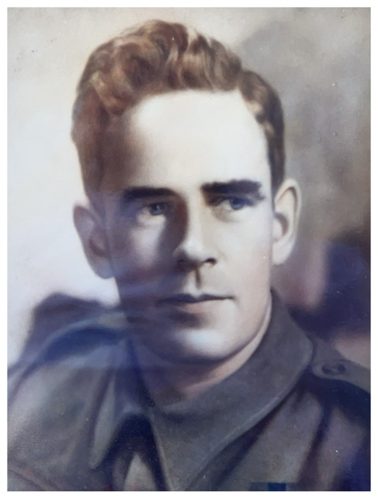
| Rank | Sergeant |
|---|---|
| Service number | NZ #1248 |
| Patrol | T Patrol |
| Regiment | 2nd NZ Divisional Cavalry Regiment |
| Role | Driver |
| Known as | “Skin” |
| Born | 1915-09-10 |
| Died | 1992-08-15 |
| Honours | DCM, MID |
| Campaign medals | War Medal 1939-45, NZ War Service Medal, Africa Star |
| Record | https://www.aucklandmuseum.com/war-memorial/online-cenotaph/record/C139007 |
What this roll records
THREE CONTEMPORARY REPORTS OF THE TREK, AND ONE FACT THEY ADD TO IT. (1) THE WANGANUI CHRONICLE OF 20 MARCH 1941 carried the first public word that he was alive: he had been “a patient at a Free French military hospital in Faya (Chad territory)” after being “found in the desert suffering from exposure following a battle between the long range desert group patrol, of which he was a member, and a much stronger Italian force”, the truck he was driving having been hit by a shell, and had now rejoined the Allied Forces. The paper sets the place as “Fayal”; it is Faya (Faya-Largeau), in northern Chad. (2) THE SAME PAPER ON 17 APRIL 1941 printed a letter written from Egypt by CAPTAIN L. B. BALLANTYNE, NZ #1398, T Patrol’s commander and a man of this roll: “He has proved himself a soldier and a leader of great ability and I consider him one of my best men, AND REMEMBER THEY ARE HAND PICKED”; “his effort in leading his companions to safety was one of the most outstanding feats of this campaign”. THE FACT THAT CHANGES HOW THE WALK READS: “RONALD WAS WOUNDED IN THE FOOT, which makes his long march all the more remarkable.” The letter also records that Ballantyne recommended him for a mention in despatches and the commanding officer for the D.C.M., for an action “which undoubtedly SAVED THREE LIVES as well as his own”, and that he returned to T Patrol after leave on 29 March 1941. (3) THE NEW ZEALAND HERALD OF 6 DECEMBER 1941 places him in the patrol inspected by GENERAL SIR CLAUDE AUCHINLECK: the Commander-in-Chief “was particularly interested in Trooper Moore’s exploit and asked him several questions concerning it”, the despatch giving the distance as “over 210 miles of desert”. Sources: Wanganui Chronicle, 20 March 1941, page 3, and 17 April 1941, page 4; New Zealand Herald, 6 December 1941, page 10 — all via Papers Past (National Library of New Zealand).
Patrol T: "Tpr R.J. Moore DCM" standing at Capt L.B. Ballantyne's T Patrol F8 command car; also posed with Tpr W.D. Burnnand alongside an F8. Brendan O'Carroll, "The Long Range Desert Group in North Africa".
MOORE'S TREK: "Trooper R.J. Moore, D.C.M., a New Zealander... member of a patrol of the LRDG" - after the ambush near Gebel Sherif (Jan 1941) his truck was disabled; shot through the foot, he led three wounded Guardsmen on foot following the patrol's tracks with almost no food and a part-tin of water; walked 210 miles in ten days before rescue by a Free French force returning from Kufra (one companion died shortly after). Cover portrait by Capt. (Peter) McIntyre. "Current Affairs" periodical, 20 Dec 1943.
On original LRP Roll (5 Dec 1940): T — Dvr T Patrol; Tp Ldr T Patrol LRDG; wounded, returned NZ. Source: LRP Roll (Original LRP Nominal Roll as at 5 Dec 1940, Capt L H Browne).
North Africa — 1 Feb 1941, Jebel Sherif: evaded capture. Posted missing 1 Feb 1941 but not captured; quickly returned to active service with the LRDG. Source: TRACKS magazine (LRDG Association), Ian Chard, 'Not all were lucky — LRDG missing in North Africa', June 2023.
Survivor of the epic desert march after the Gebel Sherif ambush near Kufra (31 Jan 1941): with the patrol's trucks destroyed, four men - Tpr R.J. Moore (#1248), Guardsmen John Easton and Alexander Winchester, and RAOC fitter Alfred Tighe - set out on foot for Tekro with a single two-gallon tin of water and a jar of jam. Tighe was left on day 5 (later rescued by the Free French), Easton died, Winchester became delirious; Moore was found still walking barefoot after ~290 miles in ~12 days. Awarded the DCM (22 Apr 1941), the first man of 2 NZ Division to win it in WWII. Moore and Tighe featured on the cover of 'Illustrated' magazine, 14 June 1941. Source: Wikipedia 'Ronald Joseph Moore'; O'Carroll 'Kiwi Scorpions' p.207.
His family were notified in stages: 'missing, believed killed' (Feb 1941), then 'believed prisoner of war', and finally 'safe and with Allied Forces' (Mar 1941). Moore recorded his own account of the march for the NZ Mobile Broadcasting Unit in 1941 - 'A Soldier's 200 Mile Desert Walk' (Nga Taonga Sound & Vision, RNZ Collection, U series, ref. 12068). DCM recommendation: The National Archives WO 373/17/144. See the In the Press and Memorabilia pages for his cuttings, awards and photographs.
Born 10 September 1915 at Te Aroha. Awarded the Distinguished Conduct Medal and Mentioned in Despatches. A farm hand in civilian life. Source: Auckland War Memorial Museum Online Cenotaph.
The Kiwi Scorpions (Brendan O'Carroll): Cpl R. J. Moore, DCM — farm hand, Morrinsville; born Te Aroha, 10 Sep 1915; wounded 31 Jan 1941 and 22 Dec 1941.
Moore's Walk: Moore's Walk — after R Patrol was caught by the Italian Auto-Saharan Company at Gebel Sherif on 31 Jan 1941 and his truck Te Aroha was destroyed, Tpr R. J. Moore walked about 210 miles south across the desert towards Tekro in French Chad before being overtaken and rescued — a feat of endurance for which he was awarded the DCM. (His companions Easton and Winchester were found along the route; Tighe stopped short at Sarra.)
Podcast about Cpl R. J. Moore and his 210-mile desert walk: “2. Into the Blue”, the second episode of DESERT PIRATES, the New Zealand Herald’s four-part series on the Long Range Desert Group, made with NZ On Air and produced by John Daniell and Noelle McCarthy of Bird of Paradise Productions. It draws on wartime audio recordings and on film the soldiers shot themselves, and it is listed on the Videos page of this site. Source: New Zealand Herald, “Desert Pirates”, episode 2, https://www.youtube.com/watch?v=dkYLcLAuGt8
After T patrol’s trucks were destroyed at Gebel Sherif (31 January 1941), rallied three companions and led them on foot southwards, walking 210 miles across the desert before being found alive by a French patrol on the tenth day. Awarded the DCM. Wounded again in an air attack near Sceleidima, December 1941. Source: ‘Long Range Desert Group in Libya, 1940–41’, Episodes & Studies Vol. 1 (NZ official war history).
Farm hand, of Morrinsville; born Te Aroha, 10 Sep 1915. DCM, m.i.d. Wounded 31 Jan 1941 and 22 Dec 1941. Source: Episodes & Studies Vol. 1 (biographical notes).
Sgt R. J. Moore, DCM, m.i.d.; farmhand, of Morrinsville; born Te Aroha, 10 Sep 1915; twice wounded. Source: Divisional Cavalry (NZ official war history).
His Distinguished Conduct Medal was announced in The London Gazette of 25 April 1941. Source: Auckland War Memorial Museum Online Cenotaph.
Farm hand in civilian life. Source: Auckland War Memorial Museum Online Cenotaph.
Embarkation detail from his Cenotaph record: he embarked as Trooper. The rank held on this card, Sergeant, is his LRDG rank; promotion after embarkation was the rule rather than the exception, so the two are not in conflict. Source: Auckland War Memorial Museum Online Cenotaph, record C139007.
Before the war: schooled at the Convent and at the district high school at Taihape, then farming in that district; he joined up in the first few days of the war with the Divisional Cavalry. Reported home on 8 February 1941 as missing believed killed, and a week later, by War Office cablegram, as missing believed a prisoner of war - he was neither, being then on the 210-mile walk out of the desert. Source: “Famous Patrol”, Waikato Times, 18 February 1941, via Papers Past (National Library of New Zealand).
SEEN IN THE WORKSHOPS, APRIL 1941, AND GIVEN A PLACE NAME FOR THE TREK. A New Zealand Official News Service reporter visiting the Group’s base found the men working on their trucks and noted “a group including a patrol navigator and Trooper D. Moore, hero of the ten-day trek from Bishara, looking at photographs taken at the wadi where one of their patrols had been ambushed”. THE PAPER CALLS THE TREK’S STARTING POINT BISHARA, where this card describes the walk as beginning from the ambush at Gebel Sherif; the two lie in the same country and the paper’s wording is recorded rather than reconciled. IT ALSO PRINTS THE WRONG INITIAL — D. Moore for R. J. Moore — left as set. Source: “Truck Repairs In Western Desert”, Northern Advocate, 2 May 1941, page 6, via Papers Past (National Library of New Zealand).
See him in the full roll →Where this comes from
- Confirmed LRDG member.
- AKA added from the LRDG Preservation Society’s Troopers roll (missing information).
- Honours & campaign medals from Online Cenotaph: MID, DCM, War Medal 1939-45, NZ War Service Medal, Africa Star. Source: Auckland War Memorial Museum Online Cenotaph.
- Murzuk Raid roll (courtesy Tarek el Mahdy)
- LRDG Nominal Roll, 28 Dec 1940 – Jan 1941 (courtesy Tarek el Mahdy) — roll rank: Trooper
- Additional sources (AWMM Online Cenotaph). Nominal Roll 2NZEF No. 1, p.127. Unit history: Loughnan, R. (1963). Divisional Cavalry. External links: London Gazette, 25 April 1941 (Distinguished Conduct Medal); Wikipedia: https://en.wikipedia.org/wiki/Ronald_Joseph_Moore; Find A Grave: https://www.findagrave.com/memorial/54490479/ronald-joseph-moore; Ngā Taonga radio talk (Apr 1941): https://ngataonga.org.nz/collections/catalogue/catalogue-item?record_id=211644; Johnston, Sarah (2023). Voices of the LRDG: https://worldwarvoices.wordpress.com/2023/04/16/voices-of-the-long-range-desert-group-the-brains-behind-the-s-a-s-rogue-heroes/ Also cited: DCM recommendation signed Lt-Col R.A. Bagnold & General Wavell (family-provided).
This page is part of the Long Range Desert Group roll of members at lrdgarchive.org. If you hold rights to anything on it and would like it credited differently, or taken down, please see Sources and Copyright. It will be dealt with promptly.
Not By Strength But By Guile