Alfred “Snowy, Alf” Tighe
Private · #7615706 · Y1 Patrol · MM, MID
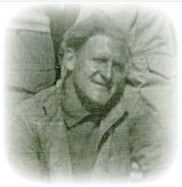
| Rank | Private |
|---|---|
| Service number | #7615706 |
| Patrol | Y1 Patrol |
| Regiment | R.E.M.E. - R.A.O.C. |
| Known as | “Snowy, Alf” |
| Died | 1944-10-10 |
| Honours | MM, MID |
| POW / KIA | Killed in action — 10 October 1944, near Corinth, Greece, by a mine |
What this roll records
Alfred Tighe served in the Royal Engineers in North Africa during the war, and volunteered for the Long Range Desert Group, a British special-forces unit whose dangerous work was to go in small groups deep behind enemy lines to gather information, destroy German and Italian fuel dumps and generally cause havoc. In January 1941, Alfred took part in a raiding party across the Libyan desert. Using the vastness of the desert to get around the German–Italian lines, the patrol drove some 700 miles behind enemy lines, successfully destroyed an Italian fort, and was over half way back when it came under attack by an Italian force with air support. Several of the British trucks were blown up, including the one Alfred was in. The British commander was captured, so his second-in-command took charge and escaped with what was left of the trucks, believing that no survivors had been left behind. In fact Alfred Tighe and three other men — a New Zealander named Moore and two Scotsmen, Easton and Winchester — had managed to hide behind some wreckage. Moore had a shell splinter in his foot, Easton had been shot in the throat, and Alfred was suffering from internal injuries and in dire pain. When the Italians had gone, the four searched the burnt-out trucks for supplies and found a two-gallon tin of water. They had a choice: walk 80 miles to the coast and surrender, or try to reach freedom 290 miles away. They chose the latter. They followed the tracks of their patrol’s vehicles in the sand, taking turns to carry the heavy water can. The desert was blistering hot by day and freezing cold at night, and they had no food. On the third day they found a two-pound pot of plum jam that must have fallen from a truck, and ate it quickly. On the fifth day a sandstorm made the tracks hard to follow and the men were close to exhaustion. Alfred, feeling he was slowing them down, told his comrades to leave him behind; they agreed to go on but left him his share of the water — which he then found undrinkable, spoiled by a salty substance in his bottle. On the sixth day Moore, Easton and Winchester came across some abandoned huts and a well the Italians had filled in. They found some old motor oil, bathed their feet with it, and lit a fire that night to stay warm. Alfred, far behind and completely alone and now without a drop of water, knew he had to catch up or die of thirst. He staggered on through the blazing heat and reached the huts on the evening the others had left. Finding a match in the sand and a little oil in one of the huts, he got a fire going; he later said it was so cold that night that he might have died but for finding that match. They all walked on in the blazing heat. Easton became delirious and dropped behind. On the eighth day two French aircraft appeared out of the blue and spotted Moore and Winchester, but could not land on the soft sand; they dropped a bag and flew off. Inside was a bottle of lemonade, but the stopper had come out and it was almost empty — yet the men now knew a rescue party would soon be on its way. It was two more days before a French patrol found them. Alfred was the first to be found — exhausted, in pain and almost dying of thirst — yet his first words were to ask after his comrades. Easton was found next, lying in the sand and barely alive; his throat wound meant he could hardly drink, though a medical officer managed to feed him a few sips of sweet tea. He smiled faintly and whispered hoarsely, “I don’t usually take sugar with my tea.” Despite the medical officer’s best efforts he died shortly afterwards, and was buried there in the desert sand. Winchester was found semi-delirious ten miles further on. Moore had gone on alone, existing on sips of water that he spat back into the bottle after wetting his mouth, and was found another ten miles ahead, still walking steadily; incredibly, he had covered some 208 miles across the desert in ten days, much of it barefoot, a shell fragment still in his foot. Alfred Tighe recovered from his injuries and returned to active service the following year. In 1944 he was with the British forces who landed in Greece following the German withdrawal, where he stepped on a land mine and was killed instantly. His name is recorded on the Swinton Cenotaph. Lest we forget.
March 1942 roll (courtesy Tarek el Mahdy): Att Fitter
North Africa — 1 Feb 1941, Jebel Sherif: evaded capture. Posted missing 1 Feb 1941 but not captured; quickly returned to active service with the LRDG. Source: TRACKS magazine (LRDG Association), Ian Chard, 'Not all were lucky — LRDG missing in North Africa', June 2023.
One of the four survivors of Tpr R.J. Moore's 1941 desert march after the Gebel Sherif ambush; the RAOC fitter was left behind on day 5 and rescued by the Free French. Pictured alongside Moore on the cover of 'Illustrated' magazine, 14 June 1941. Source: Wikipedia 'Ronald Joseph Moore'; O'Carroll 'Kiwi Scorpions' p.207.
The RAOC fitter who escaped on foot from Gebel Sherif with Moore, Easton and Winchester (Jan–Feb 1941); troubled by an old injury he was left behind on the fifth day but reached Sarra and was found alive by a French party. Source: ‘Long Range Desert Group in Libya, 1940–41’, Episodes & Studies Vol. 1 (NZ official war history).
HIS MENTION IN DESPATCHES, DATED. London Gazette, 22 June 1943, Supplement 36065, page 2862: “7615706 Cfn. A. Tighe.” That supplement is the Mentioned in Despatches list for the Middle East covering 1 May to 22 October 1942, its preamble on page 2853 reading “The KING has been graciously pleased to approve that the following be Mentioned in recognition of gallant and distinguished services in the Middle East”. HE WAS A CRAFTSMAN, and the names around his on that page are all Craftsmen and Drivers, which puts him squarely in the workshops and corroborates the R.E.M.E. attribution this card already holds: a fitter of the Group rather than a patrolman. His Military Medal does not appear in this notice. Source: The London Gazette.
HIS MILITARY MEDAL, CONFIRMED AND DATED. London Gazette, 20 July 1943, Issue 36102, page 3317, under “The Military Medal.”: “No. 7615706 Craftsman Alfred Tighe, Royal Electrical and Mechanical Engineers.” The corps is spelled out in full, corroborating the R.E.M.E. on this card. Source: The London Gazette.
HE DID NOT SURVIVE THE WAR. ALFRED TIGHE WAS KILLED BY A MINE NEAR CORINTH, IN GREECE, ON 10 OCTOBER 1944, aged 25, following the German withdrawal — three years and eight months after he walked out of the Sahara. He is buried in the PHALERON WAR CEMETERY, ATHENS, grave 17.D.8. He was born and lived at Salford, Lancashire, the son of JAMES AND MARTHA TIGHE of 10 Ada Street, Pendlebury; he was single, had spent five birthdays abroad, and was serving with the Central Mediterranean Forces. THE PATROL HE WAS KILLED ON WAS TO HAVE BEEN HIS LAST BEFORE HE CAME HOME ON CHRISTMAS LEAVE. HIS COMMANDING OFFICER WROTE TO HIS PARENTS AT ADA STREET. The lieutenant-colonel had been his patrol officer twice in the desert: “It was with profound regret that we all heard of the tragic death of your son. To me personally it was the loss not only of a magnificently gallant and able soldier, but a most charming and loyal friend. We had several patrols together, and for two of them I was his patrol officer in the desert. We all knew him as a quiet and courageous person, and he won the Military Medal with me as the result of repeated acts of bravery in actions behind the lines. NONE OF US WHO KNEW HIM EVER CEASED IN OUR ADMIRATION OF HIS HISTORIC WALK. The episode is always known as one of the greatest in history of the Long Range Desert Group. A more loyal and likeable person I would never have wished for. He was killed by a mine following the German withdrawal.” THREE RANKS, ALL OF THEM HIS, AND NONE OF THEM WRONG. The LRDG Nominal Roll of 28 December 1940 – January 1941 has him a PRIVATE. The London Gazette gives him twice, independently, as CRAFTSMAN — in the Military Medal notice and in the Middle East despatch. The record of his death and the newspaper report of it both make him a CORPORAL. That is a man promoted twice in four years, not a contradiction, and all three are kept here. The rank shown at the head of this card remains Private, which is what the Group’s own roll called him when he joined it. HIS MILITARY MEDAL was gazetted on 22 July 1943; he was also Mentioned in Despatches. SOURCE, AND WHAT IS NOT CLAIMED AS A SOURCE. The date of death, the age, the grave reference, the parents and the colonel’s letter are from the Salford War Memorials roll of honour (salfordwarmemorials.proboards.com, thread 1498, “Private Alfred Tighe’s remarkable journey”), which credits the Special Forces Roll of Honour for its record block. THE COMMONWEALTH WAR GRAVES COMMISSION IS NOT CITED HERE: it would be the primary authority for the grave, but its site was behind a bot-check on the day this was written and was not consulted, and this roll does not cite what it has not read. What can be said is that the two fields this card already held independently — the service number 7615706 and the parent unit R.E.M.E. (former R.A.O.C.) — match that record exactly. If anyone can confirm the grave reference against the CWGC register, it belongs on this card.
See him in the full roll →Where this comes from
- AKA added from the LRDG Preservation Society’s Troopers roll (missing information).
- Murzuk Raid roll (courtesy Tarek el Mahdy)
- LRDG Nominal Roll, 28 Dec 1940 – Jan 1941 (courtesy Tarek el Mahdy) — this roll gives him as Private. THE GAZETTE GIVES HIM AS CRAFTSMAN TWICE INDEPENDENTLY, in the Military Medal notice and in the Middle East despatch, so Craftsman is the better attested rank and the wording here no longer suggests it was an error.
This page is part of the Long Range Desert Group roll of members at lrdgarchive.org. If you hold rights to anything on it and would like it credited differently, or taken down, please see Sources and Copyright. It will be dealt with promptly.
Not By Strength But By Guile